Korean Rice Pancakes with Vegetables – Pan Ssambap Recipe
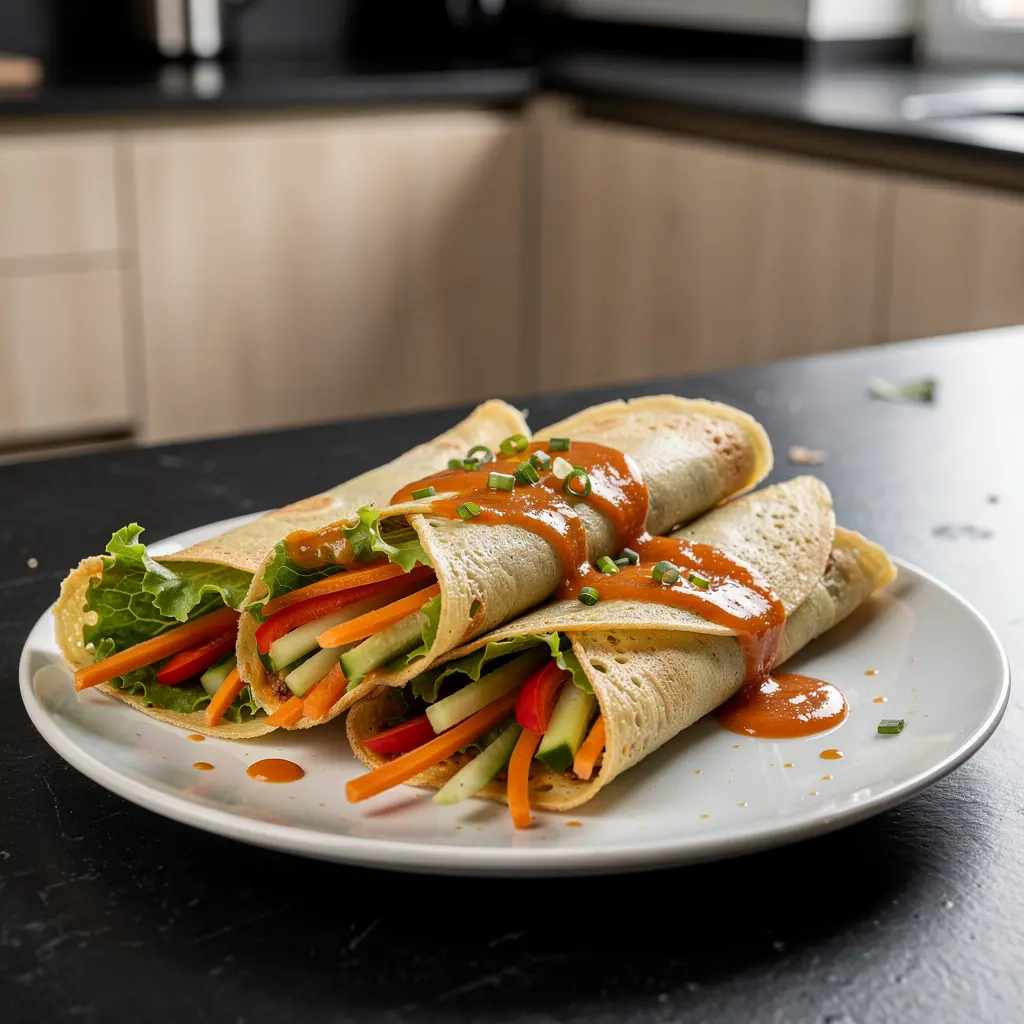
A loose, home-style take on Korean ssambap wraps: thin rice pancakes from the pan, filled with colorful vegetables and a simple sauce. Instead of wrapping rice in lettuce leaves, everything ends up in one convenient pancake. A great option for a light lunch or dinner when you want to eat plenty of vegetables in a slightly different form than a salad.
Klasyczne ssambap to ryż i dodatki zawijane w liście sałaty lub wodorostów, często jedzone przy wspólnym stole. Ta wersja z plackiem z ryżu zbliża się bardziej do ulicznych przekąsek, ale zachowuje ideę „wszystko w jednym kęsie”.
These rice pancakes turn the idea of Korean ssambap into an easy, one-pan meal: instead of assembling individual lettuce wraps, you tuck everything into a single, flexible rice pancake. It’s a fun, colorful way to eat lots of fresh vegetables with bold Korean-inspired flavors.
Dlaczego ta wersja działa
- Ciasto z ugotowanego ryżu wykorzystuje resztki i daje przyjemnie ciągnącą strukturę.
- Cienko krojone warzywa tworzą równą warstwę, więc naleśniki łatwo się zwijają.
- Sos gochujangowy jest gęsty, więc nie wypływa z placków przy jedzeniu.
Chef's tips
Use well-cooked, slightly sticky rice so the batter holds together better. A non-stick pan is key for flipping the delicate pancakes without tearing. Adjust the sauce to your taste: more vinegar for tanginess, more honey or maple syrup for sweetness, or extra gochujang for heat.
How to serve
Serve with extra fresh lettuce leaves, kimchi, or a simple cucumber salad on the side. These pancakes work well as a light main course or as part of a larger spread of Korean-inspired dishes.
Na co uważać
- Zbyt rzadkie ciasto rozleje się jak woda i placek będzie się rwał przy obracaniu.
- Nie smaż na dużym ogniu – ryżowe ciasto szybko się przypala, a środek zostaje gumowy.
- Nie przesadzaj z ilością warzyw, bo placka nie da się ciasno zwinąć.
Zamienniki
- Mąkę pszenną możesz zastąpić skrobią ziemniaczaną lub kukurydzianą dla bardziej sprężystych placków.
- Miód podmień na syrop klonowy lub ryżowy, jeśli chcesz wersję wegańską.
- Jeśli nie masz gochujang, użyj łagodnej pasty chili i odrobinę więcej miodu.
Ingredients
- rice cooked, preferably short-grain - 200 g
- water to thin the rice mixture - 80 ml
- egg for the pancake batter - 1 piece
- wheat flour - 2 tablespoon
- carrot cut into thin matchsticks - 1 piece
- red bell pepper cut into strips - 0.5 piece
- cucumber cut into thin strips - 0.5 piece
- lettuce e.g. butterhead or romaine, larger leaves - 6 leaf
- chives chopped - 2 tablespoon
- soy sauce for the sauce - 2 tablespoon
- gochujang paste Korean chili paste - 1 tablespoon
- honey or maple syrup - 1 tablespoon
- rice vinegar - 1 tablespoon
- oil for frying the pancakes - 2 tablespoon
Preparation
- Transfer the cooked rice to a bowl and let it cool slightly if it is very hot. Blend it with the water into a thick, slightly lumpy mixture (you can use a hand blender).
- Add the egg and flour to the rice mixture and mix thoroughly with a spoon until you get a thick but pourable batter, similar to pancake batter, only more sticky.
- Cut the carrot, bell pepper, and cucumber into thin strips. Wash and dry the lettuce leaves, and chop the chives.
- In a small bowl, mix the soy sauce, gochujang paste, honey, and rice vinegar until you get a smooth, thick sauce.
- Heat a thin layer of oil in a non-stick pan over medium heat. Pour in a portion of the rice batter (about 1 ladleful) and spread it thinly to form a pancake the size of a small crêpe.
- Fry the pancake for 2–3 minutes, until the bottom sets and is lightly golden. Carefully flip to the other side and fry for another 1–2 minutes. Transfer to a plate and repeat with the remaining batter.
- Place a lettuce leaf on each pancake, then add some carrot, bell pepper, and cucumber. Drizzle with 1–2 teaspoons of sauce and sprinkle with chives.
- Roll the pancakes up like crêpes or fold them in half like tacos and serve immediately.
Storage
Placki ryżowe bez nadzienia przechowuj w lodówce do 2 dni, oddzielone papierem – po podgrzaniu na suchej patelni znów zrobią się elastyczne, choć nieco bardziej ciągnące. Gotowe, zawinięte naleśniki jedz od razu, bo sos rozmiękcza placki, a sałata więdnie i traci chrupkość.
I like to treat these pancakes as a flexible, clean-out-the-fridge recipe: any crunchy vegetables work well, and the rice base makes the whole dish comforting yet still light.