Korean chicken soup with potatoes and rice noodles Recipe
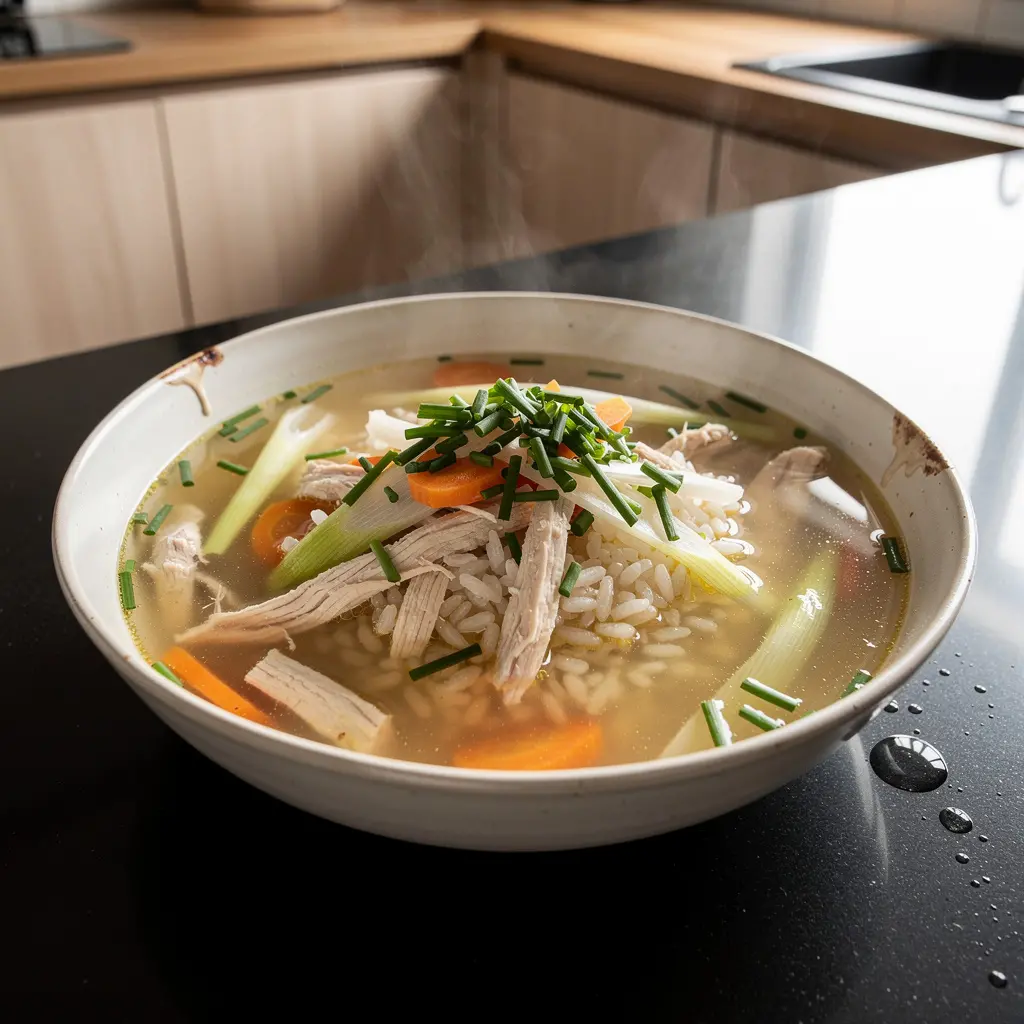
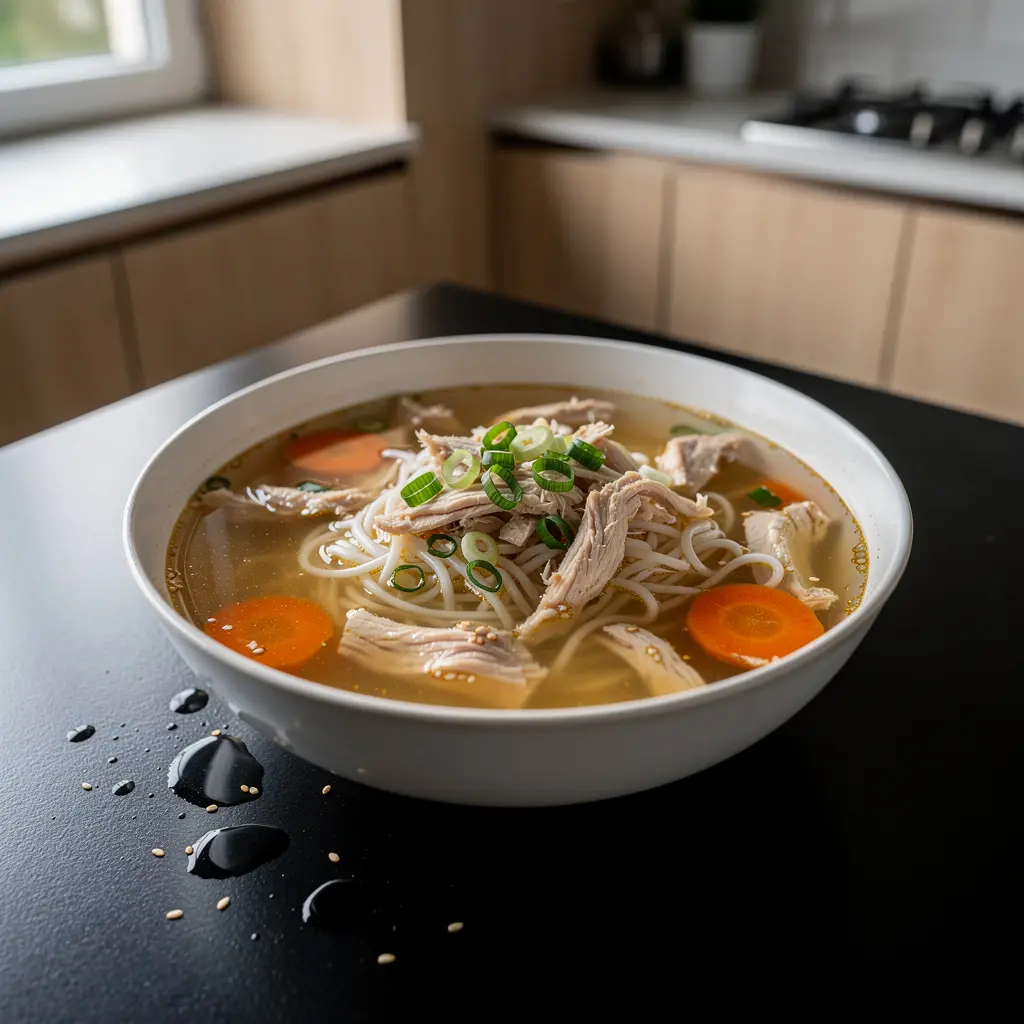
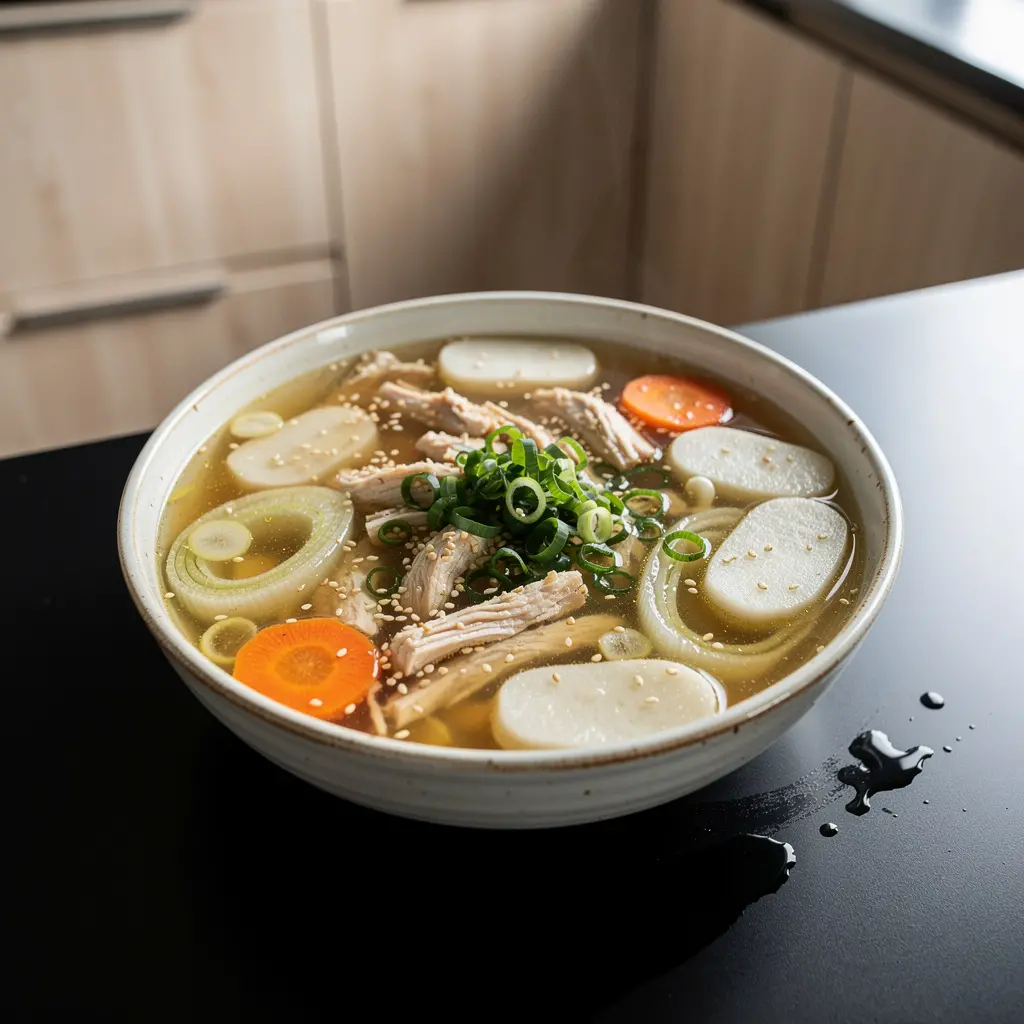
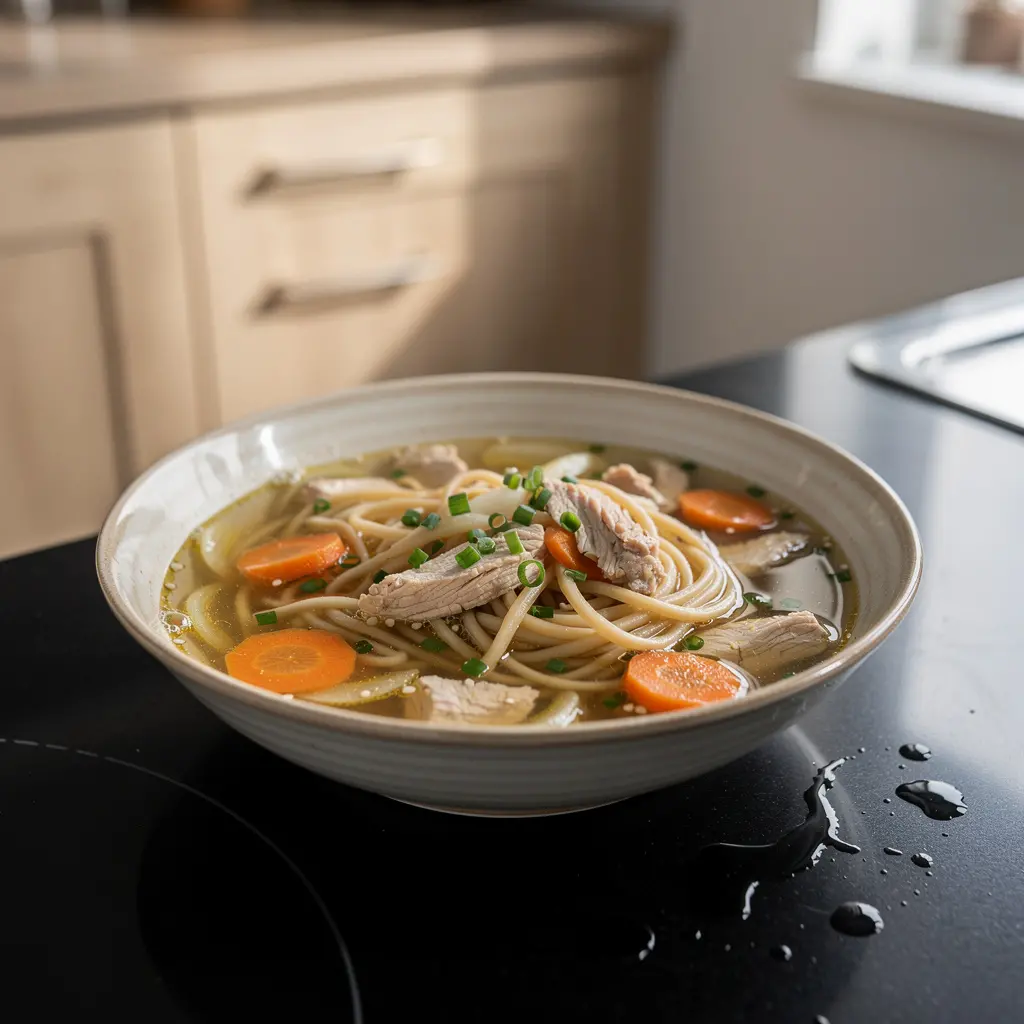
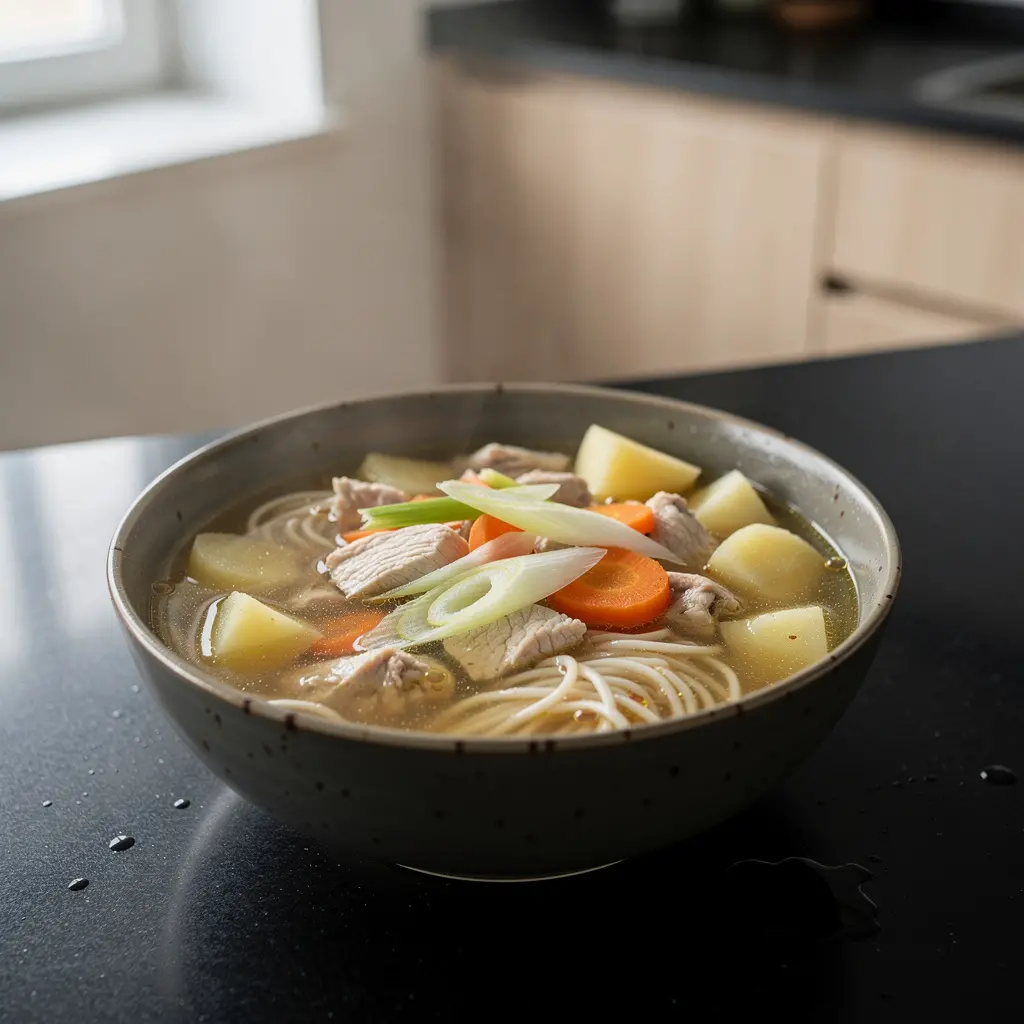
This homemade soup with chicken, potatoes, and rice noodles is a bit like a cross between classic chicken broth and a stew. In Korea, hearty soups like this often appear on colder days as a complete meal in one bowl. A delicate broth, soft potatoes, and springy rice noodles create a filling yet still light dish.
This soup combines the comfort of classic chicken broth with the heartiness of a stew, giving you a complete Korean-inspired meal in one bowl. The mix of tender chicken, soft potatoes, and chewy rice noodles makes it both satisfying and light enough for everyday cooking.
Chef's tips
Use good-quality soy sauce, as it strongly influences the final flavor of the broth. Don’t rush the step of sautéing the onion and browning the chicken—this builds a deeper taste. If you’re using broth instead of water, go easy on the salt at first and adjust only at the end.
How to serve
Serve in deep bowls with plenty of broth, making sure each serving has a generous amount of noodles and vegetables. Sprinkle with thinly sliced green onion or extra leek for freshness. You can also add a small dish of kimchi, pickled radish, or a simple cucumber salad on the side.
Ingredients
- chicken thigh - 500 g
- potato - 400 g
- rice noodles - 150 g
- onion - 1 piece
- carrot - 1 piece
- garlic - 3 piece
- soy sauce - 30 ml
- vegetable oil - 15 ml
- water - 1200 ml
- leek - 0.5 piece
- pepper ground - 0.25 teaspoon
- salt - 0.5 teaspoon
Preparation
- Rinse the chicken under cold water and pat dry with paper towels. Cut the meat into larger cubes or bite-sized strips.
- Peel the onion and slice it into thin feathers. Peel the carrot and cut into half-moons. Peel the potatoes and cut into medium cubes, about 1.5 cm.
- Wash the leek thoroughly, removing any sand between the layers, and slice into thin half-moons.
- Heat the oil in a large pot over medium heat. Add the onion and sauté for 3–4 minutes, stirring, until it softens and becomes slightly translucent but not browned.
- Add the chicken pieces and fry for 4–5 minutes, until the outside of the meat turns white. During this time add finely chopped or pressed garlic and stir so it doesn’t burn.
- Pour in the water or broth, add the carrot and potatoes. Bring to a boil, skim off any foam from the surface with a spoon, reduce the heat to medium, and cook for 15–18 minutes, until the potatoes are tender but not falling apart.
- While the soup is cooking, pour hot water over the rice noodles in a separate bowl and set aside for 5–7 minutes, until they soften and become flexible. Drain in a colander.
- Add the soy sauce, pepper, and salt to the pot with the soup. Taste the broth and, if needed, season with a little more salt or soy sauce.
- Add the soaked rice noodles and sliced leek to the soup. Cook for another 2–3 minutes, until the noodles absorb some of the broth’s flavor and the leek softens slightly but stays a bit crunchy.
- Remove the soup from the heat and let it sit for 3–5 minutes to allow the flavors to settle. Serve hot in deep bowls, making sure each portion contains noodles, potatoes, and pieces of chicken.
Storage
No storage information available for this dish.
This recipe is inspired by simple Korean home-style soups that are meant to warm you up and fill you up at the same time. It’s a great way to use everyday ingredients like chicken and potatoes in a slightly different, more aromatic way without making the dish heavy.