Kolokithokeftedes – Greek Zucchini Fritters with Feta Recipe
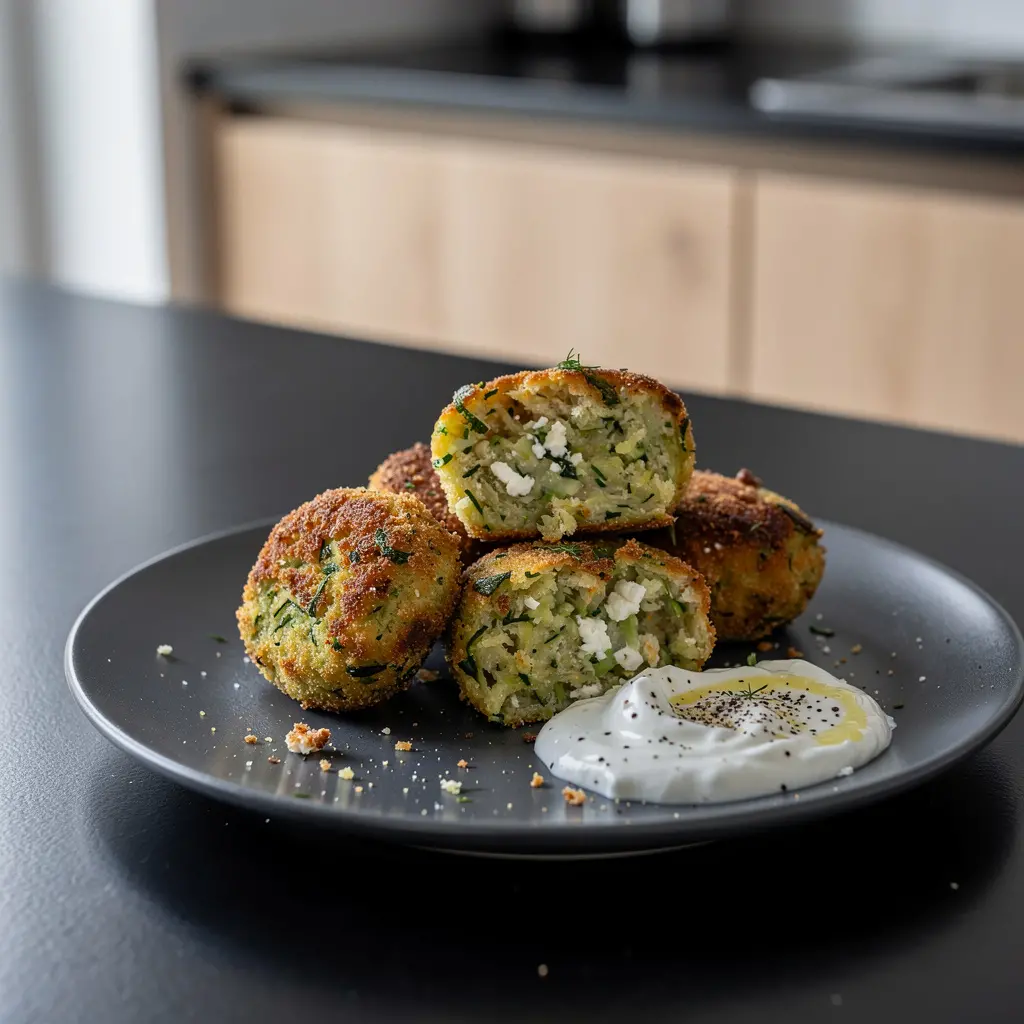
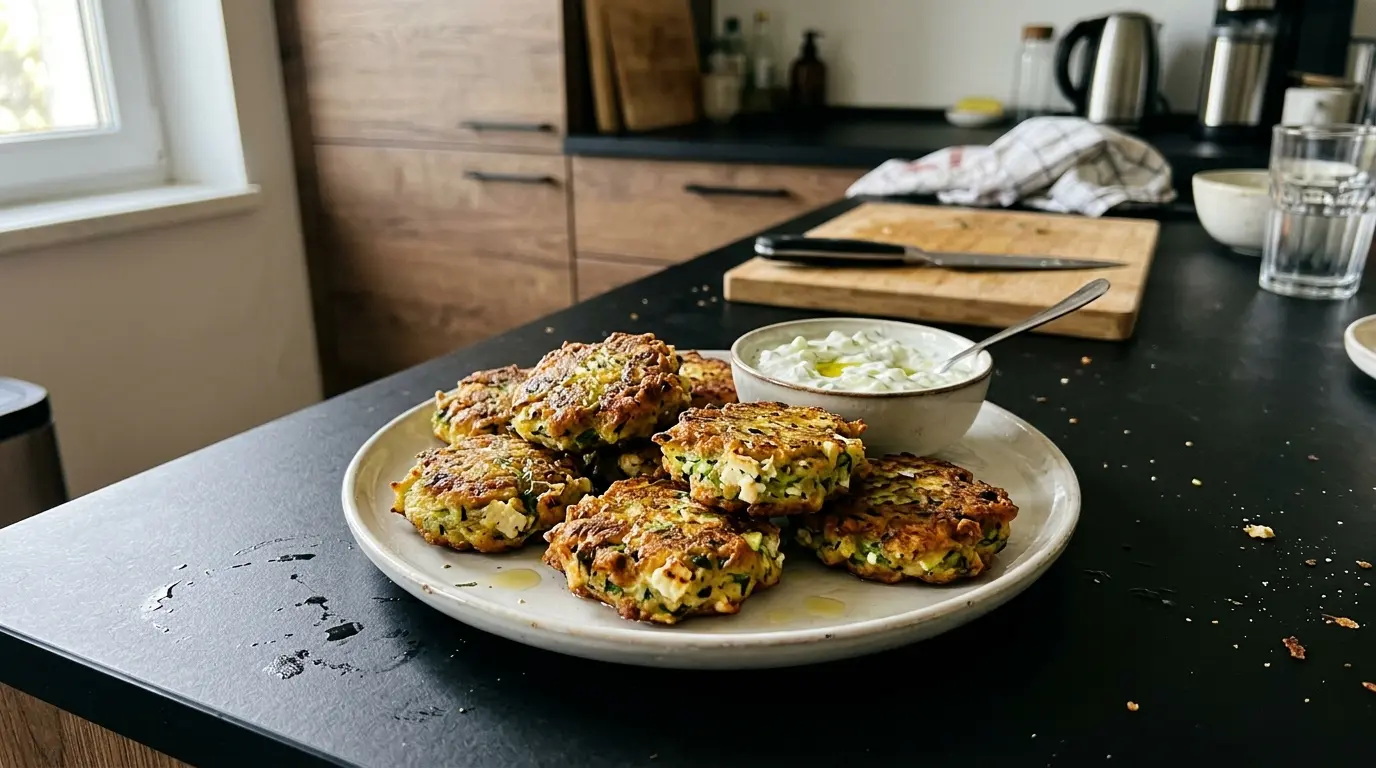
Kolokithokeftedes are fritters made with zucchini, feta and herbs, crispy on the outside and soft inside, often served in Greek tavernas as small sharing meze. They taste like a mix between zucchini pancakes and cheese patties, but with a strong herbal aroma. Perfect for a summer dinner or as a finger-food party snack.
Kolokithokeftedes are a staple in Greek taverns, served as part of a meze spread alongside tzatziki, fried calamari or dolmades. They appear especially often in summer, when zucchini is at its most tender and cheapest, and the cuisine revolves around vegetables and cheeses.
These kolokithokeftedes bring the atmosphere of a Greek taverna straight to your table: they are full of fresh herbs, have a pleasant salty touch from the feta and a crispy crust that contrasts with the soft, juicy interior. They are easy to share, work both hot and at room temperature, and are a great way to use up a surplus of zucchini in a more exciting way than classic pancakes.
Why this version works
- Thoroughly squeezing the zucchini removes excess water, so the mixture is firm and the fritters don’t fall apart in the pan.
- Feta adds saltiness and creaminess, so you don’t need a lot of yellow cheese or extra fat.
- Breadcrumbs and flour bind the moisture, creating a centre that’s soft yet cooked through, without raw “strings” of zucchini.
- A thin coating of flour right before frying gives a crispy crust that keeps the juices inside.
Chef's tips
Make sure to squeeze the zucchini really thoroughly – this is the key to fritters that hold their shape and stay crisp instead of falling apart. Use good-quality, well-drained feta so the mixture doesn’t get too wet. Fry over medium heat: if the oil is too hot, the outside will brown too quickly while the inside stays raw; if it’s too cool, the fritters will absorb more fat. You can also chill the formed patties briefly in the fridge before frying to help them set.
How to serve
Serve on a large platter as part of a meze spread with tzatziki or garlic yogurt, olives, fresh tomatoes, cucumber and warm pita or crusty bread. They also pair well with a simple green salad with lemony dressing. For a light summer dinner, serve them with a tomato and cucumber salad and a glass of chilled white wine or lemonade.
Watch out for
- Don’t add salt “just in case” – always taste the mixture first, because feta can be very salty.
- If the heat is too high, the crust will brown quickly while the inside stays raw and wet.
- Don’t crowd the pan – if you add too many fritters at once, the oil temperature will drop and they’ll start to soak up fat.
Substitutions
- You can replace part of the feta with semi-fat cottage cheese if you want a milder, less salty flavour.
- You can swap the breadcrumbs for fine rolled oats if you let them sit in the mixture for 10 minutes to swell.
- If you don’t like minty notes in savoury dishes, replace the mint with flat-leaf parsley.
- Instead of shallow-frying in oil, you can bake them at 200°C, brushing the fritters lightly with olive oil – they will be less crispy, though.
Ingredients
- zucchini - 600 g
- feta cheese - 150 g
- egg - 2 pieces
- wheat flour - 5 tablespoons
- breadcrumbs - 3 tablespoons
- dill - 2 tablespoons
- mint - 1 tablespoon
- spring onion - 2 pieces
- garlic - 1 clove
- salt
- black pepper
- oil - 200 ml
Preparation
- Wash the zucchinis and grate them on the coarse side of a grater. Transfer to a sieve set over a bowl, sprinkle with about 1 teaspoon of salt, mix with your hand and set aside for 15 minutes, until a visible amount of juice collects at the bottom.
- After this time, squeeze the zucchini very thoroughly, ideally wrapping it in a clean kitchen towel and wringing it firmly over the sink. The mass should feel noticeably lighter, compact and drier to the touch, with almost no liquid dripping out.
- Finely chop the spring onion together with the green tops. Chop the dill and mint. Press the garlic through a garlic press or grate it on a fine grater.
- In a large bowl, combine the squeezed zucchini, crumbled feta, herbs, spring onion, garlic, eggs, breadcrumbs and 3 tablespoons of flour. Season with pepper; usually you don’t need any extra salt, as feta is distinctly salty.
- Mix the mixture with a spoon or your hand until everything is well combined. The consistency should be thick but slightly sticky; if the mixture spreads out and is hard to shape into patties, add another 1–2 tablespoons of flour and set aside for 5 minutes so the breadcrumbs can absorb the moisture.
- Heat a layer of oil about 0.5 cm deep in a large frying pan over medium heat. The oil is ready when a small piece of the mixture starts to sizzle immediately and lightly brown within about 30 seconds, without darkening too quickly.
- Spread the remaining flour on a plate. Shape small patties or thicker fritters from the mixture, lightly coat them in flour, shaking off the excess, and place them straight into the hot oil, leaving some space between them.
- Fry the fritters for 3–4 minutes on each side, until evenly golden and clearly crispy around the edges. Don’t flip them too early – they should naturally start to release from the pan when you gently lift them with a spatula.
- Transfer the fried fritters to a plate lined with paper towels to drain excess oil. Fry the remaining batches, adjusting the heat if needed: if the oil starts to smoke or the fritters brown too quickly, lower the heat.
- Serve the fritters warm or at room temperature, ideally right after frying, when the crust is at its crispiest and the centre stays light green and moist.
Storage
No storage information available for this dish.
Kolokithokeftedes are one of those dishes that instantly take me back to long evenings in small Greek tavernas, where plates of meze land on the table one after another. I love how simple ingredients – zucchini, herbs and feta – turn into something so aromatic and satisfying. They’re also a great crowd-pleaser: even people who are skeptical about zucchini usually reach for seconds.