Cretan boureki – potato, zucchini and cheese bake Recipe
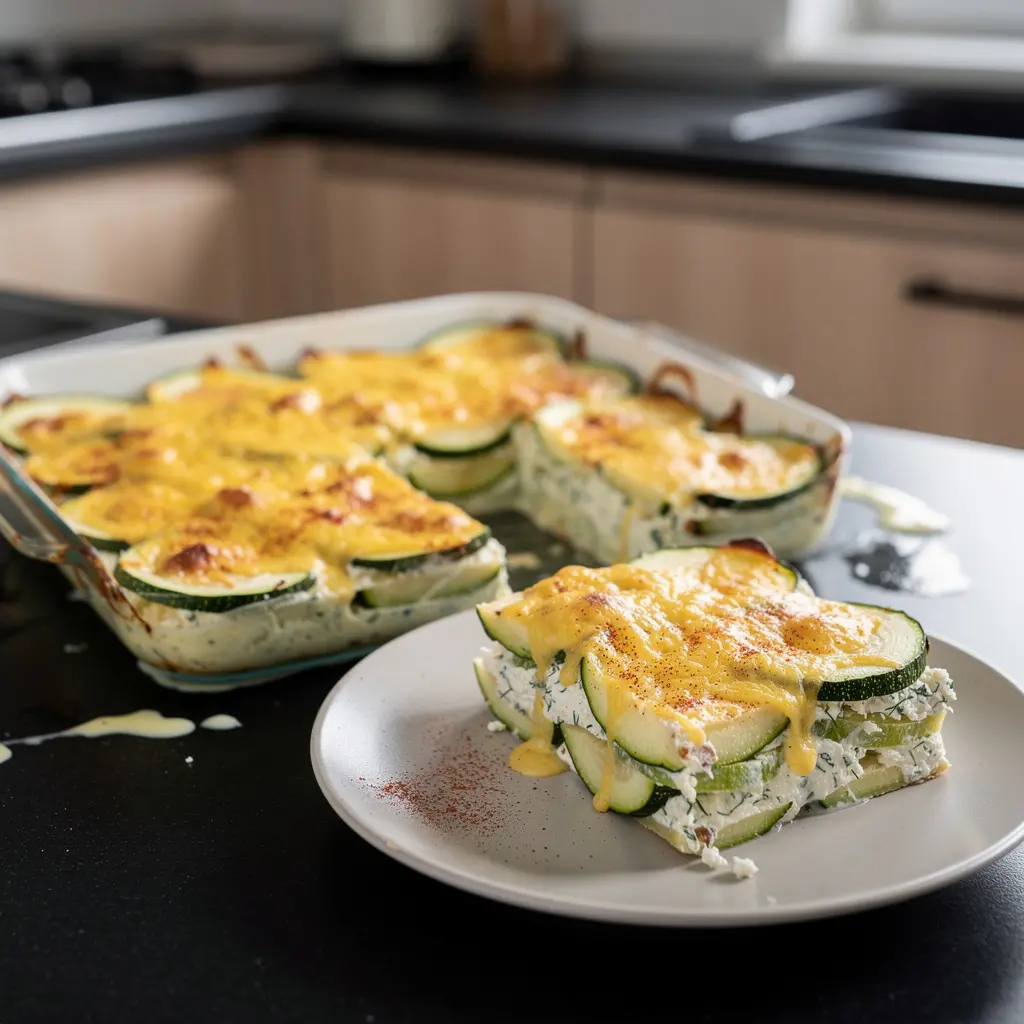
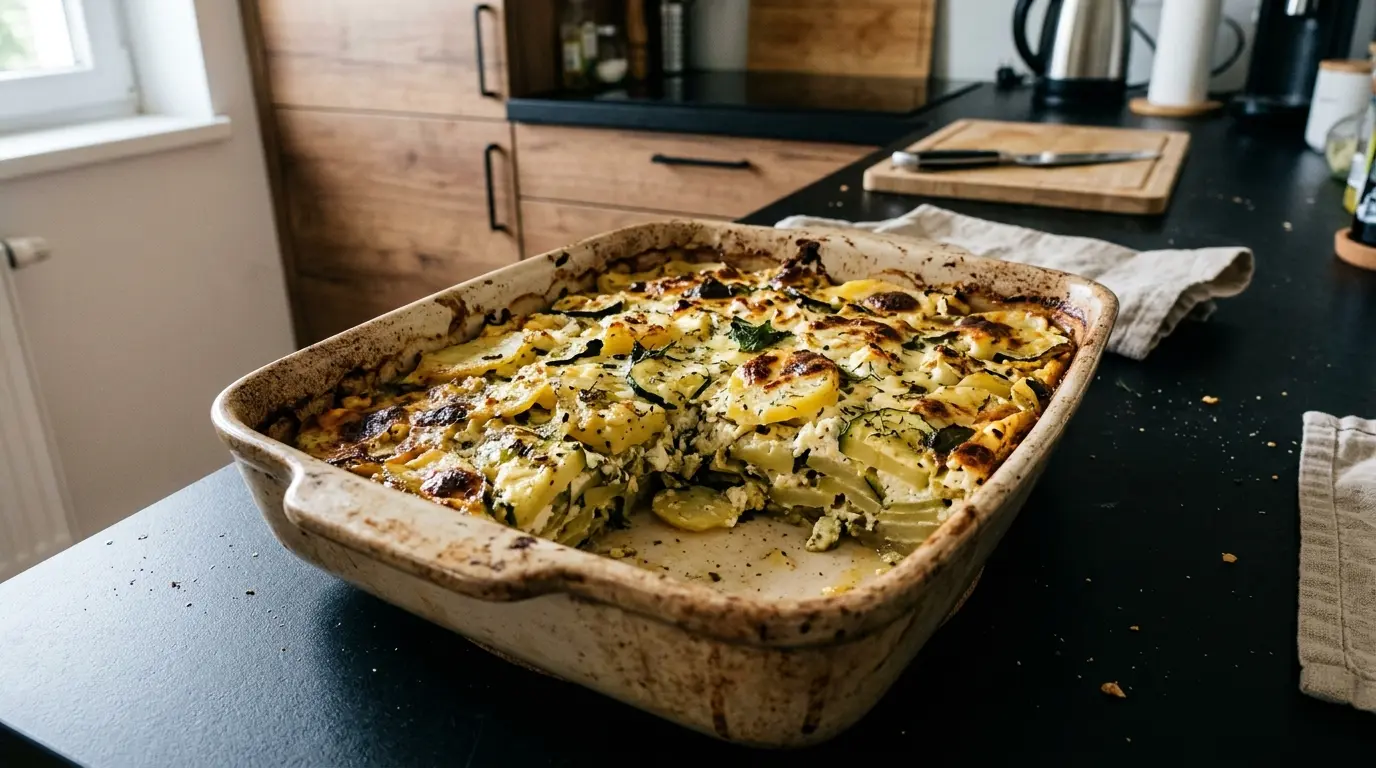
Boureki is a layered Cretan bake made from thinly sliced potatoes and zucchini, layered with cheese and herbs. The taste is reminiscent of a cross between a potato gratin and a light vegetable lasagna, just without the pasta. In Crete it is often served as a meatless main course or as a side dish to grilled meats.
On Crete, boureki is often baked in large pans and served as a main course or as a side to meat, making use of the surplus of summer zucchini and garden potatoes. In many homes it’s made without cream, relying instead on local cheeses and thick yogurt.
This Cretan boureki combines simple, everyday vegetables with aromatic herbs and two types of cheese to create a comforting yet surprisingly light bake. The thinly sliced potatoes and zucchini form delicate layers that soak up the creamy yogurt and cheese mixture, giving a rich flavor without feeling heavy.
Why this version works
- Very thinly sliced vegetables become tender without having to pre-cook the potatoes.
- Yogurt with eggs replaces cream, giving a lighter yet still creamy sauce.
- The combination of feta, yellow cheese and mint creates a bold flavour without a long list of spices.
- Baking first covered with foil and then uncovered guarantees a soft interior and a golden, slightly crisp top.
Chef's tips
Slice the vegetables as thinly and evenly as you can – this guarantees they will cook through at the same time and the layers will hold together nicely. If the top browns too quickly, cover the dish loosely with foil for the last part of baking. Taste your feta first: if it’s very salty, reduce or even omit the added salt in the mixture.
How to serve
Serve warm, cut into squares, with a fresh salad and a wedge of lemon on the side. It also pairs well with grilled chicken, lamb or fish if you want to turn it into a side dish. A spoonful of thick Greek yogurt or tzatziki on top makes it even more Mediterranean.
Watch out for
- Slices of potato that are too thick will stay firm in the middle while the top is already browned.
- Don’t skip tightly covering the dish with foil – without it, the top will brown quickly before the vegetables have time to soften.
- Don’t cut it immediately after taking it out of the oven – the hot sauce will run out and the layers will fall apart.
Substitutions
- You can partially replace feta with semi-fat curd cheese, adding a pinch more salt.
- You can swap the mint for parsley if you prefer milder, more familiar herbs.
- Greek yogurt can be replaced with thick Balkan-style yogurt of a similar consistency.
Ingredients
- zucchini thinly sliced - 600 g
- potatoes peeled, thinly sliced - 600 g
- feta cheese crumbled - 200 g
- yellow cheese grated, e.g. gouda or cheddar - 100 g
- Greek yogurt - 200 g
- egg beaten - 2 piece
- garlic pressed - 2 clove
- fresh mint chopped, can be replaced with parsley - 2 tablespoon
- olive oil for greasing the dish and drizzling on top - 3 tablespoon
- salt use sparingly, feta is salty - 0.75 teaspoon
- black pepper - 0.5 teaspoon
Preparation
- Preheat the oven to 190°C (top and bottom heat). Grease a baking dish of about 20×30 cm with 1 tablespoon of olive oil, coating the bottom and sides thoroughly so the layers don’t stick and are easy to portion.
- Slice the zucchini and peeled potatoes into very thin slices (2–3 mm). The slices should be almost translucent; if they look clearly chunky, slice them thinner, otherwise the centre may stay firm.
- In a bowl, mix the Greek yogurt, beaten eggs, pressed garlic, finely chopped mint, half of the crumbled feta and half of the grated yellow cheese, plus salt and pepper. The mixture should be thick and creamy, and a spoon should leave a visible trail in it.
- Arrange a tight layer of potato slices on the bottom of the dish, overlapping them like roof tiles with no gaps. On top, arrange a similar overlapping layer of zucchini.
- Spread a thin layer of the yogurt-cheese mixture over the vegetables, just enough to cover them. Repeat: potatoes, zucchini, mixture, until you’ve used up the ingredients, finishing with a thin layer of the mixture on top.
- Sprinkle the remaining feta and yellow cheese on top and press down lightly with your hand so the cheese “sinks” into the mixture. Drizzle with 2 tablespoons of olive oil – the surface should look lightly glossy.
- Cover the dish tightly with aluminium foil (shiny side in), making sure steam can’t escape at the sides. Bake for 35–40 minutes, then insert a thin knife into the centre – it should slide in with noticeable but not hard resistance.
- If the potatoes are still clearly firm, bake under the foil for another 5–10 minutes. Then remove the foil and bake for a further 15–20 minutes, until the cheese on top is a deep golden colour and the edges are gently bubbling with sauce.
- Take the boureki out and let it rest for 10–15 minutes. The mixture will thicken slightly and the layers will set – after this time, the bake should cut into neat squares without the middle running out.
Storage
No storage information available for this dish.
I like to prepare boureki when I’m craving Greek flavors but don’t feel like working with pastry or phyllo. It’s simple to assemble, can be made ahead and reheated, and tastes just as good the next day – sometimes even better, when the flavors have had time to meld.