Kleftiko – slow-roasted Greek pork with herbs Recipe
Kleftiko is slow-roasted meat baked in parchment parcels, full of juices, garlic, and lemon. In Greece it’s usually made with lamb, but the pork version is simpler and cheaper for the home cook. It’s a dish for a relaxed weekend, when the oven does the work for you and the house smells of oregano and garlic.
Classic kleftiko comes from rustic village cooking and is traditionally made with lamb baked in underground ovens. Today, Greek home cooks often use cheaper pork while keeping the same method of baking everything in a tightly sealed parcel.
This is a simplified, home-style version of traditional Greek kleftiko that uses pork instead of lamb, making it more affordable and accessible while keeping the characteristic flavors of lemon, garlic, and herbs. The slow roasting in a sealed parcel guarantees juicy meat and aromatic potatoes without complicated preparation.
Why this version works
- Large chunks of pork and potatoes can handle long, slow roasting without falling apart.
- The parchment-and-foil parcel traps steam so the meat braises in a fragrant sauce instead of drying out.
- Slow roasting first, followed by a short browning, gives you tender meat inside with a lightly caramelised top.
- Adding feta at the end brings a salty contrast to the lemony, herb-infused sauce.
Chef's tips
Marinate the meat the day before and leave it in the fridge – the flavors will deepen and the pork will become even more tender. Make sure the parcel is sealed well so the juices stay inside and create a rich sauce. If your oven browns unevenly, rotate the tray during the final uncovered baking time.
How to serve
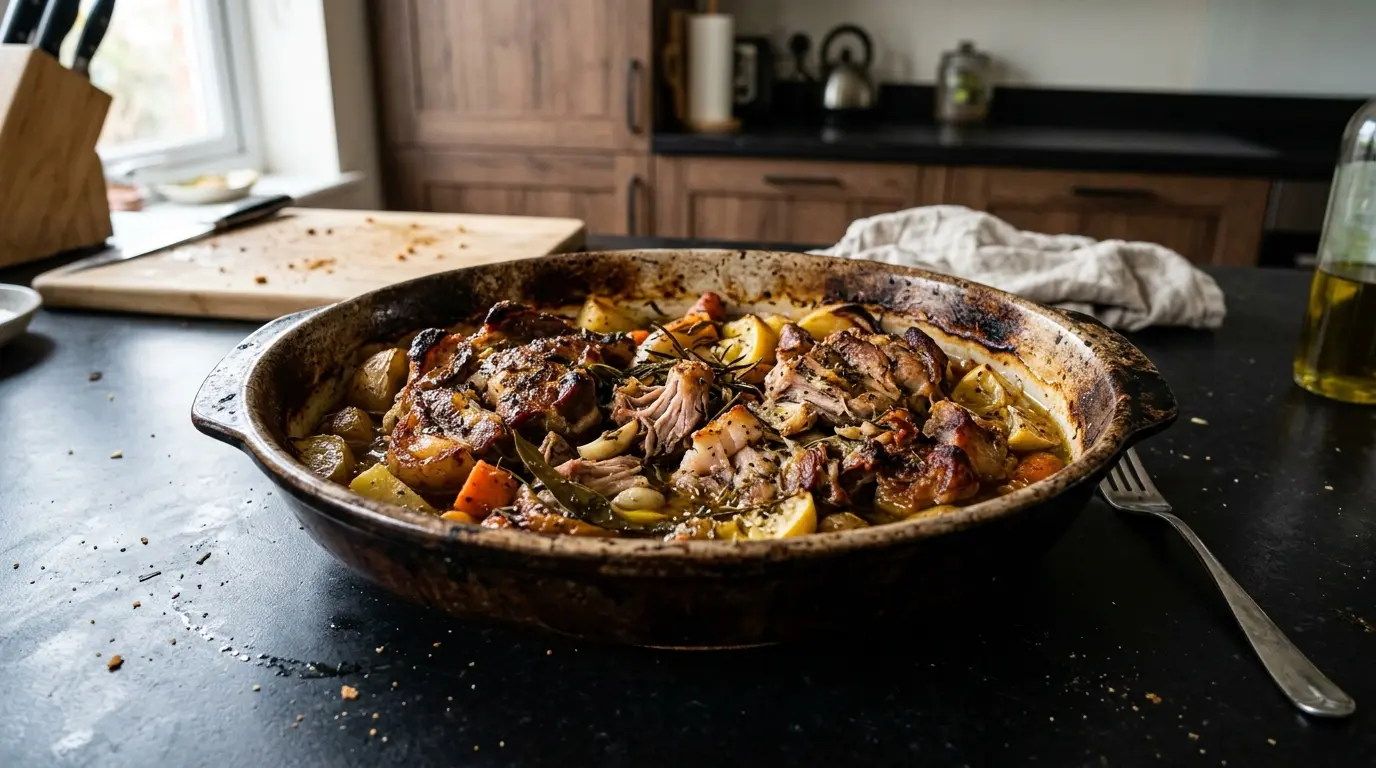
Serve the kleftiko directly in the opened parcel or in a rustic ovenproof dish, with plenty of sauce spooned over the meat and potatoes. Add a Greek-style salad, olives, and warm bread or pita to soak up the juices. A squeeze of fresh lemon and a drizzle of good olive oil just before serving will brighten the flavors.
Watch out for
- If the parcel isn’t sealed properly, the sauce will evaporate and the meat will turn out dry.
- Potato pieces that are too small can break down and turn the sauce into a mash.
- Don’t crank up the temperature to speed things up – the meat will toughen instead of becoming tender.
Substitutions
- Instead of pork, you can use bone‑in chicken pieces and reduce the baking time by about 30–40 minutes.
- You can swap rosemary for thyme if you don’t have fresh herbs on hand.
- Feta can be replaced with Balkan cheese or any firm, salty sheep’s cheese.
Ingredients
- pork shoulder or neck, in large chunks - 1.2 kg
- potatoes peeled, cut into large wedges - 800 g
- onion sliced into feathers - 2 piece
- garlic lightly crushed with a knife - 6 clove
- lemon juice and grated zest - 1 piece
- olive oil - 60 ml
- dried oregano - 2 teaspoon
- rosemary fresh, can be replaced with dried (1 teaspoon) - 2 sprig
- bay leaf - 2 piece
- salt or to taste - 1.5 teaspoon
- black pepper freshly ground - 0.5 teaspoon
- water - 120 ml
- feta cheese optional, crumbled for serving - 100 g
- parchment paper for wrapping the meat
Preparation
- Preheat the oven to 170°C (top–bottom heat). Prepare a large baking tray and a sheet of parchment paper plus aluminum foil so that, once wrapped, you have a parcel with some extra room for steam (about 5 cm of headspace above the meat).
- Cut the pork into large, palm-sized chunks. Place in a bowl, add salt, pepper, oregano, finely chopped rosemary, lemon zest and juice, and olive oil. Mix with your hands until every piece is evenly coated and lightly glossy.
- Peel the potatoes and cut them into quarters or other large pieces (at least 3 cm). Slice the onion into thick wedges, and lightly crush the garlic cloves with a knife, leaving them whole. Add the vegetables to the meat and mix again until the marinade also coats the potatoes and onion.
- Lay the parchment paper on the baking tray. Pile the meat and vegetables in the centre, add the bay leaves, and pour in enough water to just cover the bottom without creating a puddle. Fold up the paper, sealing the edges tightly so no gaps are visible.
- Wrap the entire parcel snugly in aluminum foil, pressing the edges firmly against the paper so steam cannot escape. The foil should fit closely but not tear the paper. Place in the oven and bake for 2 hours without opening – the parcel should puff up slightly from the steam.
- After 2 hours, carefully open the foil and paper, folding them back to the sides (beware of hot steam). Increase the temperature to 190°C and bake for another 20–30 minutes, until the top of the meat and potatoes is lightly browned and the sauce has thickened and turned glossy rather than watery.
- Check the meat with a fork – it should fall apart easily with light pressure, and the potatoes should be soft inside while holding their shape. If the meat is still springy, cover loosely with foil and bake for an additional 15–20 minutes until tender.
- Before serving, remove the bay leaves. Transfer the meat and potatoes to a platter or serve straight from the tray, spoon over the sauce from the bottom of the parcel, and sprinkle with crumbled feta and, if you like, fresh oregano or chopped parsley. Serve very hot so the cheese just starts to melt.
Storage
No storage information available for this dish.
This pork kleftiko is one of those dishes that practically cook themselves and fill the whole house with a holiday-like aroma. It’s perfect for days when you want something special but don’t feel like standing over the stove – a bit of chopping, wrapping, and the oven does the rest.