Hu tieu nam vang – Vietnamese pork and shrimp broth Recipe
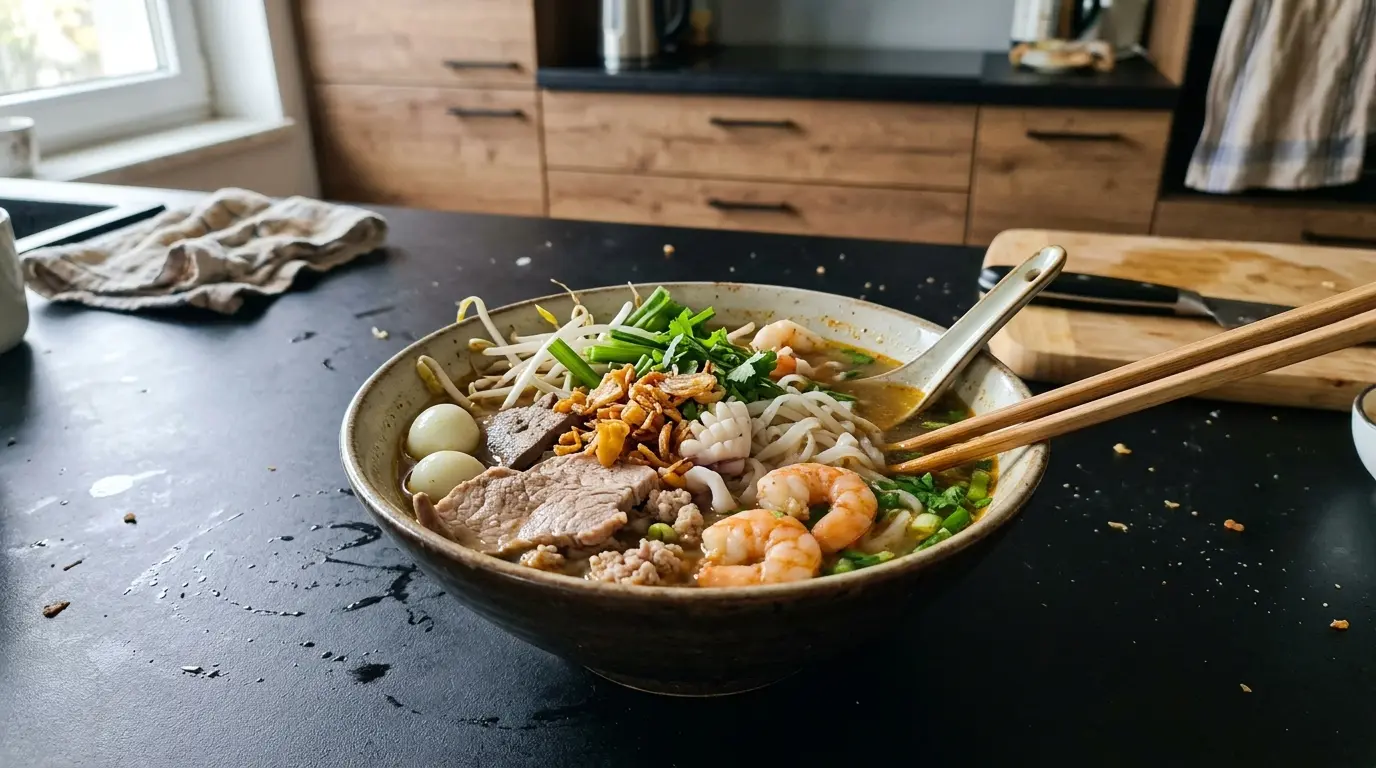
Hu tieu nam vang is a clear, delicate pork and bone broth served with rice noodles, shrimp and thinly sliced meat. In Vietnam it’s often eaten for breakfast or an early lunch, similar to how chicken soup is eaten on Sundays in some countries, except here the bowl is a full meal on its own. The flavour is milder than pho, less herbal, but very clean and slightly sweet from the long simmering of the bones.
This soup showcases the delicate, clean flavours of southern Vietnamese cooking: a crystal-clear pork broth, just a hint of sweetness from long-simmered bones and simple toppings that turn it into a complete, satisfying meal.
Chef's tips
Take your time skimming the broth – it’s the key to a clear, restaurant-style result. Don’t rush the simmering either; low and slow cooking extracts flavour without clouding the stock.
How to serve
Serve with extra herbs, lime wedges, sliced fresh chilli and a small dish of fish sauce on the side so everyone can customise the flavour and intensity.
Ingredients
- pork bones e.g. ribs, ham bones - 700 g
- pork shoulder in one piece - 250 g
- shrimp peeled, raw or frozen - 200 g
- rice noodles thin, vermicelli-type or flat - 300 g
- onion cut in half - 1 piece
- garlic - 4 cloves
- coriander root optional, stalks can be used instead - 2 piece
- sugar preferably cane sugar - 1 tablespoon
- fish sauce - 4 tablespoons
- mung bean sprouts for serving - 150 g
- chives - 0.5 bunch
- fresh coriander - 1 handful
- black pepper freshly ground - 0.5 teaspoons
- vegetable oil for frying the garlic - 1 tablespoon
- water for the broth - 2 l
Preparation
- Rinse the pork bones, cover with cold water in a pot, bring to a boil and cook for 5 minutes. Discard the water and rinse the bones under running water – this will make the broth clearer.
- Put the blanched bones into a clean pot along with the whole pork shoulder, onion, 2 cloves of garlic and the coriander root or stalks. Pour in 2 litres of water.
- Bring to a boil, then reduce the heat to low and simmer uncovered for 60–70 minutes. Skim off any scum from the surface from time to time so the broth stays clear.
- After about 40 minutes remove the piece of pork shoulder and check if it is tender. If it is, set it aside to cool and continue simmering the bones.
- Rinse the shrimp; if frozen, defrost them first. Soak the rice noodles in warm water for 15–20 minutes until softened, then drain.
- Heat the oil in a small pan, add 2 finely chopped cloves of garlic and fry over low heat for 1–2 minutes until lightly golden and very fragrant. Remove from the heat so it doesn’t burn.
- Remove the bones and onion from the broth. Add the sugar, fish sauce and pepper, and stir. Taste and, if needed, season with more fish sauce or a little salt.
- Add the shrimp to the gently simmering broth and cook for 2–3 minutes until they turn pink and firm. Do not cook them longer so they don’t become rubbery.
- Slice the cooked pork shoulder into very thin slices. Chop the chives and coriander, rinse and drain the sprouts.
- Place the noodles in a sieve and pour boiling water over them so they are hot. Divide the noodles between bowls, add slices of pork and the shrimp, then ladle over the hot broth.
- Top with sprouts, sprinkle with chives, coriander and a little fried garlic with its oil. Serve immediately.
Storage
Store the strained broth separately from the noodles and toppings in the fridge for up to 3 days. Reheat gently and cook fresh noodles when serving again so they don’t become mushy.
Hu tieu nam vang is one of those bowls that feel both light and comforting at the same time – perfect when you want something soothing but not heavy.