Greek baklava – filo pastry with nuts and honey Recipe
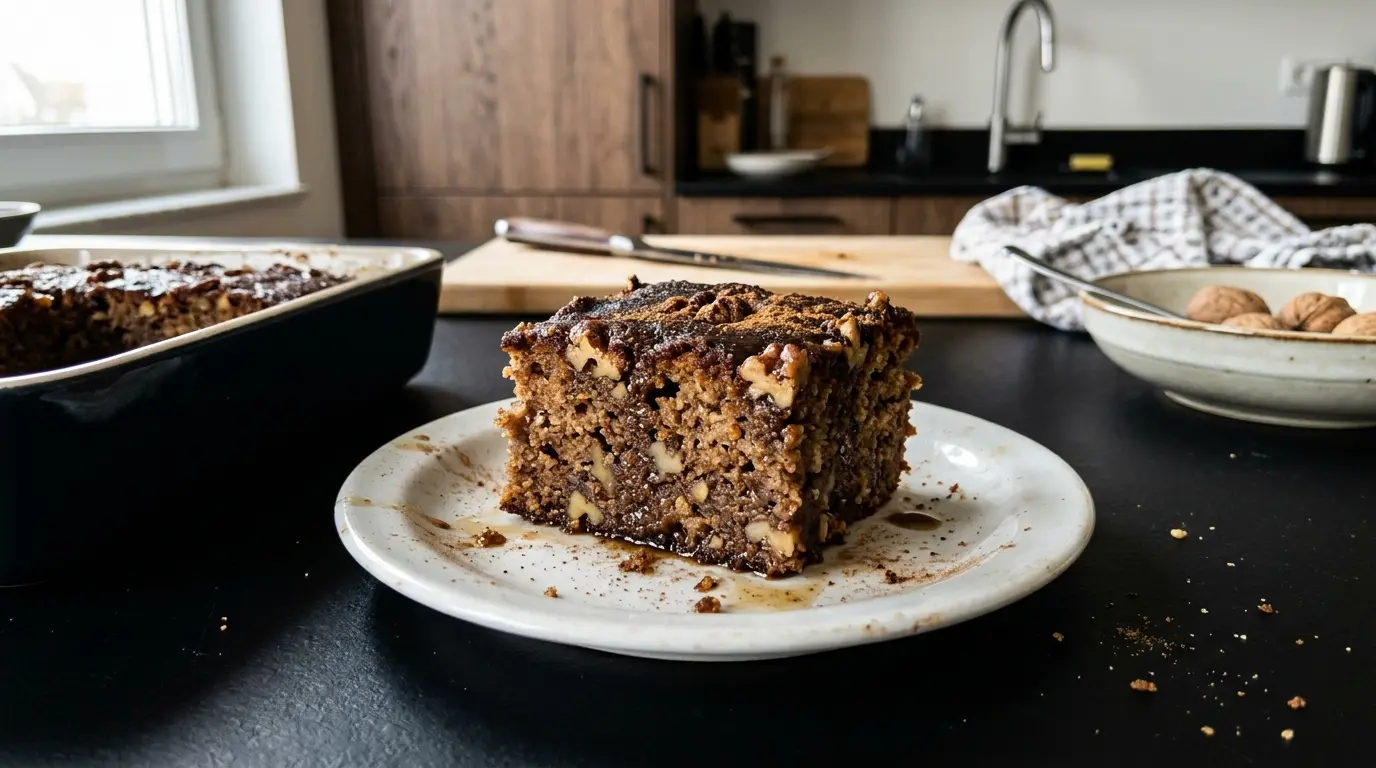
Baklava is a sweet, very nutty pastry made from many layers of filo dough, filled with a nut mixture and soaked in honey syrup. In Greece it’s served in small pieces with coffee, because it’s really rich. The crunchy layers and sticky, honey-scented center make it hard to stop at just one piece.
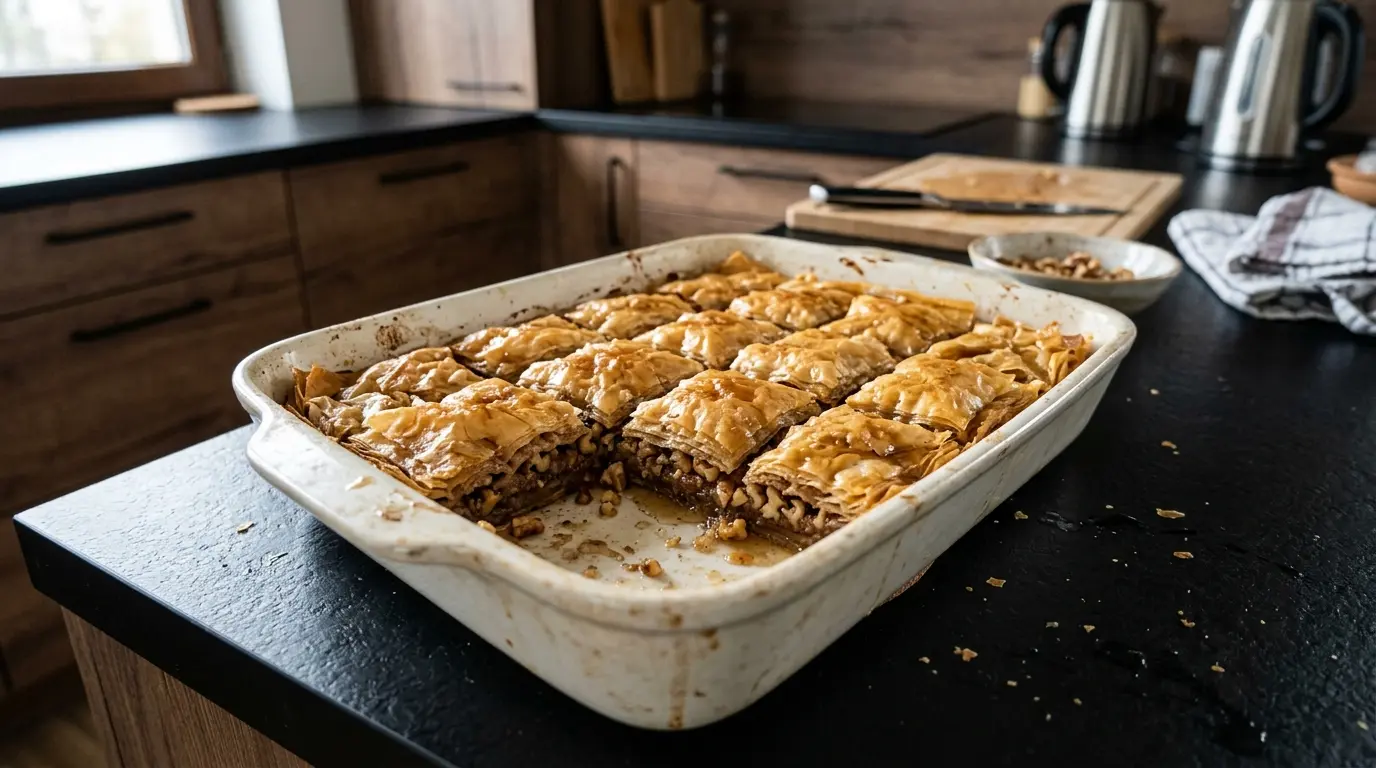
This baklava combines layers of ultra-crispy filo pastry with a fragrant nut filling and a lemony honey syrup, just like in Greek pastry shops. Cutting it before baking and soaking it in warm syrup while it’s still hot ensures that every piece is juicy inside yet crisp on top.
Why this version works
- A mix of two types of nuts gives a deeper, more complex flavor.
- The nuts are chopped rather than ground into a powder, so every bite has a distinct texture.
- Scoring the pastry before baking lets the syrup soak evenly between the layers.
- Combining hot baklava with warm, but not boiling, syrup prevents it from turning soggy.
Chef's tips
Keep the filo covered with a damp cloth at all times so it doesn’t dry out and crack while you work. Don’t rush the soaking time – the baklava really needs several hours for the syrup to distribute evenly. If your oven browns strongly, cover the top loosely with foil for the last 10 minutes of baking so it doesn’t get too dark.
How to serve
Serve baklava at room temperature, in small diamond-shaped pieces. It pairs perfectly with strong espresso, Greek coffee, black tea or unsweetened mint tea. For a more festive touch, sprinkle the top with a few chopped pistachios or a little extra grated lemon zest just before serving.
Watch out for
- Do not leave filo pastry uncovered – within a few minutes it dries out, crumbles, and becomes hard to work with.
- Do not shorten the syrup cooking time, because if it’s too thin, the baklava will turn watery instead of sticky‑honeyed.
- Do not try to cut the baklava only after pouring on the syrup – always do this before baking.
Substitutions
- You can swap the hazelnuts for almonds, keeping the same weight.
- If you don’t like cinnamon, use a pinch of cardamom or skip the warming spices altogether.
- You can replace part of the honey with maple syrup, but the flavor will be less traditionally Greek.
Ingredients
- filo pastry about 12–14 sheets - 300 g
- walnuts finely chopped - 200 g
- hazelnuts finely chopped - 100 g
- sugar for the filling - 50 g
- ground cinnamon - 1 teaspoon
- butter melted, for brushing the pastry - 200 g
- honey runny - 200 g
- water for the syrup - 150 ml
- sugar for the syrup - 150 g
- lemon juice - 1 tablespoon
- lemon zest grated, only the yellow part - 1 teaspoon
Preparation
- If you are using frozen filo pastry, defrost it according to the instructions on the package until the sheets are soft and flexible, without cracking edges. Preheat the oven to 180°C (top and bottom heat). Lightly grease a rectangular baking dish about 20×30 cm with butter.
- Finely chop the walnuts and hazelnuts with a knife or briefly pulse them in a food processor – you want small pieces you can feel when you bite, not a uniform powder.
- In a bowl, mix the chopped nuts with 50 g of sugar and the cinnamon until the spice coats the nuts evenly. Melt the butter in a saucepan and let it cool slightly so it’s not boiling hot when you brush it on.
- Unroll the filo pastry and cover it with a damp, well‑wrung‑out cloth so the edges don’t dry out and crumble while you work – the sheets should stay soft and flexible.
- Place the first sheet of filo on the bottom of the dish, fitting it to the shape of the dish; gently fold any overhanging edges inward. Brush it lightly with butter, especially in the corners. Add another sheet and brush again. Repeat until you have 5–6 layers.
- Spread half of the nut mixture evenly over the prepared base and gently press it down with your hand so the layer is fairly flat and compact, without high mounds.
- Cover the nuts with two sheets of filo, brushing each one with butter. Sprinkle over the remaining nuts, level the surface again, and gently press so the filling is evenly distributed.
- Place the remaining sheets of filo (5–6 pieces) on top, brushing each one thoroughly with butter, paying special attention to the edges, which tend to dry out. Brush the last sheet a bit more generously so it bakes up evenly golden and crisp.
- Using a sharp knife, cut the unbaked baklava into diamonds or squares, cutting all the way down to the bottom of the dish – you’ll feel the knife touch the base. The layers may shift slightly; this is normal.
- Place the dish in the preheated oven and bake for 35–40 minutes, until the top is a deep golden color and the edges are slightly pulled away and dry to the touch. If it is browning too quickly, cover it loosely with aluminum foil.
- While the baklava is baking, prepare the syrup: pour the water into a saucepan and add 150 g sugar, the honey, lemon juice, and zest. Heat until the sugar dissolves, then simmer for 8–10 minutes, until the syrup thickens slightly and coats the spoon.
- Set the syrup aside to cool slightly – it should be warm but not boiling. Take the hot baklava out of the oven and immediately pour the warm syrup evenly over it, focusing on the cuts; you’ll hear a characteristic sizzle.
Storage
No storage information available for this dish.
Homemade baklava may seem elaborate, but once you get into the rhythm of layering filo and brushing it with butter, it becomes almost meditative. The key is patience: both during baking and while waiting for the syrup to soak in. The result is a dessert that tastes like a holiday in Greece, and a small piece really goes a long way.