German Plum Cake Zwetschgenkuchen Recipe
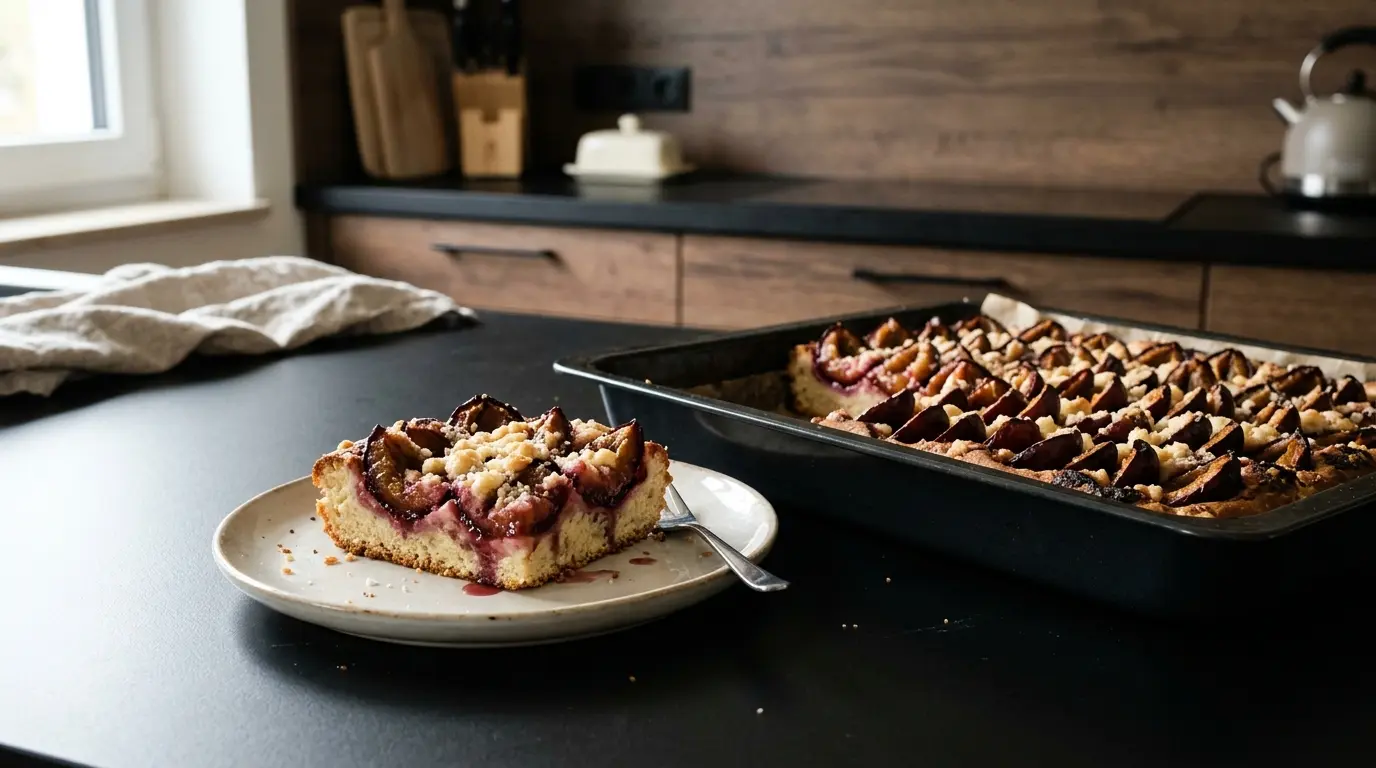
Zwetschgenkuchen is a yeasted plum cake that’s very popular in Germany in late summer and autumn. It’s often served with afternoon coffee, sometimes even with a dollop of whipped cream. It’s similar to a Polish yeast cake, but the plums are arranged densely, almost on top of each other, which makes the cake very juicy.
Zwetschgenkuchen is a staple of the German “Kaffee und Kuchen” tradition – the Sunday coffee‑and‑cake ritual. It is often baked on a large sheet pan for family gatherings and served in rectangular pieces that you eat out of hand.
Zwetschgenkuchen is the essence of German late summer: soft yeast dough literally weighed down with densely packed plums. Because the fruit is layered almost on top of itself, the cake stays incredibly juicy, with a gentle plum tartness balanced by sugar. It’s a cake that naturally fits into the “Kaffee und Kuchen” afternoon coffee-and-cake ritual so popular in Germany.
Why this version works
- Arranging the plums in a dense, slightly overlapping layer protects the dough from drying out.
- A thin layer of breadcrumbs on the base absorbs some of the juice so the cake doesn’t turn soggy.
- Longer kneading creates an elastic, well‑risen dough that can support the weight of the fruit.
Chef's tips
Yeast likes warmth but not heat – the milk should be just lukewarm, otherwise the dough won’t rise. Arrange the plums densely, cut side up, slightly overlapping, because they will shrink during baking and release their juices. After baking, let the cake rest for at least 20 minutes so the fruit juices can soak slightly into the base and not run out when cutting.
How to serve
Serve it, of course, with a mug of strong coffee or tea – in many German homes this is standard for Sunday afternoons. It also tastes great with a dollop of whipped cream or a scoop of vanilla ice cream if you want a more “festive” dessert. It’s an ideal bake for visits from friends with children, because you can cut it into rectangles and serve as handy, hand-held portions.
Watch out for
- Don’t overheat the milk for the starter – if it’s too hot it will kill the yeast and the dough won’t rise.
- Don’t add too much extra flour while kneading, or the base will turn out dry and dense.
- Don’t cut the cake immediately after baking – the hot juices will run out and the base will fall apart.
Substitutions
- You can replace part of the plums with frozen Italian plums, fully thawed and patted dry.
- Instead of cinnamon, use gingerbread spice mix for a deeper, more spiced aroma.
- You can replace fresh yeast with 7 g instant dry yeast added directly to the flour.
Ingredients
- wheat flour type 450 or 550 - 400 g
- milk lukewarm - 200 ml
- fresh yeast or 7 g instant yeast - 25 g
- sugar for the dough - 80 g
- butter melted, cooled - 60 g
- egg plus 1 yolk - 1 piece
- salt - 0.5 teaspoon
- plums Italian prune plums, ripe - 800 g
- sugar for the plums - 2 tablespoon
- cinnamon - 1 teaspoon
- breadcrumbs for sprinkling the dough - 2 tablespoon
Preparation
- Gently warm the milk so it is lukewarm but not hot. Crumble the yeast into a small bowl, add 1 tablespoon of sugar and 3 tablespoons of milk, mix and set aside for 10 minutes until a clear foam appears on the surface.
- Put the flour, remaining sugar and salt into a large bowl. Add the egg, melted, cooled butter, the yeast starter and pour in the remaining milk.
- Knead the dough by hand or with a dough hook for 8–10 minutes until smooth, elastic and starting to come away from the sides of the bowl. It should be soft and slightly sticky; if needed, add only 1–2 tablespoons of flour.
- Cover the bowl with a cloth and leave in a warm, draft‑free place for 45–60 minutes, until the dough clearly doubles in volume and feels light and airy.
- In the meantime, wash the plums, dry them, cut them in half and remove the stones. Cut each half lengthwise into 2–3 wedges so the fruit is easier to arrange and bakes more evenly.
- Briefly knead the risen dough just to knock out the air and roll it out or stretch it with your fingers onto a 30×40 cm baking tray lined with baking paper. The surface should be of roughly even thickness. Set aside for 10–15 minutes until it puffs slightly.
- Sprinkle the base evenly with breadcrumbs. Arrange the plums very densely on the dough, skin side down and cut side up, so that they slightly overlap. Sprinkle with 2 tablespoons of sugar and the cinnamon.
- Place the cake in an oven preheated to 180°C (top and bottom heat). Bake for 30–35 minutes, until the edges are clearly golden and the plums are soft and release their juices, which will lightly caramelize on top.
- After taking the cake out of the oven, leave it for at least 20 minutes so that some of the juices soak into the base and thicken slightly – this makes the cake easier to cut and keeps it from falling apart.
- If you like a crisper base, after the initial cooling slightly slide the cake out of the tin and place it on a wire rack so it can release steam from underneath.
Storage
Leftover cake keeps well for 1–2 days at room temperature, covered, or in the fridge if it’s very warm. Reheat briefly in the oven or toaster oven to refresh and bring back the just-baked texture.
I usually bake it when I buy too many plums at the market at the end of August “because they’re so pretty and cheap” and then have to use them up quickly. I always save two pieces for breakfast the next day – slightly warmed in the oven they taste like freshly baked.