Galaktoboureko – Greek filo dessert with semolina custard Recipe
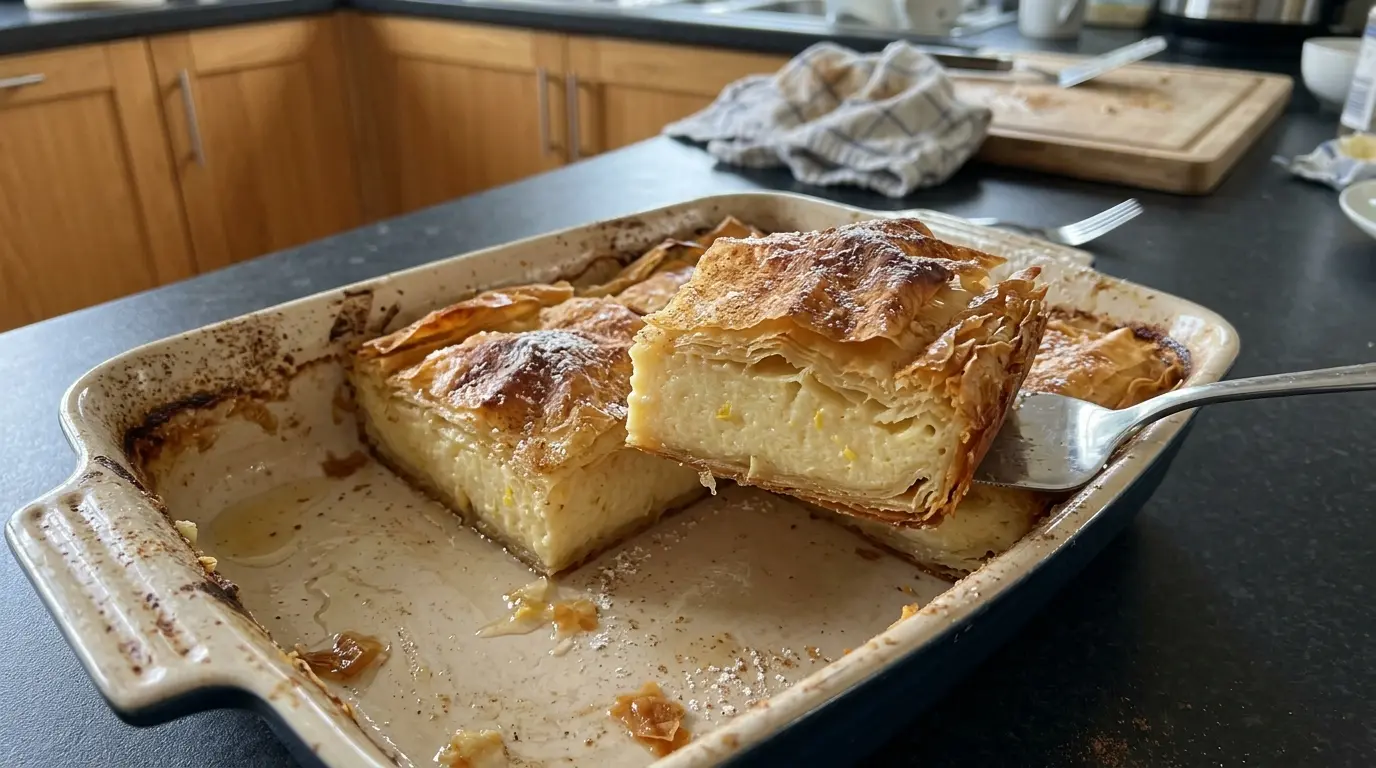
Galaktoboureko is a Greek dessert made of crispy filo pastry and a thick, vanilla semolina custard, soaked in lemon syrup. The taste is reminiscent of a mix between pudding and puff pastry, but in a crunchier, syrup-soaked version. In Greece it often appears in pastry shops next to baklava as an alternative for those who prefer fewer nuts.
Galaktoboureko comes from Greek and Cypriot cuisine and is often served in traditional pastry shops (zacharoplasteio) and after Sunday lunch. In many homes it is a festive dessert, appearing alongside baklava and kataifi.
This classic Greek dessert combines ultra-crispy layers of filo with a silky, aromatic semolina custard and fragrant lemon syrup. The contrast of textures and temperatures—hot pastry soaked with cold syrup—makes it especially memorable and different from typical custard cakes.
Why this version works
- The syrup is cooked until lightly thickened, so it soaks the dessert well without turning it into mush.
- The ratio of semolina to milk yields a custard that holds its shape after chilling but is not dense.
- Scoring the filo before baking helps the syrup to penetrate evenly between the layers.
- Adding the eggs to warm, not hot, custard prevents them from curdling into lumps.
Chef's tips
Use fine semolina so the custard is smooth and creamy. Don’t skip covering the filo with a damp cloth while you work—this prevents it from drying out and cracking. When adding the eggs to the custard, make sure it’s only warm, not hot, and whisk vigorously so the eggs incorporate evenly.
How to serve
Serve galaktoboureko well chilled, cut into squares or diamonds. It’s perfect after a Mediterranean-style dinner, alongside Greek coffee or strong espresso. For a more festive touch, you can add a small scoop of vanilla ice cream or a spoonful of thick Greek yogurt on the side.
Watch out for
- Do not pour hot syrup over completely cooled pastry – the filo will turn soggy instead of staying crisp on top.
- If the custard is too thin when you’re about to pour it, cook it for another 1–2 minutes until it clearly thickens.
- Make sure the filo doesn’t dry out while you work; dry sheets crack and break when you try to layer them.
Substitutions
- You can replace fine semolina with fine wheat semolina in the same amount.
- It’s worth swapping vanilla sugar for 1 teaspoon of real vanilla paste for a deeper aroma.
- If you don’t have a lemon, use orange zest and adjust the amount of juice in the syrup to taste.
Ingredients
- filo pastry about 10–12 sheets - 250 g
- milk for the custard - 1 l
- semolina fine - 120 g
- sugar for the custard - 180 g
- egg for the custard - 4 pieces
- butter 120 g for the pastry, 60 g for the custard - 180 g
- lemon zest grated, only the yellow part - 1 teaspoon
- vanilla sugar - 1 teaspoon
- water for the syrup - 250 ml
- sugar for the syrup - 200 g
- lemon juice - 1 tablespoon
Preparation
- First prepare the syrup: pour 250 ml water into a saucepan, add 200 g sugar and the lemon juice. Heat, stirring, until the sugar dissolves, then simmer for 8–10 minutes, until the syrup slightly thickens and runs more slowly off the spoon. Set aside to cool completely.
- Preheat the oven to 180°C (top and bottom heat). Thoroughly grease a 20×30 cm baking dish with a thin layer of butter, including the corners and sides, so the filo doesn’t stick and browns evenly.
- In a pot, heat the milk with 180 g sugar, vanilla sugar and lemon zest until very hot but not yet boiling – you should see light steam and small bubbles around the edges.
- Slowly pour the semolina into the hot milk in a thin stream, whisking constantly. Cook for 4–5 minutes over low heat, until the mixture thickens to the consistency of a thick pudding and starts to „spit” slightly as you stir.
- Remove the pot from the heat, add 60 g butter and stir until fully melted and the custard is smooth and glossy. Set aside for 5–7 minutes, until the pot is hot but no longer burning to the touch.
- Lightly beat the eggs in a bowl. Add them in batches to the warm custard, whisking vigorously so they don’t scramble. The finished custard should be silky and uniform, with no lumps or streaks of egg.
- Melt the remaining 120 g butter and let it cool slightly. Keep the filo sheets covered with a well‑wrung damp cloth so the edges don’t dry out and crumble while you work.
- Place the first sheet of filo on the bottom of the dish, letting it come up the sides. Brush it lightly with butter, especially around the edges. Add another sheet and brush again. Repeat until you have 5–6 layers; it’s fine if they wrinkle a little, which will add extra crispness.
- Pour the warm semolina custard over the prepared base and smooth the top with a spatula so the layer is even and comes to about 2/3 of the dish’s height.
- Cover the custard with more filo sheets (5–6 pieces), brushing each one generously with butter. Fold any excess pastry inward to create ruffled, buttery edges. Brush the last sheet particularly carefully so it bakes to a deep golden colour.
- Using a sharp knife, score the top into squares or diamonds, cutting only through the top layers of filo. Draw the knife in a firm motion so you don’t drag or tear the pastry.
- Place the dish in the preheated oven and bake for 35–40 minutes, until the top is deeply golden and very crisp and, when you gently shake the dish, the custard underneath feels set rather than moving like a liquid. Pour the cooled syrup over the hot pastry, focusing on the score lines.
Storage
No storage information available for this dish.
Galaktoboureko is one of those desserts that seem elaborate but are actually quite straightforward once you get used to working with filo. The key is patience: let the syrup cool completely and give the baked dessert enough time to rest so the flavors meld and the texture stabilizes.