Chocolate Cake with Beetroot Recipe
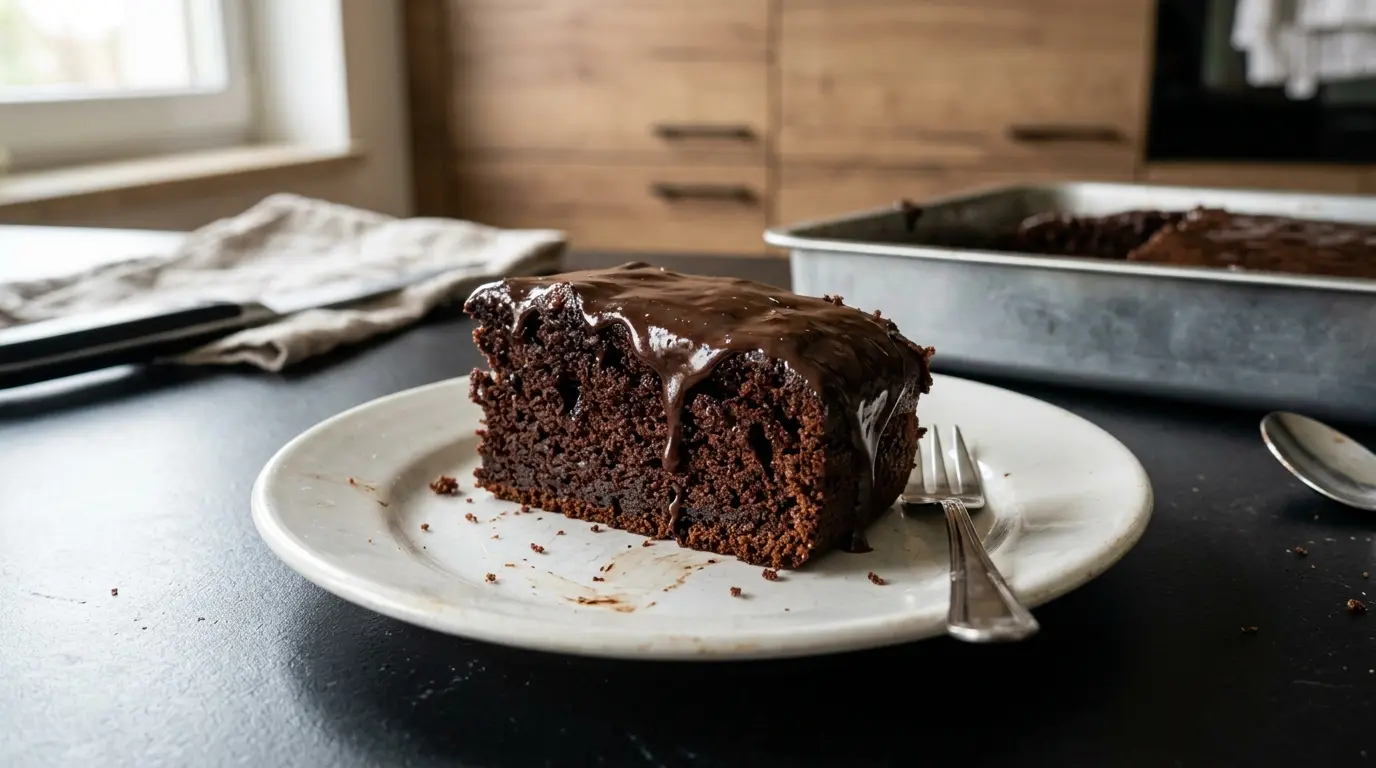
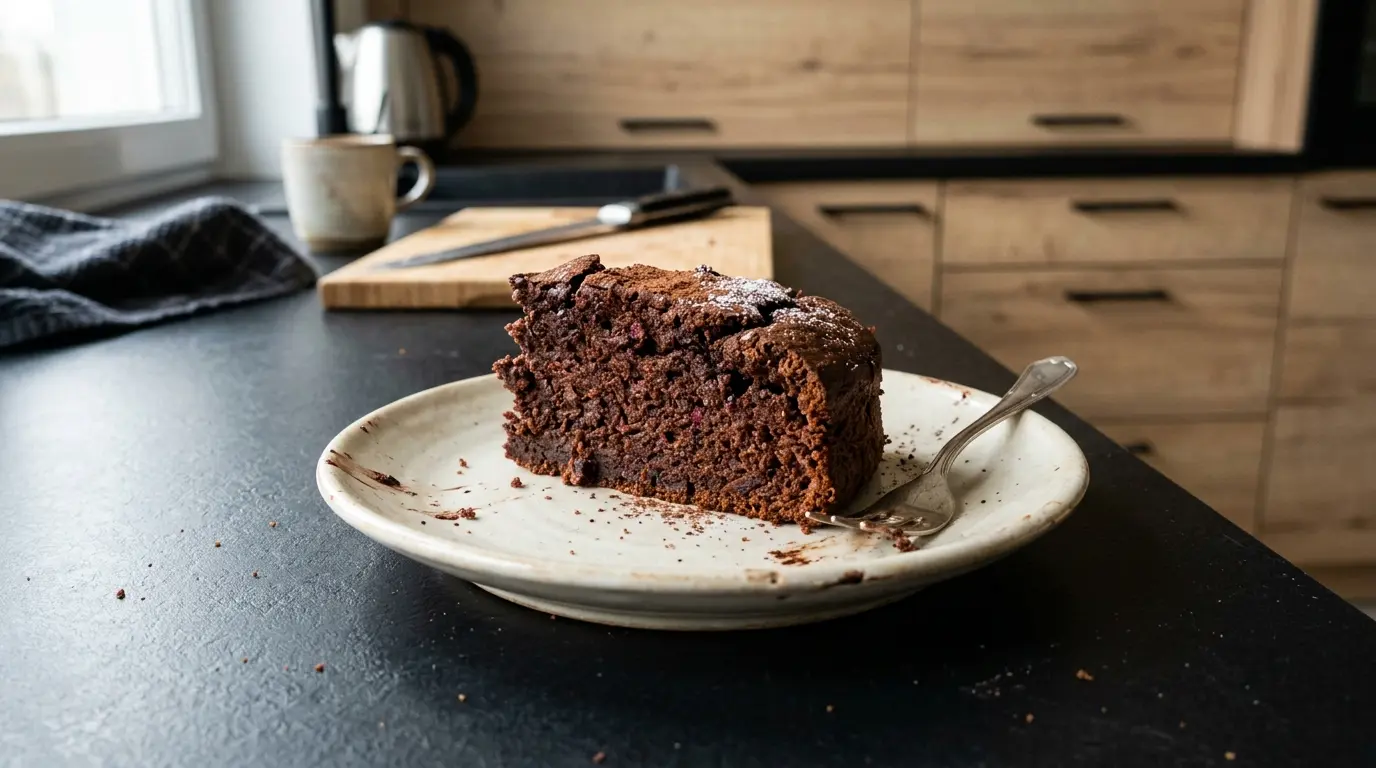
This Polish chocolate cake with added roasted beetroot purée is a twist on brownie, but baked as a classic sheet cake with glaze. It has a dense, moist centre with a deep cocoa–chocolate flavour and a light earthy note from the beetroot, which you can hardly taste on its own. The recipe is based on simply combining wet and dry ingredients, so it doesn’t require pastry experience.
Vegetable cakes, especially with beetroot or carrot, have become a way in Polish kitchens to “sneak” vegetables into desserts., They are a homemade, less sweet alternative to classic pastry-shop layer cakes.
This cake combines the intense flavour of dark chocolate with the natural sweetness of beetroot, so you can reduce the amount of sugar without losing moisture., Unlike classic brownies, it handles slicing and transport better while still staying dense and fudgy., It’s a great example of how a typically Polish ingredient – beetroot – can shine in a modern dessert.
Why this version works
- Roasted beetroot purée adds sweetness and moisture without noticeable fibres, so the texture stays smooth.
- Folding by hand after adding the flour limits gluten development and prevents a dense, heavy cake.
- Chopped chocolate inside replaces part of the sugar and creates pockets of intense flavour.
- A simple ganache glaze with equal parts cream and chocolate reliably turns out smooth and glossy.
Chef's tips
Roast the beetroots in their skins wrapped in foil – they’ll be sweeter and less watery than boiled ones, so the cake won’t turn stodgy., The most common mistake is mixing too long after adding the flour – as soon as the batter is uniform, put the spatula down., When testing with a skewer, aim for the very centre: it should come out with a few moist crumbs, not with liquid batter.
How to serve
Serve at room temperature with a spoonful of thick Greek yogurt or unsweetened whipped cream to balance the chocolate., For parties, cut the cake into small squares like brownies and serve on a platter with a bowl of fresh raspberries or cherries in syrup., On winter evenings it’s excellent with a mug of dark cocoa or black coffee.
Watch out for
- Don’t add warm beetroot purée – the egg mixture can curdle and form lumps like scrambled eggs.
- If the skewer comes out completely dry, the cake is slightly overbaked and will be less moist once cooled.
- Purée that is too thin (from beetroots boiled in water) will thin the batter – in that case add 1–2 tablespoons of flour.
Substitutions
- Instead of rapeseed oil, use grapeseed oil or a mild olive oil with a neutral flavour.
- You can replace up to 1/3 of the wheat flour with ground almonds for an even moister centre.
- If you don’t have cream, make a glaze from milk and a tablespoon of butter, keeping in mind it will be a bit thinner.
Ingredients
- beetroot - 250 g
- wheat flour - 200 g
- cocoa powder - 30 g
- sugar - 160 g
- oil (e.g. rapeseed) - 120 ml
- egg - 3 piece
- baking powder - 10 g
- dark chocolate - 80 g
- salt - 1 pinch
- cream (for whipping or heavy cream) - 80 ml
- dark chocolate - 80 g
Preparation
- Preheat the oven to 180°C (top–bottom heat). Line a loaf tin or a 22 cm springform tin with baking paper and lightly grease the sides with oil so the cake releases easily after baking.
- Peel the cooked or roasted beetroots and grate them on a fine grater or blend into a smooth purée. They should be well drained and completely cool – the purée should be thick, not watery.
- In a large bowl, mix the flour, cocoa, baking powder and salt. The dry ingredients should have an even brown colour; if you see lumps of cocoa or baking powder, sift the mixture.
- In a second bowl, beat the eggs with the sugar for 3–4 minutes, until the mixture is noticeably paler, has increased in volume and runs off the whisk in a thin “ribbon”. This aerates the cake despite its dense texture.
- Add the oil and beetroot purée to the beaten eggs. Mix briefly on low speed or whisk by hand until the mixture is uniform, with no visible beetroot streaks or oily patches.
- Add the dry ingredients to the wet and fold with a spatula from the bottom of the bowl just until no streaks of flour remain. The batter should be smooth but still thick; don’t mix further or the cake will turn heavy.
- Add the finely chopped dark chocolate and gently fold in. The finished batter should be clearly thick but still pourable and easy to spread in the tin without “standing” in one place.
- Pour the batter into the tin and smooth the top with a spoon or spatula. Bake for 35–40 minutes, until a skewer inserted into the centre comes out with a few moist crumbs but no streaks of raw batter.
- Remove the cake from the oven and leave it in the tin for about 10 minutes so some steam can escape. Then carefully transfer to a rack and cool completely – the bottom should feel dry to the touch.
- For the glaze, heat the cream almost to boiling (steam and small bubbles at the edges), remove from the heat and add the chopped chocolate. Stir until you have a smooth, glossy mixture with no lumps.
- Leave the glaze for a few minutes until it thickens slightly and runs slowly off a spoon. Pour evenly over the cooled cake, spread with a spatula and leave for at least 20 minutes so the glaze can set before cutting.
Storage
Store the cake tightly covered in the fridge for 4–5 days – the centre stays moist and the glaze firms up slightly., Before serving, take it out 20–30 minutes in advance so the chocolate softens and the flavour rounds out.
I most often bake this cake in the evening before a trip – I cut it into thick slices, pack them in a container and take it on the train; even after two days the centre is still pleasantly moist.