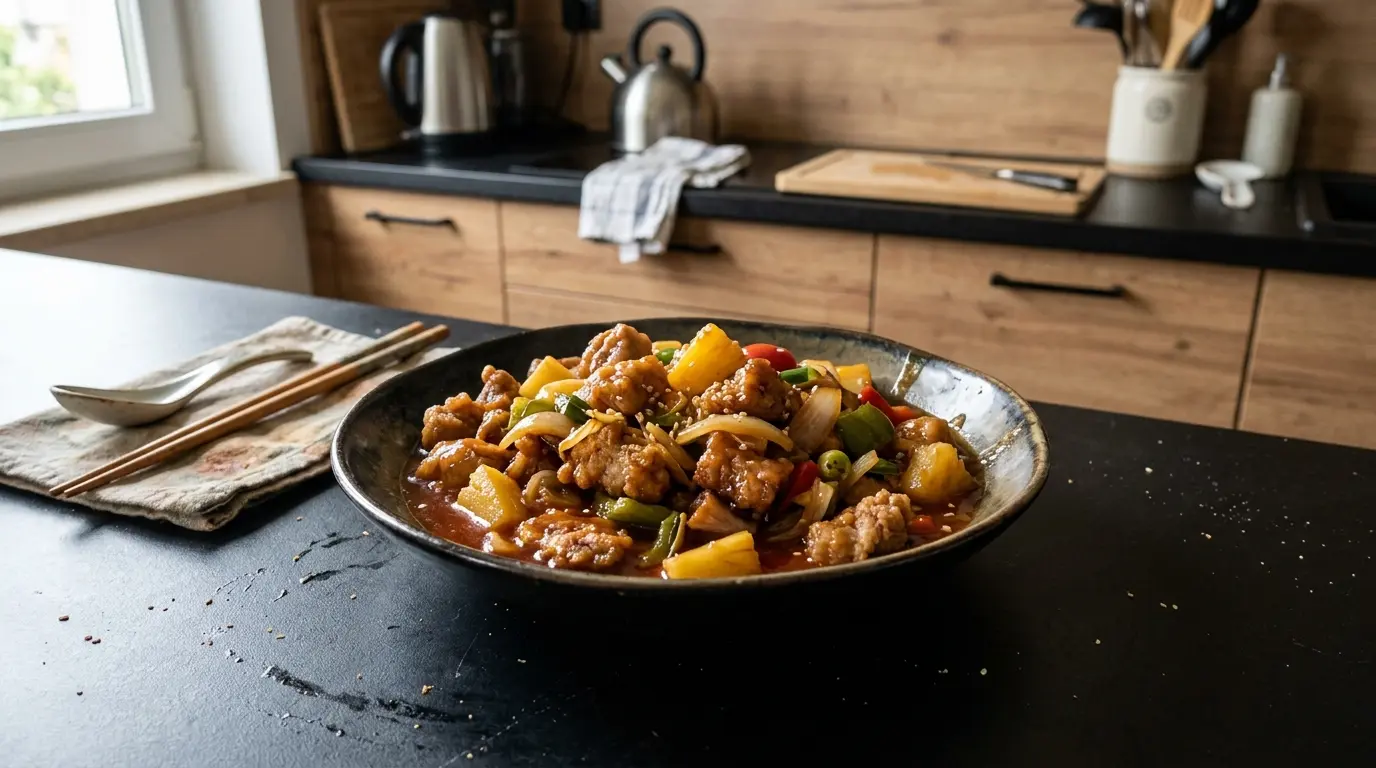
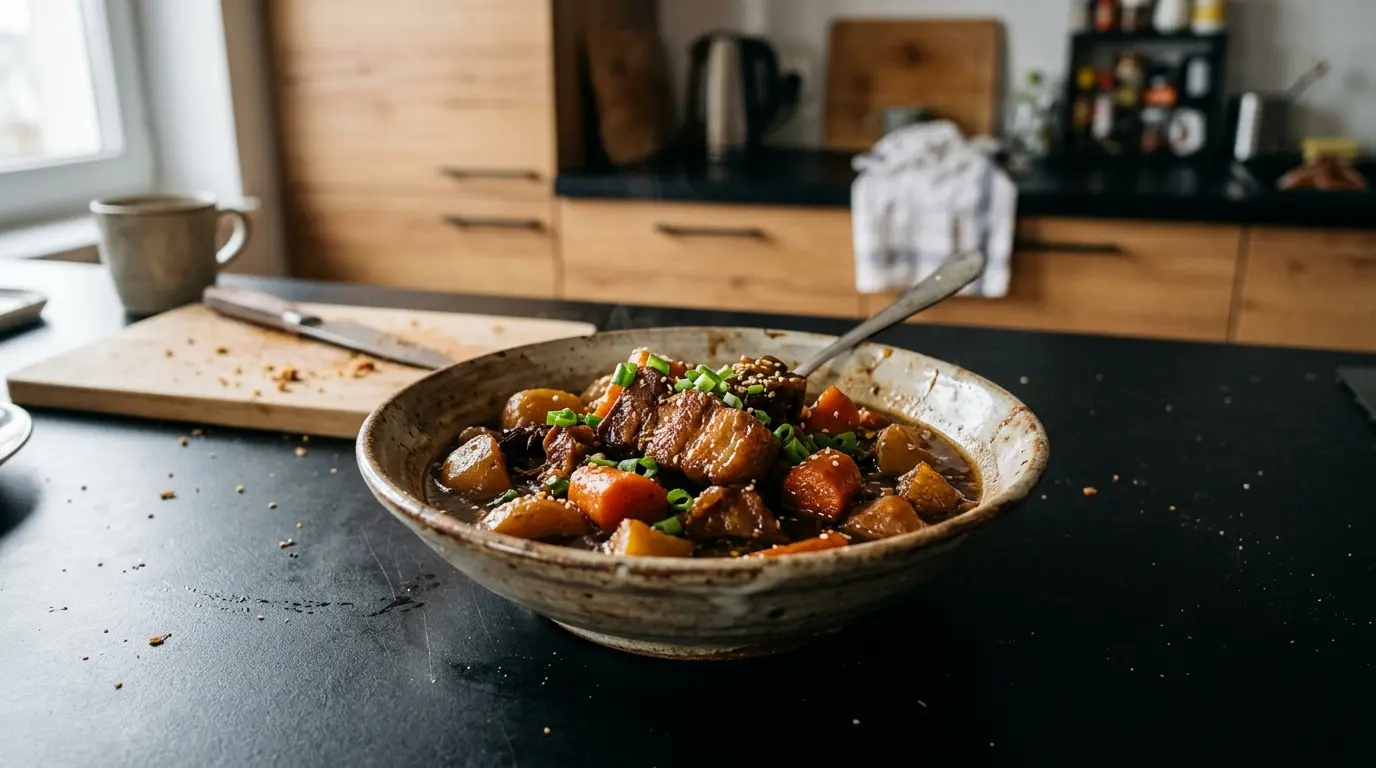
Chinese bao buns with braised pork and cucumber Recipe
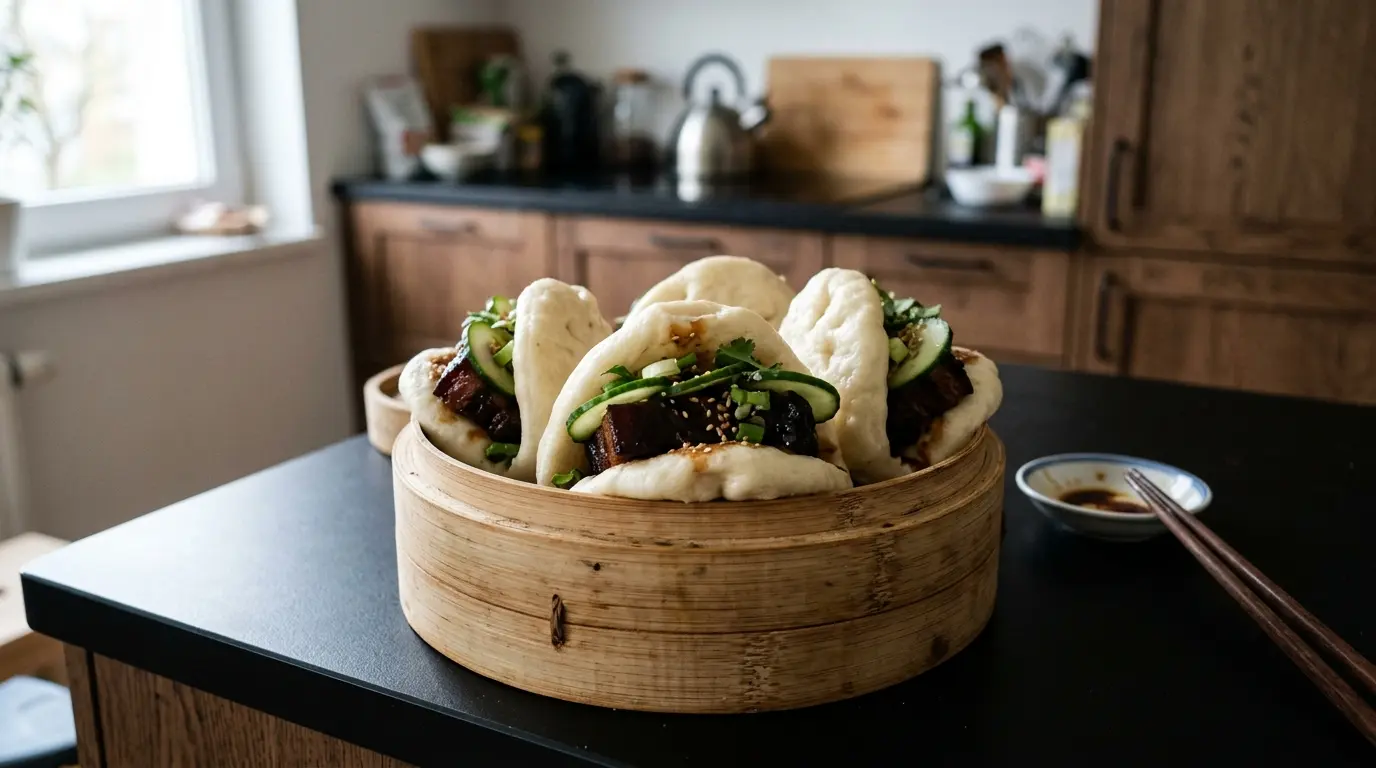
Soft, fluffy bao buns with aromatic, long-braised pork and crunchy cucumber are a classic of Chinese street food. In China they’re often eaten in the evening at night markets – a bit like our kiosk baguettes, only in a steamed version. They’re perfect for a house party: everyone can assemble their own bun.
Gua bao comes from Taiwan, where it’s sold as a quick snack at night markets, often filled with hong shao braised pork. In home cooking, people more often use easily available cuts of meat and a simpler steaming method using a regular pot.
These bao buns combine pillowy, homemade steamed bread with deeply flavored, slow-braised pork and quick-pickled cucumber, giving you a full street food experience at home. They’re interactive to serve, fun to assemble and feel special without requiring restaurant equipment.
Why this version works
- The ratio of liquid to flour gives a soft yet stable dough that doesn’t collapse or turn rubbery after steaming.
- Thoroughly searing the pork before braising builds a deep, rich sauce without using stock cubes.
- Lightly pickled cucumber in a simple brine adds acidity and crunch, balancing the richness of the meat.
- Baking paper under the buns prevents sticking and misshaping the bao while they steam.
Chef's tips
Don’t rush the dough kneading – well-kneaded dough gives the buns their signature fluffy texture. Make sure the liquid for the dough is only lukewarm so the yeast isn’t killed. When steaming, avoid lifting the lid too often, as sudden temperature changes can cause the buns to collapse. If you’re cooking for a crowd, you can braise the meat a day ahead and just reheat it gently while you steam fresh buns.
How to serve
Serve the bao family-style on a large platter with bowls of braised pork, marinated cucumber, chopped chives and extra sauces (soy, chili oil, sriracha, mayonnaise). Add a simple Asian-style slaw or a light cucumber salad on the side. They also pair well with iced green tea or light lager.
Watch out for
- Don’t cut the first rise short – underproved dough will give dense, heavy bao.
- Towards the end of braising, watch that the sauce doesn’t reduce to a dry glaze; if it thickens quickly, lower the heat.
- When steaming, don’t pack the bao too tightly, or they’ll stick together and tear easily when you try to separate the delicate dough.
Substitutions
- You can replace pork shoulder with pork neck, keeping a similar braising time.
- Rice vinegar can be swapped for apple cider vinegar, using slightly less.
- You can replace part of the milk in the dough with water, but the buns will be a bit less aromatic.
Ingredients
- flour standard cake flour or all-purpose - 400 g
- instant yeast 1 standard sachet; you can use 20 g fresh yeast - 7 g
- sugar - 20 g
- lukewarm milk or water the liquid should be slightly warm, not hot - 220 ml
- oil e.g. rapeseed or sunflower - 2 tablespoon
- boneless pork shoulder pork neck can also be used - 600 g
- light soy sauce - 5 tablespoon
- dark soy sauce if you don’t have it, just add more light soy sauce - 1 tablespoon
- brown sugar white sugar also works - 1 tablespoon
- fresh ginger piece about 3 cm - 20 g
- garlic - 3 clove
- water for braising the meat or light stock - 250 ml
- fresh cucumber long greenhouse cucumber - 1 piece
- rice vinegar can be replaced with apple cider vinegar - 2 tablespoon
- sesame oil optional, for aroma - 1 tablespoon
- chives chopped - 3 tablespoon
- salt to taste, carefully – soy sauce is salty
Preparation
- Put the flour, yeast and sugar into a bowl and mix. Pour in the lukewarm milk or water and 1 tablespoon of oil. Knead by hand for 8–10 minutes, until the dough is smooth and elastic and doesn’t stick strongly to your hands. If needed, add a little flour or water.
- Shape the dough into a ball, place it in a bowl, cover with a cloth and leave in a warm place for 1 hour, until it roughly doubles in volume.
- In the meantime, prepare the meat: cut the pork into cubes about 2–3 cm. Peel the ginger and slice it thinly, finely chop the garlic.
- Heat 1 tablespoon of oil in a frying pan or a pot with a thick bottom. Fry the meat for 5–7 minutes over fairly high heat, until lightly browned on all sides.
- Add the ginger and garlic and fry for another 1–2 minutes, stirring, until you can smell a strong aroma, but do not burn the garlic.
- Pour in the light and dark soy sauce, add the brown sugar and water or stock. Stir, bring to the boil, then reduce the heat to low, cover and braise for 60–70 minutes, until the meat is very tender and falls apart easily. If there is too much liquid, cook uncovered for a few minutes at the end until the sauce thickens slightly.
- Cut the cucumber into thin lengthwise strips. In a bowl, mix the cucumber with rice vinegar, a pinch of salt and sesame oil. Set aside for at least 10 minutes to lightly marinate.
- Turn the risen dough out onto the counter, knead briefly and divide into 10–12 equal pieces. Shape each into a ball, then roll out into an oval about 0.5 cm thick.
- Brush each oval very lightly with oil and fold in half like a pocket. Place on pieces of baking paper, leaving space between them. Cover with a cloth and leave for 20 minutes to rise again.
- Bring water to the boil in a steamer pot or a wok with a steaming insert. Arrange the buns on the rack over the boiling water (on the paper), cover with a lid and steam for 10 minutes, until they have clearly risen and are springy.
- Gently open the ready buns, add a portion of hot braised pork, a few strips of cucumber and sprinkle with chives. Serve immediately while they are still warm and soft.
Storage
No storage information available for this dish.
Homemade bao may seem intimidating, but once you make them once, they quickly become a go-to for casual gatherings. The dough is forgiving, and the long braise for the pork mostly takes care of itself. It’s one of those dishes that always impresses guests and invites everyone to get involved at the table.