Bun cha – grilled pork with rice noodles Recipe
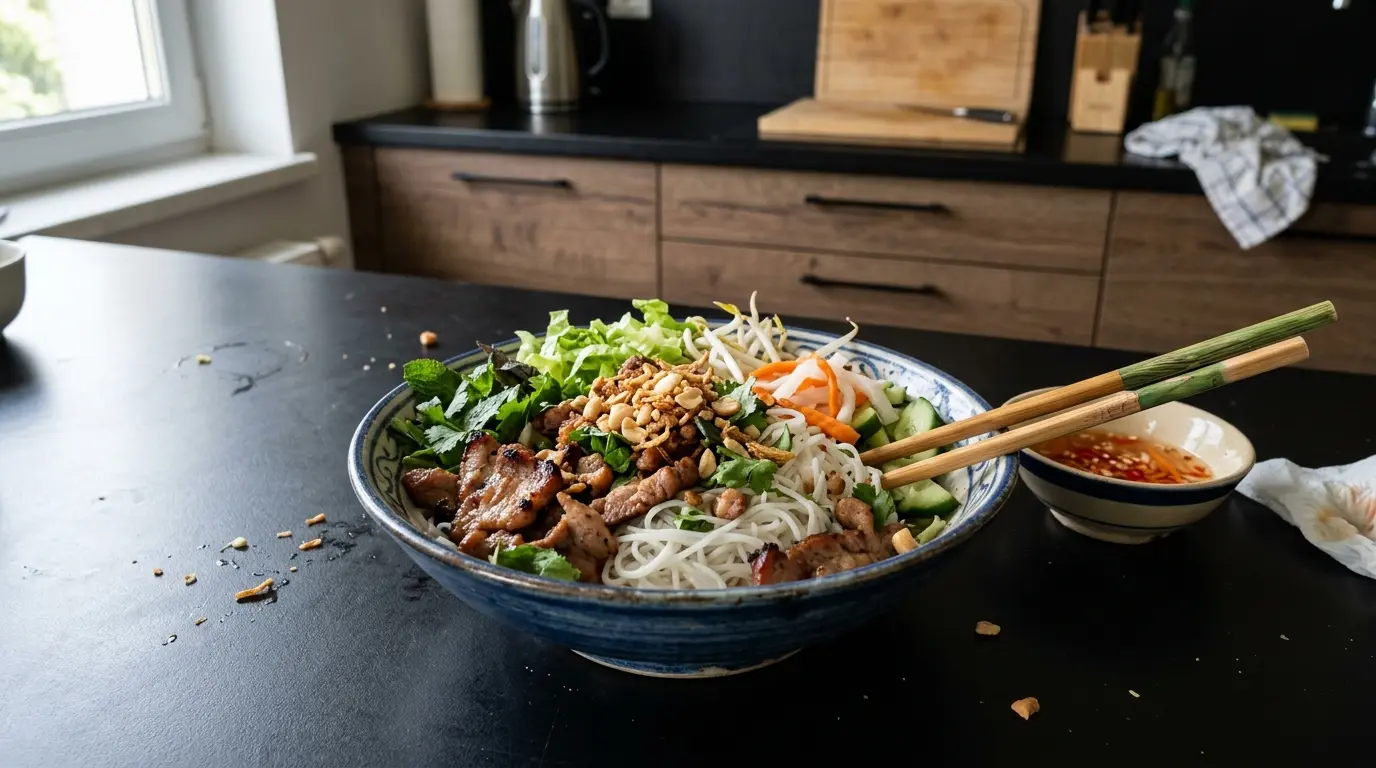
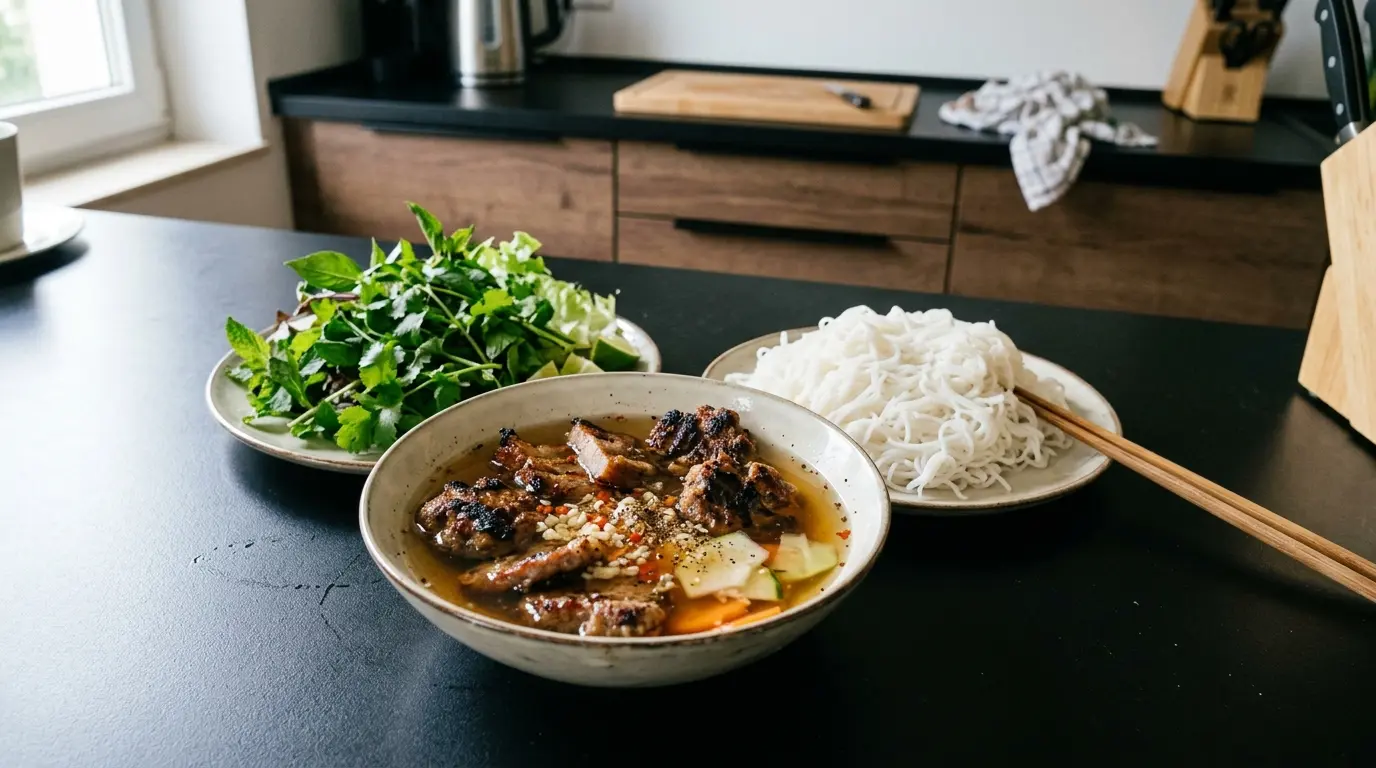
Bun cha is a dish eaten for lunch in Hanoi, often at small street grills where the smell of roasting pork mixes with the aroma of herbs. A plate comes with a bowl of rice noodles, fresh vegetables and small pork patties in a light, sweet-and-sour sauce. It’s something between a salad and a main course – filling, yet very fresh.
Bun cha combines juicy grilled pork, fresh herbs and crunchy vegetables with delicate rice noodles and a lively sweet-sour-salty sauce. It is refreshing yet satisfying and brings the flavors of Hanoi’s street food straight to your table.
Chef's tips
Don’t make the patties too thick – smaller, flatter ones cook more evenly and get a nicer char. Taste the sauce and adjust it to your liking; it should be bold and slightly stronger than you think, as it seasons the whole dish.
How to serve
Serve all components separately on the table so everyone can build their own bowl: noodles, herbs, lettuce, vegetables, meat and sauce. It’s perfect for a relaxed lunch with friends.
Ingredients
- pork shoulder minced or very finely chopped - 400 g
- pork belly in thin slices - 200 g
- rice noodles thin, vermicelli type - 300 g
- garlic finely chopped - 4 clove
- shallot finely chopped - 2 piece
- sugar preferably brown - 3 tablespoon
- fish sauce - 6 tablespoon
- rice vinegar or lime juice - 4 tablespoon
- water for the sauce - 150 ml
- carrot cut into thin sticks - 1 piece
- lettuce e.g. butterhead, torn into pieces - 1 head
- fresh coriander - 1 handful
- fresh mint - 1 handful
- vegetable oil for brushing the meat - 2 tablespoon
- black pepper freshly ground - 0.5 teaspoon
- chili pepper optional, for the sauce - 1 piece
Preparation
- Put the minced pork shoulder into a bowl with 2 tablespoons of fish sauce, 1 tablespoon of sugar, half of the chopped garlic, the shallot and pepper. Knead with your hand for 2–3 minutes until the mixture becomes sticky. Form small, flat patties about the size of a large walnut.
- Mix the pork belly slices with 1 tablespoon of fish sauce, 1 tablespoon of sugar and 1 clove of garlic. Set aside together with the patties for at least 20 minutes (you can also leave them in the fridge for a few hours).
- Cook the rice noodles according to the instructions on the package: usually it is enough to pour boiling water over them for 3–5 minutes until they soften. Drain and rinse with cold water so they don’t stick together.
- Tear the lettuce into smaller pieces, cut the carrot into thin sticks or slices, rinse and dry the herbs and remove the leaves from the thick stems.
- Prepare the sauce: in a bowl mix the water, 3 tablespoons of fish sauce, 1–2 tablespoons of sugar and the rice vinegar. Stir until the sugar dissolves. Add the remaining garlic and, if you like, finely chopped chili pepper. The sauce should be sweet-sour-salty – adjust the proportions to your taste.
- Heat a grill pan or regular pan over medium-high heat. Lightly brush with oil. Fry the patties for 3–4 minutes on each side until nicely browned and cooked through.
- In the same pan fry the pork belly slices for 2–3 minutes on each side until lightly browned and glossy from the sauce.
- Put a portion of noodles into bowls, arrange the lettuce, carrot and herbs next to them. Place the hot patties and pork belly slices on top.
- Serve with a small bowl of sauce on the side – before eating, pour it over the meat and noodles or dip each bite into it.
Storage
Store the components separately: meat, noodles, vegetables and sauce. Reheat only the meat before serving and assemble fresh bowls so the herbs and lettuce stay crisp.
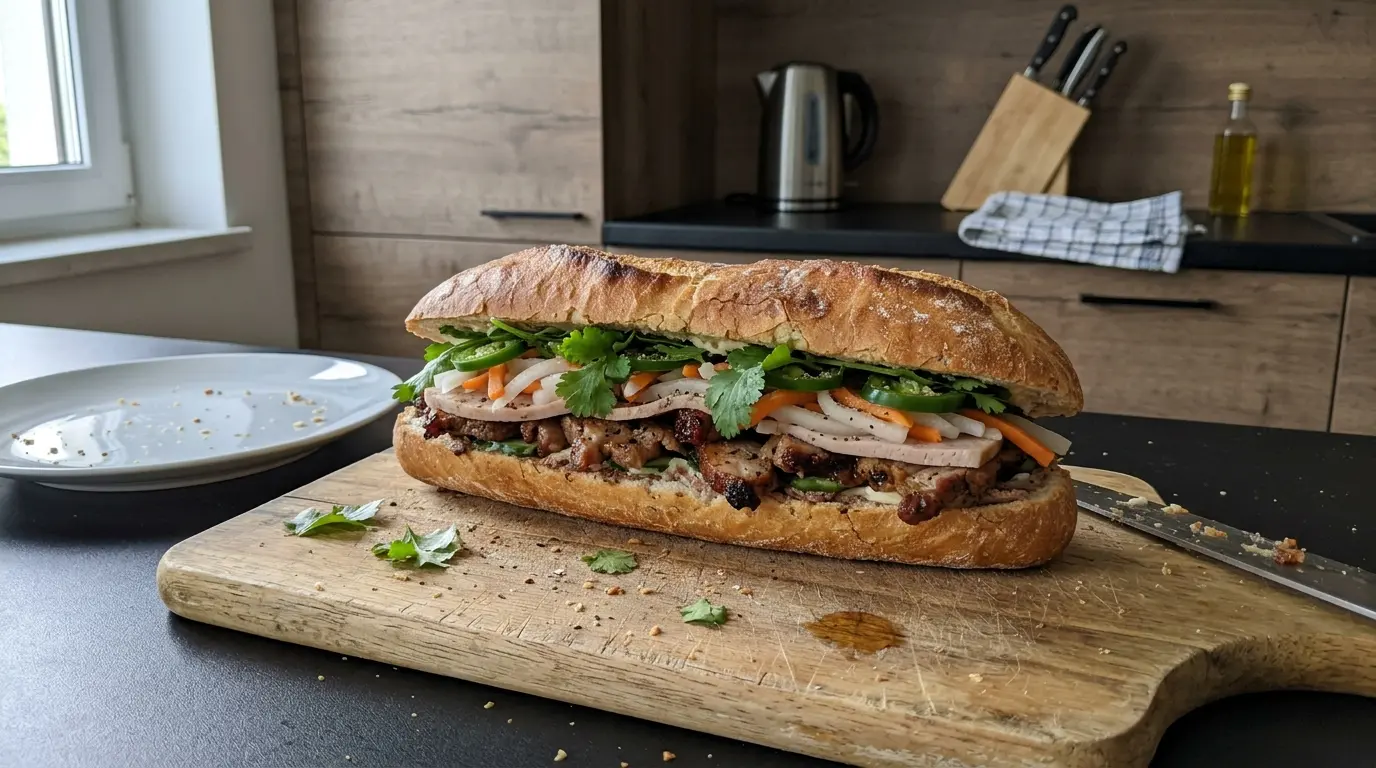
I like to add plenty of fresh herbs and a bit more vinegar to the sauce for extra brightness. Leftover patties taste great the next day in a sandwich or rice bowl.