Banh xeo – crispy Vietnamese pancakes with shrimp Recipe
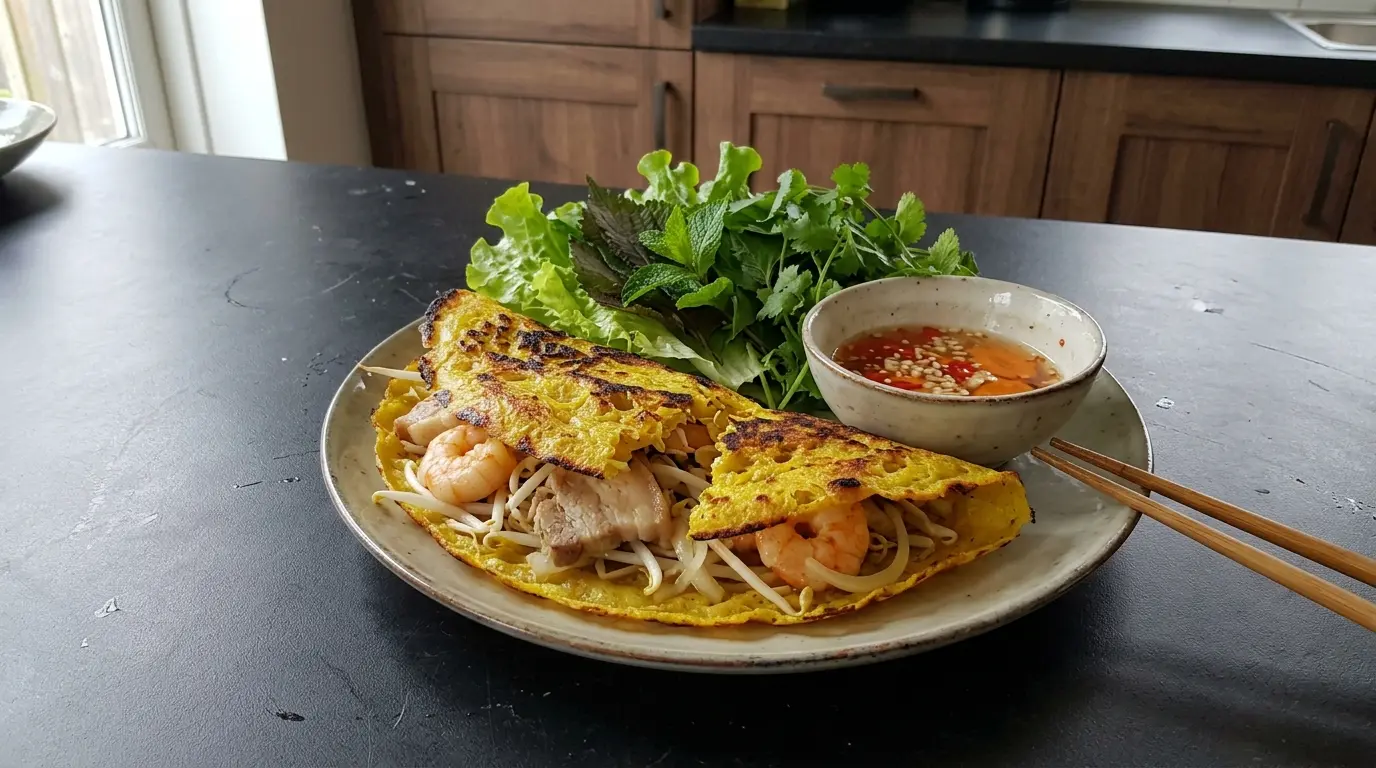
Thin, large rice flour pancakes filled with shrimp, meat and bean sprouts, eaten wrapped in lettuce leaves with herbs. They’re somewhere between a pancake and a crispy crepe, popular as a snack for family and friends gatherings. Perfect for DIY “assemble at the table” dinners, because everyone can tear off a piece and season it to their liking.
This dish brings the atmosphere of Vietnamese street food to your table: ultra-crispy, fragrant pancakes that everyone assembles themselves with fresh herbs and a bright, tangy dipping sauce.
Chef's tips
Use a non-stick pan and don’t rush the frying – the batter needs time to dry out and crisp at the edges. If the pancakes aren’t crispy enough, your batter may be too thick: add a splash of water and mix again.
How to serve
Serve with extra lime wedges, sliced chili and a simple cucumber salad. For a larger spread, pair with fresh spring rolls or a light Vietnamese soup.
Ingredients
- rice flour - 200 g
- turmeric about 1 teaspoon, for color - 3 g
- coconut milk well shaken - 200 ml
- water for the batter, add a bit more if needed - 250 ml
- salt about 3/4 teaspoon, for the batter - 4 g
- shrimp peeled, tails removed, medium size - 200 g
- pork belly cut into thin strips - 150 g
- onion cut into thin slices - 1 piece
- mung bean sprouts rinsed and drained - 150 g
- vegetable oil for frying the pancakes - 60 ml
- lettuce leaves for wrapping - 1 head
- fresh mint leaves, for serving - 10 g
- fresh coriander leaves, for serving - 10 g
- fish sauce for the dipping sauce - 40 ml
- water for the sauce - 40 ml
- sugar about 1 tablespoon, for the sauce - 15 g
- lime juice for the sauce - 1 piece
- garlic finely chopped, for the sauce - 2 cloves
- chili pepper finely chopped, for the sauce - 1 piece
Preparation
- In a bowl, mix the rice flour, turmeric and salt. Add the coconut milk and water, whisking until you get a smooth, fairly thin batter, similar to batter for thin crepes. Set aside for 15 minutes.
- Rinse and pat dry the shrimp. Cut the pork belly into thin strips, the onion into thin slices, rinse the sprouts and drain them in a sieve.
- Prepare the sauce: in a small bowl mix the fish sauce, water, sugar and lime juice. Stir until the sugar dissolves. Add the chopped garlic and chili and set aside to let the flavors meld.
- Heat a 24–26 cm pan over medium-high heat. Add 1–2 tablespoons of oil and spread it over the whole surface.
- Add a few strips of pork belly and some onion to the hot pan. Fry for 2–3 minutes, until the pork is lightly browned and the onion softens.
- Add a few shrimp and fry for another minute, until they start to turn pink.
- Stir the batter before making each pancake. Pour a portion of batter into the pan, quickly tilting it to spread a thin layer over the entire surface. The batter should be very thin.
- On one half of the pancake, scatter a handful of mung bean sprouts. Cover the pan with a lid and fry for 2–3 minutes, until the edges of the pancake pull away from the pan and become very crispy, and the bottom is golden.
- Remove the lid and fry for another 1–2 minutes to evaporate excess moisture. Fold the pancake in half, covering the sprouts with the other side. Transfer to a plate and keep warm. Repeat with the remaining ingredients, adding more oil if needed.
- Serve the pancakes with lettuce leaves, mint and coriander. Everyone at the table tears off a piece of pancake, wraps it in a lettuce leaf with herbs and dips it in the sauce.
Storage
The pancakes taste best freshly fried. If you have leftovers, reheat them briefly in a dry pan to crisp them up again. Store the sauce in the fridge and use within 1–2 days.
The first time I tried banh xeo in Vietnam, I was surprised by how thin and crispy they were compared to our usual pancakes. Recreating them at home turned out to be easier than I expected – the key is a very thin batter and patience at the pan.