Turkish Roasted Carrot Salad with Yogurt and Walnuts Recipe
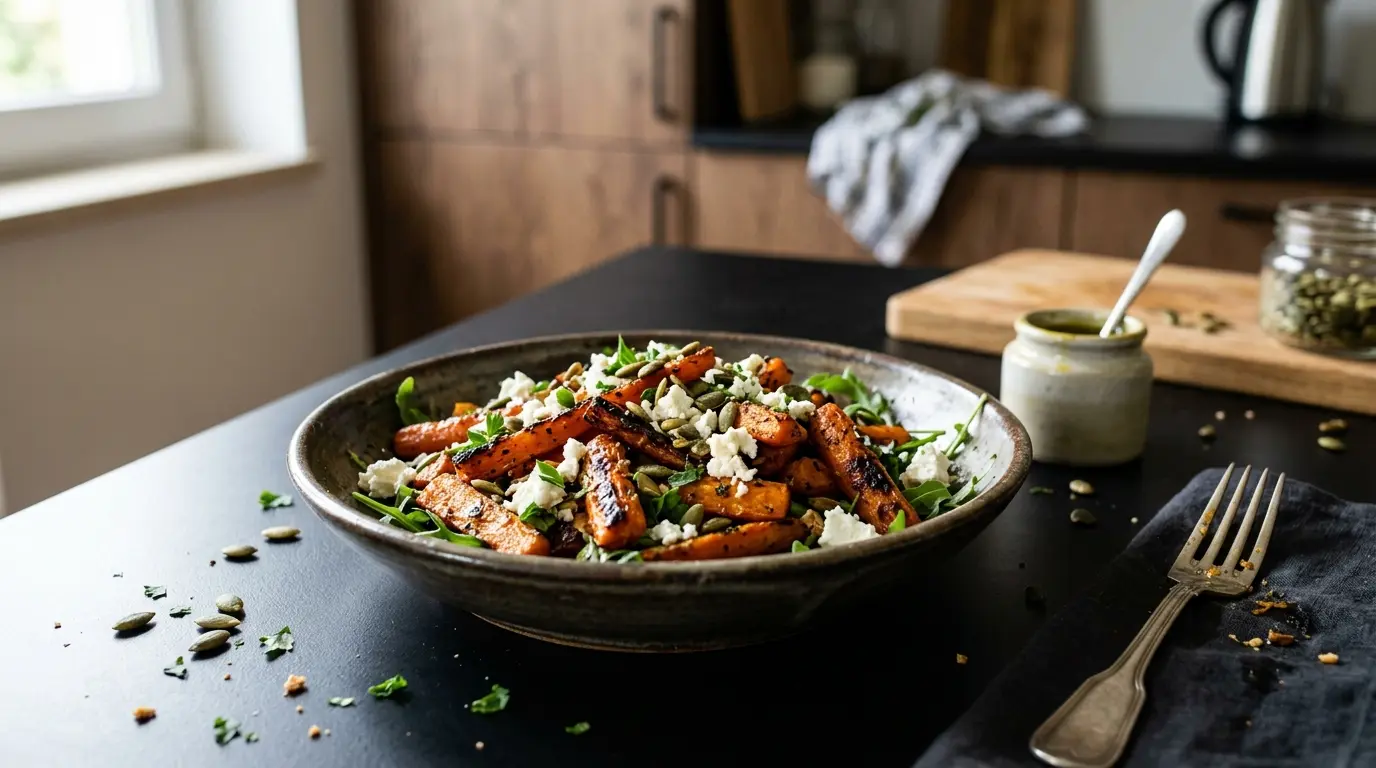
Sweet roasted carrots, thick garlicky yogurt, and crunchy nuts come together in a surprisingly addictive salad. In Turkey, similar dishes often appear as meze – small plates meant for sharing at the table. At home, it works great as a side dish for dinner or a light supper with a slice of bread.
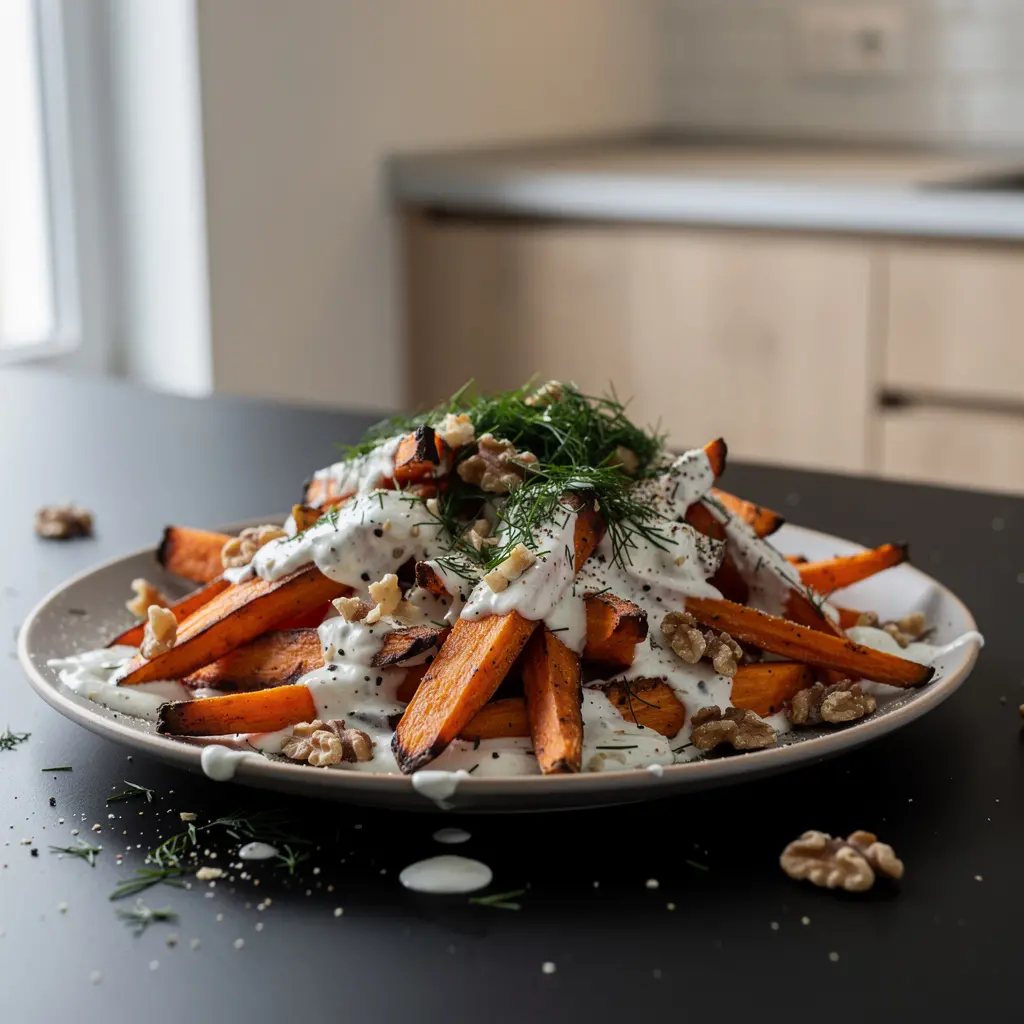
This salad combines simple ingredients into a dish with layered textures and flavors: sweet caramelized carrots, tangy garlicky yogurt, and crunchy toasted nuts. Inspired by Turkish meze, it works both as a side and as a light main, and is easy to adapt with different spices and nuts.
Chef's tips
Use thick, full-fat yogurt so the sauce stays creamy and doesn’t turn watery when mixed with the warm carrots. Don’t skip toasting the nuts – it deepens their flavor and makes the salad much more aromatic. You can also roast the carrots a bit longer for more caramelization if you prefer a deeper, sweeter taste.
How to serve
Serve on a large platter as part of a meze-style spread with hummus, baba ghanoush, olives, and flatbread. As a side dish, it pairs well with grilled chicken, lamb, or baked fish. For a light meal, serve with warm pita or crusty sourdough bread and a simple green salad.
Ingredients
- carrot - 500 g
- olive oil - 2 tablespoons
- yogurt - 250 g
- garlic - 1 clove
- lemon - 0.5 pieces
- walnuts - 30 g
- dill - 2 tablespoons
- salt - 0.75 teaspoons
- black pepper - 0.25 teaspoons
Preparation
- Preheat the oven to 200°C (top and bottom heat).
- Peel the carrots and cut them into thick sticks or diagonal slices about 1 cm thick so they roast evenly.
- Transfer the carrots to a baking tray lined with baking paper, drizzle with olive oil, sprinkle with half of the salt, and mix thoroughly with your hands so every piece is coated in oil.
- Roast for 25–30 minutes, stirring once halfway through, until the carrots soften and are lightly browned on the edges.
- Meanwhile, prepare the sauce: put the yogurt into a bowl, add the garlic pressed through a garlic press, the juice from half a lemon, the remaining salt, and the pepper. Mix and taste, adjusting the seasoning if needed.
- Roughly chop the walnuts and toast them in a dry pan for 2–3 minutes, until fragrant. Set aside to cool.
- Finely chop the dill.
- Let the roasted carrots cool slightly (they can still be warm), then mix them with half of the yogurt sauce and half of the dill.
- Transfer the salad to a plate or bowl, drizzle with the remaining sauce, and sprinkle with the walnuts and the rest of the dill. Serve slightly warm or at room temperature.
Storage
No storage information available for this dish.
This salad is a great way to turn basic carrots into something that feels special and restaurant-worthy, without much effort. It’s also very forgiving: you can serve it warm or at room temperature, make it ahead, and easily adjust the seasoning to your taste.