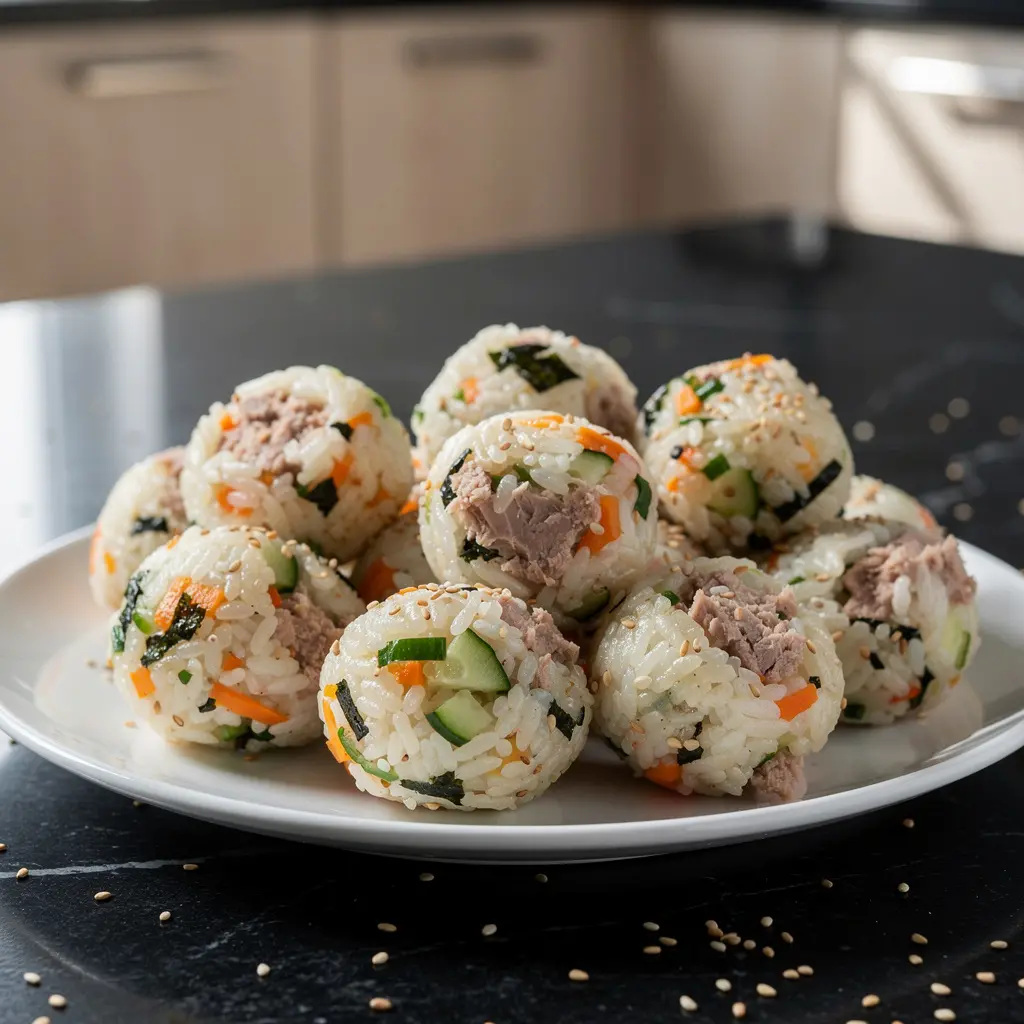
Tuna and Vegetable Gimbap Recipe
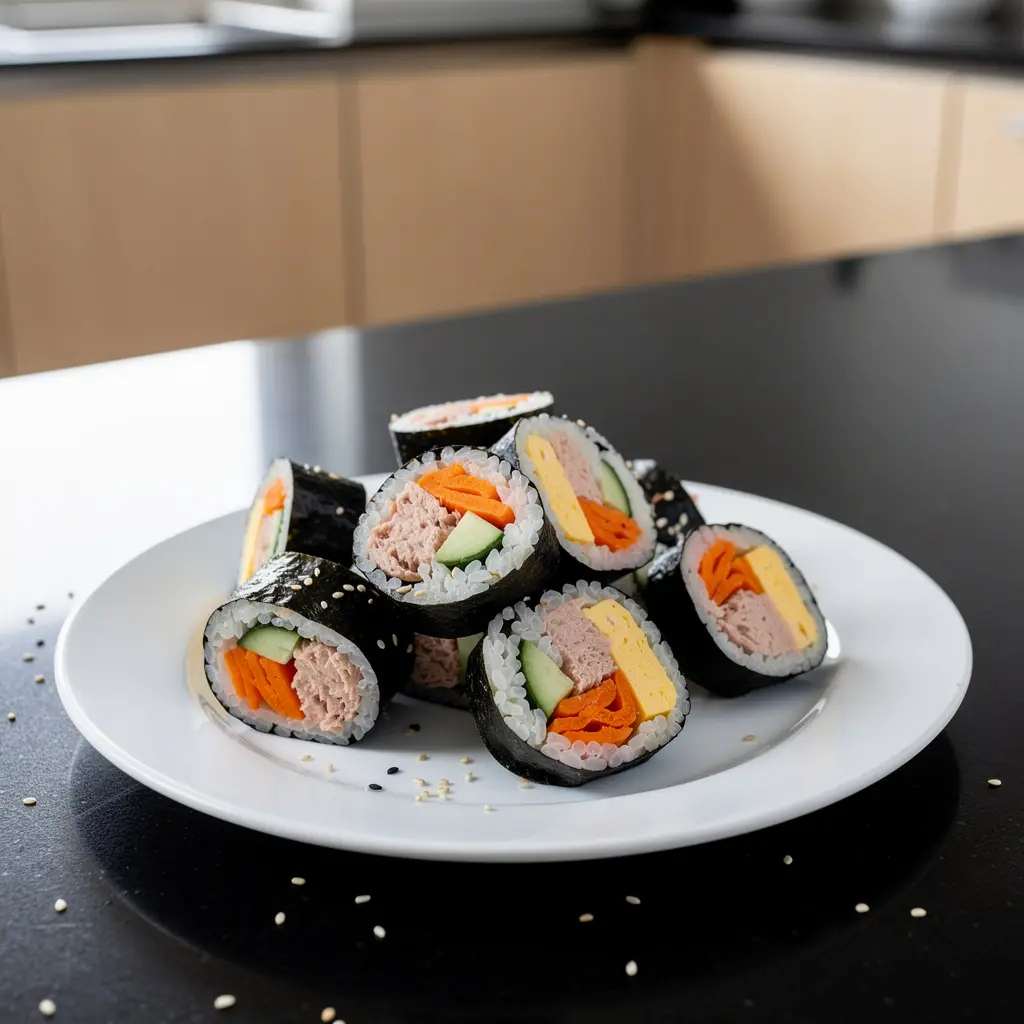
Gimbap is a Korean rice roll that looks a bit like sushi, but has a completely different character – more sesame, oil, and bold fillings. In this version, the filling is creamy tuna with vegetables, perfect for a lunchbox or a trip. In Korea, these rolls are often packed for children to take to school or for picnics by the Han River.
This gimbap combines creamy tuna with crunchy vegetables and fragrant sesame oil, giving you a satisfying, portable meal that feels both comforting and fresh. It’s designed to hold its shape and taste great even after a few hours in a lunchbox or on the road.
Chef's tips
Rinse the rice thoroughly and don’t skip the resting time after cooking – this is key for the right texture and easy rolling. When filling the rolls, avoid overstuffing; a moderate amount of filling makes the gimbap neater and easier to slice. Keep a small bowl of water nearby to moisten your fingers and the knife so the rice doesn’t stick.
How to serve
Serve the gimbap as a light lunch with a simple miso soup or a bowl of kimchi on the side. For a picnic, pack the rolls whole, wrapped in plastic, and slice them on the spot. On a party platter, alternate the tuna gimbap with vegetable-only rolls for variety in color and flavor.
Ingredients
- rice short-grain, sushi rice or glutinous rice - 300 g
- water for cooking the rice - 360 ml
- rice vinegar - 2 tablespoons
- salt for the rice and filling - 0.5 teaspoons
- sesame oil 1 tablespoon for the rice, 1 for the filling - 2 tablespoons
- tuna in brine, drained (about 150 g after draining) - 1 can
- mayonnaise - 2 tablespoons
- carrot medium - 1 piece
- cucumber long, fresh - 0.5 pieces
- pickled radish danmuji yellow, in strips; can be replaced with another pickled radish - 80 g
- egg for a thin omelette - 2 pieces
- vegetable oil for frying the carrot and eggs - 1 tablespoon
- nori dried seaweed sheets for rolling - 5 sheets
- sesame seeds toasted, for sprinkling - 1 tablespoon
- black pepper for the tuna filling - 0.25 teaspoons
Preparation
- Rinse the rice thoroughly in cold water, changing the water several times until it is almost clear. Drain, cover with the measured water, cover with a lid and cook over low heat for about 12–15 minutes, until it absorbs the water. Remove from the heat and leave covered for another 10 minutes.
- Transfer the hot rice to a wide bowl, add the rice vinegar, 1 tablespoon of sesame oil and a pinch of salt. Gently mix with a spatula while fanning the rice (e.g. with a piece of cardboard) so it cools faster and becomes slightly sticky but not wet.
- Peel the carrot and cut into thin matchsticks. Heat the vegetable oil in a pan, add the carrot and fry for 3–4 minutes over medium heat, stirring, until slightly softened but still firm. Let cool.
- Wash the cucumber, cut it in half lengthwise, scoop out the soft seedy center with a teaspoon, and cut the rest into long strips. If the pickled radish is not already cut, slice it into long strips.
- Beat the eggs in a small bowl with a pinch of salt. In the pan used for the carrot, add a little more oil if needed, pour in the eggs and cook over low heat until a thin omelette forms. When the top sets, flip to the other side for 10–20 seconds. Let cool and cut the omelette into long strips.
- Drain the tuna very well, transfer to a bowl, add the mayonnaise, 1 tablespoon of sesame oil, salt and pepper. Mix into a fairly smooth, creamy paste.
- Place a sheet of nori shiny side down on a bamboo mat or clean board. Spread a thin layer of rice over the bottom two-thirds of the sheet, leaving the top strip of nori empty (about 2 cm). Gently press the rice with wet fingers so it adheres.
- Place a strip of tuna paste in the center of the rice, then arrange strips of carrot, cucumber, pickled radish and omelette alongside. Starting from the bottom, roll everything up tightly, using the mat to help, and lightly moisten the top empty strip of nori with water so it seals.
- Gently press the finished roll in the mat so it is even. With a sharp knife moistened with water, cut the roll into pieces about 1.5–2 cm wide. After every few cuts, wipe the knife with a damp cloth to prevent the rice from sticking.
- Arrange the gimbap pieces on a plate, sprinkle with sesame seeds and serve immediately or pack into a takeaway box.
Storage
No storage information available for this dish.
I love this version of gimbap because it’s forgiving and practical: the tuna filling is easy to make from pantry staples, and the rolls stay tasty for hours. It’s one of those recipes that quickly becomes a go-to for busy days, school lunches, or casual get-togethers.