Tagliatelle with white wine chicken ragù Recipe
This light, pale ragù made from ground chicken and white wine is a more delicate cousin of classic Bolognese sauce. Italians often serve this kind of sauce for Sunday family lunch. It’s full of vegetables and herbs, with a gentle yet deep flavour – perfect when you’re craving something lighter than rich beef.
White ragù made with poultry is a popular home-style variation of classic ragù in Emilia-Romagna, more commonly found in trattorias than in touristy restaurants. The wine and soffritto stay the same; only the type of meat and the overall richness of the sauce change.
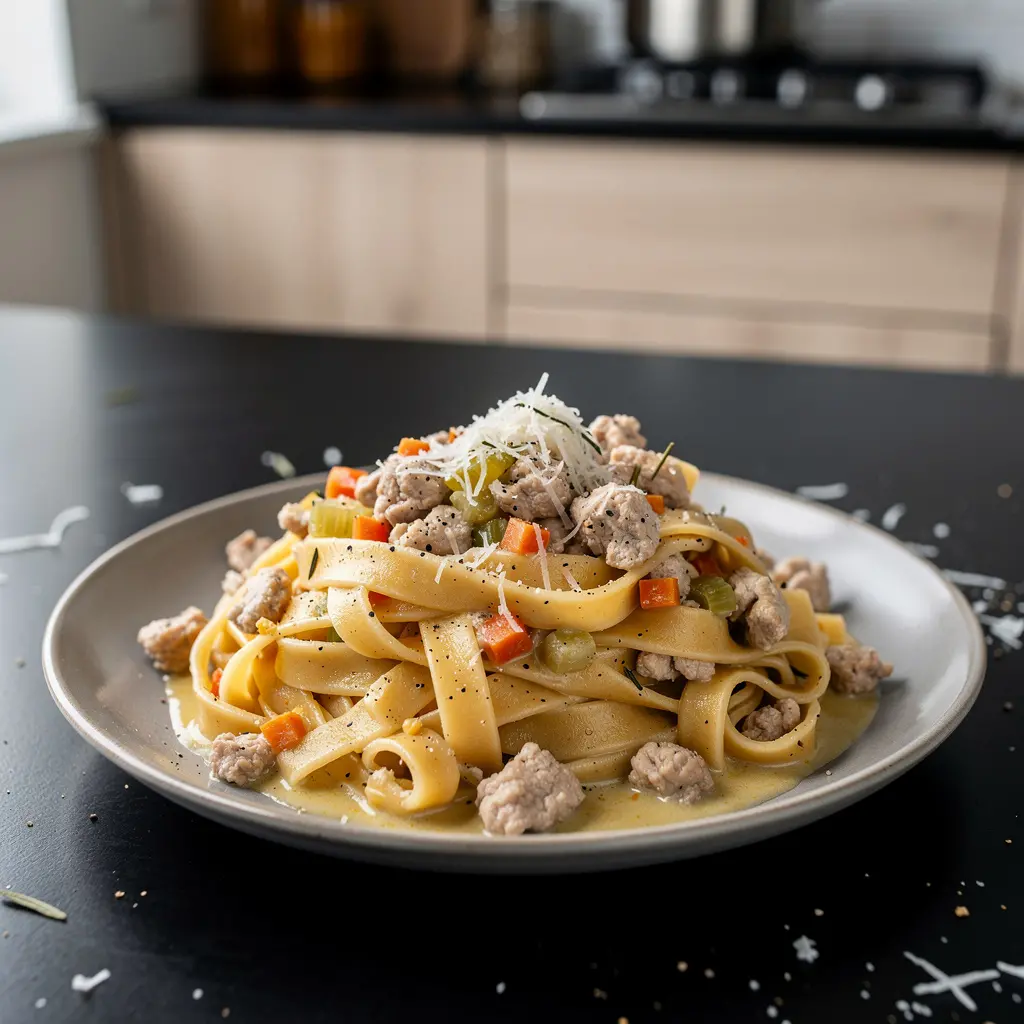
Tagliatelle with white wine chicken ragù is a lighter, more delicate answer to classic Bolognese – there are more vegetables and herbs here than heavy meat. White wine and cream create a subtle, velvety sauce in which the chicken is tender but doesn’t overpower the overall flavour. It has a Sunday-lunch feel, yet it’s light enough to enjoy in the middle of the week without feeling overly full.
Why this version works
- Finely chopped soffritto melts into the sauce, building a flavor base instead of leaving noticeable chunks of vegetables.
- A wide pan makes it easier to evaporate the wine and stock, so the sauce thickens naturally instead of relying on very high heat.
- Gradually adding pasta water lets you control the texture precisely and get a sauce that really clings to the tagliatelle.
- Cream added at the end rounds out the flavor but doesn’t have time to split or burn.
Chef's tips
I brown the chicken over fairly high heat until it takes on a little colour – if it releases too much water and starts stewing, the sauce will taste bland. Don’t rush the vegetable soffritto: give the carrot, celery and onion at least 8–10 minutes to soften and sweeten, because they build the depth of flavour. After adding the white wine, I always let it reduce for a while until it no longer smells strongly of alcohol, and only then do I add the stock and the remaining ingredients.
How to serve
This ragù is perfect for a Sunday family lunch when you want to serve something ‘special’ but not overly heavy – serve it on wide plates with plenty of sauce and freshly grated Parmesan. To drink, choose the same dry white wine you used for cooking, such as Pinot Grigio, or a light red if you’re serving it in the evening. As a side, a bowl of mixed leaf salad with a simple vinaigrette and a few roasted carrots from the oven is all you need.
Watch out for
- If the meat releases a lot of liquid and starts boiling, raise the heat and stir until the moisture evaporates – otherwise the ragù will taste flat.
- Don’t cut the wine-reduction time short; if it still smells strongly of alcohol, the sauce will be harsh and unbalanced.
- Over-reducing the stock will make the sauce pasty – keep it at a gentle simmer, not a vigorous boil.
Ingredients
- tagliatelle or other long egg pasta - 350 g
- ground chicken preferably from thighs, they’re juicier - 400 g
- carrot finely diced - 1 piece
- stalk of celery finely chopped - 1 piece
- onion finely chopped - 1 piece
- dry white wine can be replaced with chicken stock - 150 ml
- chicken or vegetable stock - 300 ml
- heavy cream 30% optional, for a gentle creaminess - 80 ml
- olive oil - 3 tablespoons
- garlic clove finely chopped - 1 piece
- fresh rosemary or thyme chopped or dried - 1 teaspoon
- bay leaf - 1 piece
- grated Parmesan for serving - 40 g
- salt and pepper (to taste)
Preparation
- Finely dice the carrot, celery and onion. Finely chop the garlic.
- In a large frying pan or wide pot, heat the olive oil over medium heat. Add the carrot, celery and onion. Fry for 8–10 minutes, stirring often, until the vegetables soften and lightly brown at the edges.
- Add the garlic and fry for 1 more minute, until it becomes very fragrant.
- Add the ground chicken. Break it up with a spoon so there are no large lumps. Fry for 6–8 minutes, until the meat turns pale and is no longer pink.
- Pour in the white wine, stir and cook for 3–4 minutes over medium heat, until most of the liquid evaporates.
- Add the stock, bay leaf and rosemary or thyme. Reduce the heat and simmer gently, uncovered, for 20–25 minutes, until the sauce thickens noticeably. Stir from time to time.
- If using cream, pour it in towards the end of cooking and simmer for another 3–4 minutes, until the sauce is slightly creamy. Season to taste with salt and pepper. Remove the bay leaf.
- Meanwhile, cook the pasta in plenty of salted water until al dente. Reserve about 1 cup of the pasta cooking water.
- Transfer the cooked pasta to the pan with the sauce. Add a few tablespoons of the pasta water and toss for 1–2 minutes over low heat, until the sauce coats the pasta thoroughly.
- Serve immediately, sprinkled with grated Parmesan and freshly ground black pepper.
Storage
Leftover sauce keeps well in the fridge for up to 3 days or in the freezer for up to 3 months. Reheat gently, adding a splash of water or stock if it has thickened too much. It’s also delicious served the next day with rice, polenta or on toasted bread as a quick dinner.
I most often make this ragù when I know someone will ‘drop by for a moment’ on Sunday afternoon and suddenly there are five people at the table instead of two – I always have chicken in the freezer and there are always some vegetables in the fridge drawer. I like to save a small portion of the sauce for Monday, because it tastes fantastic with rice or on toast as a quick supper.