Sweet Pumpkin Rice Congee Recipe
Sweet pumpkin rice congee is a delicate Chinese breakfast or dessert, especially popular in autumn. It resembles a very thin rice pudding, but cooked in water or plant-based milk, with soft pieces of pumpkin and a gentle sweetness. Perfect when you need something soothing for the stomach and warming.
Congee is an everyday breakfast in China and an easily digestible dish for children or people recovering from illness. Pumpkin versions are popular in autumn, when sweet varieties with deep orange flesh appear at the markets.
This sweet pumpkin rice congee combines the lightness of traditional Chinese rice porridge with the natural sweetness and creaminess of pumpkin. It is gentle on the stomach, naturally comforting, and easy to adapt to both breakfast and dessert versions.
Why this version works
- Short‑grain rice gives natural creaminess without any need for blending.
- Pumpkin cooked from the very beginning partly breaks down, sweetening and thickening the congee.
- Adding coconut milk at the end prevents burning and curdling.
- Gradually adding water makes it easy to adjust the consistency to the time of day.
Chef's tips
Use short-grain rice such as sushi or risotto rice for the creamiest texture. Cut the pumpkin into small, even cubes so it softens at the same time as the rice. Stir regularly, especially towards the end of cooking, to prevent sticking and to help the rice break down into a silky porridge.
How to serve
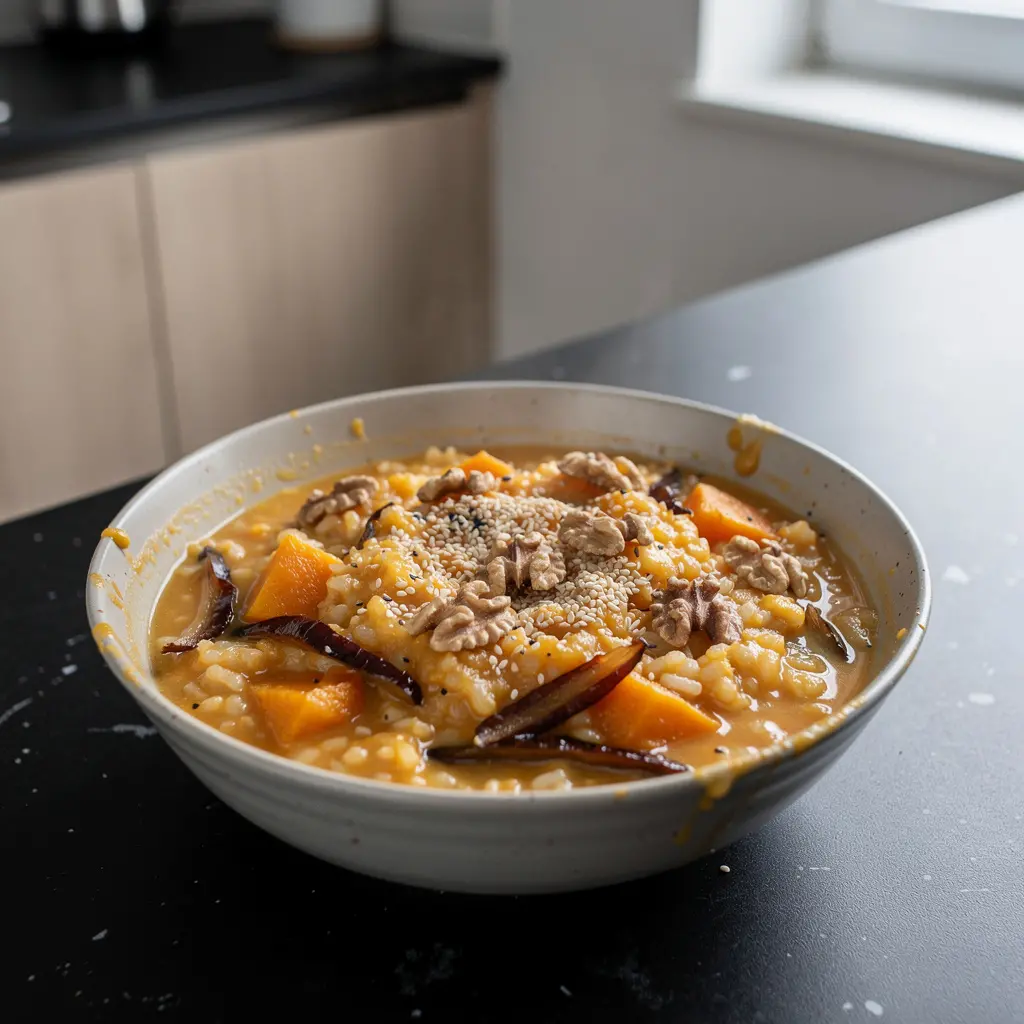
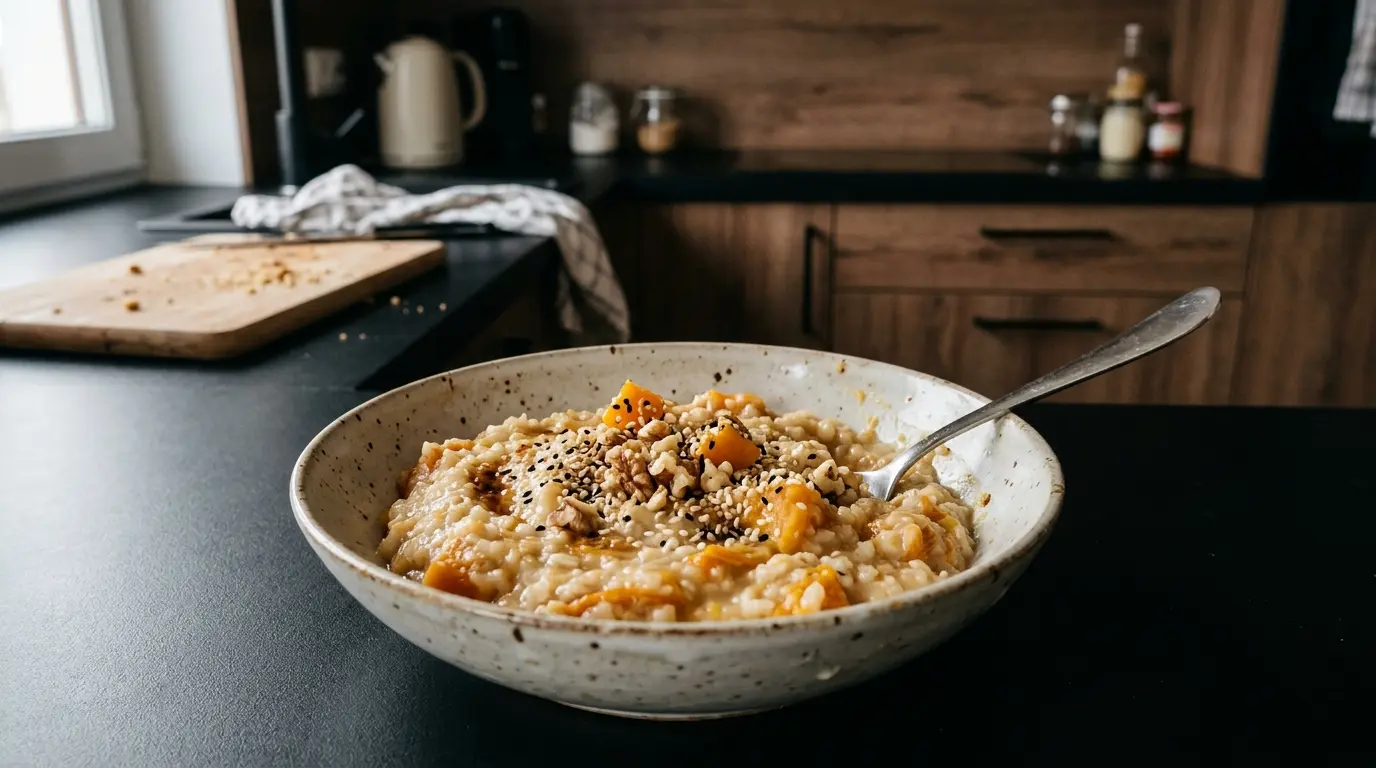
Serve in small bowls, topped with sesame seeds or chopped nuts for crunch. For extra richness, drizzle with a little coconut milk or condensed coconut milk. Fresh fruit like banana or mango, or dried fruit such as raisins or goji berries, works very well on top.
Watch out for
- If you hear a gentle sizzling sound, stir immediately and lower the heat – it means the rice is starting to catch on the bottom.
- Don’t add all the sugar at once, because pumpkin can be very sweet and it’s easy to end up with a cloying congee.
- If the heat is too high, the rice will be soft on the outside but still firm in the centre.
Substitutions
- You can replace coconut milk with cow’s milk or oat drink, bearing in mind the flavour will be milder.
- Fresh ginger can be swapped for a pinch of ground ginger added at the end of cooking.
- Butternut squash is a good substitute for Hokkaido; choose varieties with intensely orange flesh.
Ingredients
- rice can be sushi or risotto rice - 100 g
- pumpkin, peeled and deseeded e.g. Hokkaido or butternut squash - 250 g
- water or replace part of the water with plant-based milk - 900 ml
- sugar or to taste, you can use honey (add at the end) - 2 tablespoon
- salt enhances the flavor - 1 pinch
- milk optional, for creaminess - 100 ml
- fresh ginger small slice, optional - 5 g
- sesame seeds or chopped nuts for sprinkling, optional - 1 tablespoon
Preparation
- Rinse the rice several times in cold water, gently rubbing the grains until the water is almost clear. Drain in a sieve – the rice should be moist and slightly sticky, without a puddle of water underneath.
- Peel the pumpkin (you can leave Hokkaido unpeeled), remove the seeds and fibres. Cut the flesh into cubes of about 1.5 cm – some pieces can be smaller, they will break down faster. Peel the ginger and cut it into 1–2 thick slices.
- Put the rice into a heavy‑bottomed pot, add the pumpkin and ginger. Pour in 900 ml of water, stir so the rice doesn’t stick to the bottom, and set over medium heat until the first bubbles start to appear on the surface.
- When the congee comes to a boil, reduce the heat to very low. Cook for 35–40 minutes with the lid slightly ajar, stirring every few minutes and scraping the bottom – the congee is at a good stage when the rice has clearly swollen and the pumpkin softens with a light press of the spoon.
- If the mixture becomes too thick while cooking, add 50–100 ml of hot water at a time, stirring thoroughly after each addition. The consistency should resemble a thick, pourable soup – when you ladle it onto a spoon, the congee should slowly flow off, not sit there in a lump.
- Near the end of cooking, mash some of the pumpkin against the sides of the pot with a spoon. The liquid will become creamier and more intensely orange, with individual pumpkin cubes still visible but very soft.
- Remove the ginger slices. Add 1–1.5 tablespoons of sugar, a pinch of salt and the coconut milk. Stir over low heat for 3–5 minutes, until the milk is well incorporated and the surface of the congee is slightly glossy, without a separate layer of fat.
- Taste and sweeten more if needed – remember that the sweetness will intensify slightly as it cools. If you use honey or maple syrup, take the pot off the heat and stir in the sweetener at the end to preserve its aroma.
- Serve the congee hot in bowls, topped with toasted sesame seeds or chopped nuts. The finished congee should gently spread when you tilt the bowl and stay silky, without compact, dry clumps of rice.
Storage
No storage information available for this dish.
This congee is perfect for chilly mornings or days when you want something simple and soothing. It is also a great way to use up leftover pumpkin and to introduce gentle, lightly sweet flavors to children or anyone with a sensitive stomach.