Swabian Spätzle Pasta with Cheese Recipe
Spätzle is a soft, homemade pasta from southern Germany, especially popular in Swabia. In the cheese version it’s a bit like a cross between dumplings and macaroni and cheese, very filling and ideal for colder days. In Germany it’s often served as a main course or as a side to roasts.
Käsespätzle is one of the most homely dishes of Swabia and the Allgäu, often served in Alpine inns instead of classic pasta. In Germany it is usually made with regional mountain cheeses, and the onions are sometimes served separately on top.
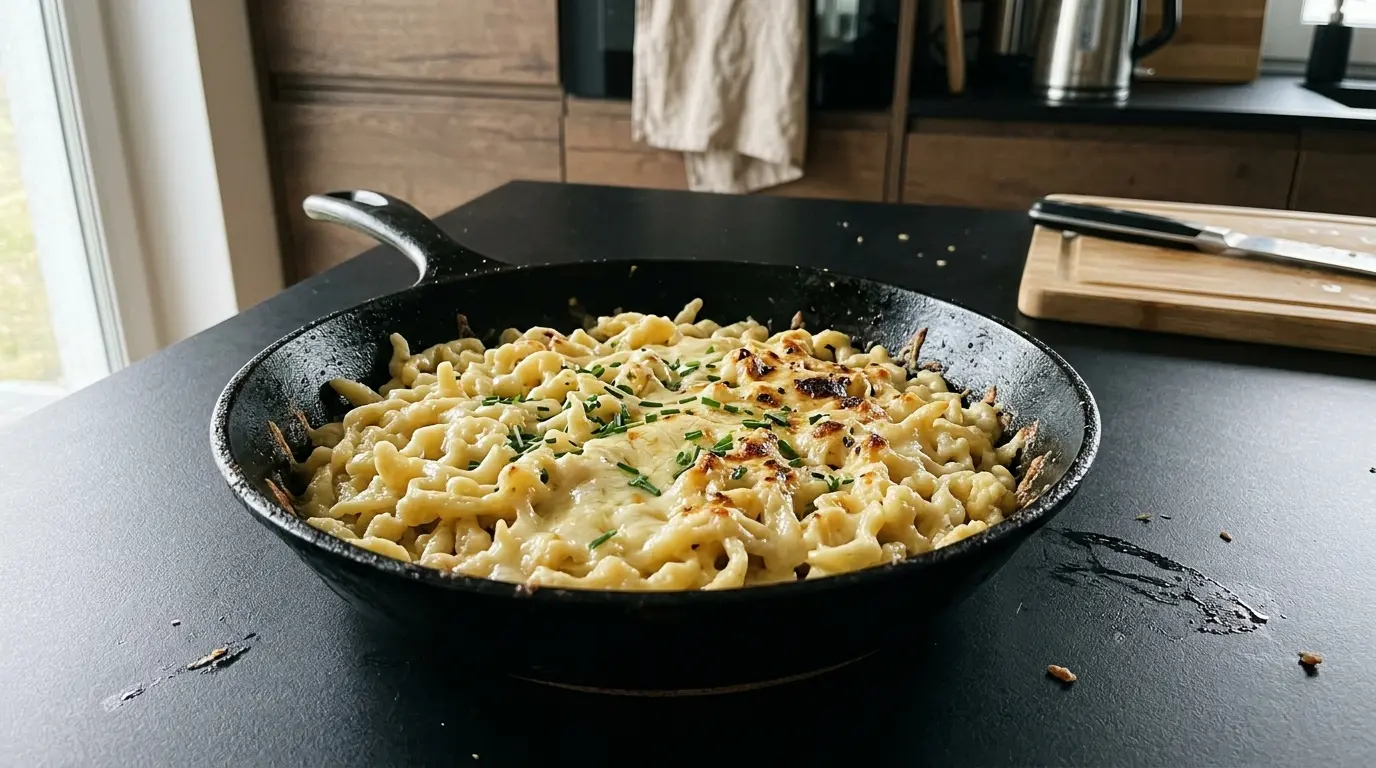
Swabian cheese Spätzle is the essence of southern German comfort food – soft, irregular little dumplings scraped by hand into boiling water, baked with gooey cheese. It’s something between homemade dumplings and mac and cheese, but with a distinct cheesy, buttery character. In the Swabia region it’s treated almost like a national dish, served both on ordinary days and alongside Sunday roasts.
Why this version works
- Long kneading until bubbles appear gives dumplings that are elastic yet soft, so they don’t fall apart in the water.
- Cooking in gently simmering water helps the Spätzle keep their shape and prevents the dough from fraying.
- Freshly, finely grated cheese melts evenly into a stretchy layer instead of clumping.
- Well‑browned but not burnt onions add sweetness and a lightly caramelised aroma that balances the richness of the cheese.
Chef's tips
The Spätzle dough should be thick and elastic yet still slightly pourable – after mixing, beat it vigorously with a spoon until air bubbles start to appear. Drop the dough into well-salted simmering water in batches, using a special Spätzle grater or simply a board and knife; the dumplings are done when they float to the surface. Grate the cheese finely and layer it with the Spätzle so it melts evenly – if you add it all at once, it can clump into one solid block.
How to serve
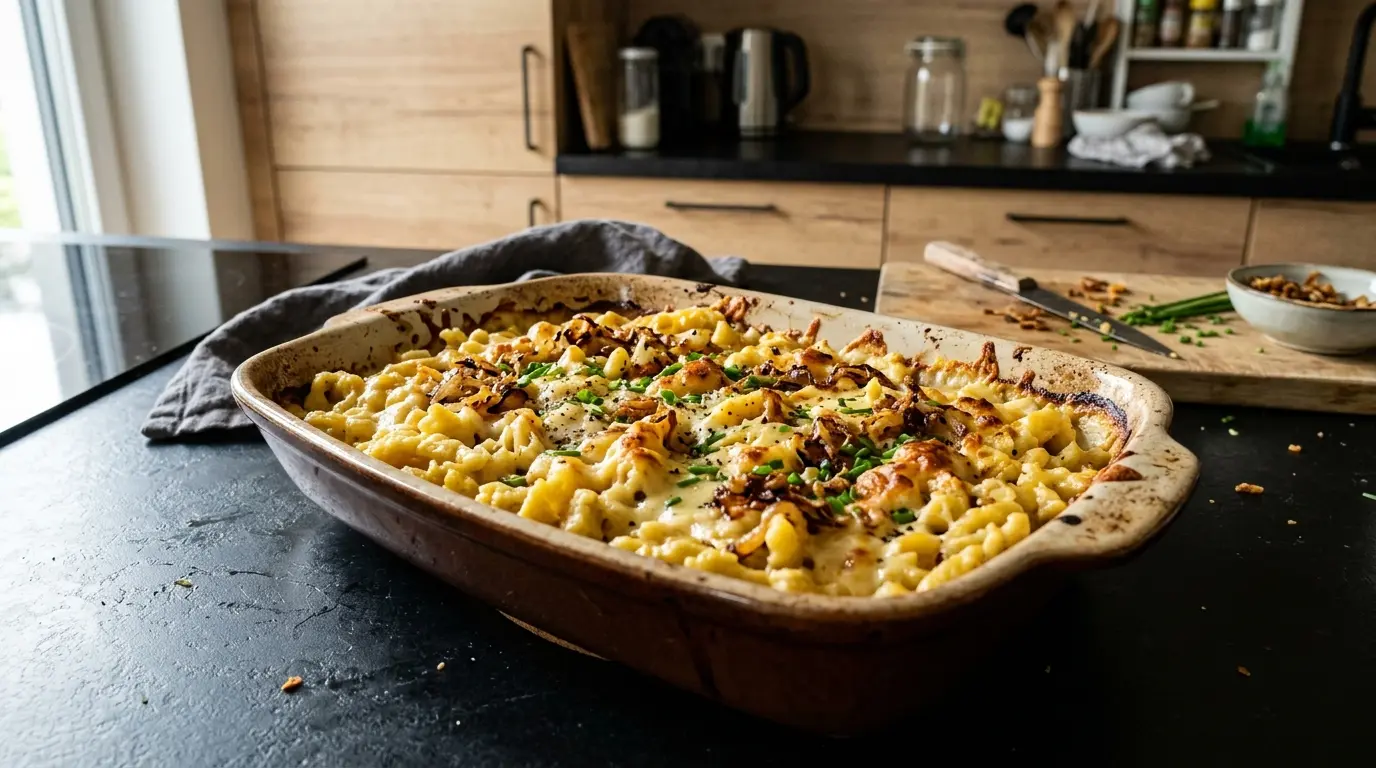
Serve cheese Spätzle hot, straight from the oven or pan, topped with golden sautéed onions and chives. It’s an excellent side dish for roast beef, goulash or braised beef in red wine, but it also works perfectly as a standalone vegetarian main with a green salad and vinaigrette. At my place it most often appears in November, when everyone comes back from a chilly walk dreaming of something really hearty and hot.
Watch out for
- Don’t pour all the dough in at once – you’ll end up with thick, unevenly cooked dumplings with a raw centre.
- Don’t fry the onions over too high a heat; black edges will make the whole bake taste bitter.
- Don’t leave the dish in the oven for too long; once the cheese has melted and is lightly golden, take it out so the dumplings don’t dry out.
- Avoid using pre‑grated cheese from a bag – it contains starch and melts poorly, turning into dry, stringy threads.
Substitutions
- Instead of classic Alpine cheese, use a good Gouda, Emmental or a mix of these cheeses.
- You can partly replace the butter for the onions with clarified butter if you’re worried about burning it.
- You can replace part of the water in the dough with milk for a slightly milder flavour and a lighter colour of the dumplings.
Ingredients
- wheat flour - 300 g
- egg medium - 4 piece
- water lukewarm - 80 ml
- salt for the dough, plus for the cooking water - 1 teaspoon
- yellow cheese well-melting, grated, e.g. Gouda or Emmental - 200 g
- butter - 40 g
- onion medium - 2 piece
- black pepper to taste
- chives chopped, optional - 2 tablespoon
Preparation
- Put the flour and salt into a large bowl. Add the eggs and most of the water, then stir with a spoon for 5–7 minutes, until the dough is smooth, thick and falls from the spoon in a thick, springy ribbon with no flour lumps.
- Continue to beat the dough vigorously for 1–2 minutes, until small air bubbles appear and the dough starts to pull away from the sides of the bowl. If it is very stiff and rubbery, add 1–2 tablespoons of water. Leave to rest for 5 minutes.
- Bring a large pot of well‑salted water to the boil. Reduce the heat so the surface is just trembling – a few bubbles only, without a vigorous boil, otherwise the dumplings will come out ragged and may fall apart.
- Place a portion of the dough on a board, Spätzle maker or grater with large holes. Scrape thin strips or droplets of dough straight into the water, using quick, short movements. Work in batches so the dumplings don’t clump together in one spot.
- Cook each batch for 2–3 minutes, until the dumplings float and feel springy when lightly pressed with a spoon, and when cut they are matte in the centre, not glassy and raw. Lift out with a slotted spoon into a sieve; if you’re not baking them straight away, briefly rinse with cold water and toss with a little butter.
- Peel the onions and slice them into thin feathers. Heat the butter in a pan and fry the onions for 8–10 minutes over medium heat, stirring often, until soft, golden and with some light brown edges but no black burnt spots.
- Preheat the oven to 180°C top and bottom heat. Finely grate the cheese just before using so it stays loose. Put a thin layer of hot or slightly warm Spätzle into an ovenproof dish, sprinkle with some of the cheese and some of the onions.
- Repeat the layers until you’ve used up all the ingredients, finishing with a thicker layer of cheese on top so the dumplings are completely covered. Bake for 10–12 minutes, until the cheese has fully melted, the edges start to bubble gently and the top is golden.
- After taking the bake out of the oven, sprinkle with freshly ground black pepper and chopped chives. Serve immediately, while the cheese is still very stretchy and the dumplings are soft and juicy, not dried out.
- If you want a more deeply browned top, switch on the grill for the last 2–3 minutes and watch the cheese closely: it should turn a deep golden colour, but not dark brown or hard like a shell.
Storage
Store cooled cheese Spätzle covered in the fridge for up to 2 days. Reheat in the oven, covered with foil, or in a pan with a splash of water until hot and the cheese is melted again.
The first time I made Spätzle I used a regular vegetable grater instead of a special tool and ended up with drops of dough all over the kitchen – but the flavour made up for the mess. To this day, when I’ve had a rough day, I mix the hot dumplings with a double portion of cheese and eat straight from the pan before anyone can call me to the table.