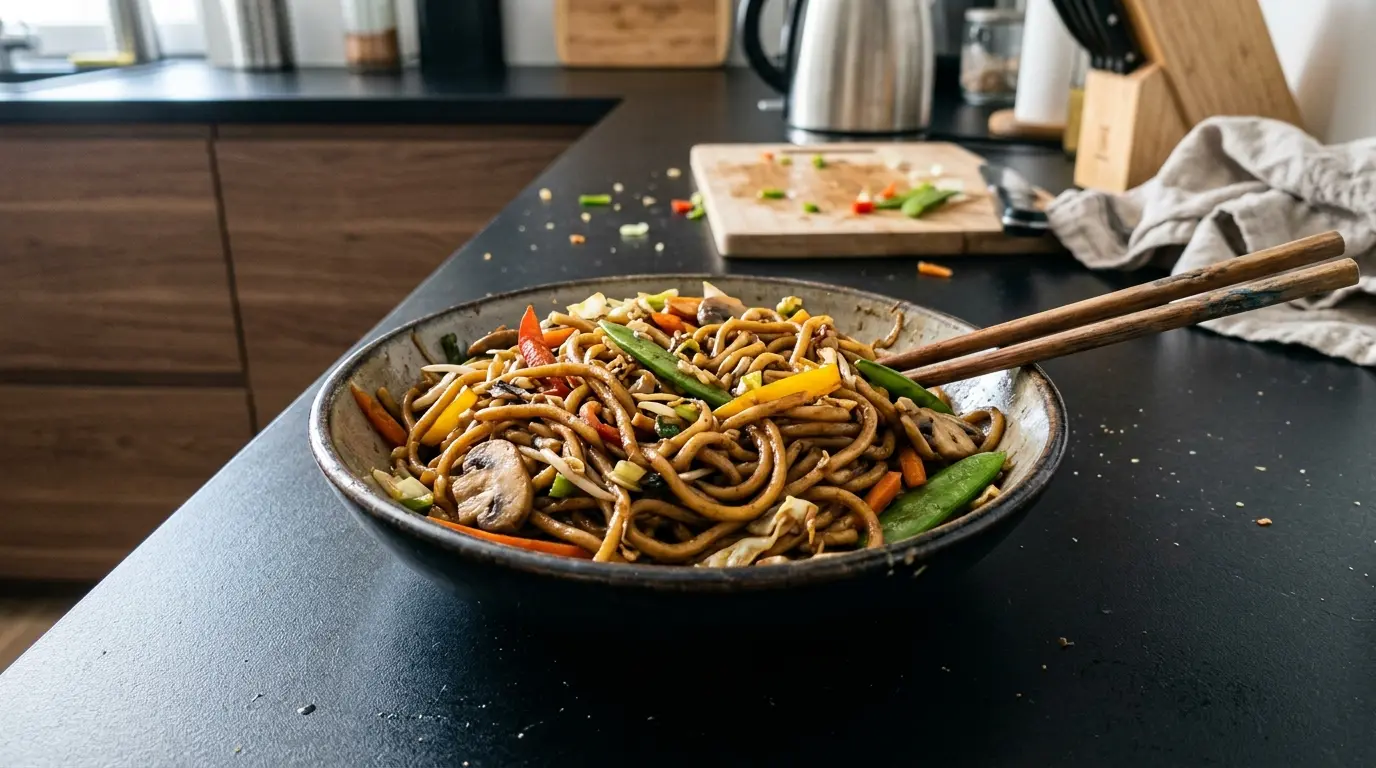
Stir-fried wheat lo mein noodles with vegetables Recipe
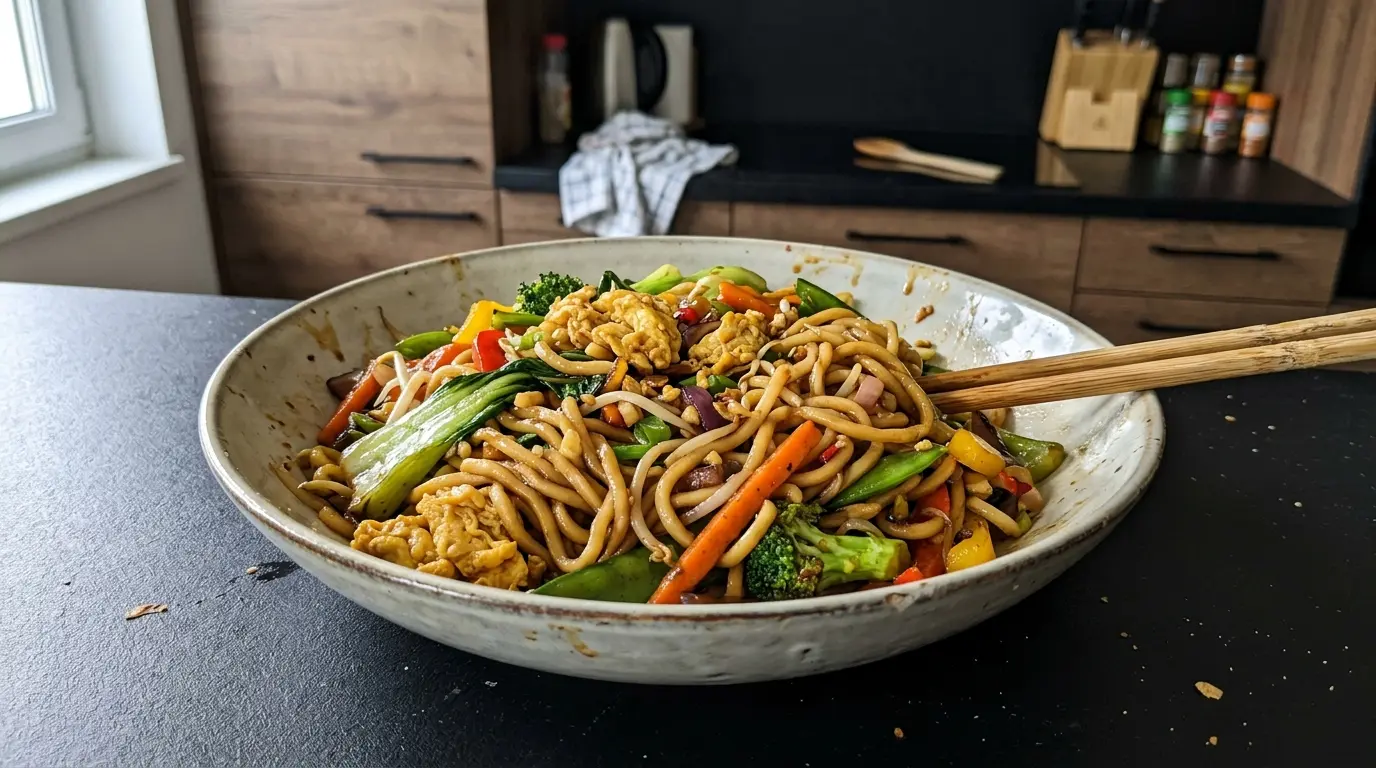
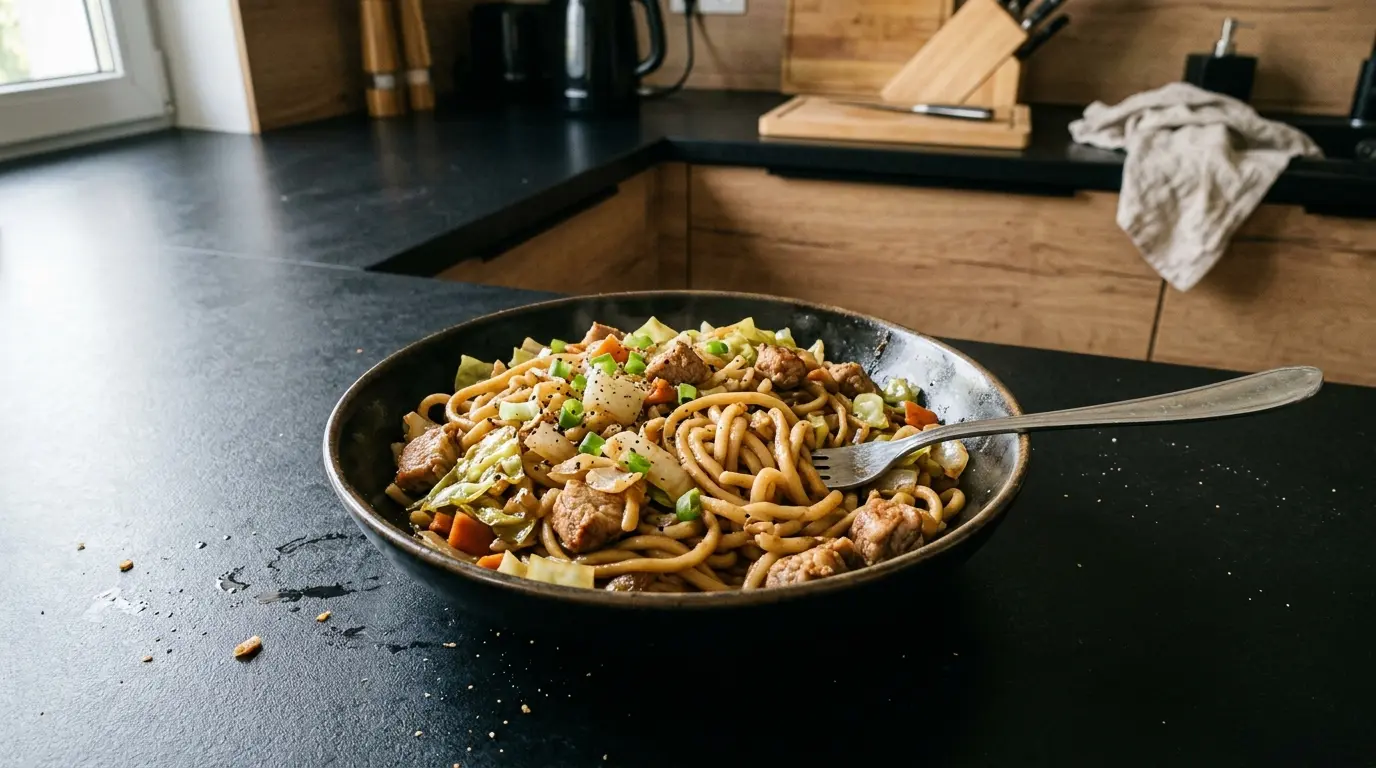
Lo mein is a Chinese stir-fried wheat noodle dish in a mild, slightly sweet sauce. Unlike the more heavily fried chow mein, here the noodles stay softer and springy. It’s a quick one-pan meal, perfect when you have a few leftover vegetables in the fridge.
Lo mein comes from Cantonese cuisine, where fried wheat noodles are a quick street food and a one‑wok lunch. At home it’s often made from leftover vegetables and meat, which translates perfectly to the typical “whatever’s in the fridge” situation in many households.
This lo mein is a flexible, quick stir-fry that turns leftover vegetables into a satisfying meal. The noodles stay pleasantly springy and are coated in a mild, slightly sweet sauce that appeals to both adults and kids.
Why this version works
- Noodles cooked slightly shorter than the package time don’t turn mushy during the quick stir‑fry.
- Mixing the sauce in a bowl beforehand lets you season the noodles fast without burning the sauce in the pan.
- The order of adding vegetables gives a contrast of textures: soft noodles with crunchy add‑ins.
- The ratio of light and dark soy sauce to vinegar gives a classic takeout flavor without being overly salty.
Chef's tips
Prepare and chop all the ingredients before you start cooking – stir-frying goes very fast, and having everything ready helps keep the vegetables crisp and the noodles from overcooking. If the noodles start to stick, add a splash of water or a bit more sauce while stir-frying.
How to serve
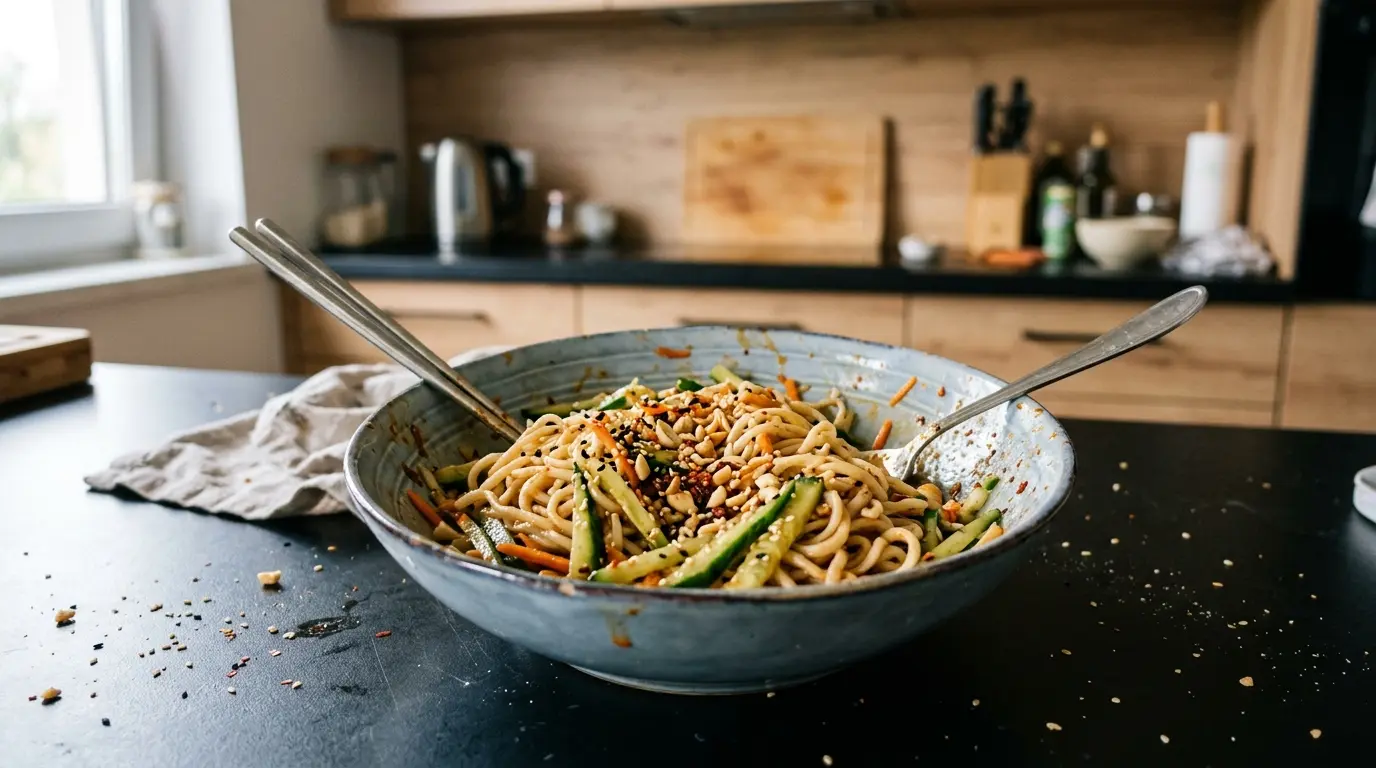
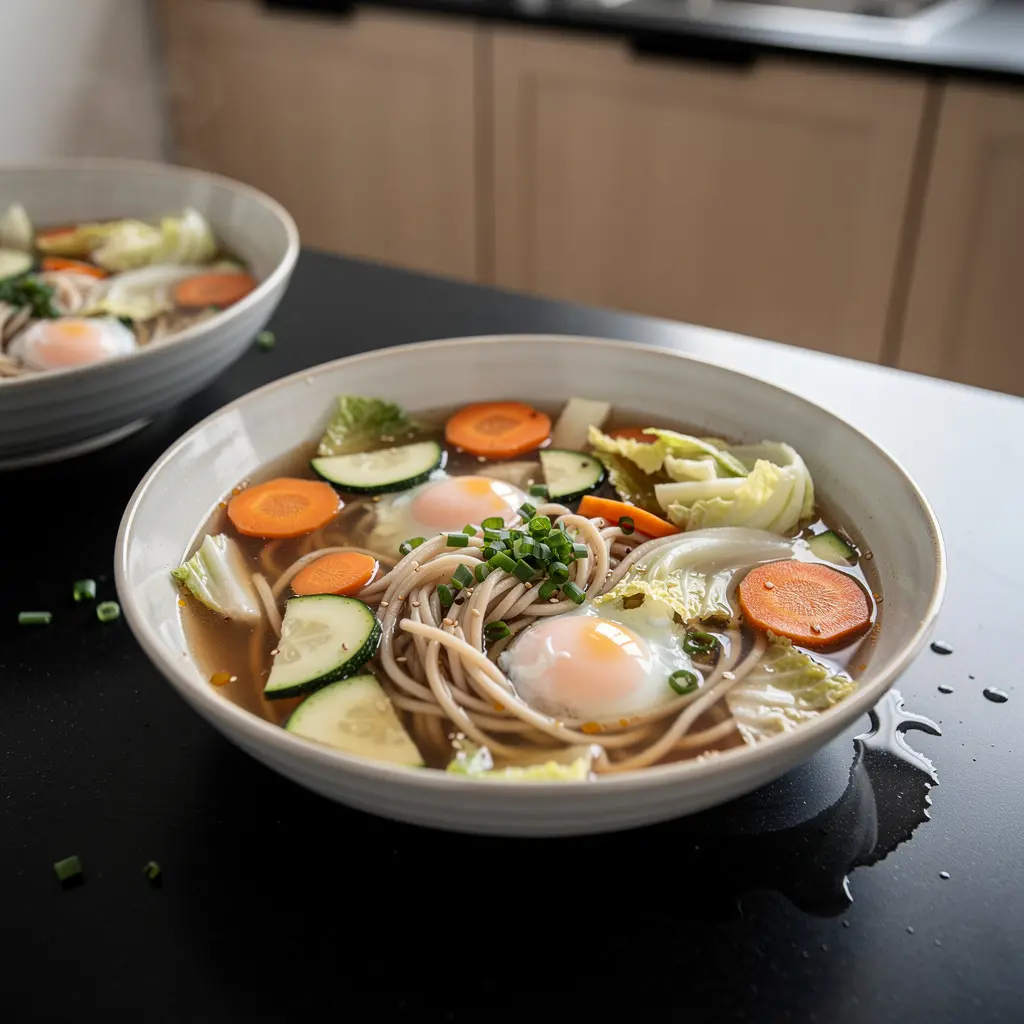
Serve straight from the wok in warm bowls, topped with extra spring onion greens, toasted sesame seeds or a drizzle of chili oil for those who like heat. It pairs well with simple Asian-style cucumber salad or miso soup.
Watch out for
- Don’t overload the pan – if the vegetables release a lot of liquid and start stewing, fry everything in two batches.
- If there’s a puddle of thin sauce at the bottom after adding the liquids, turn up the heat and reduce it, stirring constantly.
- If the noodles start clumping into big lumps, separate them right away with tongs or chopsticks.
Substitutions
- Chinese wheat noodles can be swapped for thicker egg noodles or ramen.
- You can replace napa cabbage with white cabbage, savoy cabbage, or kale cut into thin strips.
- Button mushrooms can be replaced with oyster mushrooms cut into thin strips.
Ingredients
- Chinese wheat noodles or thicker egg noodles you can use udon or spaghetti - 250 g
- carrot cut into thin matchsticks - 1 piece
- bell pepper - 0.5 piece
- cabbage shredded into strips - 150 g
- button mushrooms sliced - 120 g
- onion - 3 piece
- garlic - 2 clove
- oil - 3 tablespoon
- light soy sauce - 3 tablespoon
- dark soy sauce for color, can be omitted - 1 teaspoon
- vinegar - 1 tablespoon
- sugar - 1 teaspoon
- oil for finishing - 1 teaspoon
Preparation
- Cook the noodles in plenty of salted water according to the package instructions, but reduce the cooking time by 1 minute so they are slightly al dente. Drain and briefly rinse with cold water to keep them from sticking.
- Cut the carrot, bell pepper and cabbage into thin strips. Slice the mushrooms. Chop the spring onion, keeping the white and green parts separate. Finely chop the garlic.
- In a small bowl, mix together the light soy sauce, dark soy sauce, rice vinegar and sugar until the sugar dissolves.
- Heat the oil in a large frying pan or wok over high heat. Add the white parts of the spring onion and the garlic and stir-fry for about 30–40 seconds, until fragrant but not browned.
- Add the carrot, bell pepper and mushrooms. Stir-fry over high heat for 3–4 minutes, stirring frequently, until the vegetables soften slightly but remain crisp.
- Add the cabbage and stir-fry for another 2 minutes, until it just wilts.
- Add the cooked noodles. Pour in the prepared sauce and stir-fry for 2–3 minutes, tossing or stirring, until the noodles are heated through and well coated in the sauce.
- Remove the pan from the heat, drizzle with sesame oil and sprinkle with the green parts of the spring onion. Serve immediately.
Storage
No storage information available for this dish.
I like to treat this lo mein as a “clean out the fridge” recipe – almost any crunchy vegetable works as long as it’s cut thinly so it cooks quickly. Adjust the sweetness and saltiness of the sauce to your taste by tweaking the sugar and soy sauce.