Saganaki – Greek Fried Cheese Recipe
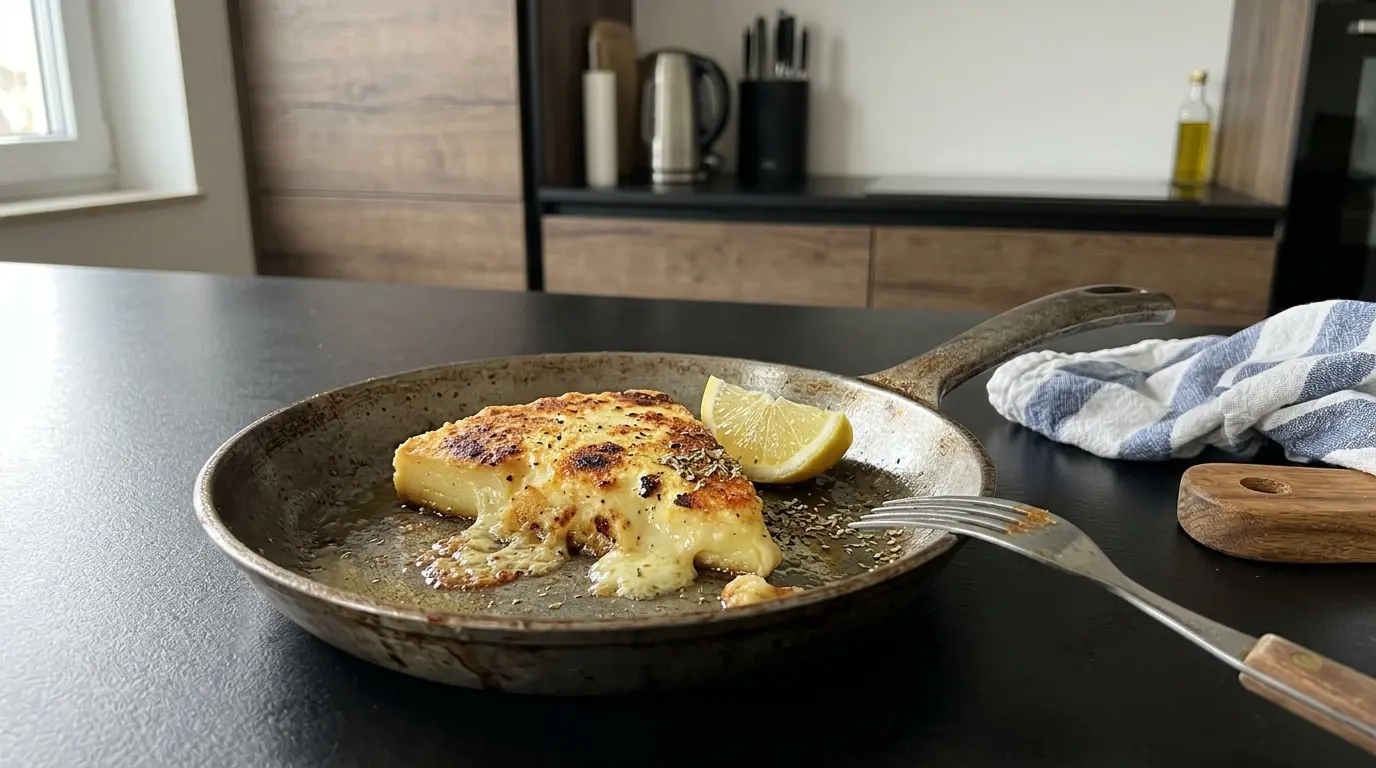
Saganaki is a thick slice of cheese fried until golden and served hot with lemon. In Greek tavernas it’s one of the most popular appetizers for sharing with wine. The flavor is reminiscent of a mix between breaded pan-fried cheese and halloumi, but it’s simpler and more lemony.
In Greek tavernas, saganaki often opens a meal of mezze – small sharing plates served with wine or ouzo. The name comes from the small pan, “saganaki”, in which the cheese is traditionally cooked and served.
This classic Greek taverna dish turns a simple slice of cheese into an indulgent, golden, lemony appetizer that’s ready in just a few minutes and perfect for sharing.
Why this version works
- A simple flour-only coating doesn’t overpower the flavor of the cheese and browns quickly.
- Controlling the temperature of the olive oil with a pinch-of-flour test helps prevent the crust from burning.
- Thick slices of cheese give a creamy center and reduce the risk of the cheese leaking out.
Chef's tips
Use a firm, well-aged cheese that doesn’t melt too quickly, and make sure the slices are thick enough so they keep their shape while frying. Don’t rush flipping the cheese—wait until the underside is nicely set and golden so the coating stays intact.
How to serve
Serve straight from the pan, sizzling hot, with plenty of lemon wedges, olives, fresh bread or pita, and a simple tomato-cucumber salad. It works beautifully as part of a larger mezze spread with dips like tzatziki or hummus.
Watch out for
- If the oil is too cool, the cheese will start to ooze before the coating sets.
- If the heat is too high, the flour will burn quickly while the cheese inside stays hard and cold.
Substitutions
- Instead of kefalotyri, use a firm gouda, graviera or a Balkan-style cheese such as kashkaval.
- If you don’t have olive oil, fry in rapeseed (canola) oil and drizzle the finished dish with a little good extra virgin olive oil.
Ingredients
- hard yellow cheese in a block, e.g. kefalotyri, graviera or a good gouda/emmental-type cheese - 200 g
- wheat flour for coating the cheese - 4 tablespoons
- olive oil or neutral-tasting oil for frying - 3 tablespoons
- lemon cut into wedges for serving - 0.5 pieces
- pepper optional, for sprinkling
Preparation
- Cut the cheese into 2–3 slices, 1.5–2 cm thick, so they are compact and don’t break when you lift them. Slices that are too thin will easily melt and lose their shape as they fry.
- Lightly moisten each slice of cheese with water on both sides – using a brush or a quick dip. The cheese should just be damp, without dripping water, otherwise the flour will clump.
- Pour the flour onto a shallow plate. Dredge each slice of cheese thoroughly, pressing gently so the flour forms a thin, even layer with no gaps. Shake off the excess; the surface should look matte.
- Heat the olive oil in a heavy-bottomed pan over medium-high heat. It’s ready when a pinch of flour sizzles gently right away and turns lightly golden, but the oil is not smoking or darkening.
- Carefully lay the cheese slices in the pan, leaving space between them. Fry for 2–3 minutes, until the bottom is golden and the edges are clearly browned and starting to pull away from the pan. Don’t move the cheese at the beginning.
- When the edges start to release, flip the cheese in one decisive motion using a wide spatula. Fry for another 2–3 minutes, until the second side is golden and the center feels distinctly soft when gently pressed.
- Transfer the fried cheese to a plate lined with paper towel for 10–20 seconds to drain off excess fat. Immediately move it to a serving plate so the center stays molten.
- Generously drizzle the hot saganaki with lemon juice, season with freshly ground pepper and serve at once, before the cheese in the middle starts to set and the coating softens.
Storage
No storage information available for this dish.
I love how little effort saganaki requires compared to how impressive it feels on the table. Once you try it with a generous squeeze of lemon and a glass of chilled white wine, it’s hard not to make it a regular feature of your evening snacks.