Pulled Pork – Shredded Pork in Barbecue Sauce Recipe
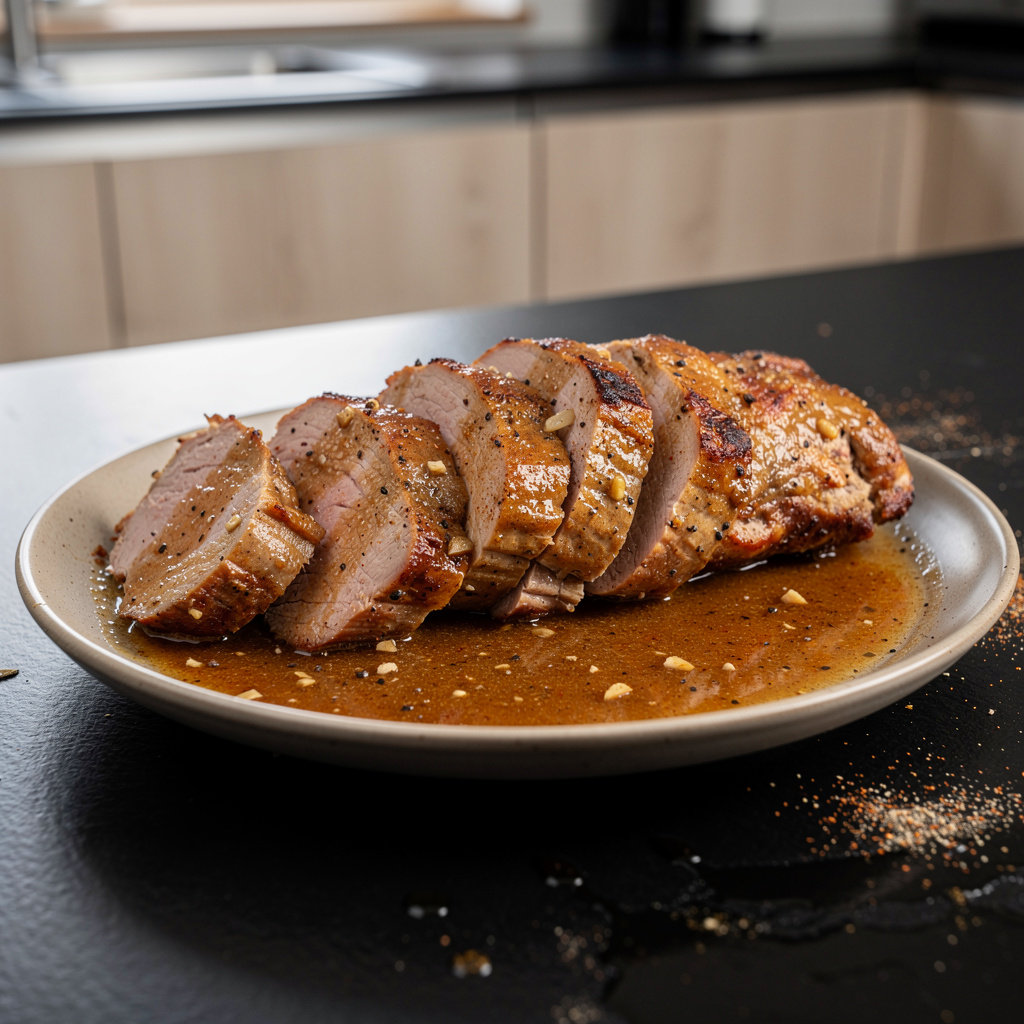
Pulled pork is slow-roasted pork that, once cooked, is pulled into strands and mixed with barbecue sauce. In the southern states of the USA it’s a classic at family gatherings, picnics, and roadside food trucks. The meat is so tender you can eat it in a bun like a sandwich or with potatoes as a homestyle dinner.
This is a home-style version of classic pulled pork from the American South, where the meat is usually smoked over wood for many hours. Here the smokiness comes from smoked paprika and a strong sear, so the dish is more accessible for kitchens without a grill or smoker.
Pulled pork is the essence of American barbecue – long, slow roasting turns a simple pork shoulder into meat so tender it falls apart at the lightest touch of a fork. The combination of sweet brown sugar, smoky paprika, and tangy barbecue sauce creates a deep, slightly smoky flavor that’s hard to replicate with any quicker method. It’s a dish that immediately brings to mind food trucks and roadside diners somewhere in the American South.
Why this version works
- Mustard acts as a “glue” for the spices and helps build an intense, browned crust without any breading.
- Searing before baking creates deep umami flavor and smoky notes even without a grill.
- A low, steady temperature lets the connective tissue turn into gelatin, so the meat is tender but not dry.
- Barbecue sauce thinned with vinegar and water gives a thick, glossy sauce without overwhelming sweetness.
Chef's tips
The most important thing is patience – don’t crank up the temperature, or the meat will be tough; it’s better to roast longer at 150°C until a fork slides in with no resistance. If you don’t have smoked paprika, don’t just swap it for regular paprika – it’s better to add a little liquid smoke or smoked salt, because that smokiness is what defines the dish. After baking, be sure to give the meat those 10–15 minutes of rest; otherwise, when you pull it, you’ll lose a lot of juices on the board.
How to serve
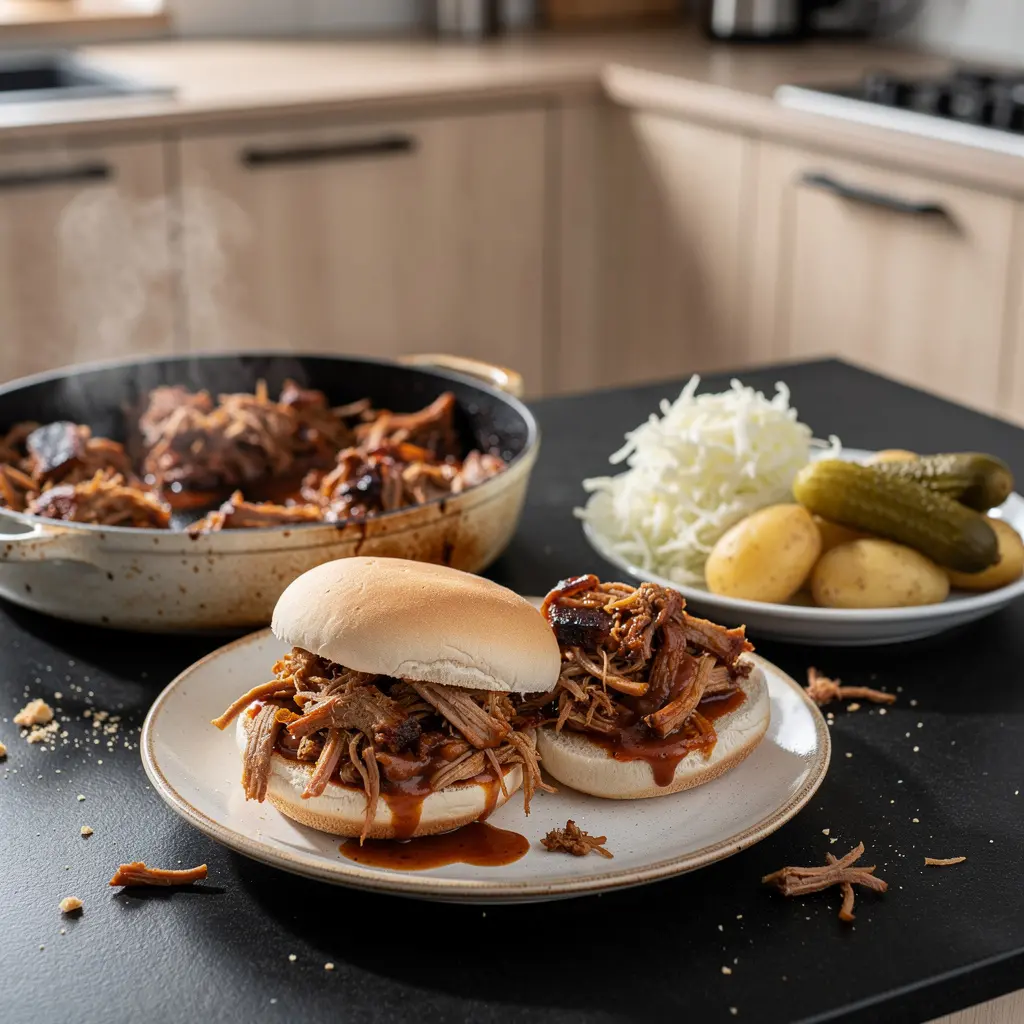
The most classic way to serve pulled pork is in a soft bun with coleslaw and pickles, with a light, mildly hoppy beer or iced tea to drink. For house parties, a “pulled pork station” works great for me – a bowl of meat, and next to it various sauces, buns, and toppings so everyone can build their own sandwich. If you prefer a more homestyle version, serve the meat with roasted potatoes, dill pickles, and a simple green salad with vinaigrette.
Watch out for
- Do not speed up the cooking by raising the temperature – the outside will darken, but the fibers will stay tough.
- Make sure there is always at least a thin film of liquid on the bottom of the pan; a dry, burnt residue will taste bitter.
- Don’t pull the meat right after taking it out – if it’s too hot, the juices will run onto the board instead of staying inside.
- Don’t pour a large amount of very thin sauce into the meat all at once; it’s better to reduce it briefly than end up with a watery result.
Substitutions
- You can replace the pork shoulder with pork neck, choosing a piece with evenly marbled fat.
- Apple cider vinegar can be swapped for white wine vinegar; avoid distilled white vinegar, as it will be too harsh.
- You can replace part of the barbecue sauce with passata (sieved tomatoes) if you prefer a less sweet result.
Ingredients
- pork shoulder in one piece, boneless - 1500 g
- salt - 2 teaspoons
- brown sugar - 2 tablespoons
- sweet paprika - 2 teaspoons
- smoked paprika - 1 teaspoon
- granulated garlic - 1 teaspoon
- granulated onion - 1 teaspoon
- black pepper - 0.5 teaspoons
- barbecue sauce store-bought or homemade - 250 ml
- apple cider vinegar about 4 tablespoons - 60 ml
- water - 100 ml
- vegetable oil for searing the meat - 1 tablespoon
- mustard for brushing the meat before seasoning - 1 tablespoon
Preparation
- Pat the meat dry with paper towels. If there are very thick pieces of fat, you can trim them slightly, but leave some on as it adds flavor and juiciness.
- In a small bowl, mix together the salt, brown sugar, sweet paprika, smoked paprika, granulated garlic, granulated onion, and pepper.
- Rub the meat with a thin layer of mustard, then coat it thoroughly in the spice mix, massaging it in on all sides.
- Heat a large pan over high heat, add the oil, and sear the meat for 2–3 minutes on each side until the surface is well browned.
- Transfer the meat to an ovenproof dish with a lid or to a cast-iron pot. In a separate bowl, mix the barbecue sauce, apple cider vinegar, and water, then pour the mixture into the dish with the meat.
- Cover the dish and place it in an oven preheated to 150°C. Roast for about 4.5–5 hours, until the meat is so tender that it falls apart when you insert a fork.
- Every hour or so, baste the meat with the sauce from the bottom of the dish. If the sauce reduces too much, add a little water.
- When the meat is ready, take it out onto a board and let it rest for 10–15 minutes. Then, using two forks, pull the meat into thin strands.
- Mix the pulled pork with the sauce from the dish until everything is evenly coated. If there is too much sauce, you can reduce it briefly in a pot on the stove.
- Serve hot in buns with coleslaw or with potatoes and dill pickles or sauerkraut pickles.
Storage
No storage information available for this dish.
I always make this pulled pork when I invite friends over to watch a game – the meat quietly cooks away in the oven while I have time to prepare everything else. There’s usually a portion left for the next day, and then it ends up in a tortilla with whatever leftover salad I find in the fridge.