Psarosoupa – Greek Fish Soup with Vegetables and Lemon Recipe
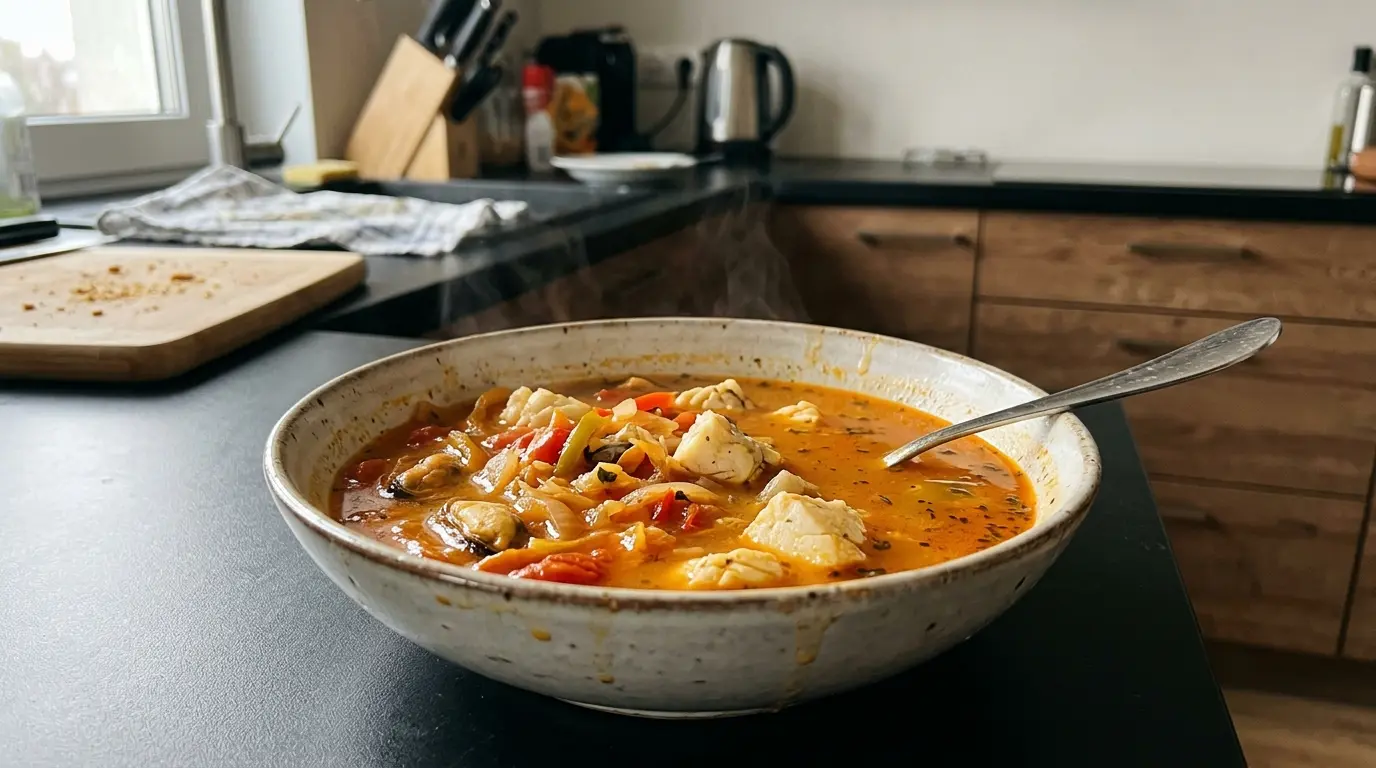
Psarosoupa is a delicate Greek fish soup in which the fish is cooked in a broth made from vegetables, olive oil, and lemon. It’s not as heavy as French bouillabaisse; it’s more like a light, homemade fish soup with a pronounced citrus note. In seaside towns in Greece, it’s a common way to use fresh, small fish caught the very same day.
In Greece, psarosoupa is often a way to use freshly caught, cheaper fish and whatever vegetables are on hand in the kitchen. In tavernas it’s usually served with extra lemon and bread, without cream, which keeps it light even in hot weather.
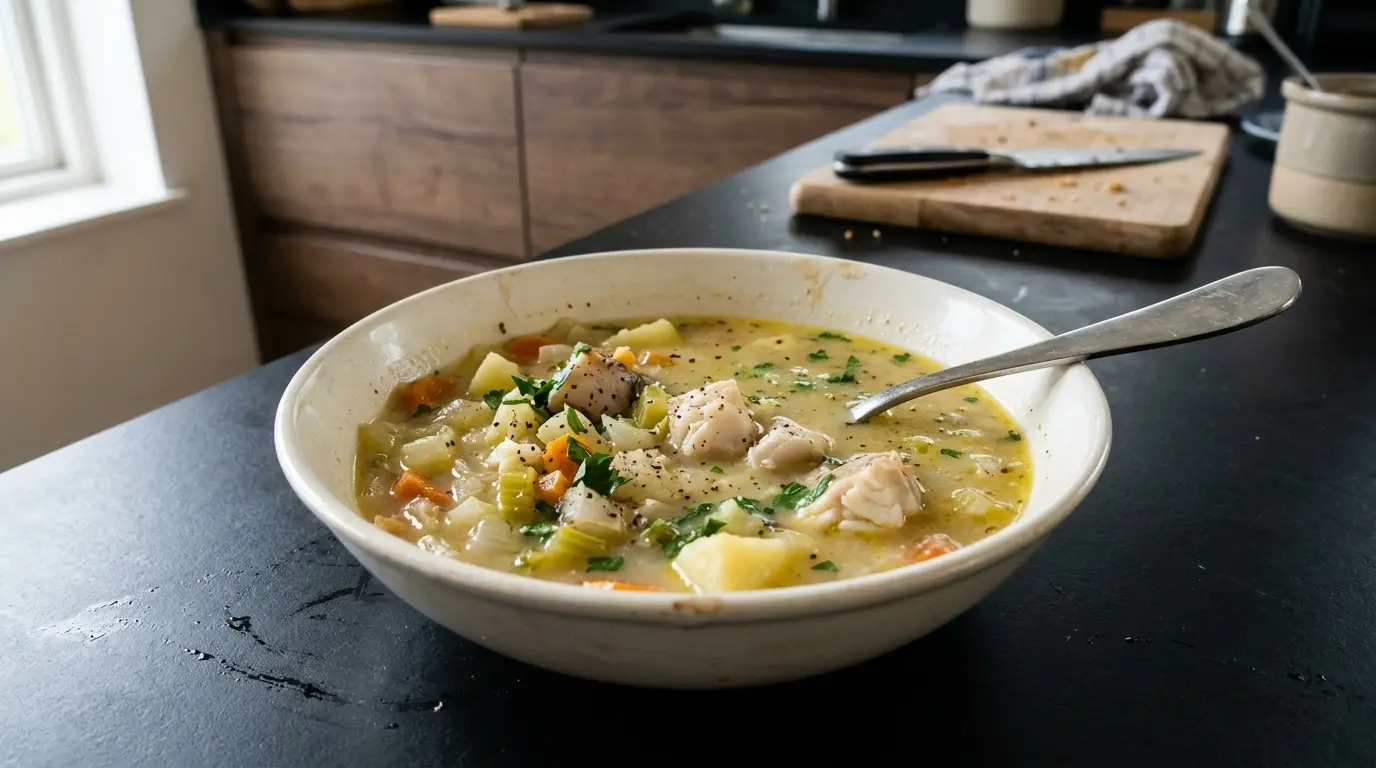
This psarosoupa is a light, aromatic Greek fish soup where the delicate flavor of the fish is highlighted by a simple vegetable broth, good olive oil, and fresh lemon. It’s easy to prepare, doesn’t require expensive fish or seafood, and brings a taste of a Greek seaside tavern to your home kitchen.
Why this version works
- Large chunks of fish and very gentle, barely-simmering cooking give you a clear soup with pieces that don’t fall apart.
- Cooking the vegetables to just tender first and only then adding the fish prevents any of the ingredients from overcooking.
- Adding the lemon and parsley after turning off the heat preserves their fresh aroma without bitterness or a metallic aftertaste.
- A short list of seasonings lets the flavour of the fish and vegetables shine instead of masking it.
Chef's tips
Use the freshest fish you can get – even small, inexpensive fish will give the broth great flavor. Don’t let the soup boil vigorously once the fish is added; gentle simmering keeps the pieces whole and juicy. Adjust the amount of lemon to your taste – some people like a very citrusy broth, others prefer just a subtle hint.
How to serve
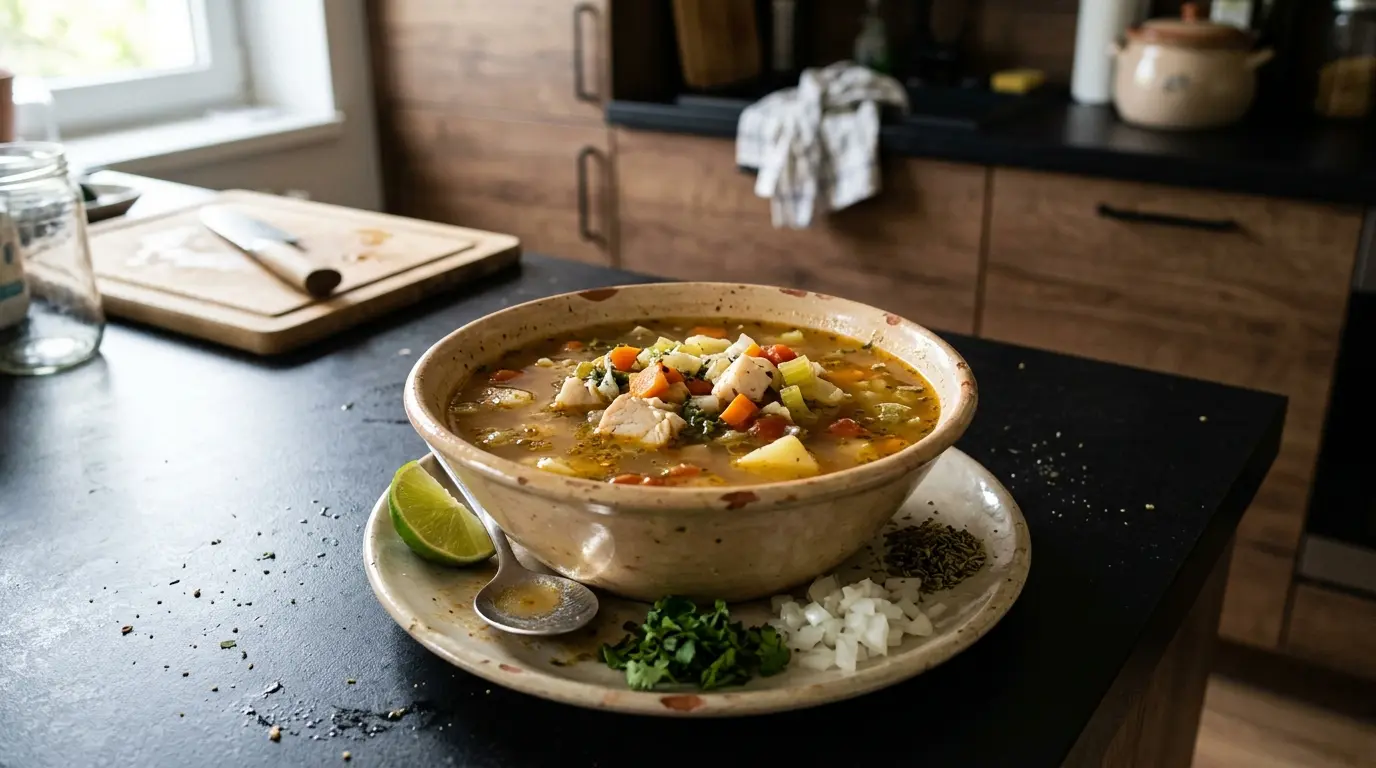
Serve the soup very hot, with extra lemon wedges on the side so everyone can adjust the acidity on their plate. A simple green salad with olive oil and oregano pairs well, as does fresh bread or toasted baguette rubbed lightly with garlic.
Watch out for
- Don’t let the soup boil hard once the fish is in – the broth will turn cloudy and the pieces will start to break up.
- Don’t cut the fish into small cubes; tiny pieces will overcook quickly and become dry.
- Don’t brown the onion or leek – even lightly browned edges will darken the soup and change its flavour.
Substitutions
- Instead of cod, use hake, pollock, or any other firm white sea fish.
- You can replace part of the water with a light vegetable stock if you happen to have some in the fridge.
- You can swap the parsley for dill to give the soup a more Baltic-style character.
Ingredients
- white fish fillet e.g. cod, pollock, hake, skinless and boneless - 600 g
- potatoes diced - 300 g
- carrot cut into half-slices - 2 piece
- celery stalk cut into slices - 2 stalk
- onion diced - 1 piece
- leek white part, cut into half-slices - 0.5 piece
- bay leaf - 2 piece
- peppercorns - 6 piece
- olive oil - 3 tablespoon
- lemon juice and grated zest - 1 piece
- parsley chopped - 2 tablespoon
- salt or to taste - 1 teaspoon
- water - 1.5 l
Preparation
- In a large pot, heat the olive oil over medium heat. Add the finely chopped onion and leek and sauté for 3–4 minutes, until they soften and turn translucent but do not brown – the broth should stay light.
- Add the carrot sliced into half-moons, the celery sliced thinly, and the potatoes cut into cubes. Sauté for 3–4 minutes, stirring, until the vegetables look slightly glossy and start to smell sweet.
- Pour in the water, add the bay leaves, peppercorns, and about 0.5 teaspoon of salt. Bring to a boil, then reduce the heat and cook for 15 minutes, until the vegetables are almost tender – a fork should go in with slight resistance.
- Meanwhile, check the fish fillets for bones and remove them with tweezers or your fingers. Cut the fish into large pieces, about 4–5 cm – they should look like generous chunks, not small cubes.
- After 15 minutes of cooking the broth, taste and lightly salt if needed. Gently place the fish pieces into the pot so they are fully submerged in the broth.
- Cook over very low heat for 8–10 minutes – the surface of the soup should only gently “blink”, without a vigorous boil. Don’t stir with a spoon; instead, every few minutes gently shake the pot.
- The fish is done when the flesh turns matte, opaque, and flakes easily when you press it lightly with a fork. Turn off the heat before it starts to fall apart into shreds.
- Add the freshly squeezed lemon juice, finely grated yellow zest, and chopped parsley. Stir gently, taste, and adjust with salt or more lemon until the flavour is clearly citrusy but not sharply sour.
- Before serving, fish out the bay leaves and any visible peppercorns. Serve the soup very hot in deep bowls, with an extra lemon wedge on the side so everyone can season their portion to taste.
Storage
No storage information available for this dish.
This is one of those soups that taste like a holiday by the sea – simple ingredients, lots of vegetables, and the aroma of lemon and olive oil. I like to make it when I want something light but comforting, and when I don’t feel like frying fish and airing out the kitchen afterward.