Poulet rôti aux herbes de Provence – roast chicken legs with Provençal herbs Recipe
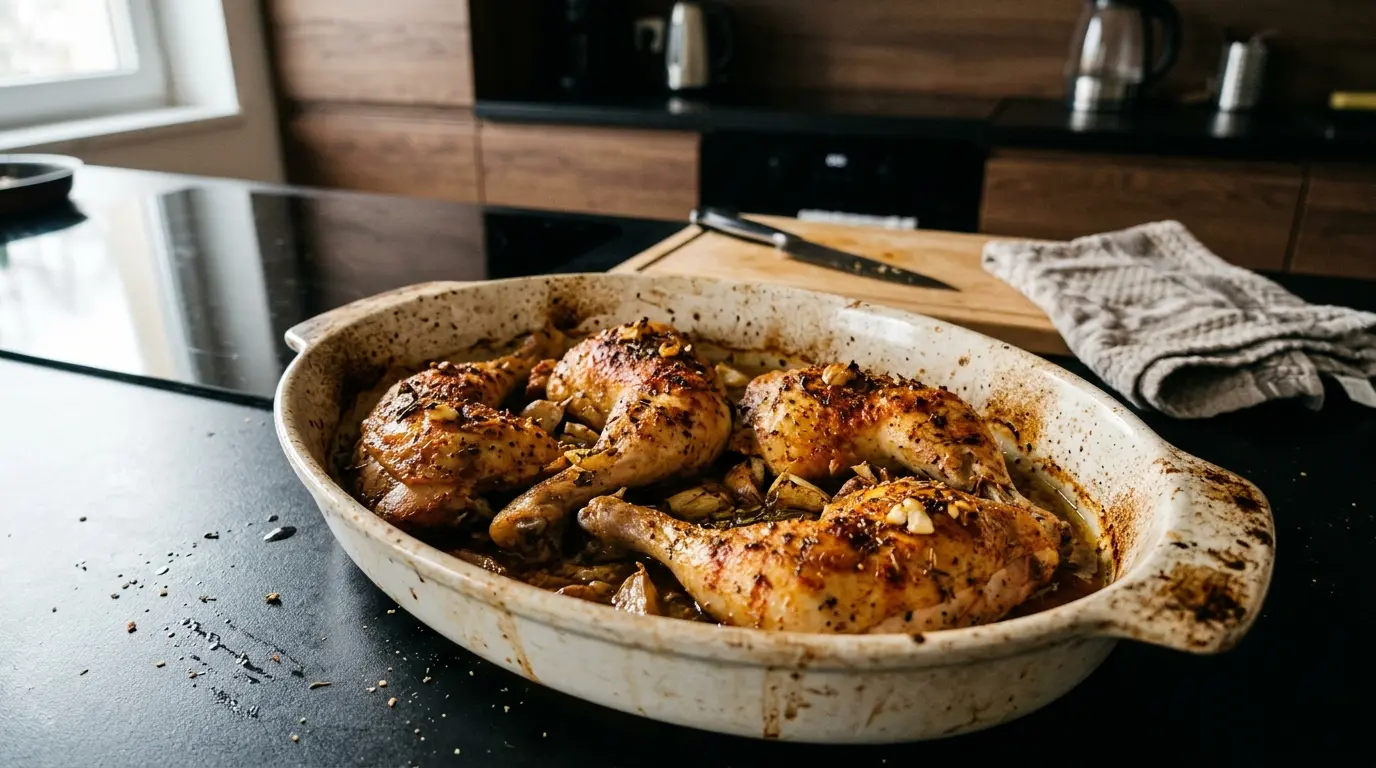
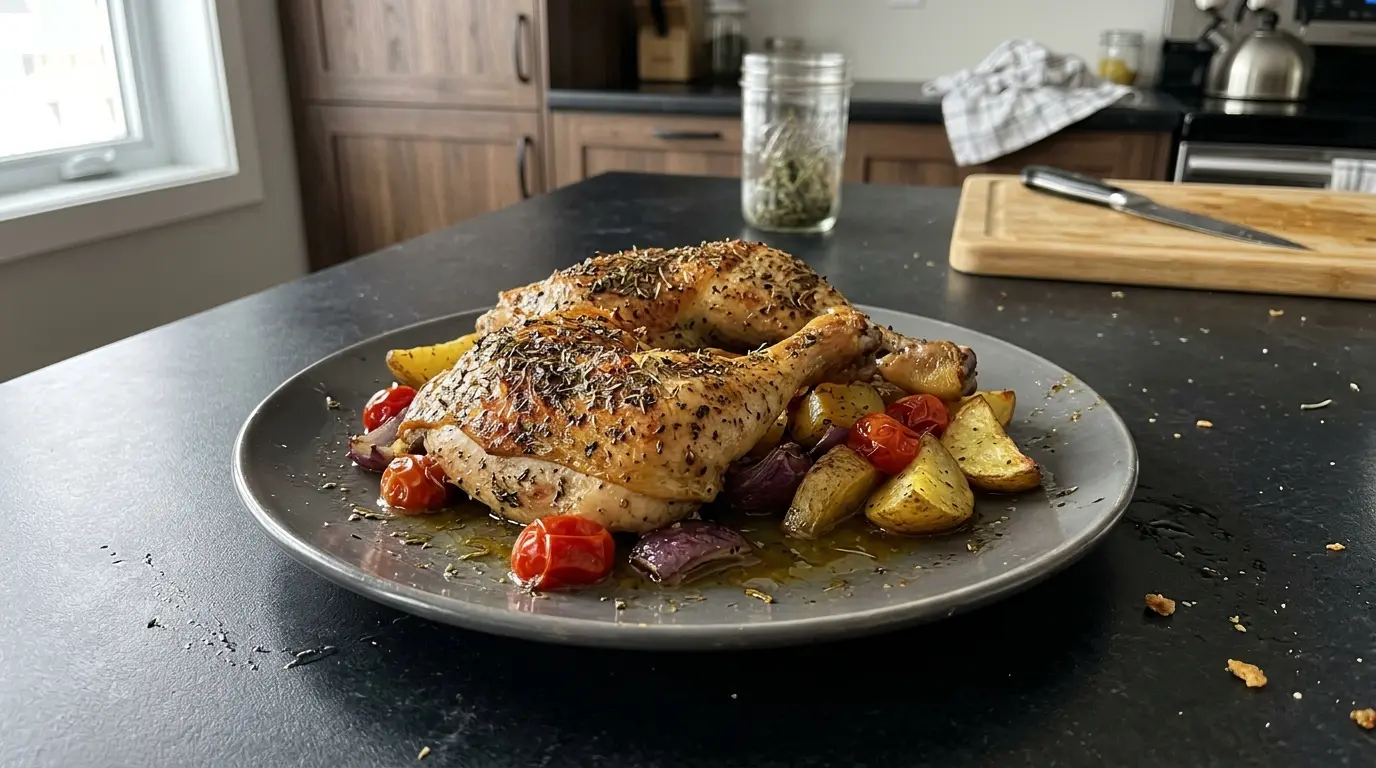
This simple dish of roasted chicken legs scented with a blend of Herbes de Provence, garlic, and lemon is reminiscent of a Sunday lunch in a French home. The meat is juicy, the skin is crispy, and a fragrant sauce forms at the bottom of the dish, perfect for spooning over potatoes or soaking up with a baguette. It’s a French counterpart to classic roast chicken, just with more herbs and olive oil.
A classic French-style roast chicken dish that relies on simple ingredients and Herbes de Provence to create a deeply aromatic, juicy result with minimal effort. The pan juices double as an instant sauce for sides, turning an everyday meal into something that feels like a Sunday lunch in Provence.
Chef's tips
Drying the chicken skin thoroughly before seasoning is key to getting it really crispy. Don’t skip rubbing the herb mixture under the skin wherever you can – it keeps the meat flavorful and moist. If your oven browns unevenly, rotate the dish halfway through baking. Use good-quality olive oil and a fresh, fragrant herb blend; old, stale herbs will give a flat taste.
How to serve
Serve the chicken legs straight from the baking dish so everyone can help themselves to the aromatic juices. Pair with roasted or mashed potatoes, crusty baguette for dipping in the sauce, and a simple green salad. For a more substantial meal, add buttered green beans or a ratatouille-style vegetable mix.
Ingredients
- chicken legs with bone and skin - 8 piece
- Herbes de Provence dried - 2 teaspoon
- garlic lightly crushed with a knife - 4 clove
- lemon cut into quarters - 1 piece
- olive oil - 3 tablespoon
- dry white wine optional, for deglazing - 100 ml
- salt for rubbing into the meat
- black pepper freshly ground, to taste
- butter cut into small pieces, for the top - 20 g
Preparation
- Pat the chicken legs dry with a paper towel so the skin browns better.
- In a small bowl, mix the olive oil, Herbes de Provence, 1 teaspoon of salt, and some pepper until you get an aromatic paste.
- Rub each chicken leg thoroughly with the herb and oil mixture, trying to work some of it under the skin wherever possible.
- Arrange the legs in a single layer in an ovenproof dish, skin side up, tucking the crushed garlic cloves and lemon quarters between the pieces of meat.
- If using wine, pour it into the bottom of the dish, trying not to wash the seasoning off the skin; if not, you can pour in 50–70 ml of water.
- Place small pieces of butter on top, distributing them evenly over the chicken legs.
- Put the dish into an oven preheated to 200°C (top and bottom heat) and roast for 35–40 minutes, until the skin is well browned and the meat is almost cooked through.
- During baking, baste the legs 1–2 times with the juices from the bottom of the dish so they stay juicier and more aromatic.
- For the last 10 minutes, increase the temperature to 220°C or switch on the grill function so the skin becomes very crispy; watch carefully so it doesn’t burn.
- Check that the meat is done – when you pierce the thickest part, the juices should run clear with no traces of blood. Serve immediately with the juices from the bottom of the dish.
Storage
No storage information available for this dish.
This recipe is inspired by the kind of unfussy, comforting roast chicken you might find in a French family kitchen: lots of herbs, garlic, lemon, and good olive oil doing most of the work. It’s forgiving, easy to scale up for guests, and the leftovers are just as delicious the next day.