Portokalopita – Greek yogurt cake with oranges and filo pastry Recipe
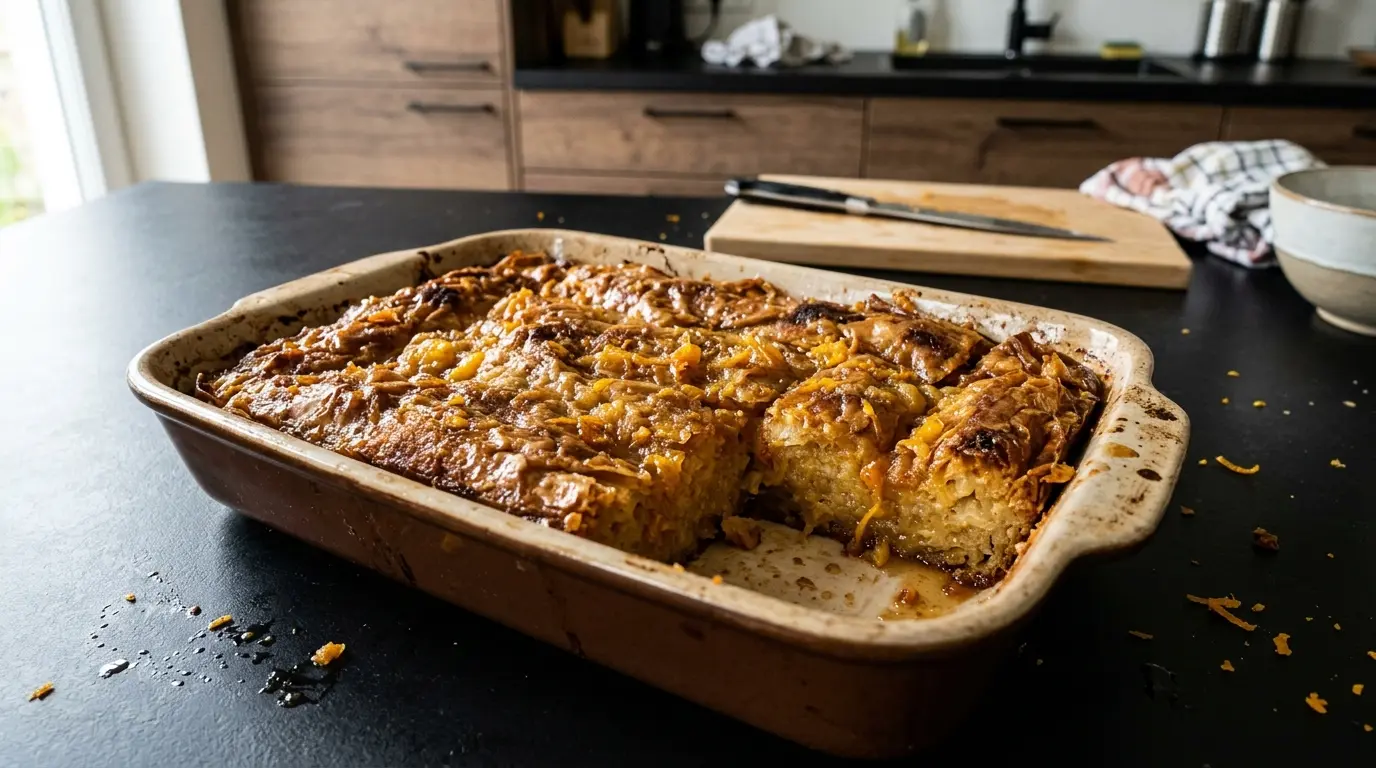
Portokalopita is a moist, intensely orange-flavoured cake made with yogurt and torn filo pastry, soaked in a citrus syrup. In Greek cafés it often sits on the counter next to baklava as a dessert to go with post‑lunch coffee. It tastes like a cross between cheesecake, pound cake and syrup‑soaked cake, with a strong aroma of orange zest.
Portokalopita is a popular dessert in Greece, often served in tavernas alongside baklava and galaktoboureko. It is traditionally made with ready-made filo sheets, which makes it a smart way to use up leftover pastry by turning it into a new cake.
This classic Greek dessert combines simple ingredients into an incredibly moist, fragrant cake. Torn filo pastry gives it a unique, slightly layered texture that absorbs citrus syrup beautifully, while yogurt keeps it tender and rich without being heavy.
Why this version works
- Drying and tearing the filo instead of cutting it with a knife creates a light, porous structure that easily soaks up the syrup.
- Pouring cold syrup over a hot cake ensures deep soaking without a soggy, gummy top.
- Adding the orange zest and juice to the batter, not just to the syrup, boosts the citrus flavour throughout the whole cake.
- Scoring the cake into portions before pouring on the syrup helps it soak in evenly right down to the bottom.
Chef's tips
Let the filo dry slightly before tearing it – if it is too soft, it will clump instead of absorbing the batter evenly. Make sure the syrup is completely cooled and the cake is hot when you pour it on; this temperature contrast helps the syrup soak in properly. Don’t rush the resting time after soaking – a few hours make a big difference to the final texture.
How to serve
Serve portokalopita as a dessert with strong coffee or Greek-style coffee. It also pairs well with unsweetened tea to balance its sweetness. For a more festive presentation, garnish with thin strips of candied orange peel or a sprinkle of chopped pistachios.
Watch out for
- Do not pour warm syrup over a warm cake – the top will turn pasty while the centre stays dry.
- If the filo is not properly dried and crisp, the cake can turn out heavy and doughy inside.
- Do not overmix once you add the baking powder – too much mixing will make the cake dense and flat.
Substitutions
- You can replace Greek yogurt with thick natural yogurt that has been drained in a sieve for 1–2 hours.
- You can swap up to one third of the orange juice for lemon juice for a more pronounced tangy flavour.
- You can replace the vanilla with ground cardamom or almond extract, which will change the character of the aroma.
Ingredients
- filo pastry - 250 g
- Greek yogurt - 400 g
- egg - 4 pieces
- sugar - 200 g
- oil - 150 ml
- baking powder - 10 g
- orange - 2 pieces
- water - 250 ml
- sugar - 200 g
- cinnamon - 0.5 teaspoons
- vanilla - 1 teaspoon
Preparation
- Preheat the oven to 160°C (top–bottom heat). Lightly grease a 25×30 cm baking tin with oil, including the sides so the cake doesn’t stick. If you’re using frozen filo, defrost it in advance and unfold it gently so the sheets don’t break.
- Lay the filo sheets out individually on a baking tray or large board and leave for 10–15 minutes, until they become dry and slightly stiff to the touch. Tear them into pieces about 2×2 cm and spread them out loosely so they can dry a bit more – when you touch them they should rustle clearly.
- Prepare the syrup: put 200 g sugar into a saucepan, add 250 ml water, the thinly peeled zest from 1 orange and the cinnamon. Bring to the boil and cook for 8–10 minutes over low heat, until a drop of syrup on a plate is slightly sticky rather than watery. Set aside to cool completely, then remove the zest and spices.
- Finely grate the zest from one orange, only the orange-coloured part. Squeeze the juice from both oranges, removing the seeds and any larger membranes so the juice is smooth and free of bitter fibres.
- In a large bowl, beat the eggs with 200 g sugar into a pale, fluffy mixture (about 3–4 minutes with a mixer). The mixture should clearly lighten in colour and increase slightly in volume. Add the yogurt, oil, vanilla, orange zest and juice, and the baking powder, and mix briefly, just until combined.
- Add the torn pieces of dried filo to the mixture in batches, stirring thoroughly with a spoon each time. The pieces should separate and soak in the mixture; if you see dry “flakes”, separate them with your fingers and stir again.
- Pour the mixture into the prepared tin and smooth the top with a spoon. The surface may be uneven because of the filo pieces – after baking it should be risen and slightly wavy, with no visible puddles of fat.
- Bake for 40–45 minutes, until the cake has risen and the top is evenly golden. A skewer inserted into the centre should come out dry or with moist crumbs, but without any liquid batter.
- Remove the tin from the oven and leave for 5 minutes. While the cake is still hot, score it with a sharp knife into squares or diamonds, cutting almost to the bottom – you should see a springy, not liquid, centre in the cuts.
- Pour the completely cooled syrup over the hot cake, spreading it evenly over the surface and into the cuts. The syrup should soak in gradually; if it temporarily pools at the edges, gently spoon it over the centre. Leave for at least 2 hours, preferably until completely cooled in the fridge.
Storage
No storage information available for this dish.
Portokalopita is one of those desserts that tastes even better the next day, so it’s perfect for making ahead for guests. The combination of intense orange aroma, soft texture and syrup makes it feel luxurious, even though the preparation is straightforward.