Pasta alla Norma with Ricotta and Olives Recipe
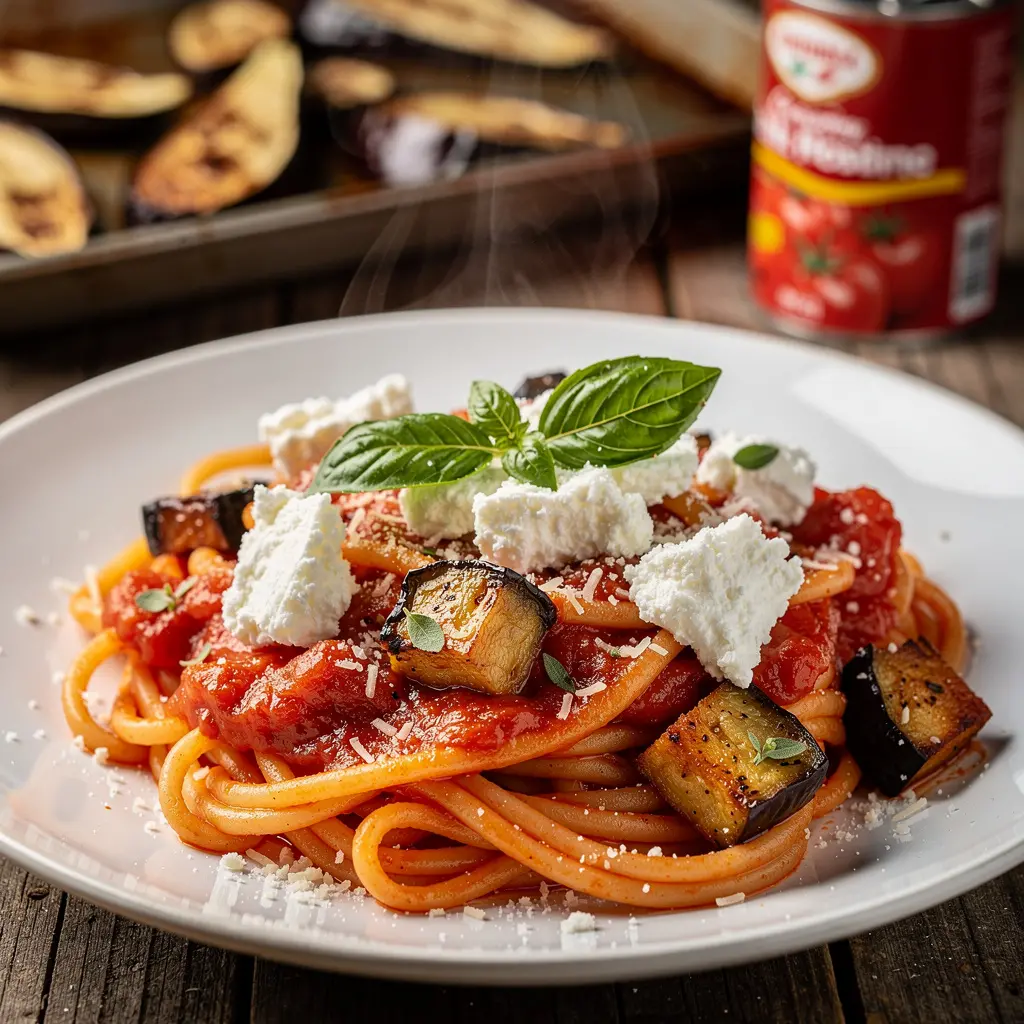
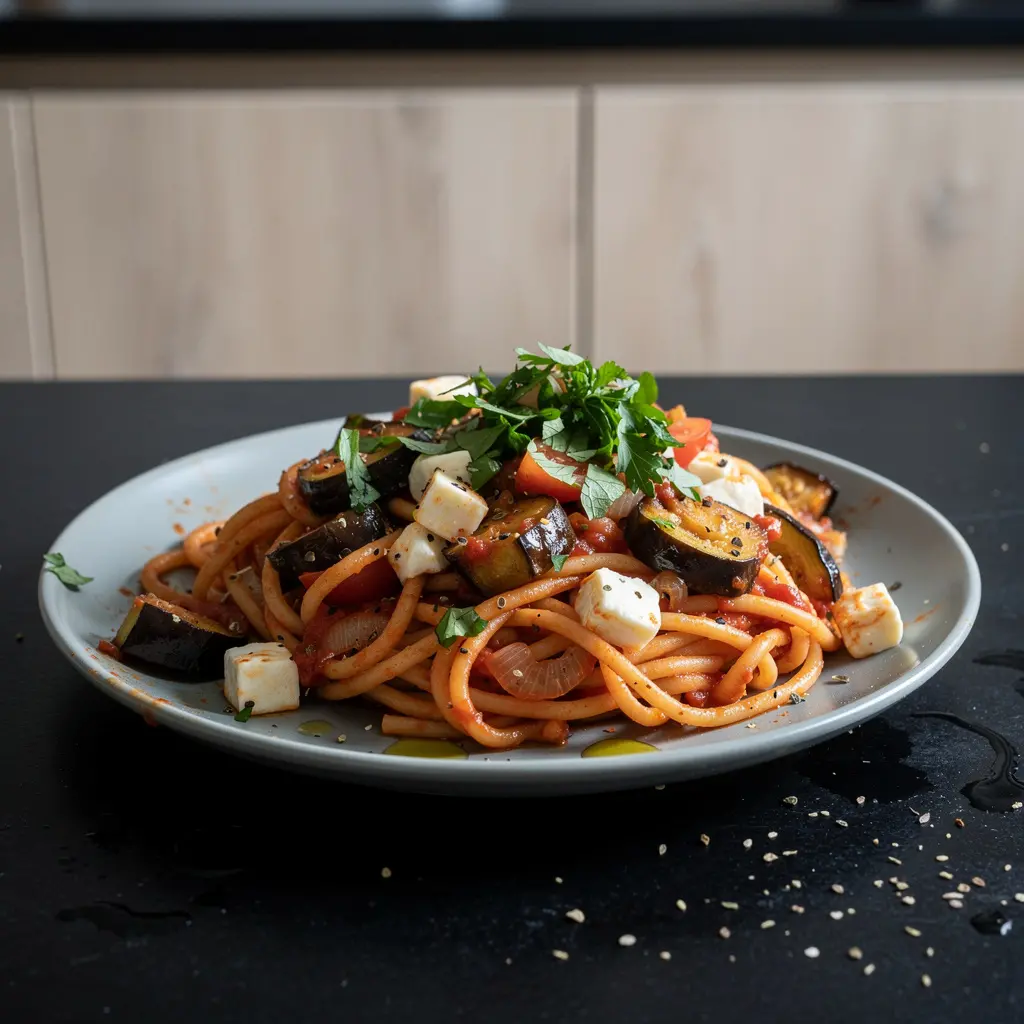
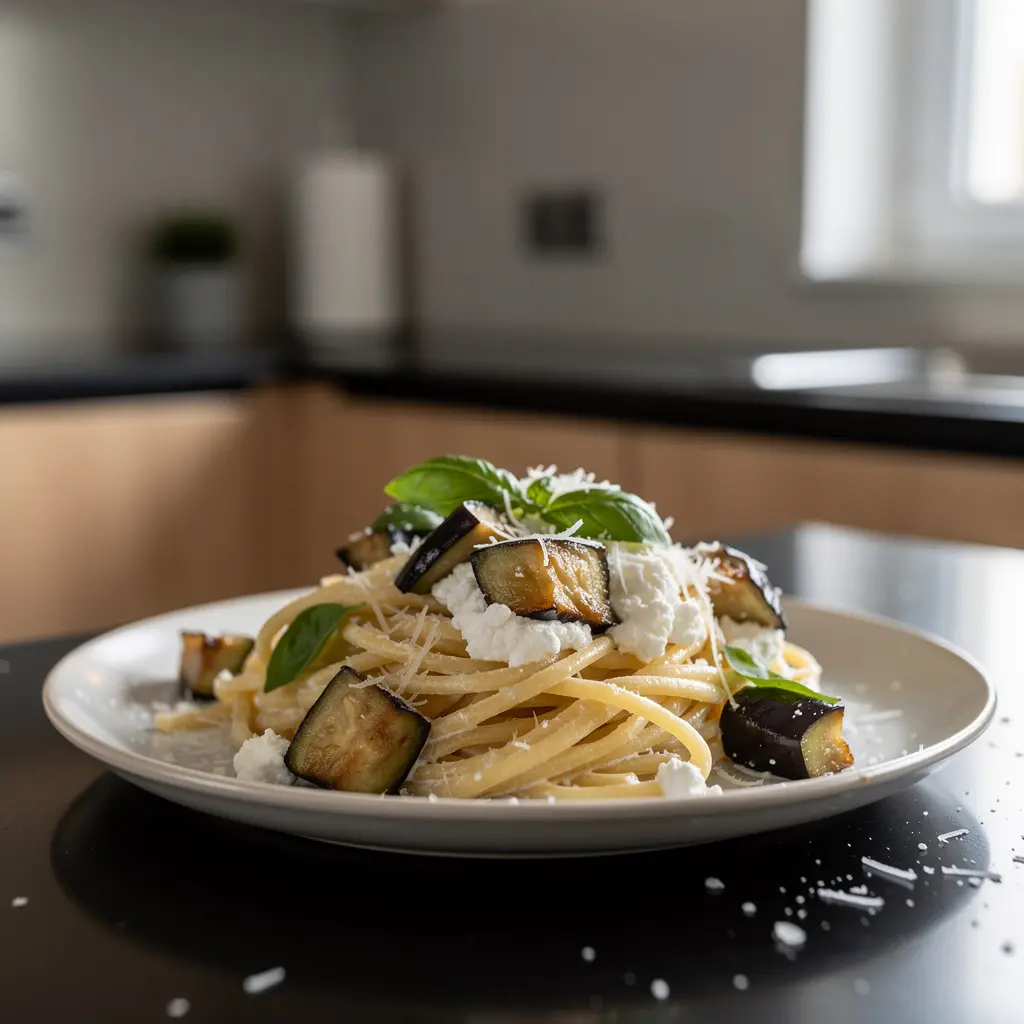
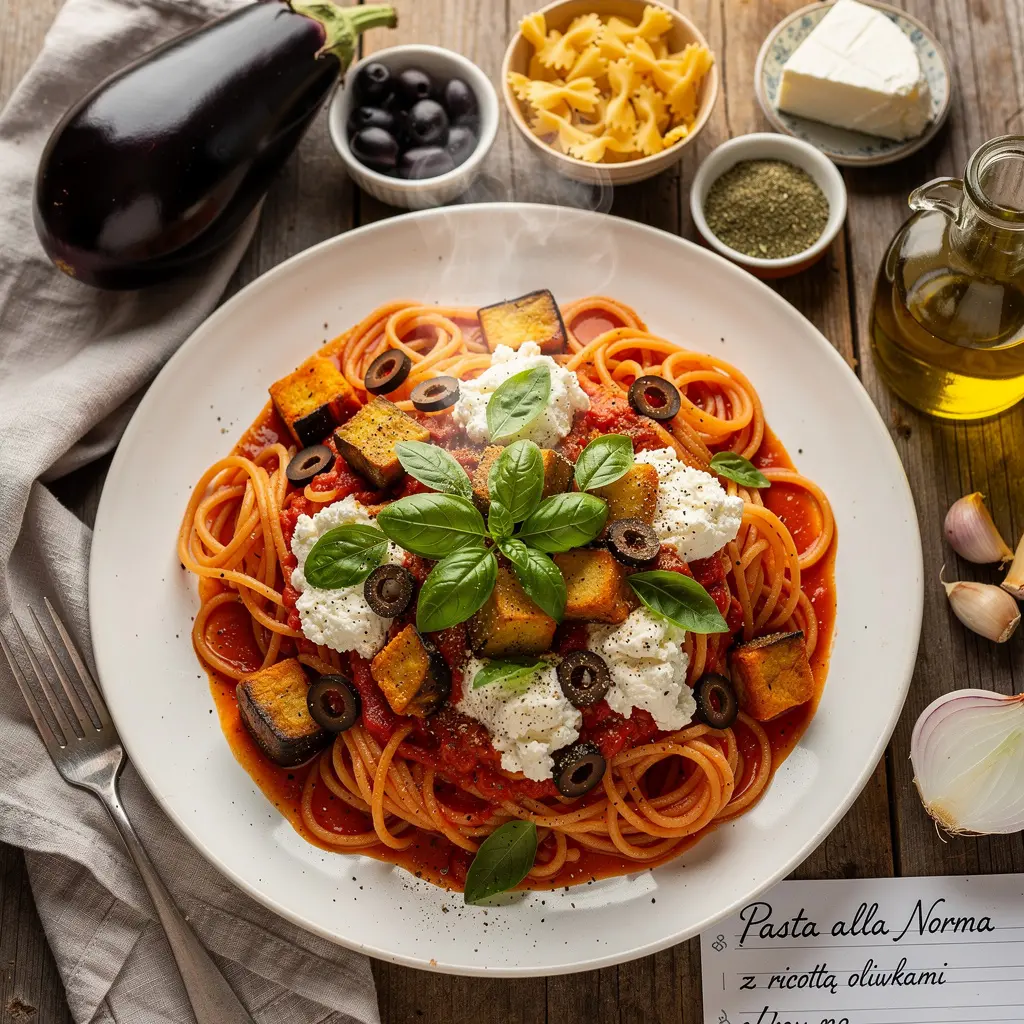
A twist on the famous Sicilian pasta alla Norma – here the tomato sauce with eggplant is enriched with creamy ricotta and salty olives. The dish is hearty, fragrant with basil and perfect for a family lunch when you want to feel the vibe of an Italian Sunday without spending half the day in the kitchen.
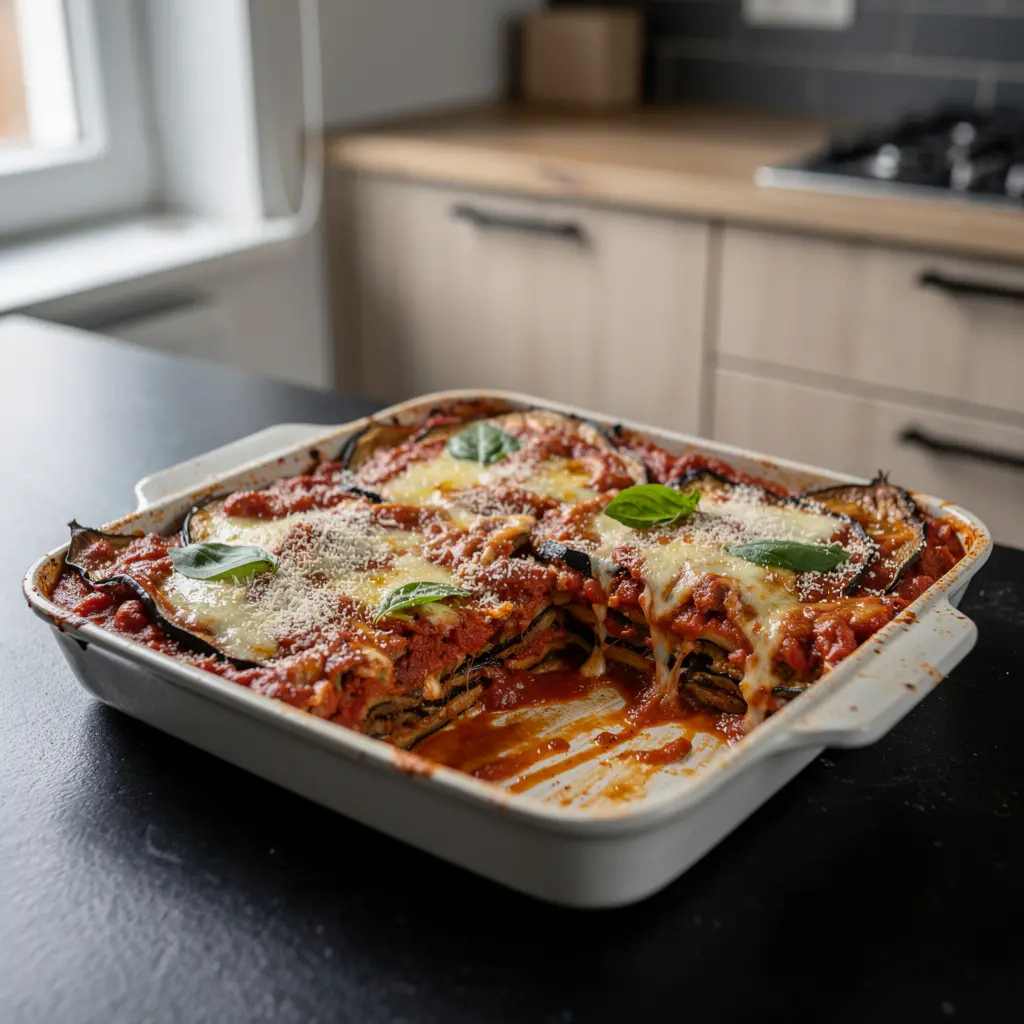
Classic pasta alla Norma comes from Catania in Sicily and is traditionally served with ricotta salata. This version with creamy ricotta and olives is a home-style adaptation that keeps the Sicilian character while using more easily available ingredients.
This version of pasta alla Norma combines the traditional Sicilian eggplant sauce with creamy ricotta and bold olives, making the dish both velvety and characterful. Chopped tomatoes, garlic and basil build a deep tomato flavor, while the saltiness of the olives beautifully cuts through the sweetness of the fried eggplant.
Why this version works
- Searing the eggplant separately gives it a golden color and sweetness instead of a soft, greasy mush.
- Adding the ricotta off the heat creates a velvety sauce without the risk of curdling.
- Pasta cooking water lets you adjust the sauce thickness and helps it cling to the pasta.
- Olives bring a salty counterpoint that balances the sweetness of the eggplant and tomatoes.
Chef's tips
It’s best to cut the eggplant into evenly sized cubes, lightly salt and leave for 15–20 minutes so it releases water – this way it will absorb less fat. Fry it in batches in well-heated olive oil until golden and soft inside but not falling apart into mush. Add the ricotta at the end, after taking the sauce off the heat, so it doesn’t curdle and keeps a creamy texture.
How to serve
Serve this pasta with a glass of medium-bodied red wine, such as Nero d’Avola or Montepulciano, and a simple arugula salad with lemon vinaigrette. It’s perfect for a Sunday lunch after a long walk or as a quick dish for movie night when you want to feed several people with one pot. Put an extra bowl of olives and freshly grated pecorino or Parmesan on the table.
Watch out for
- Don’t fry the eggplant in too little oil – it will start to steam, turn rubbery, and soak up even more fat later.
- Watch the garlic closely; as soon as it starts to color, add the tomatoes, otherwise the sauce will turn bitter.
- Always add the ricotta after taking the pan off the heat, because over high heat it can curdle and separate.
Substitutions
- You can replace ricotta with cream cheese or mascarpone, reducing the amount by 1–2 tablespoons.
- Instead of black olives, use green or a mix if you want a more intense, piquant flavor.
- If you don’t have fresh basil, make up for it with a pinch of extra dried oregano added to the sauce.
Ingredients
- pasta or another short pasta - 320 g
- eggplant medium - 1 piece
- canned chopped tomatoes 1 can - 400 g
- ricotta can be replaced with well-mashed semi-fat curd cheese - 200 g
- pitted black olives about a handful, sliced - 60 g
- garlic - 2 cloves
- onion small - 0.5 piece
- olive oil - 4 tablespoons
- dried oregano - 1 teaspoon
- fresh basil chopped or torn - 1 handful
- salt to taste
- freshly ground pepper to taste
Preparation
- Cut the eggplant into cubes of about 1.5 cm, transfer to a bowl, lightly salt and toss. Set aside for 10–15 minutes until droplets of juice appear. Pat very dry with a paper towel; the cubes should look matte, not wet.
- Finely chop the onion and slice the garlic thinly. Cut the olives into halves or slices so their flavor spreads evenly through the sauce and they’re easier to pick up with the pasta.
- In a large, wide pan, heat 2 tablespoons of olive oil over medium heat. Add the eggplant in a single layer and fry for 8–10 minutes, stirring often, until the cubes are golden on the edges and soft inside when pierced with a fork.
- Transfer the eggplant to a plate lined with paper towel. In the same pan, heat the remaining 2 tablespoons of olive oil, add the onion and fry for 3–4 minutes over medium heat until it softens, turns translucent and yields slightly under the spatula, but does not brown.
- Add the garlic and fry for another 30–40 seconds, until very fragrant but still pale. Pour in the canned tomatoes, add the oregano and a pinch of salt and pepper, and stir, scraping up any browned bits from the bottom of the pan.
- Cover and simmer the sauce over low heat for about 10 minutes, until it thickens slightly and small, lazy bubbles appear on the surface. Taste and, if needed, balance the acidity with a pinch of sugar if the tomatoes are very sour.
- Meanwhile, cook the pasta in plenty of well-salted water until al dente, springy to the bite. Reserve about half a cup of the cooking water and drain the rest; the pasta should be hot and not rinsed.
- Add the fried eggplant and olives to the sauce and gently stir. Cook together for 2–3 minutes until the eggplant absorbs some of the sauce and the mixture is thick but still slightly fluid, with no dry spots on the pan.
- Take the pan off the heat. Add the ricotta and stir until it fully combines with the tomatoes into a smooth, creamy, lump‑free sauce. Taste and season with salt and pepper, keeping in mind the saltiness of the olives.
- Add the cooked pasta and torn basil leaves. Toss vigorously for 1–2 minutes, adding the pasta cooking water a tablespoon at a time if needed, until the sauce is glossy and coats the tubes all over without forming a watery puddle.
- Serve immediately, topped with freshly ground pepper and a few basil leaves. The pasta should be tender yet springy, and the sauce thick and enveloping, with distinct pieces of eggplant.
Storage
Store leftovers in an airtight container in the fridge for up to 2 days. Reheat gently in a pan, adding a splash of water to loosen the sauce if it has thickened too much.
I always make this pasta when on a Friday after work I pop into the greengrocer’s for “something quick” and come out with a beautiful eggplant under my arm. I always cook a bigger batch because it tastes even better the next day reheated in a pan.