Onion Pakora – Crispy Indian Fritters Recipe
Onion pakora are Indian fritters built from thinly sliced raw onion rather than a smooth batter. Salting the onion first draws out enough moisture to help the chickpea flour cling, while a small amount of wheat flour strengthens the coating. Fried in loose, irregular clusters, the pakoras develop crisp, frilly edges around a tender, naturally sweet onion center.
Pakora are widely enjoyed across India as snacks, street food, and tea-time fare, particularly welcome during rainy weather. Onion versions may also be called onion bhaji or kanda bhaji in different regions, although names, spice blends, and batter styles vary.
These pakoras rely on onion moisture to create the coating, so the result is strands of onion bound by a thin, seasoned crust rather than onion pieces buried in a heavy batter. Loose shaping exposes more edges to the oil, producing the characteristic craggy crunch.
Why this version works
- Using medium onions gives a practical onion-to-flour ratio and prevents the coating from becoming either dry or overwhelmed by onion.
- Salting before adding the flour softens the slices and releases flavorful liquid that helps bind the mixture.
- Adding water gradually accounts for differences in onion moisture; the full 120 ml is available but should not be used automatically.
- Small, loosely formed clusters cook through before the outer onion strands become too dark.
- Maintaining the oil near 175°C crisps the coating without leaving the centers raw or greasy.

Chef's tips
Use your fingertips to lift and scatter the onion while mixing instead of stirring it into a smooth paste. When shaping, pinch just firmly enough to bind the center and leave several strands projecting from the outside; those exposed strands become the crispiest part.
How to serve
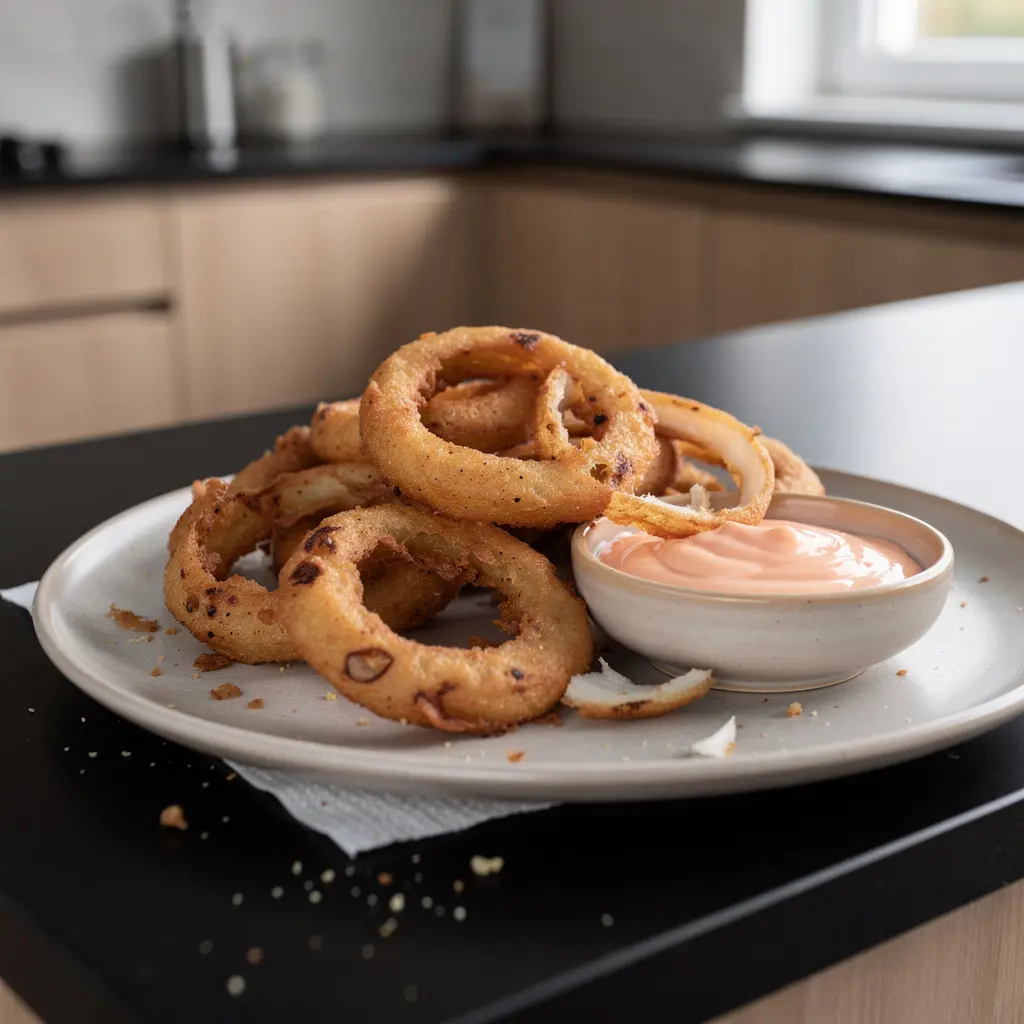
Serve the pakoras immediately with the lemon-spiked yogurt for a cool, tangy contrast. They are best brought to the table in small freshly fried batches rather than piled together for a long time, which traps steam and softens the crust.
Watch out for
- A pourable batter will make flat, oily pakoras. Stop adding water once a pinched portion holds together.
- Do not pack the onion into smooth, dense balls; compressed centers take longer to cook and have fewer crisp edges.
- Crowding the pot can pull the oil below 170°C. Fry in batches and allow the temperature to recover.
- Very fine onion strands can burn before the centers cook, while thick slices remain firm. Keep the slices close to 2–3 mm.
- The mixture becomes wetter as it stands, so heat the oil before finishing the batter and begin frying immediately.
Substitutions
- Yellow, white, or red onions can be used, provided they are medium-sized and sliced to the same thickness.
- For a version without wheat flour, replace the 20 g wheat flour with an equal weight of the listed chickpea flour; the crust will be slightly more fragile and craggy.
- The yogurt and lemon juice may be served separately instead of mixed, using the same quantities.
Ingredients
- onion medium - 3 piece
- chickpea flour - 150 g
- wheat flour - 20 g
- ground cumin - 0.5 teaspoons
- ground coriander - 0.5 teaspoons
- chili powder - 0.5 teaspoons
- turmeric - 0.25 teaspoons
- salt - 0.75 teaspoons
- water - 120 ml
- fresh coriander - 2 tablespoons
- vegetable oil - 700 ml
- lemon juice - 1 tablespoon
- plain yogurt - 150 g
Preparation
- Peel 3 medium onions, about 350–400 g total after peeling, and slice them into strands roughly 2–3 mm thick. Place them in a large bowl, add all 0.75 teaspoon salt, and toss thoroughly. Leave for 5–10 minutes, until the slices are flexible and the bottom of the bowl looks slightly damp.
- Add the chickpea flour, wheat flour, ground cumin, ground coriander, chili powder, turmeric, and finely chopped fresh coriander. Mix by hand, lifting and gently squeezing the onion strands so their released juice moistens the flour.
- Add the water 1 tablespoon at a time rather than pouring in all 120 ml. Stop as soon as no dry flour remains and a squeezed handful holds together in a loose, ragged clump. The onion should look tacky and heavily coated, with no pourable batter or puddle in the bowl; depending on the onions, some water may remain unused.
- Pour the vegetable oil into a deep, heavy pot and heat it to 175°C, aiming to keep it between 170°C and 180°C while frying. Without a thermometer, drop in a teaspoon-sized test clump: it should rise within a few seconds and bubble steadily while remaining pale at first. If it darkens in under 30 seconds, lower the heat; if it sinks with little bubbling, heat the oil longer.
- Fry the test pakora until golden, then taste it to check the seasoning, texture, and heat level before cooking the full batch. If it spreads apart, compress subsequent portions a little more firmly; if it is dense, form looser, smaller clusters.
- Gather portions of about 1–1½ tablespoons, keeping the shapes irregular rather than rolling them into tight balls. Carefully lower them into the oil and fry only enough at a time to leave space between them. Fry the remaining mixture promptly, as the onions will continue releasing moisture and can loosen the coating.
- Cook each batch for about 3–5 minutes total, turning the pakoras several times for even coloring. They are ready when deeply golden, crisp at the projecting onion edges, and surrounded by noticeably calmer bubbles. Let the oil return to about 175°C between batches.
- Lift the pakoras out with a slotted spoon and drain on paper towels. Stir the lemon juice into the plain yogurt and serve it alongside the pakoras while they are still hot and crisp.
Storage
Pakoras are best freshly fried; if you have leftovers, reheat them briefly in the oven at 200°C for 5–7 minutes to bring back their crispiness.
The most appealing pakoras are rarely the neatest ones. I prefer clusters with a compact center and plenty of stray onion strands, because they give each bite a mix of tender onion and brittle, deeply browned edges.