Omelette aux fines herbes – French herb omelet Recipe
A classic French omelet with a mix of fresh herbs is fluffy inside and lightly golden on the outside. In France it’s a quick breakfast or dinner, often served with salad and a slice of baguette. Compared with Polish scrambled eggs, it’s more delicate and set, with herbs playing the main role.
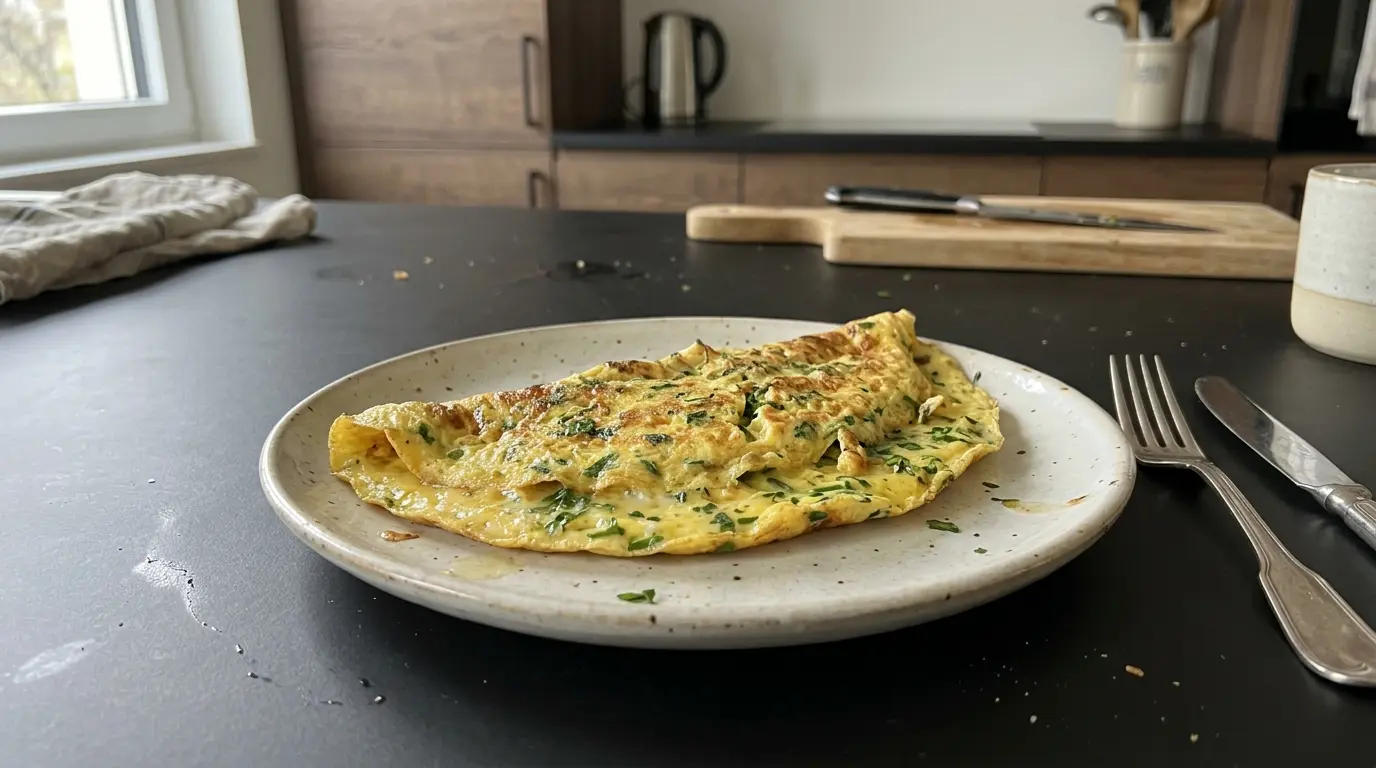
This classic French omelet showcases the aroma of fresh herbs in a simple, elegant form. Its soft, creamy interior and lightly golden exterior make it feel restaurant-worthy, yet it’s quick enough for an everyday breakfast or light dinner.
Chef's tips
Use the freshest eggs and herbs you can find—their flavor really defines this dish. Don’t overbeat the eggs; they should be just combined, not foamy. Control the heat so the butter doesn’t brown and the omelet sets gently without becoming rubbery.
How to serve
Serve with a green salad dressed in a light vinaigrette and a slice of baguette or country bread. For breakfast, pair with coffee or tea; for a light dinner, serve with a small glass of dry white wine or sparkling water with lemon.
Ingredients
- egg - 4 piece
- milk or cream - 2 tablespoon
- butter - 15 g
- chives finely chopped - 1 tablespoon
- parsley leaves, finely chopped - 1 tablespoon
- dill finely chopped - 1 tablespoon
- tarragon fresh, finely chopped; optional - 0.5 tablespoon
- salt to taste
- pepper freshly ground, to taste
Preparation
- Rinse the herbs, pat them dry, and chop them finely.
- Crack the eggs into a bowl, add the milk, a pinch of salt, and pepper. Beat with a fork or whisk until the mixture is uniform but not whipped into a foam.
- Add the chopped herbs to the eggs and gently mix.
- Heat the butter in a medium (preferably non-stick) pan over medium heat until it foams but does not brown.
- Pour the egg mixture into the pan. For the first 20–30 seconds, gently lift the set edges of the omelet with a spatula and tilt the pan so the liquid mixture flows underneath.
- When the top is still slightly moist but most of the mixture has set (after about 2–3 minutes), fold the omelet in half, nudging it with the spatula.
- Cook for about 30 seconds more, then gently slide the omelet onto a plate. The center should be soft and slightly creamy, not dry.
Storage
No storage information available for this dish.
This omelet is one of the simplest ways to bring a bit of French bistro atmosphere into your kitchen. Once you master the technique, you can adjust the herbs and fillings to your taste while keeping the texture soft and delicate.