Lazy dumplings with butter and sugar Recipe
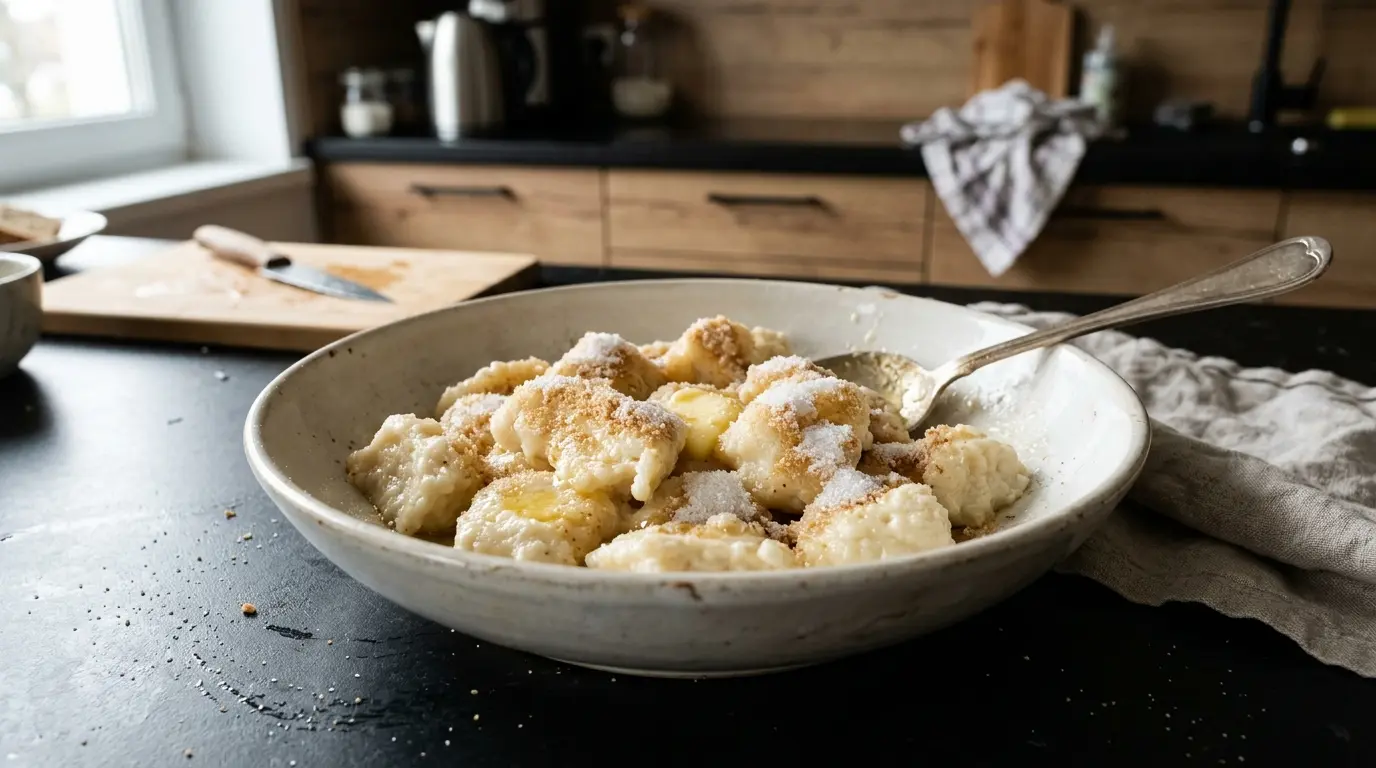
Lazy dumplings with butter and sugar are homemade dumplings made from twaróg (Polish farmer’s cheese) and flour, popular in Poland as a sweet lunch or late breakfast. They are very soft, slightly cheesy and coated in a simple sauce of hot butter and sugar that highlights the flavor of the cheese. This version focuses on the amount of flour and gentle cooking so the dumplings turn out light, not dense.
Lazy dumplings (kluski leniwe) are a classic of Polish home cooking, often served as a sweet main course or hearty breakfast. They are closely related to so-called ‘lazy pierogi’ and are a way to use up leftover twaróg from the fridge. Many people associate them with childhood and simple, comforting meals made by grandmothers.
This version of lazy dumplings is focused on texture rather than decorative shape, making it easy to achieve soft, light dumplings like from a home kitchen. The simple butter-and-sugar topping enhances the flavor of the cheese instead of masking it. The dish is quick, inexpensive and especially popular as a sweet main course or comforting breakfast.
Why this version works
- Thoroughly pressing the twaróg gives the dumplings an exceptionally delicate, even texture.
- Gradually adding flour and mixing briefly prevents the dumplings from becoming hard and dense.
- Cooking in gently simmering water keeps them from falling apart and fraying.
- Optional buttered breadcrumbs add a nutty aroma and a light crunch.
Chef's tips
The most common mistake is trying to fix dough that’s too loose by adding a lot of flour—it’s better to flour the work surface more generously and work with a slightly sticky mass than to keep adding handfuls of flour., Perfect dumplings are soft but springy after cooking; if they fall apart when you lift them out, they were cooked too long or the water boiled too hard., Heat the butter patiently over low heat until it smells lightly nutty and tiny golden specks appear—that’s when it has the most flavor.
How to serve
Serve immediately after cooking, generously drizzled with hot butter and sprinkled with powdered sugar, optionally with cinnamon or vanilla sugar., They taste great with seasonal fruit such as strawberries or blueberries, or with apple sauce., This is a good dish for a quick sweet lunch after work or a lazy, late weekend breakfast.
Watch out for
- If the dough stops sticking to your hands and feels very firm, you’ve added too much flour.
- Water that boils too vigorously can tear the dumplings and turn them into ragged ‘shreds’.
- Stir the breadcrumbs in butter constantly—if they burn, they will make the whole dish taste bitter.
Substitutions
- You can replace about 30% of the wheat flour with potato starch for a more delicate texture.
- You can swap semi-fat twaróg for full-fat, increasing the flour by 1–2 tablespoons so the mixture isn’t too loose.
- For sprinkling, you can replace powdered sugar with xylitol or erythritol if you’re cutting down on sugar.
Ingredients
- semi-fat twaróg (Polish farmer’s cheese) - 500 g
- egg - 1 piece
- egg yolk - 1 piece
- flour wheat - 150 g
- sugar - 1 tablespoon
- salt - 0.25 teaspoons
- butter - 60 g
- sugar powdered - 2 tablespoon
- breadcrumbs - 2 tablespoon
Preparation
- Transfer the twaróg to a bowl and mash it very thoroughly with a fork or press it through a ricer until smooth, with no noticeable lumps. The mixture should resemble a thick, creamy cheese spread.
- Add the egg, egg yolk, 1 tablespoon of sugar and salt. Mix with a spoon until everything comes together into a uniform, moist mass with no streaks of egg white or dry bits of cheese.
- Gradually add the flour, mixing with your hand or a spoon just until combined. The dough should be soft and slightly sticky but easy to gather into a ball; if it completely spreads out, add a little more flour, 1–2 tablespoons at a time.
- Lightly dust the work surface with flour. Divide the dough into 3–4 portions and gently roll each into a log about 2 cm thick, coating only the outside in flour so it doesn’t stick to your hands but stays soft inside.
- Cut the logs on the diagonal into pieces about 2 cm long using a sharp knife. Place the dumplings on a lightly floured surface so they don’t touch; the surface should stay soft, not dried out.
- Bring a large pot of water with 1 teaspoon of salt to a boil. Reduce the heat so the water only gently bubbles—too vigorous a boil can tear the dumplings and fray their edges.
- Drop the dumplings into the water in batches and gently stir right away so they don’t stick to the bottom. Cook for 1–2 minutes from the moment they float to the surface, until they puff slightly and feel springy to the touch.
- Lift the dumplings out with a slotted spoon onto a warmed plate or platter. If you’re cooking several batches, you can drizzle them lightly with melted butter so they don’t clump together.
- Melt the butter in a small saucepan. For the breadcrumb version, add the breadcrumbs to the butter and fry for 2–3 minutes over low heat until golden, crisp and intensely nutty in aroma, but not dark brown.
- Pour the hot butter (with or without breadcrumbs) over the dumplings and immediately sprinkle with powdered sugar. Serve right away, while they are very soft yet springy when lightly pressed with a fork and before they have time to firm up.
Storage
Store cooked dumplings in the fridge for up to 2 days, lightly drizzled with oil or butter so they don’t stick together. When reheated in butter they become more elastic and develop a lightly crisp surface, but they lose some of their original fluffiness.
I most often make lazy dumplings from ‘leftover’ twaróg in the fridge and I deliberately save some for the next day to pan-fry them in butter until golden and eat them with tart plum preserves.