Korean Rice Salad with Chicken and Vegetables in Sesame Dressing Recipe
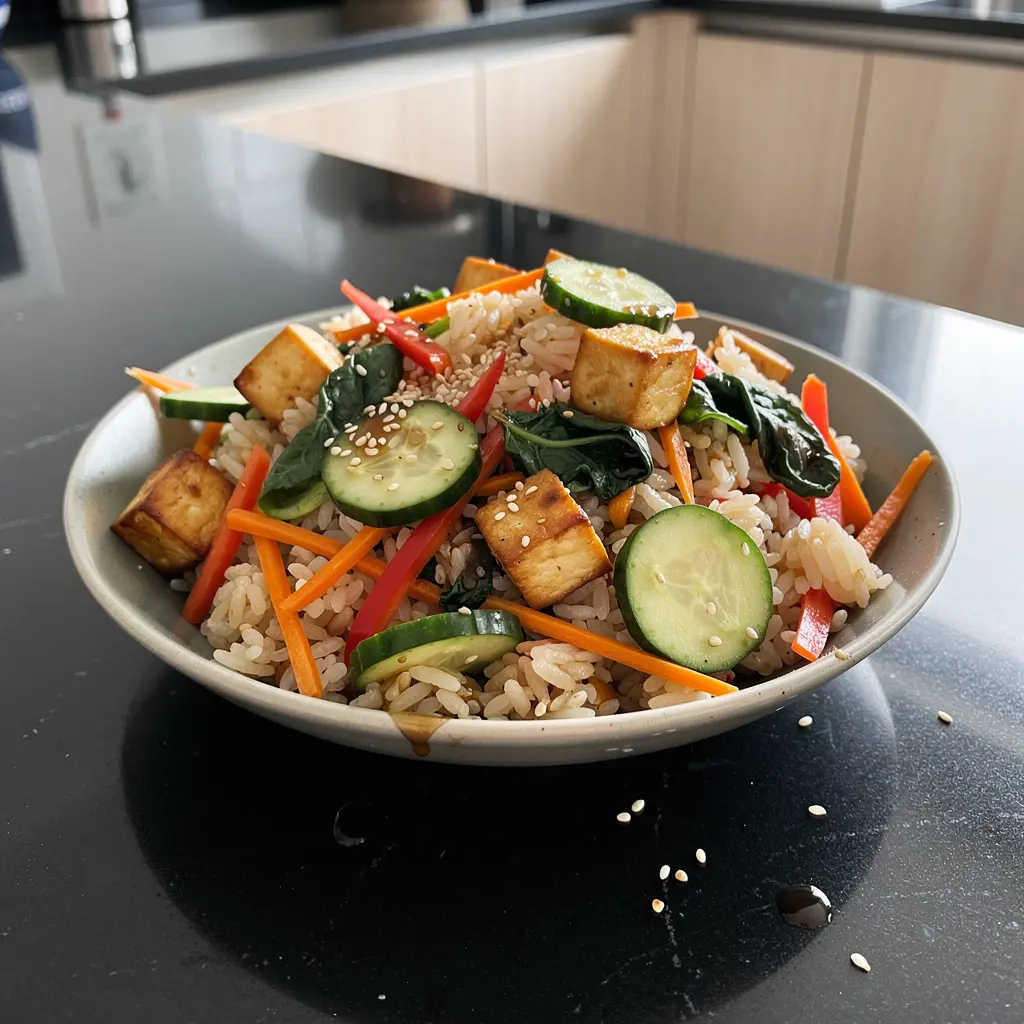
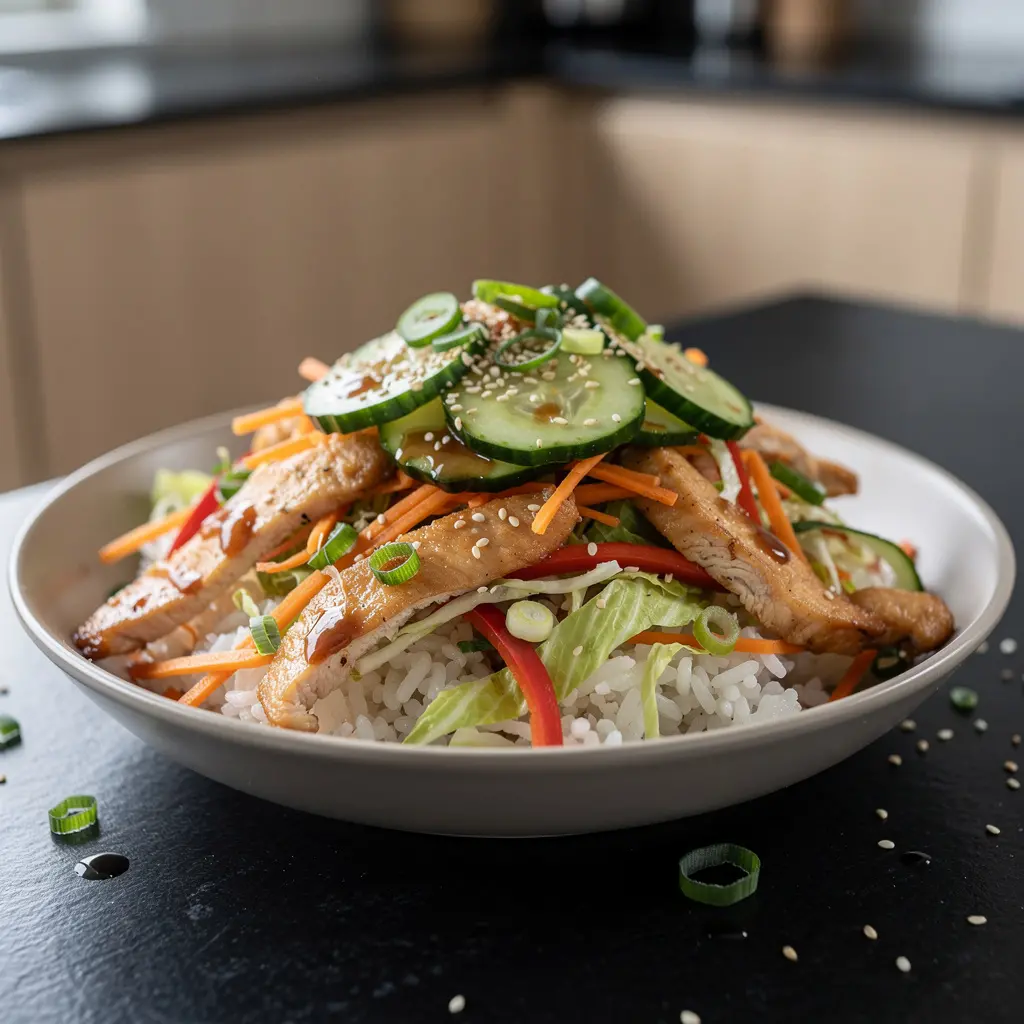
This salad is a bowl full of rice, juicy chicken and crunchy vegetables, drizzled with an aromatic sesame-soy dressing. In Korea, similar dishes often replace a classic lunch or dinner – everything is in one bowl, but it’s not a heavy stew. The flavor is reminiscent of bibimbap, just in a milder, less spicy version that’s easy to pack into a lunchbox.
A complete Korean-inspired meal in one bowl: tender chicken, fluffy rice and crisp vegetables tied together with a fragrant sesame-soy dressing. It has the comforting feel of bibimbap but in a milder, easy-to-pack salad form.
Chef's tips
Don’t overcook the rice – slightly springy grains work best in salads and won’t turn mushy when mixed with the dressing. Toast the sesame seeds just before using to bring out their nutty aroma. If you’re packing this for lunch, keep the dressing and cucumber separate and combine everything right before eating.
How to serve
Serve in deep bowls, topped with extra toasted sesame seeds and a drizzle of sesame oil. For a more filling meal, add a soft-boiled egg on top. Pair with kimchi, pickled radish or a simple miso soup on the side.
Ingredients
- white rice preferably short-grain, but long-grain will also work - 250 g
- chicken breast boneless and skinless - 350 g
- carrot cut into thin matchsticks - 1 piece
- fresh cucumber cut into thin half-slices - 1 piece
- red bell pepper cut into thin strips - 0.5 piece
- Chinese cabbage thinly shredded - 120 g
- spring onion sliced - 3 piece
- vegetable oil for frying the chicken - 1 tablespoon
- soy sauce for the dressing - 4 tablespoons
- sesame oil for the dressing - 2 tablespoons
- rice vinegar for the dressing - 1.5 tablespoons
- honey or sugar - 1 teaspoon
- garlic grated for the dressing - 1 clove
- sesame seeds toasted - 1 tablespoon
- salt to taste, mainly for the chicken and rice
- black pepper to taste
Preparation
- Rinse the rice thoroughly under cold water until the water is almost clear. Cook in lightly salted water according to the package instructions. After cooking, leave covered for 5–10 minutes, then gently fluff with a fork to loosen the grains.
- Rinse the chicken breast, pat dry and cut into thin strips. Season with salt and pepper.
- Heat the vegetable oil in a pan over medium heat. Add the chicken and fry for 6–8 minutes, stirring, until the pieces are golden and cooked through. Set aside to cool slightly.
- Prepare the vegetables: cut the carrot into thin matchsticks, the cucumber into half-slices, the pepper into strips, finely shred the Chinese cabbage, and slice the spring onion.
- In a small bowl, mix the soy sauce, sesame oil, rice vinegar, honey and grated garlic. Taste and adjust with a little more honey or vinegar if needed.
- In a large bowl, combine the cooked rice, fried chicken, carrot, pepper, Chinese cabbage and most of the spring onion. Pour in the dressing and gently but thoroughly mix so the rice and add-ins are evenly coated.
- Arrange the cucumber slices on top, then sprinkle with the remaining spring onion and toasted sesame seeds.
- Serve immediately at room temperature or slightly chilled if you prefer a more refreshing version.
Storage
No storage information available for this dish.
This salad was inspired by my love for bibimbap, but I wanted something milder and more lunchbox-friendly. It’s become a go-to recipe for busy days when I still crave something colorful, balanced and full of texture.