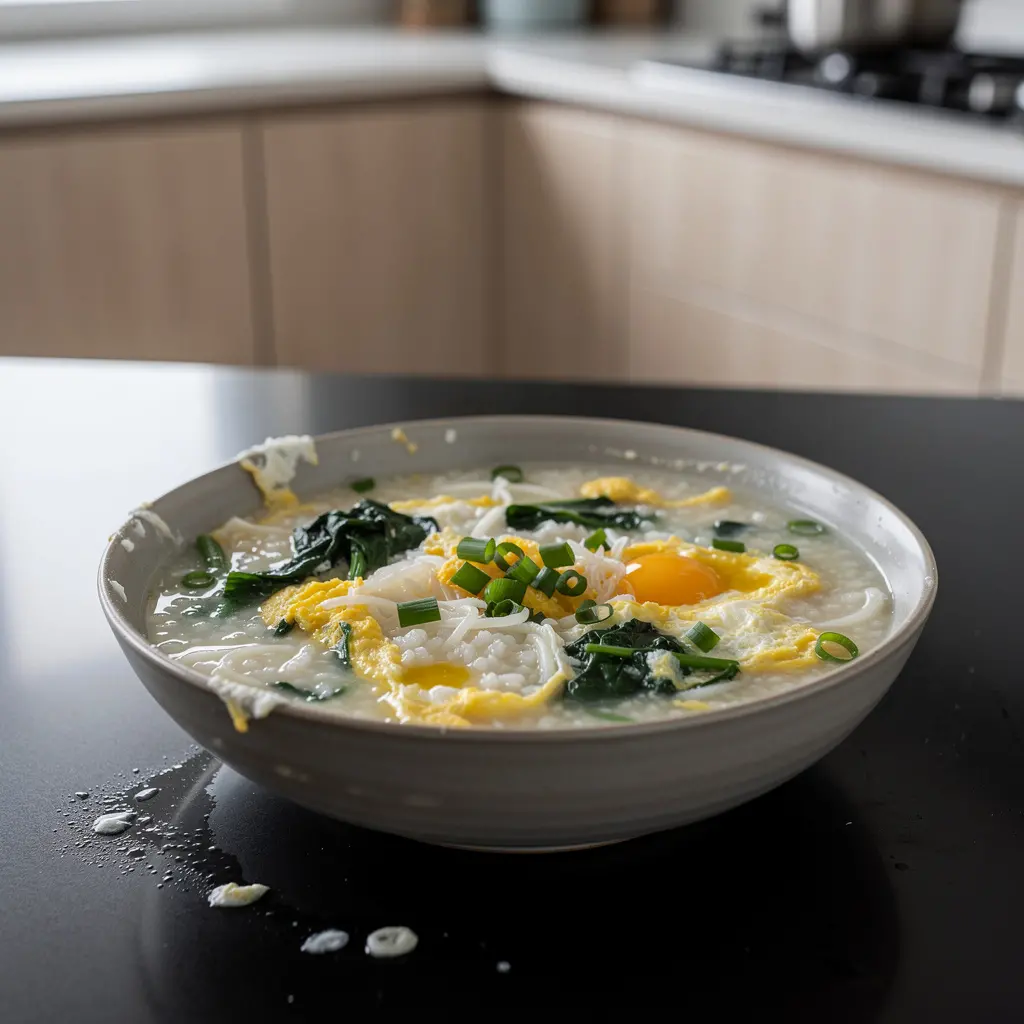
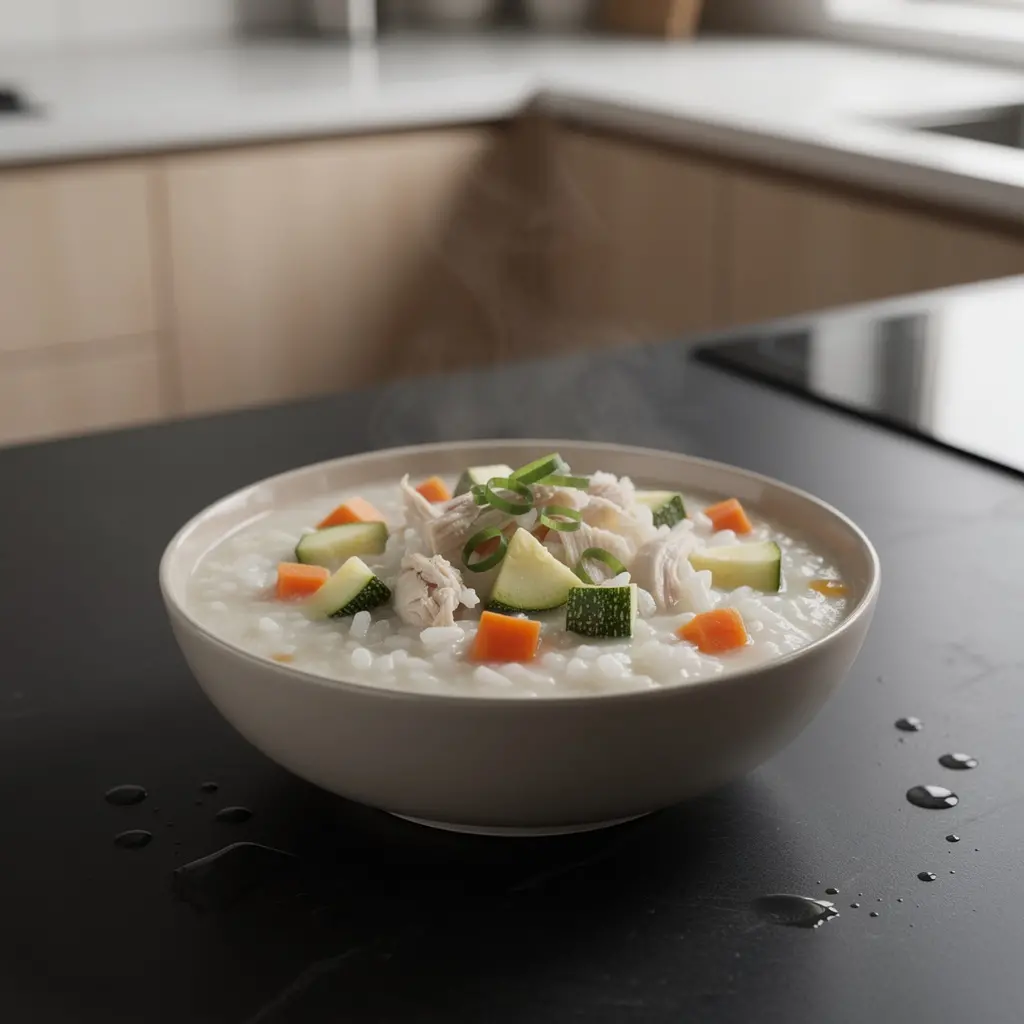
Korean Rice Porridge with Beef (Soegogi Juk) Recipe
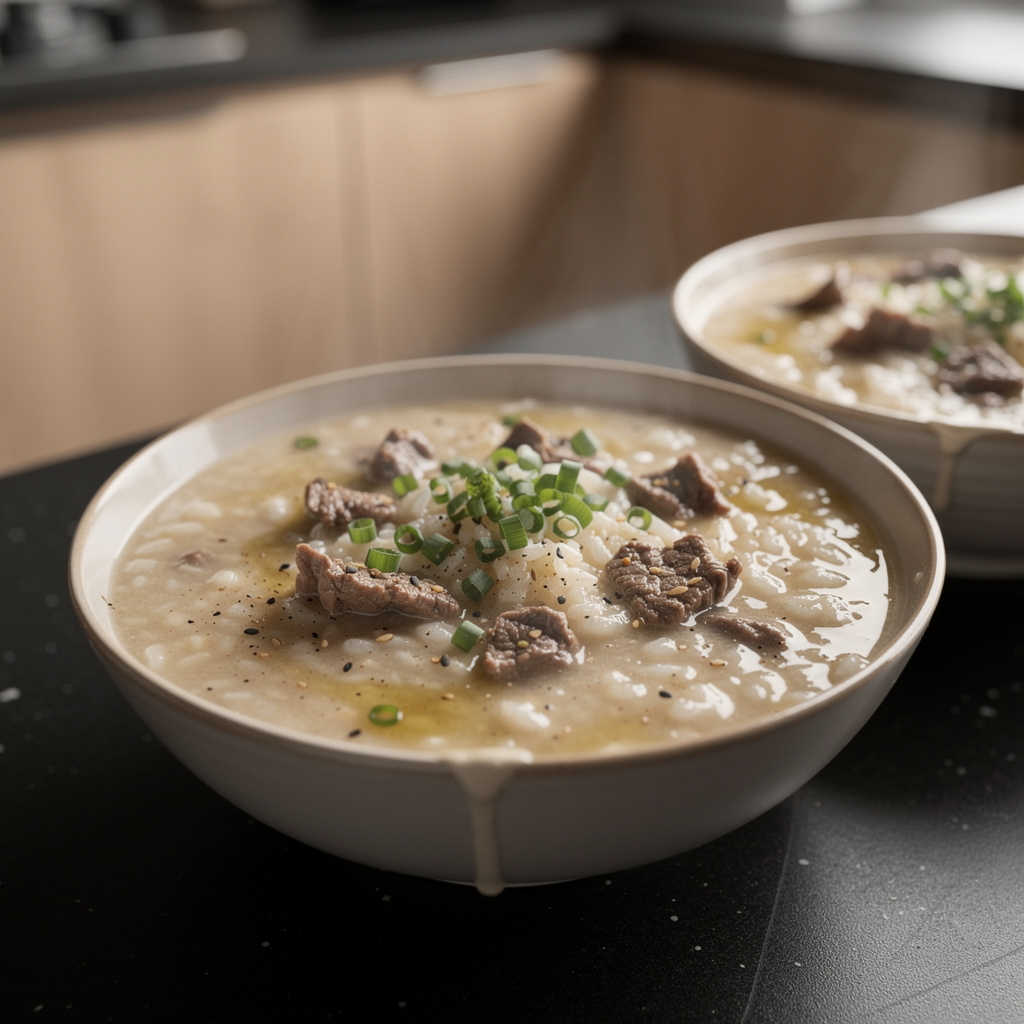
Delicate, thick rice porridge with finely chopped beef is a Korean comfort dish often served to people who are ill or simply exhausted. It tastes like a cross between plain rice gruel and a light stew, but is much more aromatic. Perfect for a chilly morning or a calm dinner when you need something gentle on the stomach.
This Korean-style rice porridge is both nourishing and gentle, combining the soothing texture of congee with the savory depth of sesame oil, soy sauce, and beef. It’s a one-pot meal that feels restorative without being heavy.
Chef's tips
Use good-quality short-grain rice; it breaks down into a creamy texture without turning gluey. Keep the heat low once it starts simmering and stir the bottom regularly—this is the key to a smooth porridge without burnt bits. Taste and adjust the salt only at the end, especially if you plan to add more soy sauce at the table.
How to serve
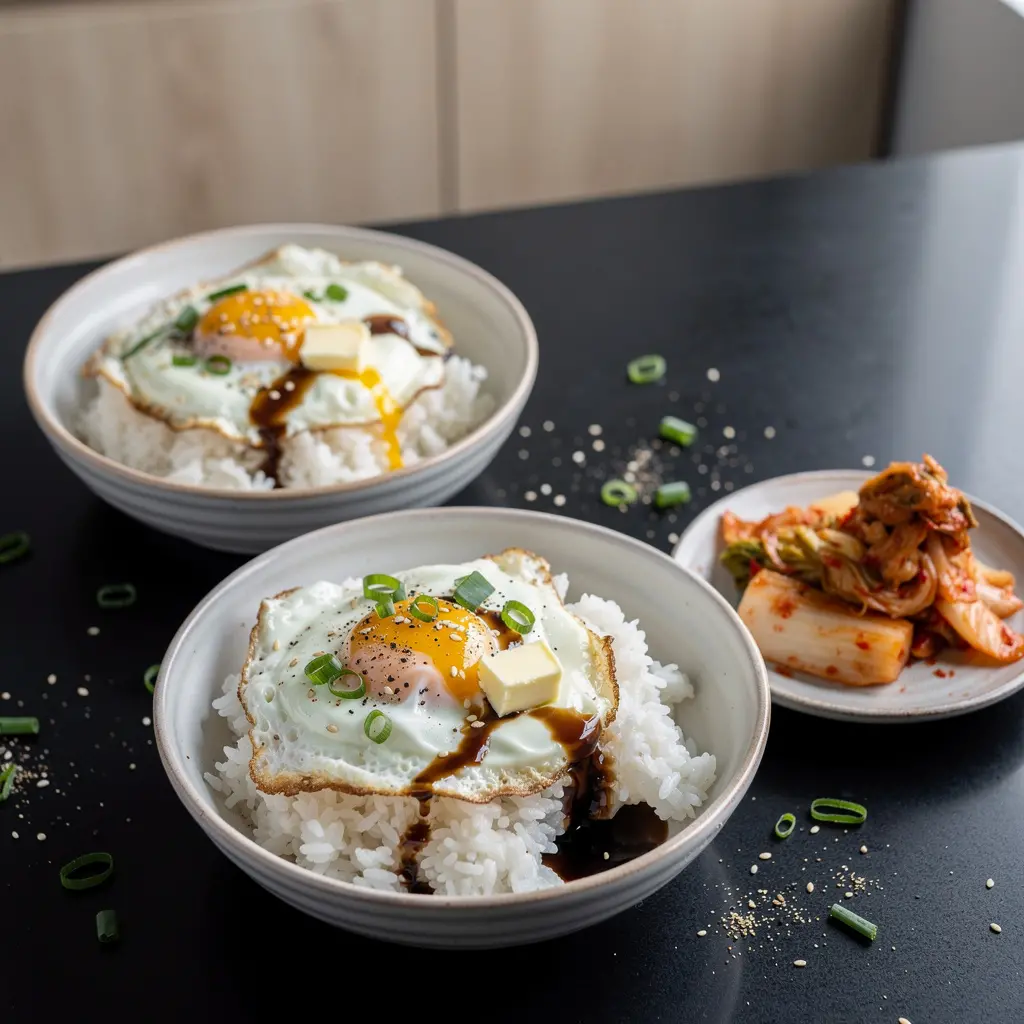
Serve in warm bowls with plenty of chopped chives and extra sesame oil or soy sauce on the side. For a more filling meal, top each portion with a soft-boiled or fried egg and serve with kimchi, pickled radish, or lightly seasoned steamed vegetables.
Ingredients
- short-grain rice e.g. sushi rice, rinsed - 150 g
- beef lean, finely chopped or ground - 150 g
- water - 1.3 l
- sesame oil - 1.5 tablespoons
- soy sauce for seasoning the beef - 1 tablespoon
- salt or to taste - 0.75 teaspoons
- garlic finely chopped - 1 clove
- chives chopped, for serving - 2 tablespoons
- black pepper optional - 0.25 teaspoons
Preparation
- Rinse the rice several times in cold water until the water is almost clear, then drain.
- In a bowl, mix the beef with the soy sauce and half of the sesame oil, and set aside for 10 minutes.
- In a heavy-bottomed pot, heat the remaining sesame oil over medium heat.
- Add the rice and stir for 2–3 minutes, until each grain is coated with oil and looks slightly glossy and translucent.
- Add the marinated beef and garlic, and fry for 3–4 minutes, breaking up the meat with a spoon, until it turns brown.
- Pour in the water, stir, bring to a boil, then reduce the heat to very low.
- Cook partially covered for 35–40 minutes, stirring every few minutes and scraping the bottom of the pot with a spoon so the rice doesn’t stick and burn.
- When the rice has broken down and the mixture has the consistency of a thick soup or porridge, season with salt and, if you like, pepper.
- If the porridge is too thick, add a little hot water and stir; if it’s too thin, cook a few minutes longer uncovered.
- Serve hot in bowls, sprinkled with chives. Everyone can season their portion with extra soy sauce to taste.
Storage
No storage information available for this dish.
This dish is my go-to when I want something comforting but not bland. The aroma of sesame oil and garlic makes the whole kitchen smell cozy, and the texture is incredibly soothing—ideal for days when you’re under the weather or just need a quiet, warming meal.