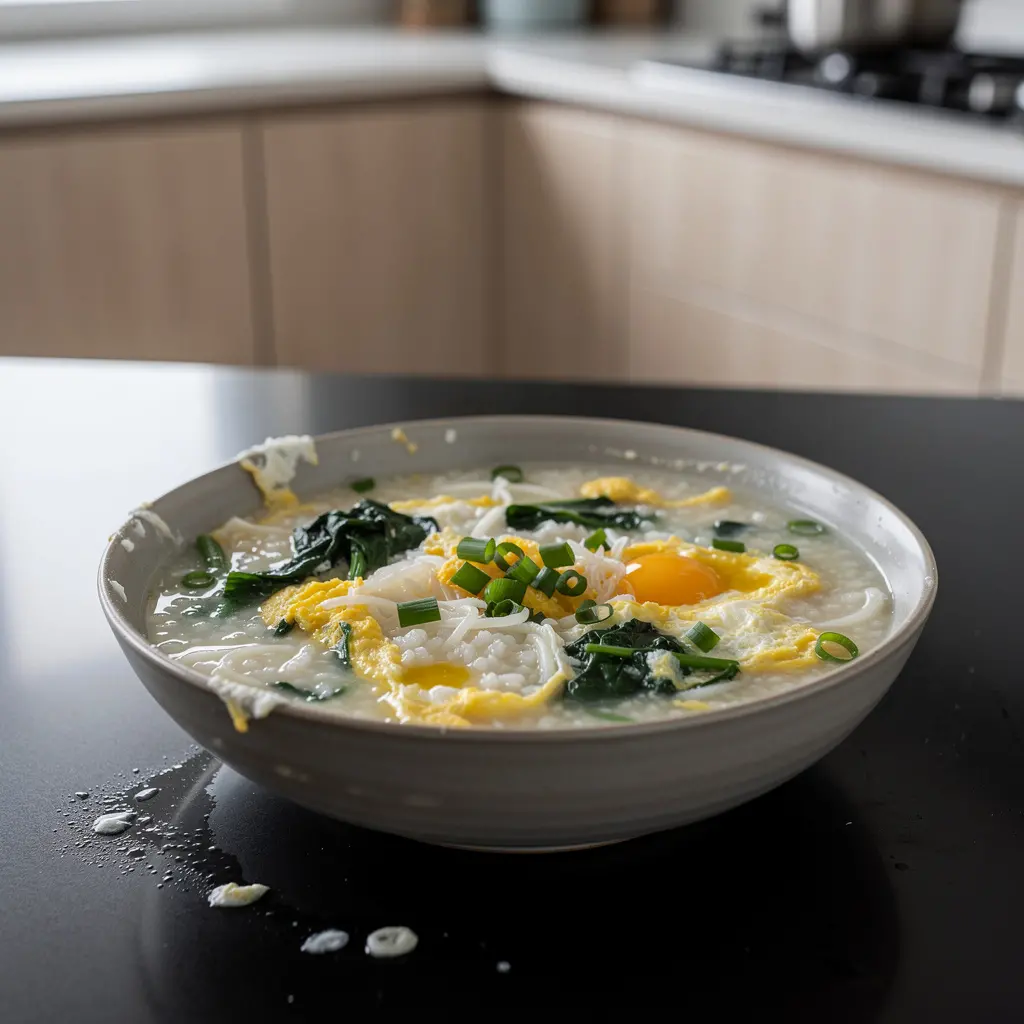
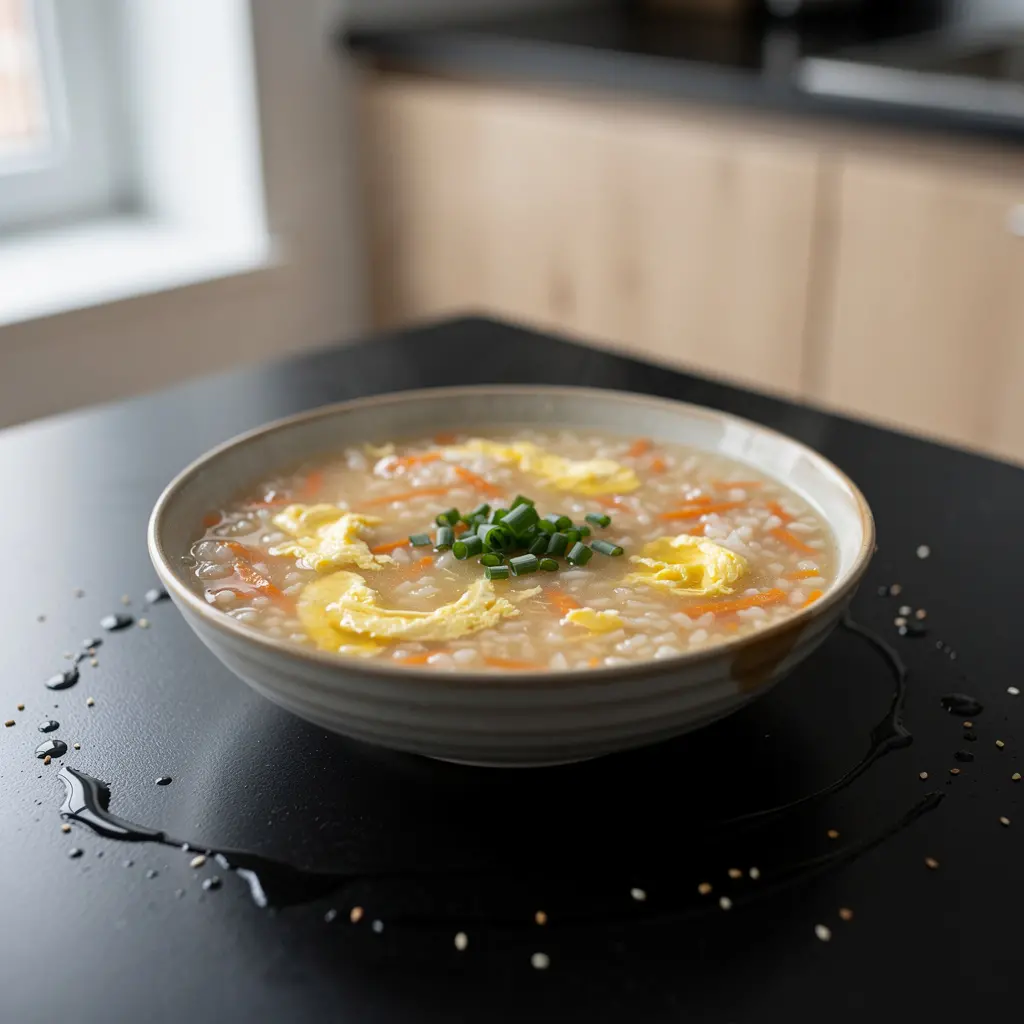
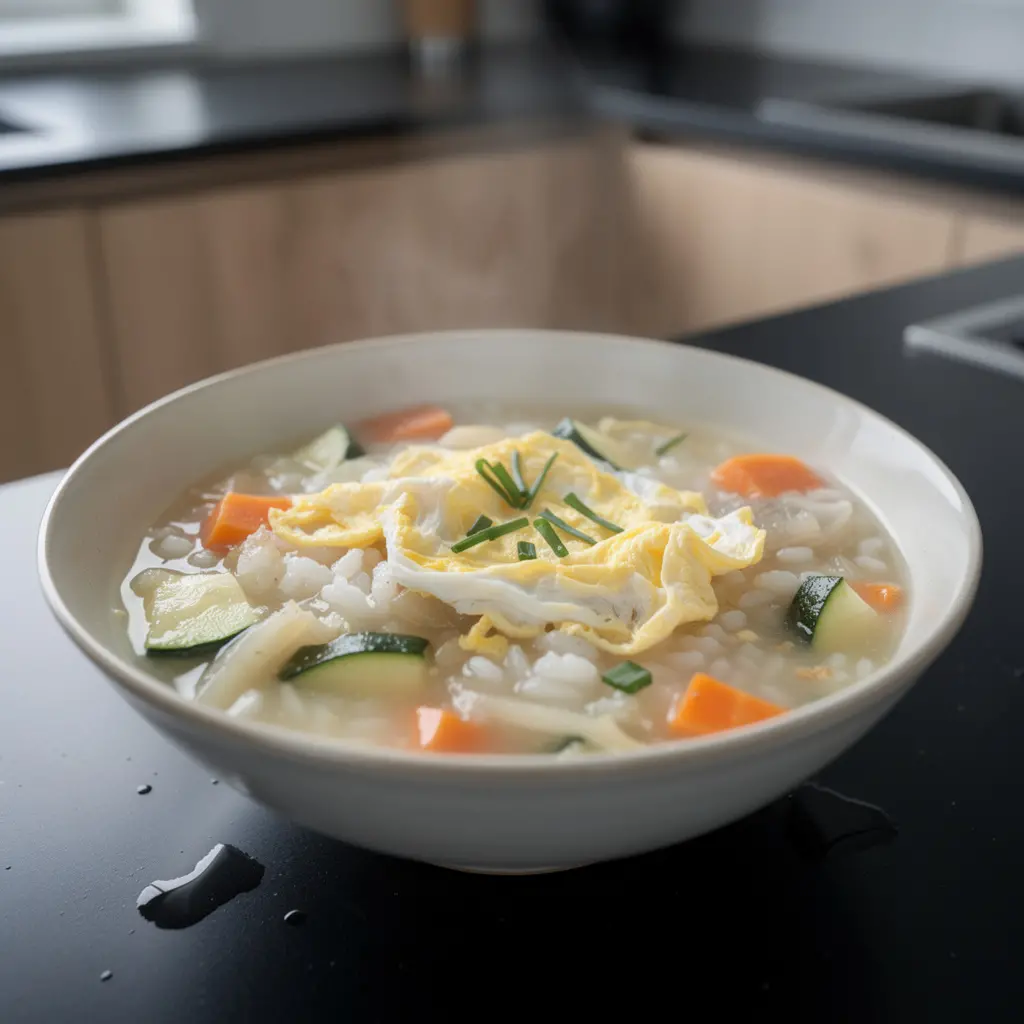
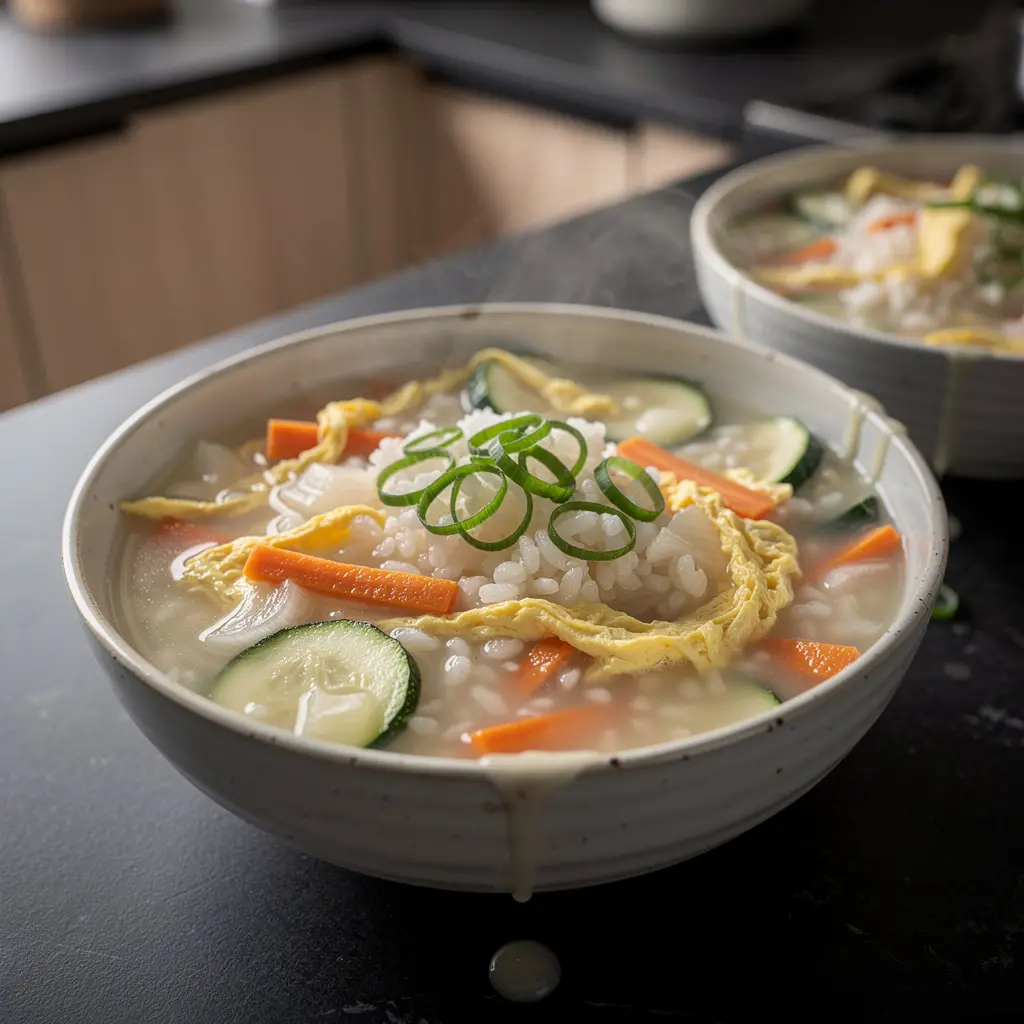
Korean rice porridge juk with chicken Recipe
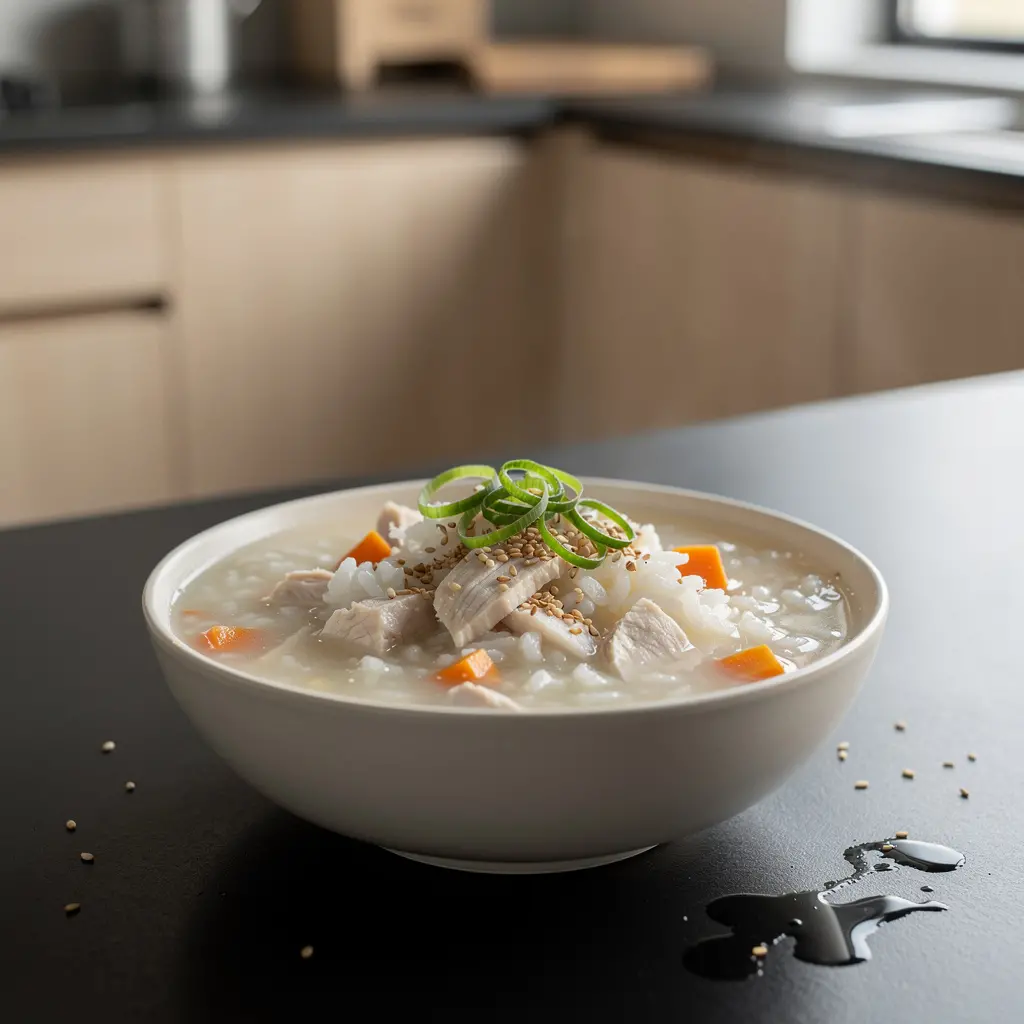
Juk is a delicate, thick rice porridge that in Korea is served to people who are ill, tired, or simply need something gentle on the stomach. The chicken version is filling but very mild in flavor, a bit like a cross between clear chicken soup and rice gruel. It’s a great dish for a calm breakfast or dinner when you don’t feel like eating anything heavy.
This Korean-style rice porridge is extremely gentle on the stomach while still being nourishing and satisfying thanks to the chicken and stock. Toasted sesame oil and ginger add subtle depth without making the dish heavy or spicy, making it ideal for days when you need something soothing and easy to digest.
Chef's tips
Stir the porridge often, especially towards the end of cooking, to prevent it from catching on the bottom of the pot. If you like an even smoother texture, you can cook it a bit longer with more stock until the rice almost completely breaks down. Use a mild, good-quality stock – its flavor will define the whole dish, so avoid very salty or strongly seasoned broths.
How to serve
Serve juk in deep bowls, topped with finely chopped chives and toasted sesame seeds. You can add a small dish of kimchi or lightly seasoned cucumber salad on the side for those who feel well enough for a bit more flavor. For extra protein, you can top each portion with a soft-boiled egg or a poached egg.
Ingredients
- rice - 200 g
- chicken breast - 200 g
- stock - 1200 ml
- garlic - 2 clove
- ginger - 1 slice
- carrot - 0.5 piece
- salt - 0.75 teaspoon
- pepper - 0.25 teaspoon
- sesame oil - 1 tablespoon
- chives - 2 tablespoon
- sesame seeds - 1 tablespoon
Preparation
- Rinse the rice several times in cold water until the water is almost clear, then drain it in a sieve.
- Cut the carrot into very small cubes, finely chop the garlic, slice the ginger into a thin slice, and finely chop the chives.
- Cut the chicken breast into very small cubes or thin strips so it cooks quickly.
- Heat the sesame oil over medium heat in a heavy-bottomed pot, add the garlic and fry for 1–2 minutes until fragrant but not browned.
- Add the rice and fry for 2–3 minutes, stirring, until the grains become slightly translucent around the edges – similar to making risotto.
- Pour in the stock, add the slice of ginger and the carrot, stir and bring to a boil.
- Reduce the heat to low and cook uncovered for 25–30 minutes, stirring often, especially at the bottom, so the rice doesn’t burn; the consistency should be thick like porridge.
- After about 15 minutes of cooking, add the chopped chicken, stir and continue to cook until the meat is completely white and tender.
- When the rice has broken down and the porridge is thick and creamy, remove the slice of ginger and season with salt and pepper to taste.
- If the porridge is too thick, add a little hot stock or water; if it’s too thin, cook for a few minutes longer.
- Ladle the juk into bowls, sprinkle with chopped chives and toasted sesame seeds, and serve warm.
Storage
No storage information available for this dish.
This chicken juk is one of those dishes that feels like a warm hug in a bowl. It’s perfect for days when you’re tired, recovering from a cold, or simply craving something simple and comforting. Once you get used to the basic method, you can easily adapt it with different vegetables or toppings depending on what you have at home.