Korean-style salad with egg, rice and vegetables Recipe
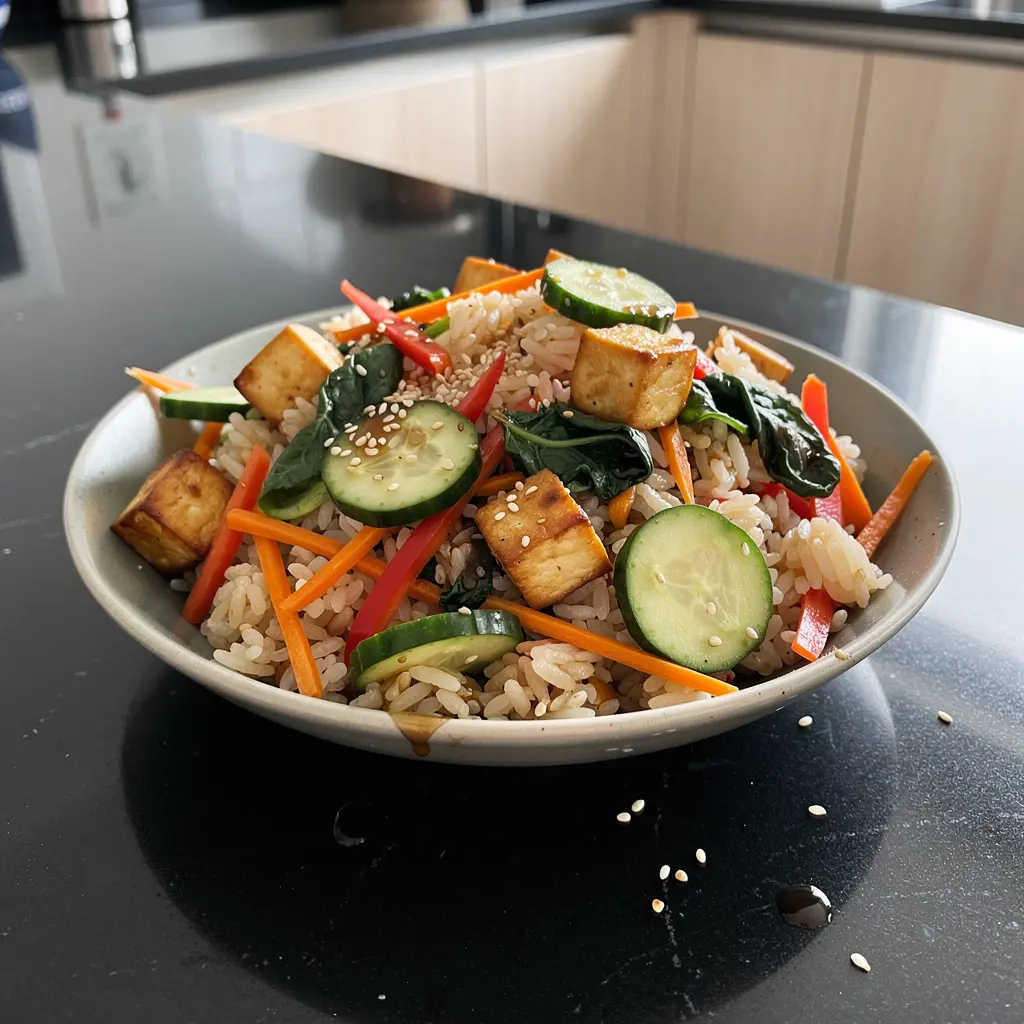
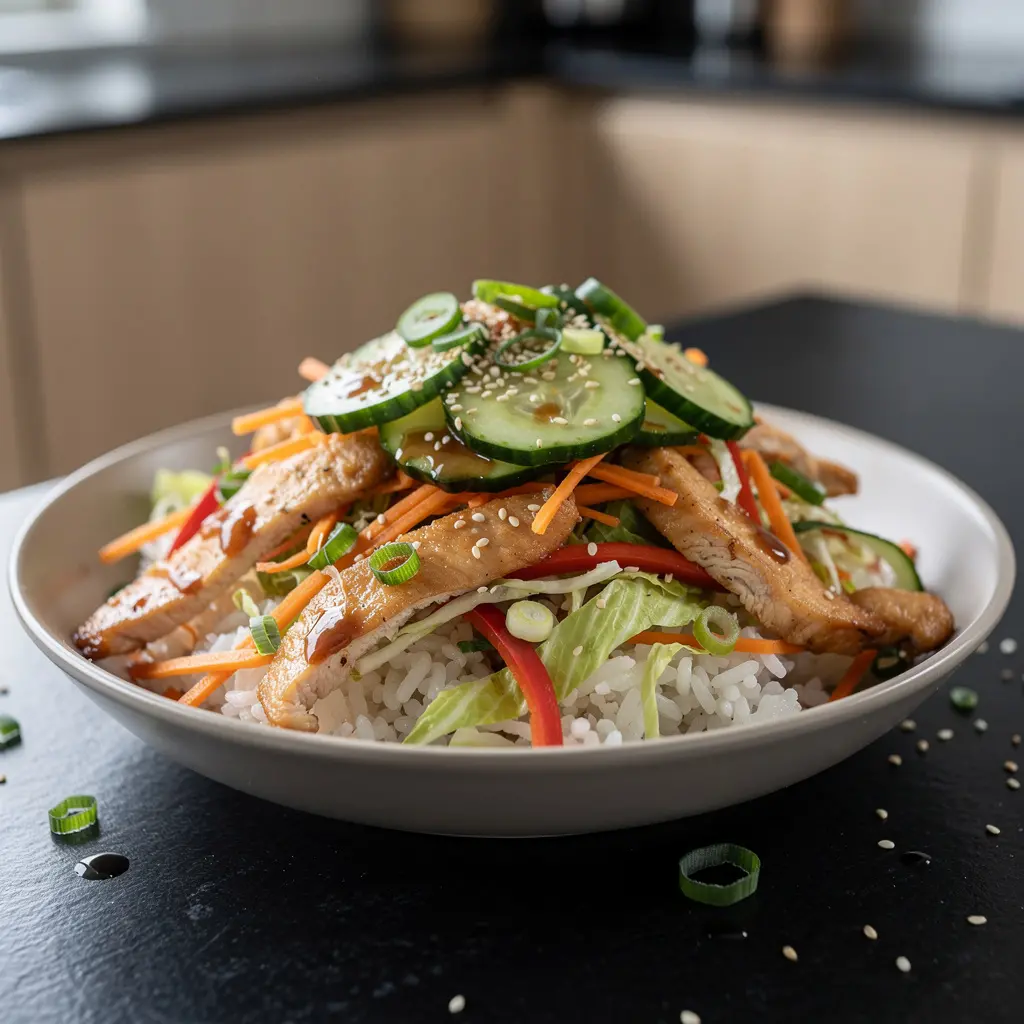
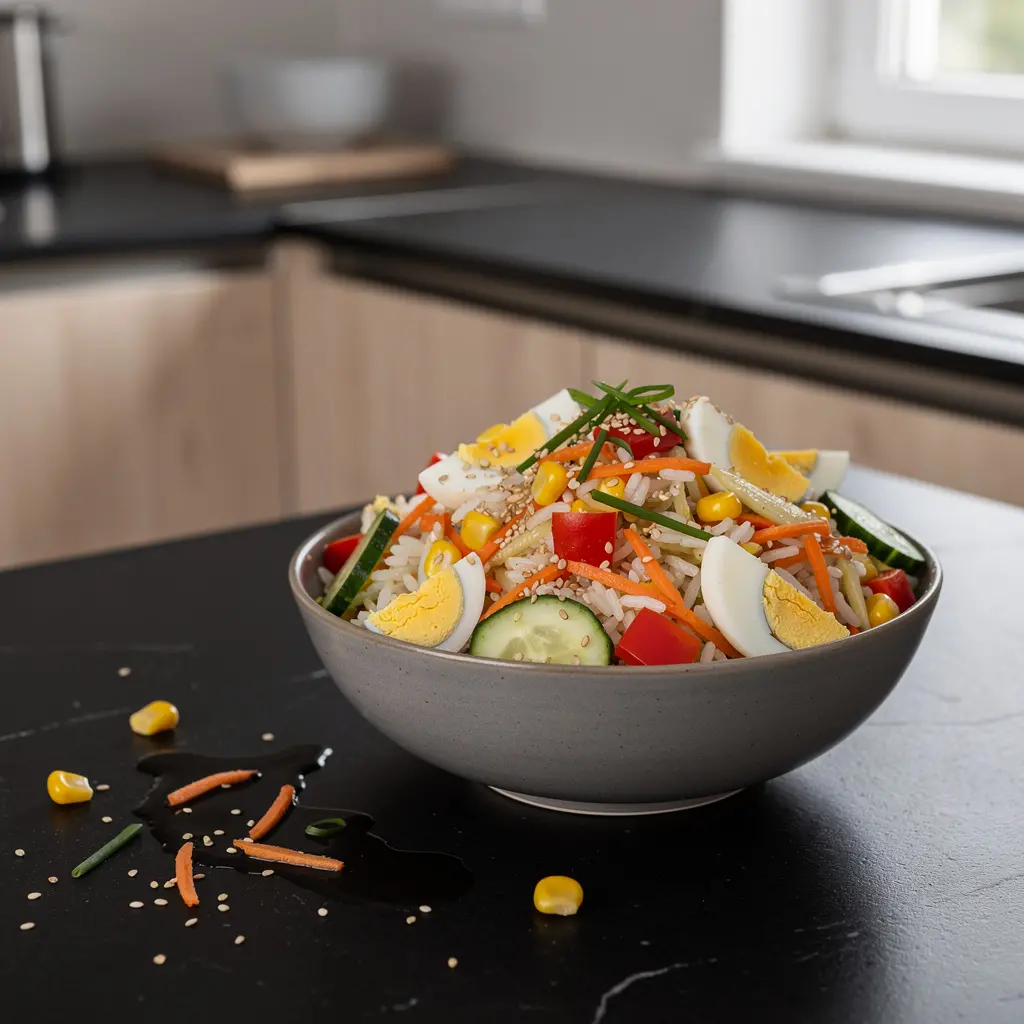
This is a simple, filling salad with rice, egg and crunchy vegetables that’s a bit like a cross between Polish vegetable salad and bibimbap, just served cold. In Korea, similar rice bowls with toppings are often packed into lunchboxes for school or work. A dressing based on soy sauce and sesame oil turns plain rice into a fragrant, flavorful dish.
W Korei miski z ryżem, jajkiem i warzywami często pakuje się do dosiraków, czyli lunchboxów zabieranych do pracy lub szkoły. Ta sałatka to uproszczona, chłodna wersja takich misek, dostosowana do łatwego przygotowania z dostępnych w Polsce składników.
This salad combines familiar, comforting ingredients like rice and hard-boiled eggs with Korean-inspired flavors from soy sauce, sesame oil and rice vinegar. It’s easy to pack, tastes great cold and makes a satisfying, balanced meal in one bowl.
Dlaczego ta wersja działa
- Użycie ryżu z dnia poprzedniego zapobiega rozmoknięciu sałatki i daje lepszą strukturę ziaren.
- Sos łączy słoność sosu sojowego z kwasowością octu i nutą sezamu, dzięki czemu ryż nie jest mdły.
- Dodatek jajek sprawia, że sałatka jest pełniejszym, białkowym posiłkiem, a nie tylko „ryżem z warzywami”.
Chef's tips
Don’t skip cooling the rice properly – slightly dried, loose grains absorb the dressing better and won’t turn mushy. If you’re short on time, spread freshly cooked rice on a wide plate and place it near an open window or fan to cool faster. Taste the dressing before adding it to the salad and adjust the balance of saltiness, sweetness and acidity to your liking.
How to serve
Serve the salad in deep bowls, topped with extra toasted sesame seeds and a little fresh chives. You can also serve it on a bed of crunchy lettuce leaves or with a side of kimchi or other pickled vegetables for more Korean-style flavor.
Na co uważać
- Nie mieszaj sałatki zbyt energicznie, bo jajka rozpadną się w papkę i sos stanie się mętny.
- Nie dodawaj zbyt dużo sosu na raz – ryż powinien być lekko błyszczący, nie pływać w zalewie.
- Jeśli ryż jest jeszcze ciepły przy mieszaniu, warzywa szybko stracą chrupkość.
Zamienniki
- Ocet ryżowy możesz zastąpić jabłkowym, wybierając łagodniejszy, niebaryłkowany.
- Miód zamień na syrop klonowy lub cukier, jeśli potrzebujesz wersji wegańskiej.
- Kukurydzę z puszki możesz podmienić na edamame lub zielony groszek dla innej tekstury.
- Olej sezamowy zastąp neutralnym olejem i szczyptą większej ilości prażonego sezamu.
Ingredients
- rice preferably short-grain, cooked and cooled - 200 g
- eggs hard-boiled - 3 pieces
- cucumber cut into thin half-slices - 0.5 pieces
- carrot coarsely grated - 0.5 pieces
- bell pepper diced finely - 0.5 pieces
- canned corn drained - 3 tablespoons
- chives chopped - 2 tablespoons
- soy sauce for the dressing - 2.5 tablespoons
- sesame oil for the dressing - 1.5 tablespoons
- rice vinegar adds a light acidity - 1 tablespoon
- honey or sugar - 1 teaspoon
- garlic grated or very finely chopped - 0.5 clove
- sesame seeds toasted in a dry pan - 1 tablespoon
- salt to season the rice, if needed - 0.25 teaspoons
Preparation
- Cook the rice according to the package instructions, preferably the day before so it has time to cool completely and dry out slightly. If you’re using freshly cooked rice, spread it out on a plate so it cools faster.
- Place the eggs in a pot with cold water, bring to a boil, then cook for 8–9 minutes from the moment it starts boiling. Rinse with cold water, peel and cut into large cubes.
- Slice the cucumber into thin half-slices. Coarsely grate the carrot, dice the bell pepper finely, drain the corn, and chop the chives.
- In a small bowl, make the dressing: mix the soy sauce, sesame oil, rice vinegar, honey and grated garlic until well combined.
- In a large bowl, fluff the rice with a fork so it’s not clumped together. If it’s very dry, you can sprinkle it with 1–2 tablespoons of water.
- Add the eggs, cucumber, carrot, bell pepper, corn and most of the chives to the rice (reserve a little for sprinkling on top). Pour in the dressing and gently mix with a large spoon so you don’t mash the eggs.
- Sprinkle the salad with toasted sesame seeds and the remaining chives. Set aside for 10–15 minutes so the flavors meld, then serve at room temperature or slightly chilled.
Storage
Sałatkę przechowuj w szczelnym pojemniku w lodówce do 24 godzin – ryż lekko zmięknie, a warzywa stracą część chrupkości. Przed podaniem delikatnie ją przemieszaj i w razie potrzeby dodaj odrobinę świeżego szczypiorku lub sezamu dla odświeżenia smaku.
I like this salad as a way to use up leftover rice from the day before. The combination of creamy egg, crunchy vegetables and aromatic sesame dressing makes it feel both homely and a bit exotic at the same time. It’s one of those dishes that tastes even better after a short rest, when all the flavors have had time to come together.