Korean Fried Eggs on Rice with Vegetables Recipe
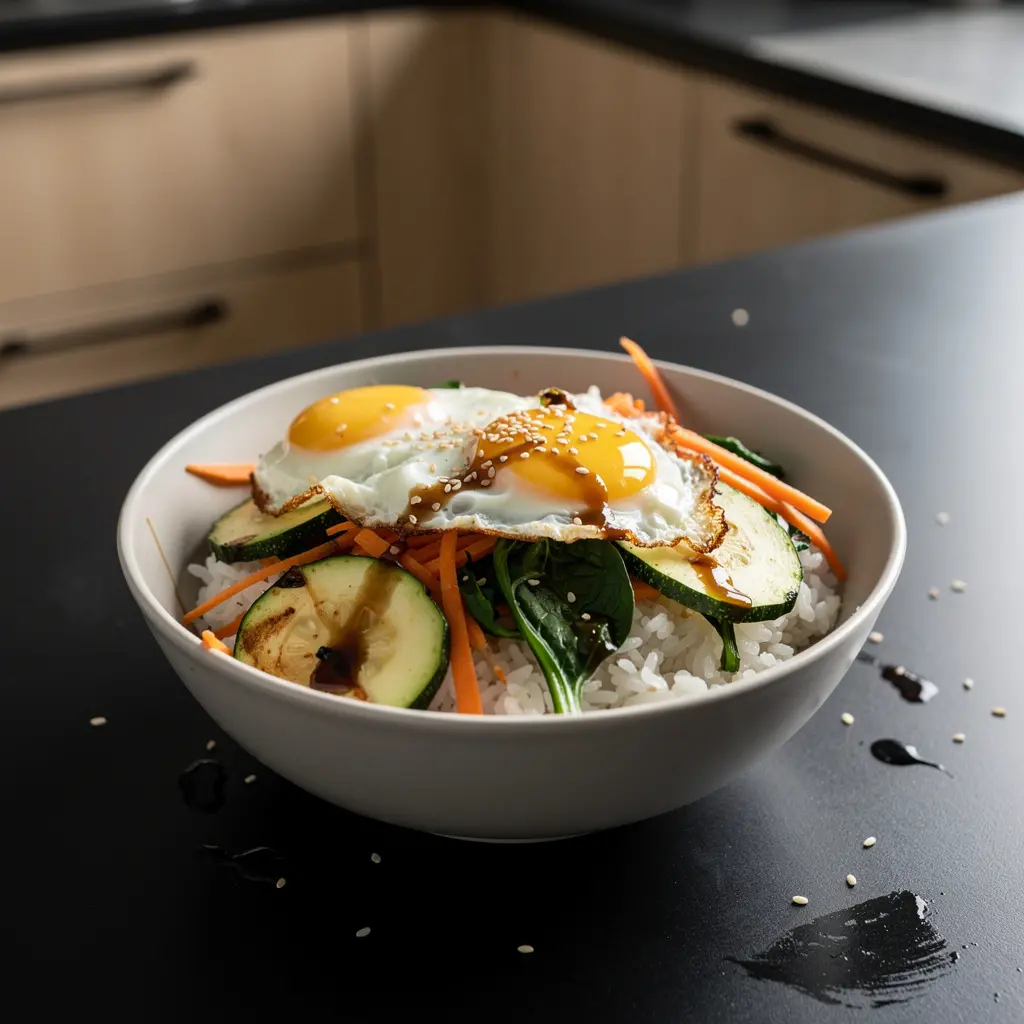
This is a very simple dish that in Korea could easily be a quick student meal: a bowl of warm rice topped with a fried egg and a handful of vegetables. It’s a bit like a minimalist version of bibimbap, but without the complicated add‑ons. Perfect when you have cooked rice from the previous day and want to turn it into a complete meal in 10 minutes.
A minimalist, Korean-inspired rice bowl that turns leftover rice into a complete, comforting meal in minutes, using just a fried egg, fresh vegetables, and a simple spicy-savoury sauce.
Chef's tips
Use day-old rice straight from the fridge for the best texture—just reheat it gently so it becomes fluffy again. Toast the sesame seeds briefly in a dry pan to bring out their aroma, and adjust the amount of gochujang to your heat tolerance.
How to serve
Serve immediately while the egg yolk is still warm and runny, so it can coat the rice like a sauce. Add a side of kimchi or pickled vegetables for extra Korean flavour and a refreshing contrast.
Ingredients
- rice cooked, preferably slightly warm - 200 g
- egg - 2 piece
- carrot grated on a coarse grater - 50 g
- cucumber cut into thin half-slices - 60 g
- chives chopped - 8 g
- soy sauce - 20 ml
- gochujang paste you can reduce the amount - 8 g
- vegetable oil for frying the eggs - 15 ml
- sesame oil - 5 ml
- sesame seeds toasted - 4 g
Preparation
- If the rice is cold, transfer it to a bowl and heat it in the microwave or over steam until warm and soft.
- Slice the cucumber into thin half-slices and grate the carrot on a coarse grater. You can leave the vegetables raw for extra crunch.
- In a small bowl, mix the soy sauce, gochujang paste, and sesame oil until you get a smooth sauce.
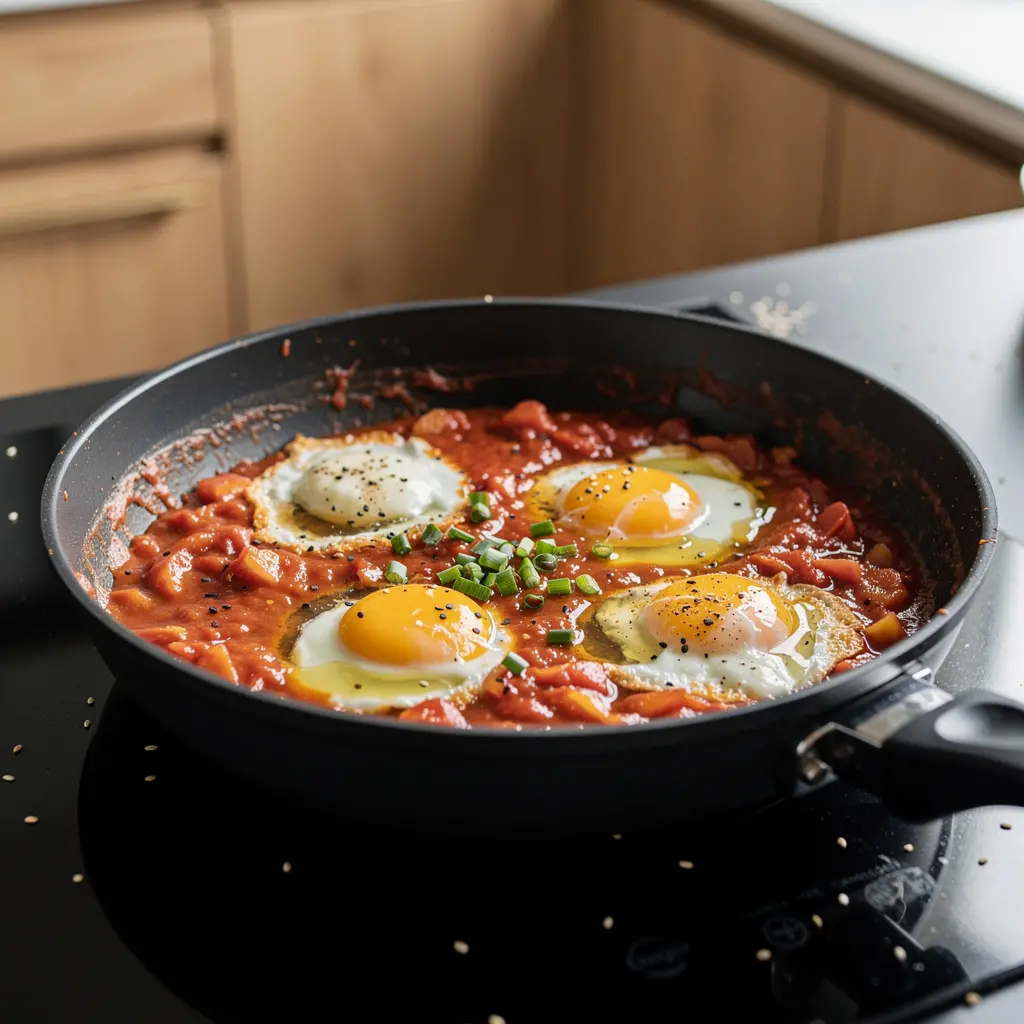
- Heat the vegetable oil in a pan over medium heat. Crack in the eggs and fry for 3–4 minutes, until the whites are fully set and the yolks remain runny or semi-runny, depending on your preference.
- While the eggs are frying, divide the warm rice between two bowls, gently pressing it down with a spoon to create an even surface.
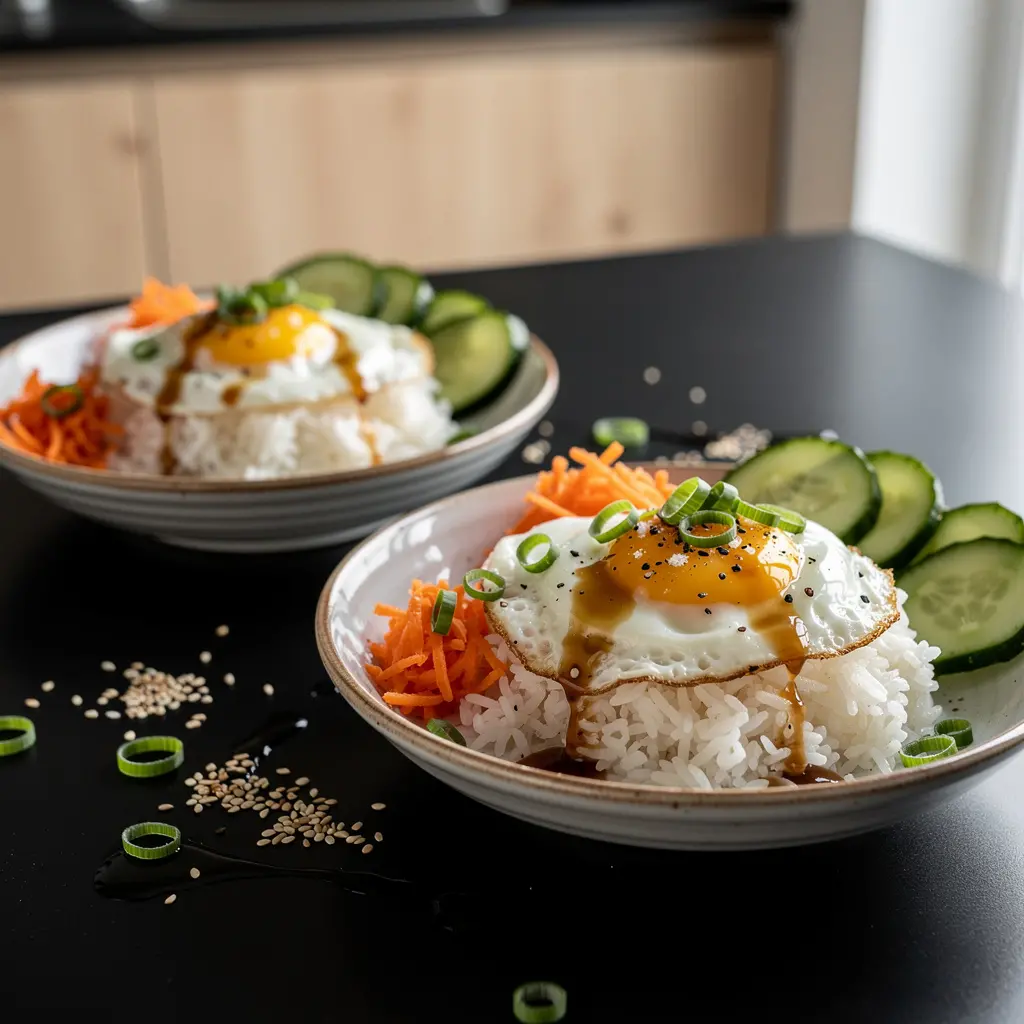
- Arrange a handful of carrot and cucumber on top of the rice in each bowl, creating colorful little piles on the side.
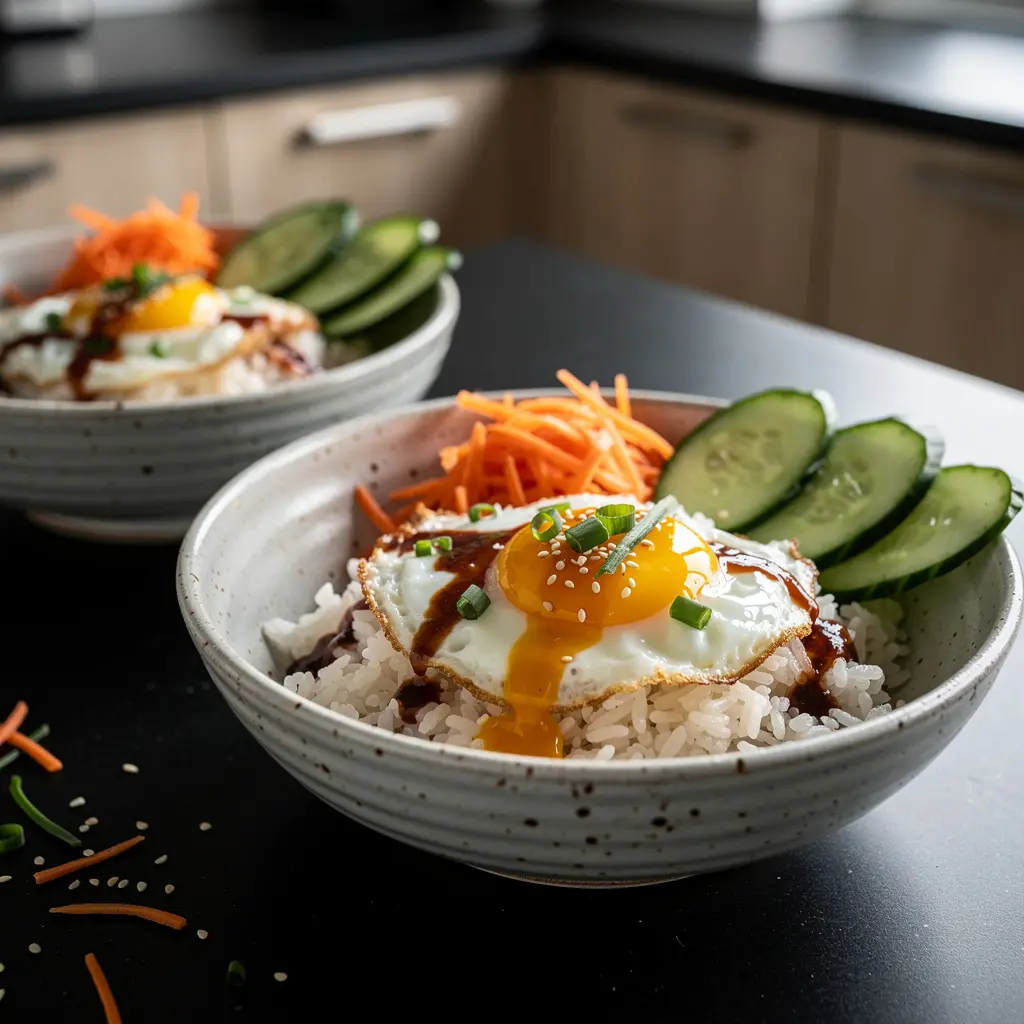
- Gently place a fried egg in the center of each bowl. Drizzle everything with the prepared sauce and sprinkle with chives and sesame seeds.
- Before eating, mix the contents of the bowl with a spoon so the egg yolk combines with the rice and sauce.
Storage
No storage information available for this dish.
This dish is my go-to when I want something warm, filling, and homemade, but don’t feel like cooking a full meal. It proves that with just rice, an egg, and a few vegetables, you can create something that feels special and satisfying.