Korean Cold Wheat Noodle Salad with Tofu Recipe
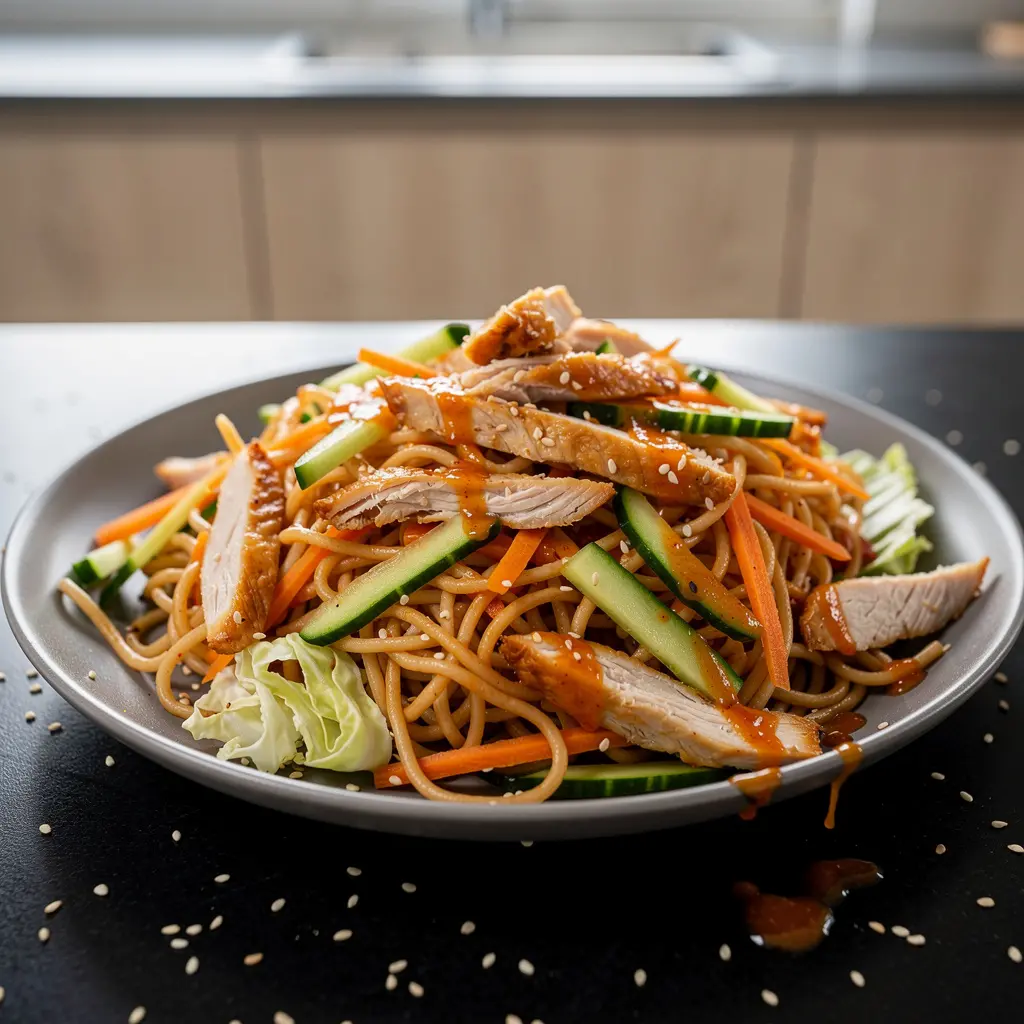
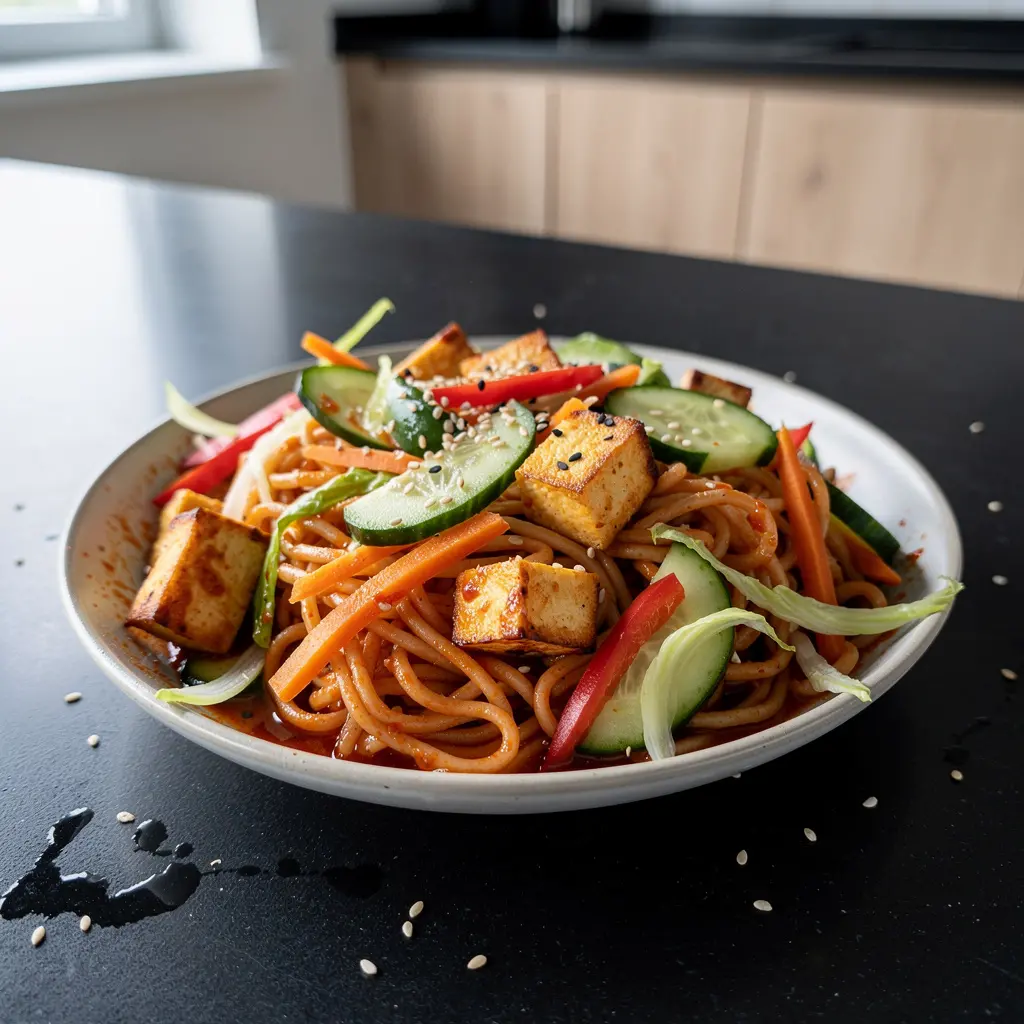
This salad combines chilled wheat noodles, crunchy vegetables, and pan-fried tofu in a sweet-and-sour, slightly spicy sauce. In Korea, similar dishes are eaten in summer as a refreshing lunch or dinner when hot soup is the last thing you feel like. The flavor is a bit like an Italian pasta salad, but with the addition of gochujang and sesame.
A refreshing Korean-inspired pasta salad that combines the comfort of wheat noodles with the bright, bold flavors of gochujang, sesame, and crisp vegetables. It’s satisfying yet light, perfect for hot days when you want something flavorful but cooling.
Chef's tips
Make sure both the noodles and tofu are fully cooled before mixing in the sauce—this keeps the salad from steaming and thinning the dressing. Toast the sesame seeds briefly in a dry pan to bring out their nutty aroma. If preparing ahead, keep a little extra sauce aside to freshen the salad just before serving.
How to serve
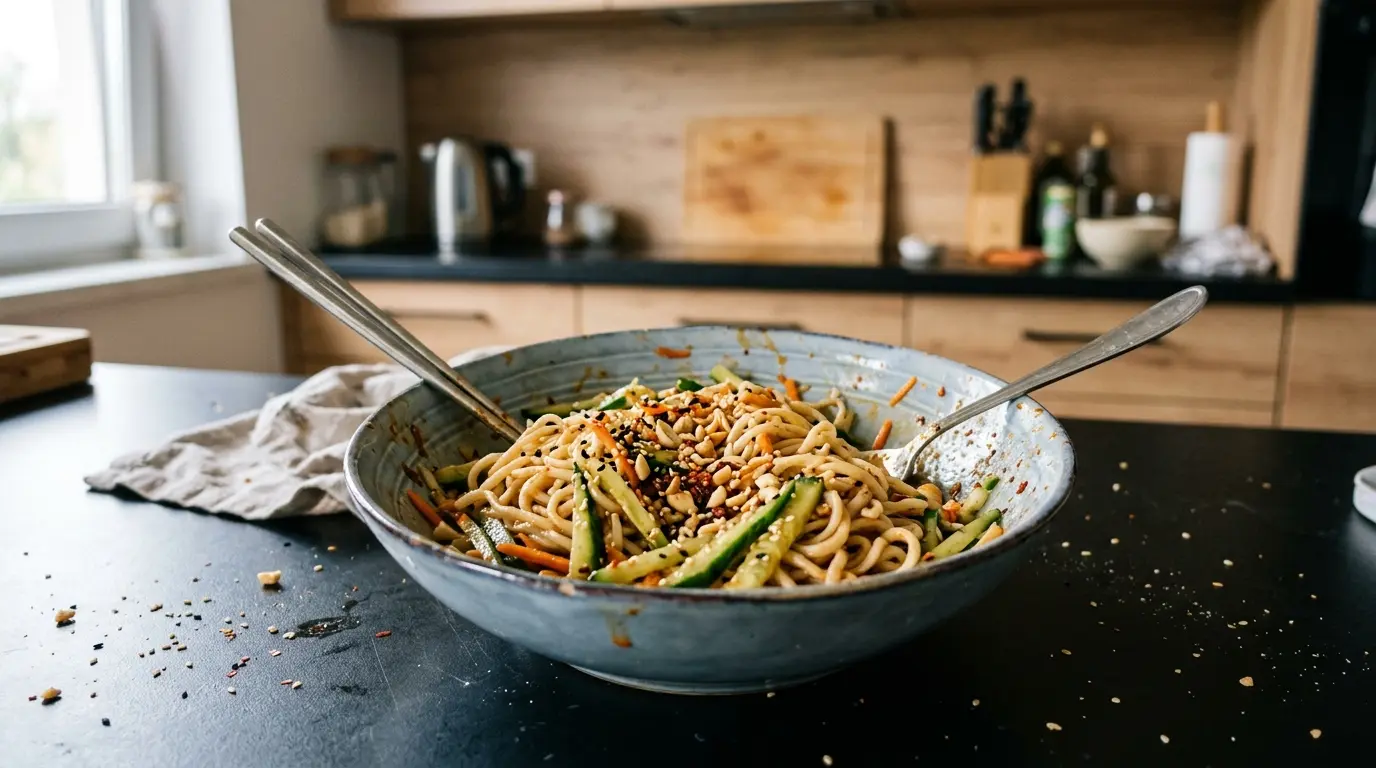
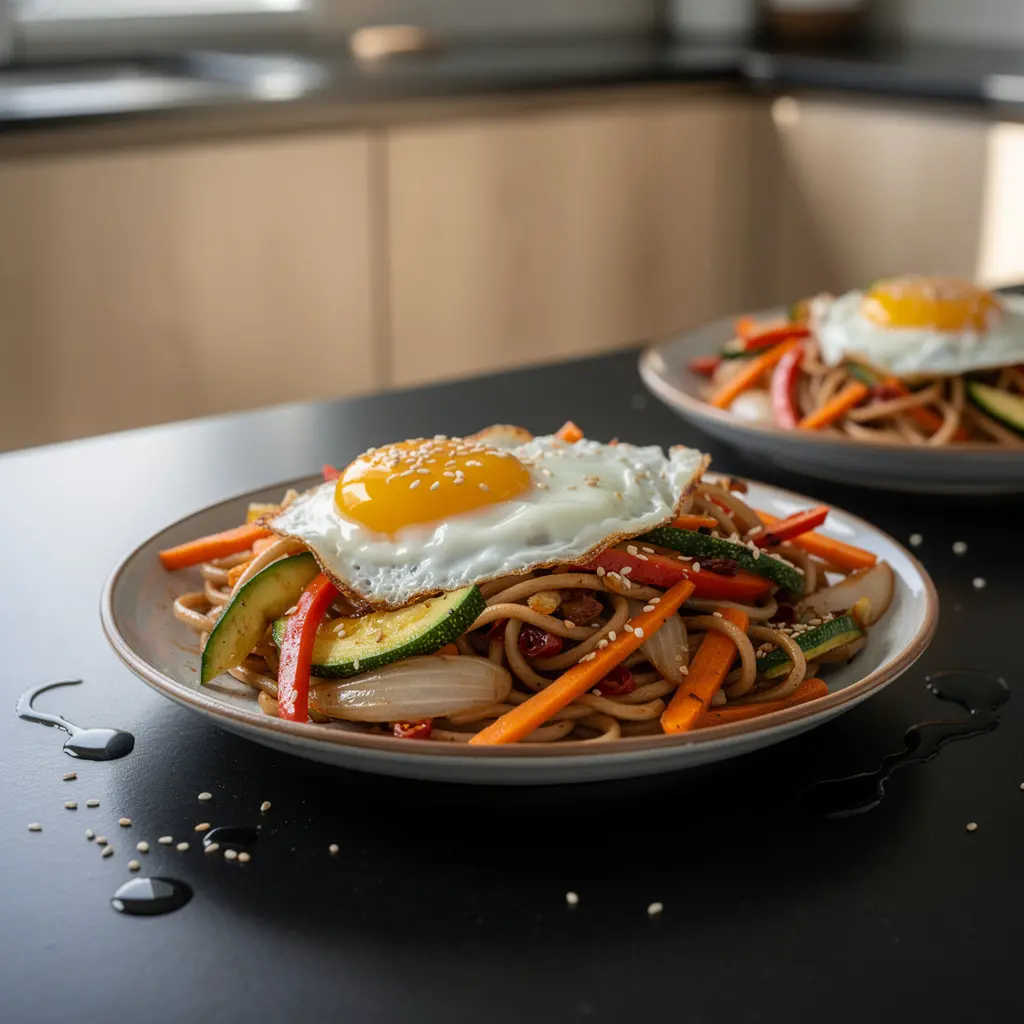
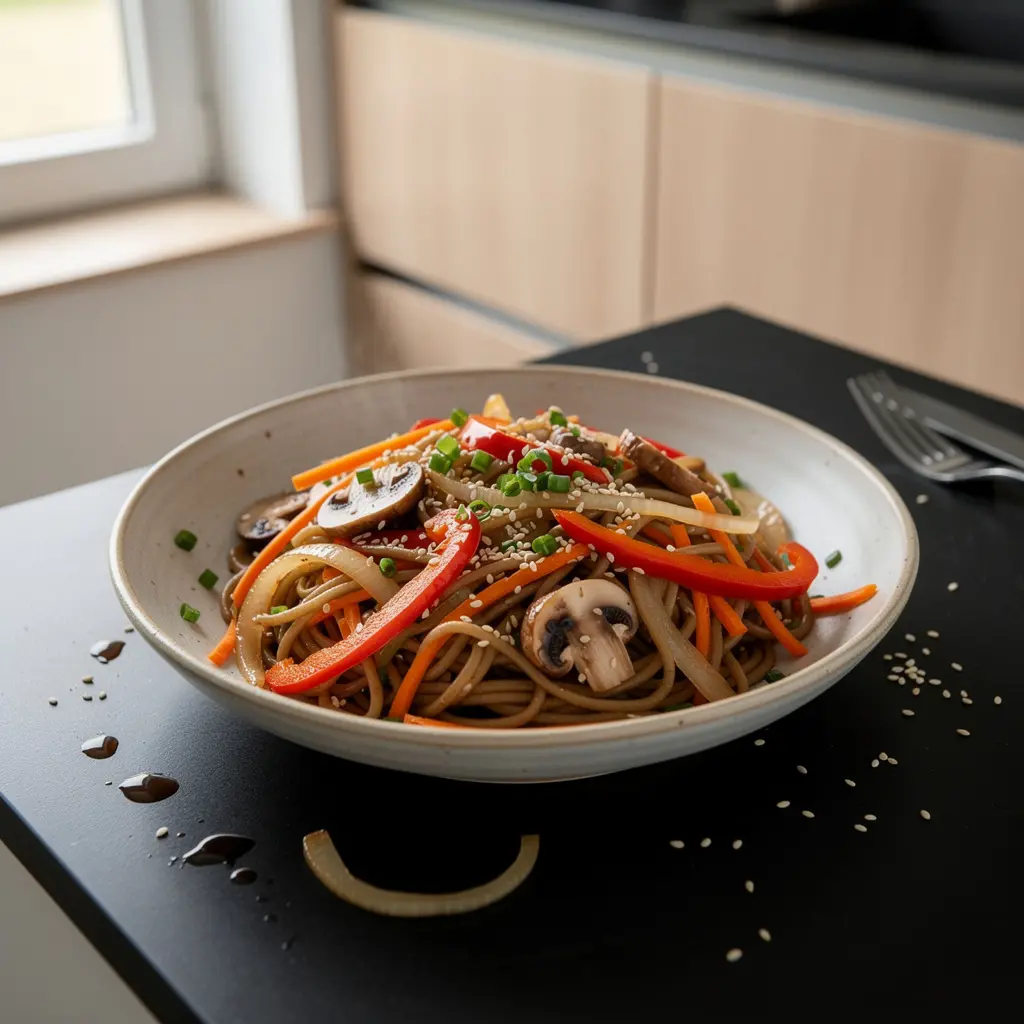
Serve in a large bowl family-style, topped with extra sesame seeds and, if you like, finely sliced green onion. It works well alongside simple grilled vegetables or as part of a buffet with other cold dishes. For a more substantial meal, add a soft-boiled egg on top.
Ingredients
- wheat noodles - 250 g
- tofu - 200 g
- cucumber - 1 piece
- bell pepper - 0.5 piece
- carrot - 1 piece
- napa cabbage - 80 g
- gochujang - 1 tablespoon
- rice vinegar - 3 tablespoon
- soy sauce - 2 tablespoon
- sugar - 1.5 tablespoon
- sesame oil - 1.5 tablespoon
- vegetable oil - 1 tablespoon
- garlic - 2 piece
- sesame seeds - 1.5 tablespoon
Preparation
- Cook the noodles in a large amount of salted water according to the package instructions until al dente, meaning soft but still slightly firm to the bite. Drain, rinse with cold water, and set aside to cool completely.
- Pat the tofu dry with paper towels and cut into cubes about 1.5 cm on each side.
- Heat the vegetable oil in a pan over medium heat. Add the tofu and fry for 6–8 minutes, turning gently, until the cubes are golden on all sides. Set aside to cool.
- Slice the cucumber into thin half-moons. Cut the bell pepper into thin strips. Peel the carrot and grate it on a coarse grater or cut into thin matchsticks. Shred the napa cabbage into thin strips.
- Make the sauce in a bowl: mix the gochujang, rice vinegar, soy sauce, sugar, sesame oil, and finely grated garlic. Stir until the sugar dissolves and the sauce is smooth.
- Put the cooled noodles into a large bowl, add the fried tofu and all the vegetables.
- Pour the prepared sauce over everything and gently but thoroughly toss so the sauce coats the noodles and vegetables.
- Finally, sprinkle the salad with toasted sesame seeds. Refrigerate for at least 15 minutes so the flavors meld and the salad chills well.
Storage
No storage information available for this dish.
This salad is inspired by Korean cold noodle dishes but kept simple and accessible with ingredients you can find in most supermarkets. It’s a great way to introduce gochujang to people who haven’t tried it before—its heat is balanced by the sweetness and acidity of the dressing.