Indian Pumpkin and Red Lentil Curry Recipe
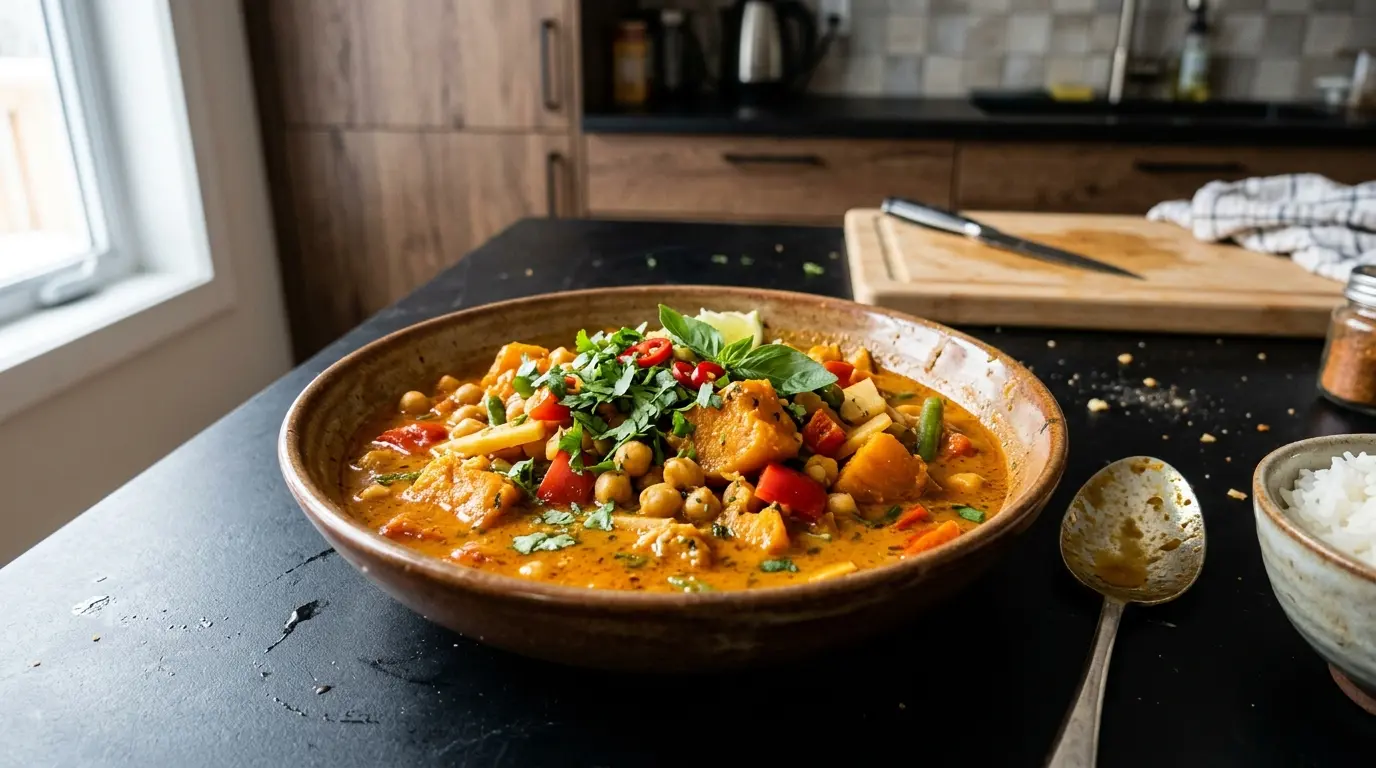
Indian Pumpkin and Red Lentil Curry is a thick, gently spiced one-pot meal for about 4 servings. Hokkaido pumpkin softens while retaining a few distinct pieces, and the red lentils collapse into the tomato and coconut sauce, giving the curry a creamy texture without dairy.
This is an Indian-inspired curry rather than a strict regional classic. Pairing lentils with seasonal vegetables is common across Indian home cooking, while the combination of coconut milk, tomato, and ground spices draws broadly from several regional pantry traditions.
Two different kinds of softness give this curry its character: the lentils dissolve into the sauce, while most of the pumpkin remains in tender pieces. Hokkaido pumpkin also brings a chestnut-like sweetness that balances the warm spices and hot paprika.
Why this version works
- Even 2 cm pumpkin cubes cook at roughly the same rate, preventing a mixture of hard centers and completely collapsed pieces.
- Cooking the onion until soft with lightly golden edges develops sweetness without making the inaccurate claim that all browning causes bitterness.
- Briefly heating the ground spices releases their aroma, while a spoonful of the measured water protects them if the pan becomes dry.
- A 22–28 minute simmer gives both the pumpkin and lentils enough time to become tender; visual and knife-tenderness cues are more reliable than timing alone.
- Adding coconut milk near the end preserves its rounded flavor and makes the final thickness easier to control.

Chef's tips
Use a wide pot rather than a narrow saucepan so the pumpkin sits in a relatively even layer and is easier to stir without crushing. When checking tenderness, test one of the larger cubes rather than a small edge piece.
How to serve
Serve the curry hot in bowls as a complete lentil-and-vegetable meal, or spoon it over rice or alongside flatbread. Allow it to rest for 5 minutes before serving so the sauce settles around the pumpkin pieces.
Watch out for
- Do not cut the pumpkin much larger than 2 cm, or it may remain firm after the lentils have already broken down.
- Red lentils settle easily as they cook, so scrape the bottom of the pot during each stir to prevent sticking.
- Keep the simmer gentle. Vigorous boiling can make the curry catch on the base and break the pumpkin apart too quickly.
- The curry thickens as it stands; stop cooking while it is still slightly more fluid than the consistency you want to serve.
Substitutions
- An equal weight of whole canned tomatoes may replace chopped canned tomatoes if they are crushed before being added.
- The Hokkaido pumpkin skin can be removed if preferred, although leaving it on helps the cubes retain their shape.
Ingredients
- hokkaido pumpkin - 500 g
- red lentils - 150 g
- onion - 1 piece
- garlic - 3 cloves
- ginger - 2 cm
- chopped canned tomatoes - 200 g
- coconut milk - 200 ml
- water - 400 ml
- vegetable oil - 2 tablespoons
- ground cumin - 1 teaspoon
- ground coriander - 1 teaspoon
- turmeric - 0.5 teaspoons
- hot paprika, ground - 0.5 teaspoons
- salt
Preparation
- Scrub the Hokkaido pumpkin; its thin skin may be left on. Halve it, scrape out the seeds, and cut 500 g pumpkin into evenly sized 2 cm cubes. Rinse the red lentils in a fine sieve until the draining water is mostly clear. Peel and finely chop 1 medium onion, about 120–150 g before peeling; finely chop the garlic and grate or mince the ginger.
- Heat the vegetable oil in a wide, heavy-bottomed pot over medium heat. Add the onion and cook for 6–8 minutes, stirring regularly, until soft and translucent with light golden edges. Gentle coloring is fine; avoid letting any pieces become dark or scorched.
- Stir in the garlic and ginger. Cook for 45–60 seconds, stirring continuously, until aromatic but not browned.
- Add the cumin, coriander, turmeric, and hot paprika. Stir for 20–30 seconds, just until the spices smell toasted and evenly coat the onion. They do not need to foam; if the pot looks dry, stir in a spoonful of the measured water to prevent scorching.
- Add the pumpkin and turn the cubes through the aromatic mixture for 2–3 minutes. The aim is to coat and warm the pumpkin rather than brown it, since the pot is too moist and crowded for a true sear.
- Stir in the chopped tomatoes and cook for 2 minutes. Add the rinsed lentils, the remaining water, and a small pinch of salt. Bring to a full simmer, stirring along the bottom so the lentils do not settle.
- Reduce the heat to low, cover with the lid slightly ajar, and simmer for 22–28 minutes. Stir every 5 minutes, scraping the base of the pot. The curry is ready for the next stage when the lentils have lost their shape and a pumpkin cube can be pierced easily with a knife; a few cubes should begin to break at the edges.
- Pour in the coconut milk and simmer uncovered for 4–6 minutes, stirring often, until the curry is thick but still falls slowly from a spoon. Add a little water if it becomes pasty, or simmer a few minutes longer if it is too loose. Taste and adjust the salt before serving.
Storage
The curry thickens after chilling, so when reheating add a little water or coconut milk to reach the right consistency.
I prefer to leave a few pumpkin pieces intact and gently press only one or two against the side of the pot at the end. That gives the sauce extra body without turning the entire curry into a purée.