Homemade Tonkotsu Ramen Recipe
Tonkotsu ramen is a creamy, rich soup made from long-simmered pork bones, served with noodles and toppings. In Japan it’s a specialty of the Fukuoka region, often eaten late at night after work or meeting friends. The homemade version doesn’t require 12 hours of cooking, but still gives you a thick, milky broth full of flavor.
This simplified tonkotsu ramen gives you a deeply flavorful, creamy broth at home without the need for a professional kitchen or 12 hours of simmering. Careful preparation of the bones and aromatic vegetables, plus braised pork belly and marinated eggs, creates a bowl that’s very close to what you’d get in a ramen shop.
Chef's tips
Don’t rush the initial blanching and cleaning of the bones – it’s key to a clean-tasting broth. Keep the broth at a steady, active simmer rather than a gentle poach so it emulsifies and turns milky. If the flavor seems too strong, you can always dilute with a bit of hot water in the bowl.
How to serve
Serve the ramen piping hot with extra toppings on the side: nori sheets, chili oil, toasted sesame seeds or finely chopped garlic. It pairs well with simple pickled vegetables or a small cucumber salad to cut through the richness.
Ingredients
- pork bones - 1.2 kg
- pork belly - 400 g
- ramen noodles - 300 g
- onion - 1 piece
- garlic - 5 cloves
- ginger - 30 g
- leek - 1 piece
- soy sauce - 60 ml
- mirin - 40 ml
- oil - 1 tablespoon
- egg - 4 piece
- spring onion - 3 piece
- shiitake mushrooms - 4 piece
- salt - 2 teaspoons
- water - 2.5 l
Preparation
- Place the pork bones in a large pot, cover with cold water, bring to a boil and cook for 5 minutes. Then drain the water, rinse the bones under running water, removing any visible foam and blood residue – this will make the broth cleaner in taste.
- Cut the onion in half (you don’t need to peel it), cut the leek into a few large pieces, lightly crush the garlic with a knife, and slice the ginger.
- Put the cleaned bones into a large pot, add the onion, leek, garlic and ginger, and pour in 2.5 liters of fresh water. Bring to a boil, reduce the heat to medium and cook uncovered for 2.5–3 hours so that the broth bubbles gently but steadily.
- While cooking, skim the foam from the surface from time to time with a spoon. The longer you cook, the more milky and thicker the broth should become.
- Meanwhile, roll the pork belly tightly into a log and tie it with kitchen twine so it keeps its shape. Heat the oil in a pan and sear the pork belly on all sides until golden brown.
- Pour 200 ml of water into a small pot, add the soy sauce and mirin. Add the seared pork belly, cover and braise over low heat for 40–50 minutes, turning every 10–15 minutes, until tender. Set aside to cool in the sauce.
- Once the broth is cooked, remove the bones and vegetables, and strain the stock through a sieve into a clean pot. Season with salt to taste – the broth should be distinctly salty and very intense.
- Cook the eggs to soft-boiled: place them in cold water, bring to a boil and cook for 6.5–7 minutes from the moment the water starts boiling. Transfer to cold water, peel, and place in the sauce in which the pork belly was braised for 15 minutes so they take on color and flavor.
- Slice the shiitake mushrooms thinly and briefly toast them in a dry pan until lightly browned and fragrant. Slice the spring onion thinly.
- Cook the ramen noodles in a separate pot according to the package instructions, usually 3–4 minutes. Drain and briefly rinse with warm water.
- Remove the pork belly from the sauce, discard the twine and slice the meat thinly. Cut the eggs in half.
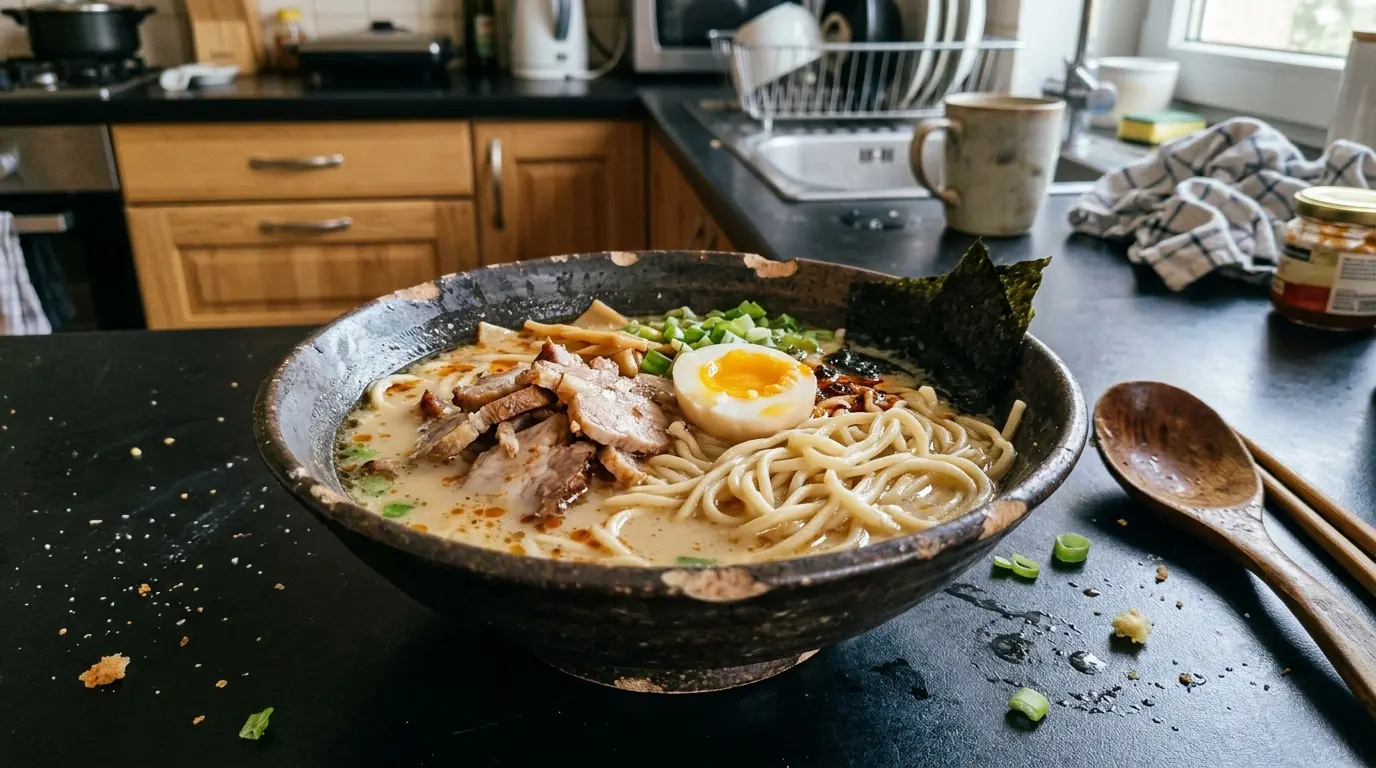
- Divide the noodles between bowls and pour over very hot broth. Top with slices of pork belly, egg halves and mushrooms, then sprinkle with spring onion. Serve immediately.
Storage
No storage information available for this dish.
Homemade tonkotsu ramen may look intimidating, but most of the time is hands-off simmering. Once you make it once, you’ll see it’s more about patience than complicated techniques, and the reward is a comforting, restaurant-level bowl of noodles.