Moussaka – Greek Potato and Eggplant Bake with Minced Meat Recipe
Moussaka is a Greek layered casserole with eggplant, potatoes, minced meat and a creamy sauce on top. In Greece it often appears at Sunday lunch, a bit like lasagne for special occasions in other countries. It’s filling, aromatic, and tastes best after it has rested for a while after baking.
In Greece, moussaka is a festive, “for guests” dish, often served in large baking dishes at family gatherings. In restaurants it is usually baked in big trays and served in thick, hearty portions.
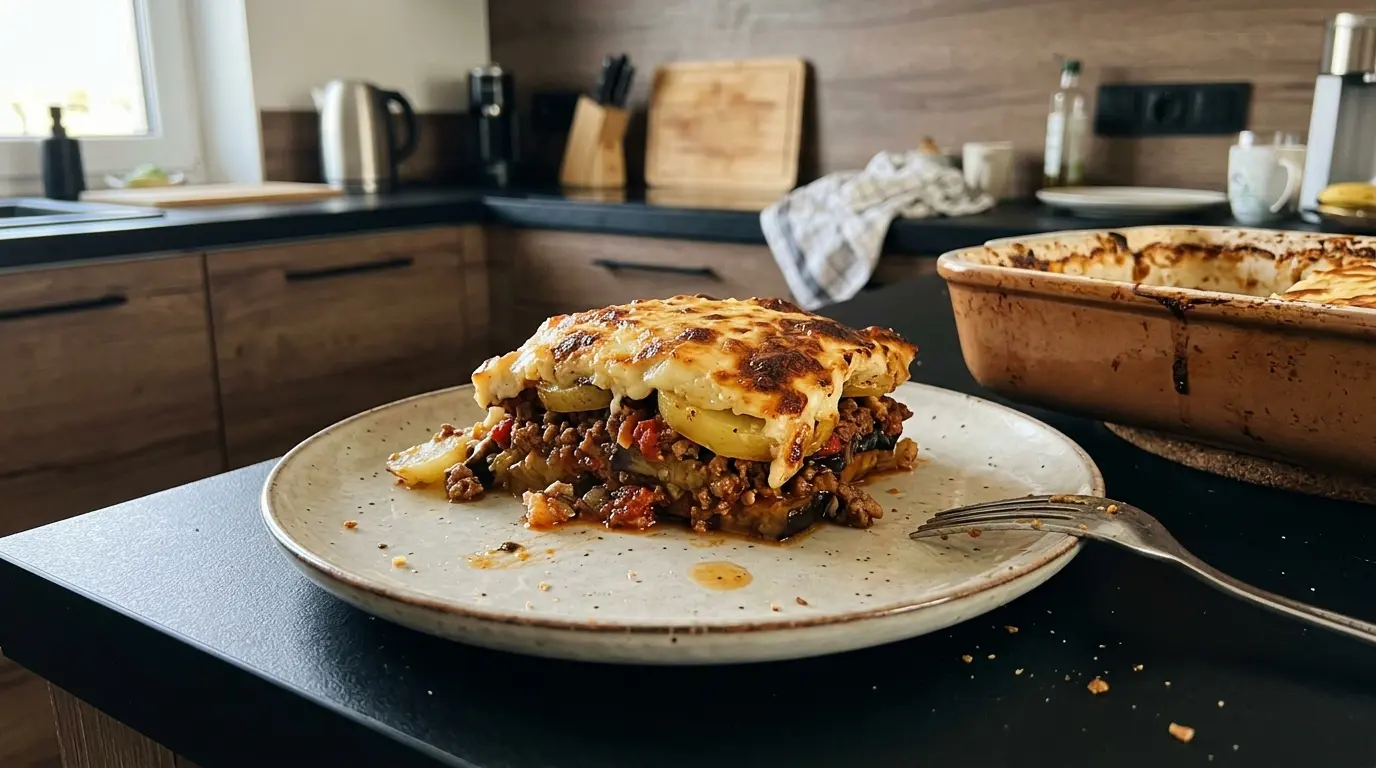
This moussaka combines tender layers of potatoes and eggplant with aromatic minced meat and a creamy, cheesy topping. The hint of cinnamon gives it a distinctly Greek character, and the dish tastes even better after resting, making it ideal for preparing ahead for family meals or gatherings.
Why this version works
- Pan-frying the eggplants removes their bitterness and excess moisture, so they don’t make the casserole soggy.
- Parboiled potatoes finish cooking in the oven at the same time as the rest and don’t stay hard in the center.
- A thick béchamel with egg creates a stable, creamy top layer that doesn’t seep down into the filling.
- A well-reduced meat sauce prevents the moussaka from turning watery and falling apart.
Chef's tips
Salt the eggplant and let it sit – this step really improves the flavor and texture by removing bitterness and excess moisture. Don’t rush the meat sauce; letting it reduce properly prevents the casserole from becoming watery. After baking, give the moussaka time to rest so it sets and slices neatly.
How to serve
Serve generous squares of moussaka with a fresh tomato–cucumber–onion salad, a simple Greek salad with feta, or crisp green leaves with a lemony vinaigrette. A slice of crusty bread and a glass of red wine pair beautifully with this dish.
Watch out for
- Don’t cut short the reduction time for the sauce – if it’s too thin, it will dissolve the layers as the moussaka bakes.
- Fry the eggplants in a well-heated pan; if the pan is cold, they’ll soak up lots of oil and turn heavy.
- Stir the béchamel constantly after adding the milk, otherwise it can easily become lumpy.
- Don’t cut the moussaka immediately after taking it out of the oven – the hot béchamel is still too fluid.
Substitutions
- You can replace part of the beef with pork if you prefer a milder flavor.
- It’s worth swapping the regular yellow cheese for a hard, aged cheese such as kefalotyri or Parmesan.
- If you avoid cinnamon, use just a pinch of nutmeg in the béchamel instead.
Ingredients
- eggplant medium - 2 pieces
- potatoes for baking or all-purpose - 700 g
- ground beef can be mixed beef and pork - 500 g
- onion large - 1 piece
- garlic - 3 cloves
- chopped canned tomatoes 1 can - 400 g
- tomato paste - 1 tablespoon
- ground cinnamon a pinch, gives it a Greek character - 0.25 teaspoons
- olive oil for frying - 6 tablespoons
- butter for the sauce - 60 g
- wheat flour for the sauce - 3 tablespoons
- milk for the sauce - 600 ml
- yellow cheese grated, e.g. gouda or cheddar - 80 g
- egg for the sauce - 1 piece
- salt to taste
- black pepper to taste
Preparation
- Wash the eggplants and cut them into slices about 0.8 cm thick. Spread them out on a board, lightly salt on both sides and set aside for 20 minutes, until droplets of juice appear on the surface – this helps get rid of their bitterness.
- Peel the potatoes and cut them into slices about 0.5 cm thick. Cook them in salted water for 5–7 minutes, until the edges are tender but the centers are still firm. Drain and shake the pot so they steam dry and no longer look shiny from the water.
- Peel and finely chop the onion. Heat 2 tablespoons of olive oil in a large pan and fry for 3–5 minutes, until it softens and turns translucent, but stays pale without brown edges.
- Add the garlic pressed through a garlic press and fry for about 30 seconds. Add the minced meat, break it up with a spoon and fry for 8–10 minutes, until it changes color completely and there are no raw pink bits left.
- Season the meat with salt, pepper and cinnamon. Add the canned tomatoes and tomato paste, stir. Cook over medium heat for about 15 minutes, until the sauce thickens and, when you drag a spoon across the bottom of the pan, it stays visible for a moment.
- Rinse the eggplants under running water to remove the salt and dry them very thoroughly with paper towels. Heat 3–4 tablespoons of olive oil in a large pan and fry the slices in batches for 2–3 minutes on each side, until they soften and are well browned.
- Transfer the fried eggplants to a paper towel to blot off excess fat. Preheat the oven to 180°C top and bottom heat and lightly grease a 20×30 cm baking dish with olive oil.
- Cover the bottom of the dish with the potatoes, slightly overlapping them so they form a tight layer with no gaps. Arrange a layer of eggplants on top, then spread all of the meat and tomato sauce evenly over them, and finish with a second layer of eggplants.
- Béchamel: melt the butter in a saucepan over medium heat. Add the flour and whisk for about 1 minute, until you get a smooth paste without lumps; it should stay pale and just start to smell slightly nutty.
- Gradually pour in the milk, whisking vigorously. Cook for 5–7 minutes, until the sauce thickens to the consistency of thick yogurt, is smooth and coats the spoon evenly. Season with salt and pepper.
- Take the saucepan off the heat and wait 2–3 minutes. Add the egg and whisk quickly until it is fully incorporated without forming lumps. Add half of the grated cheese and stir – the sauce will thicken slightly and become more elastic.
- Pour the béchamel over the entire casserole, smooth the top with a spoon and sprinkle with the remaining cheese. Bake for 35–40 minutes at 180°C, until the top is golden, lightly browned at the edges and just starting to bubble gently around the sides. Before cutting, leave to rest for at least 20 minutes, until the bubbling stops.
Storage
No storage information available for this dish.
This version of moussaka is inspired by traditional Greek recipes but adapted to be easy to prepare at home. It’s one of those dishes that fills the whole house with a wonderful aroma and brings everyone to the table – and it’s even better the next day, so don’t hesitate to make a bigger batch.