German Quark Pancakes Quarkpfannkuchen Recipe
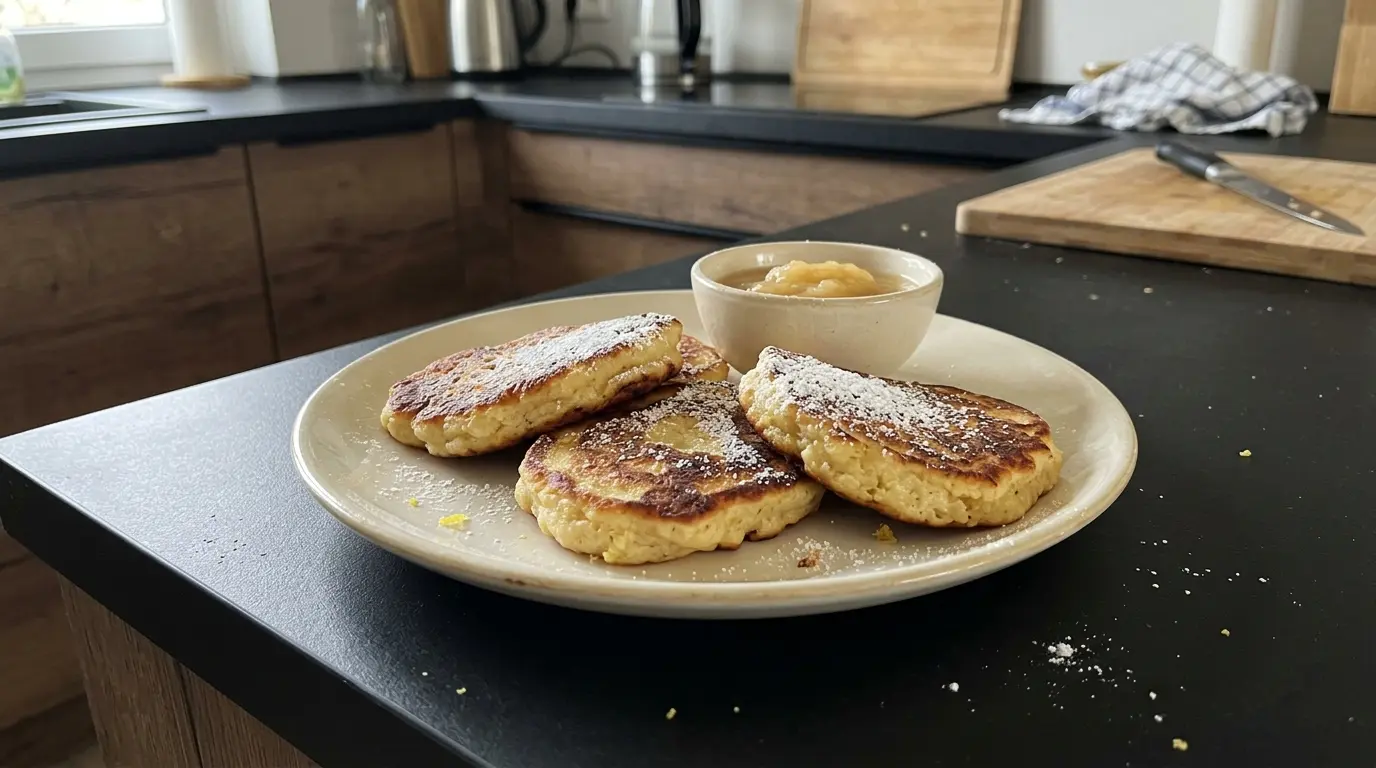
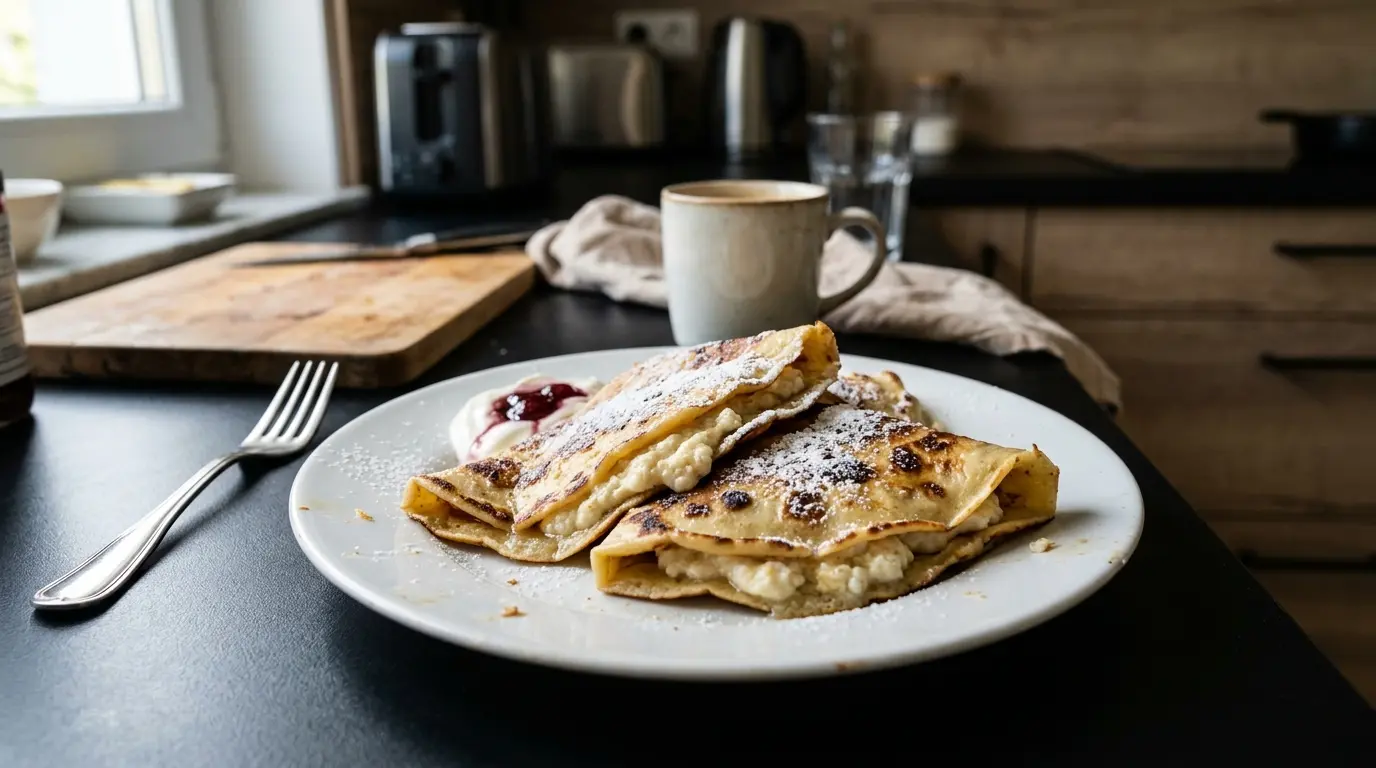
These are fluffy pancakes with quark mixed into the batter, popular in Germany as a sweet lunch or warm breakfast. They are thicker than typical Polish crêpes but thinner than American pancakes, something in between. Thanks to the quark inside they are gently moist and filling, and served with fruit and icing sugar they disappear from the plate surprisingly fast.
In Germany, quarkpfannkuchen are a typical home-style dish for a sweet lunch or late breakfast, often served to children instead of dessert. Quark-style curd cheese is very popular there, which is why it’s added directly to the batter.
Quark in the batter gives these pancakes a unique texture: tender, moist and satisfying without being heavy, somewhere between crêpes and classic fluffy pancakes.
Why this version works
- Curd cheese in the batter keeps the pancakes moist and soft for longer, even after reheating.
- The flour-to-milk ratio gives a texture somewhere between thin crêpes and American-style pancakes.
- A short resting time lets the baking powder start working, without the need to whip egg whites.
Chef's tips
Use well-drained quark so the batter doesn’t become too runny. Adjust the amount of milk slightly depending on how moist your quark is – the batter should be thick but pourable.
How to serve
Serve stacked on a plate with fresh berries, sliced fruit or a quick berry compote, plus a generous dusting of icing sugar or a drizzle of honey.
Watch out for
- Batter that is too thin will give flat, rubbery pancakes – if needed, add 1 tablespoon of flour.
- Heat that is too high will quickly burn the bottom while leaving the centre raw and pasty.
- Don’t mix the batter for too long after adding the flour, so you don’t develop gluten and toughen the texture.
Substitutions
- Instead of traditional Polish curd cheese, use thick tub-style curd cheese or quark and reduce the milk by 2–3 tablespoons.
- You can replace vanillin sugar with 1/2 teaspoon of vanilla extract.
- You can replace up to 1/3 of the milk with kefir if you like a more tangy, cheesecake-like flavour.
Ingredients
- quark - 250 g
- wheat flour - 200 g
- milk - 250 ml
- egg - 3 piece
- sugar - 40 g
- vanillin sugar - 1 packet
- baking powder - 1 teaspoon
- salt - 0.25 teaspoons
- vegetable oil - 2 tablespoons
- fruit
- icing sugar - 2 tablespoons
Preparation
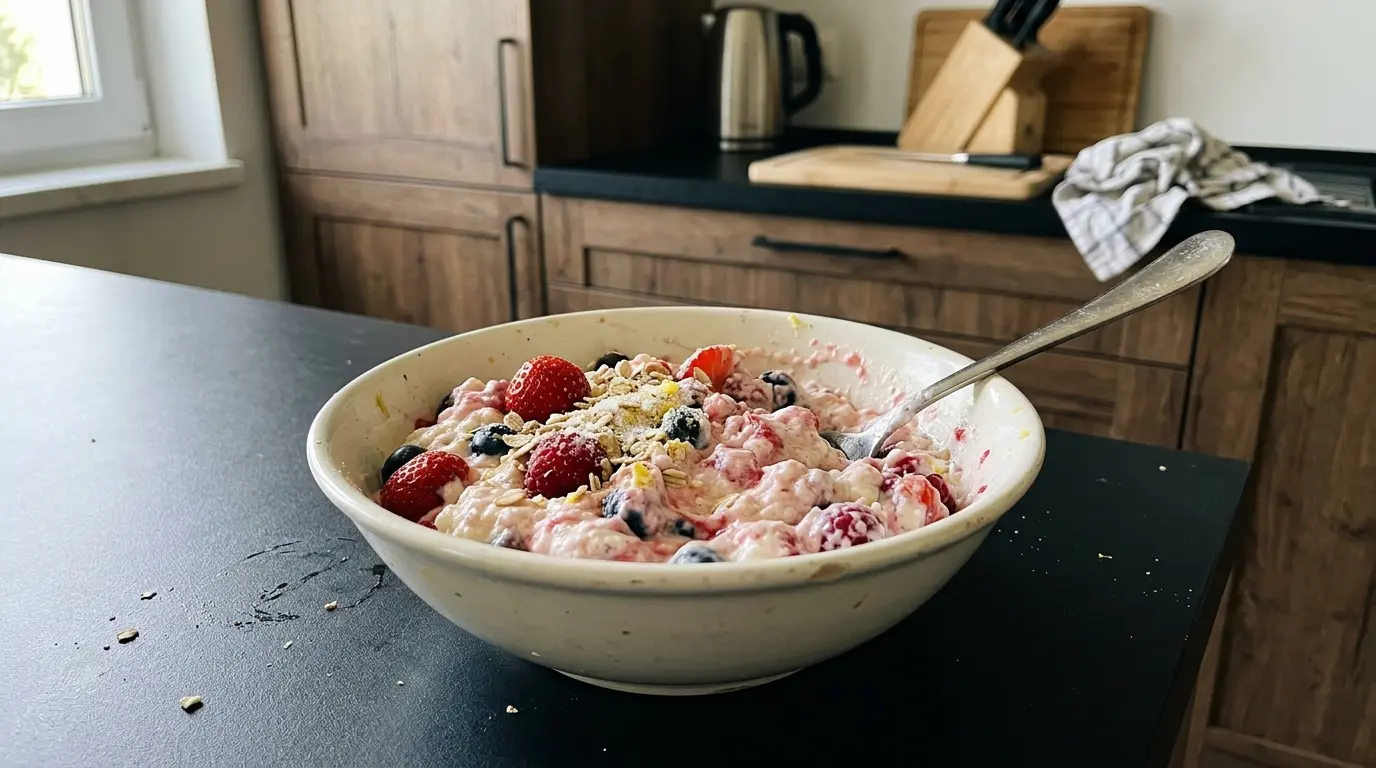
- Transfer the quark to a bowl and mash thoroughly with a fork until almost smooth. If it’s very dry and crumbly, add 1–2 tablespoons of milk – the mixture should be soft and easy to mix.
- Add the eggs, sugar, vanillin sugar and salt to the quark. Beat with a whisk or briefly with a mixer until the mixture is pale, uniform and without visible curd lumps bigger than a grain of rice.
- Mix the flour with the baking powder. Add it to the quark–egg mixture, pour in most of the milk and mix just until combined. The batter should be thick but pourable, with no dry pockets of flour.
- Set the batter aside for about 5–10 minutes so the baking powder can start working and the mixture thickens slightly. After this time, check the consistency – when scooped with a spoon it should slowly run off, leaving a trace on the surface for a moment.
- If the batter is too thick and falls off the spoon in big clumps, add the remaining milk a tablespoon at a time, mixing briefly. If it’s too runny, thicken it with 1 tablespoon of flour, folding it in gently so you don’t lose fluffiness.
- Grease the pan with a thin layer of oil and heat it over medium heat. When a drop of batter placed on the pan starts to sizzle lightly right away, you can fry the first test pancake.
- Spoon portions of batter onto the pan to form pancakes about 12–15 cm in diameter. Fry for 2–3 minutes, until small bubbles appear on the surface, the edges set and dry slightly, and the bottom is golden brown.
- Gently flip the pancake with a spatula and fry for another 1–2 minutes, until the second side is nicely browned. The inside should feel springy when lightly pressed with a fork, not wet or pasty.
- Transfer the cooked pancakes to a plate and cover with a cloth so they stay warm and soft. If necessary, add a little oil to the pan before each new batch.
- Serve immediately, dusted with icing sugar and with your favourite fruit, applesauce or jam. They also taste excellent with plain yogurt, honey or a light vanilla sauce.
Storage
Store cooled pancakes in the fridge, covered, for up to 2 days. Reheat gently in a dry pan or in the oven; dust with icing sugar and add fruit only after reheating.
These pancakes are a cosy, family-style dish that feels special but is easy enough to make on a relaxed morning.