German Potato Casserole Kartoffelgratin Recipe
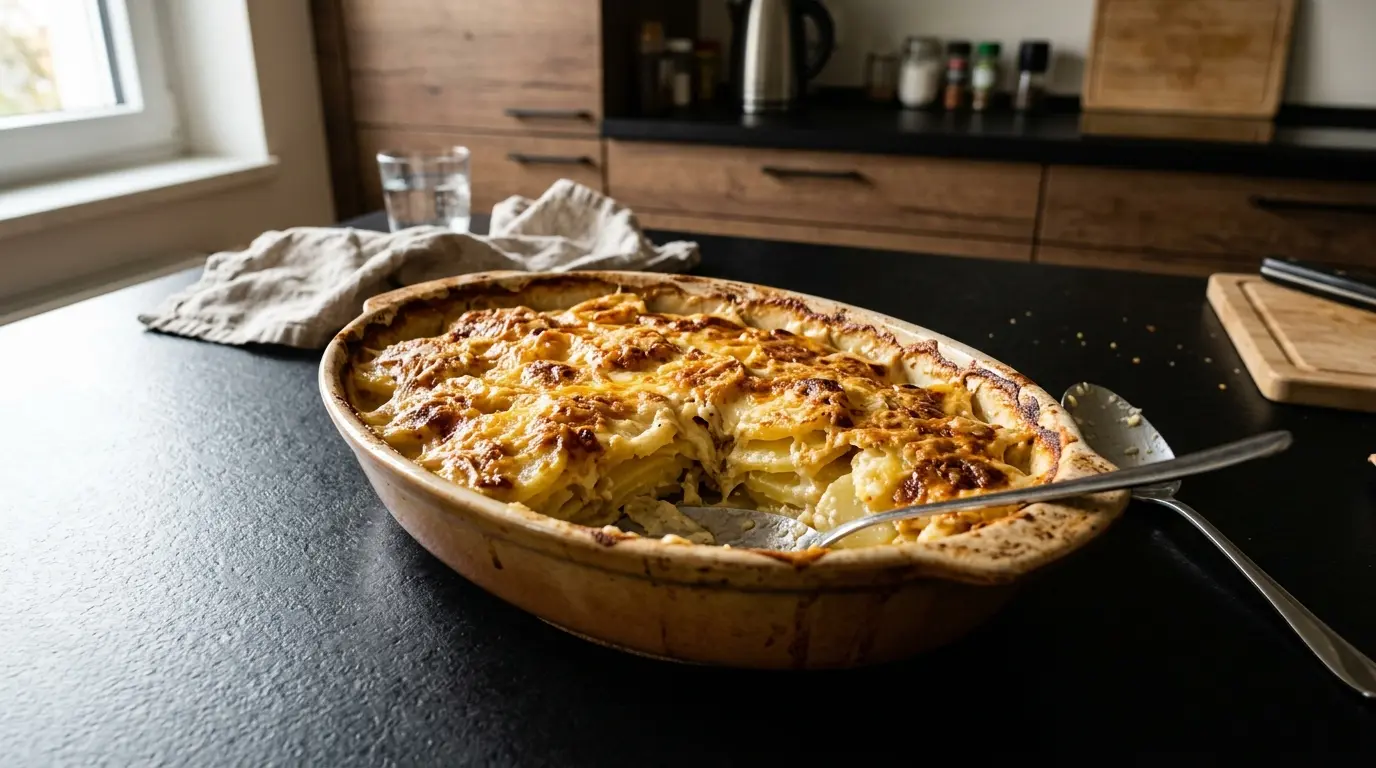
Kartoffelgratin is a creamy casserole of thinly sliced potatoes baked in cream with cheese. In Germany it often accompanies roasted meats or is served as a filling main dish for a quiet evening at home. The flavors are similar to French gratin dauphinois, but the German version more often includes cheese and garlic.
W Niemczech takie ziemniaczane gratiny często podaje się do pieczeni z sosem, ale ta bogatsza, serowa wersja bywa też głównym daniem z sałatą z kwaśnym dressingiem. Zioła jak tymianek i gałka muszkatołowa nadają jej bardziej środkowoeuropejski charakter niż klasycznemu francuskiemu gratin dauphinois.
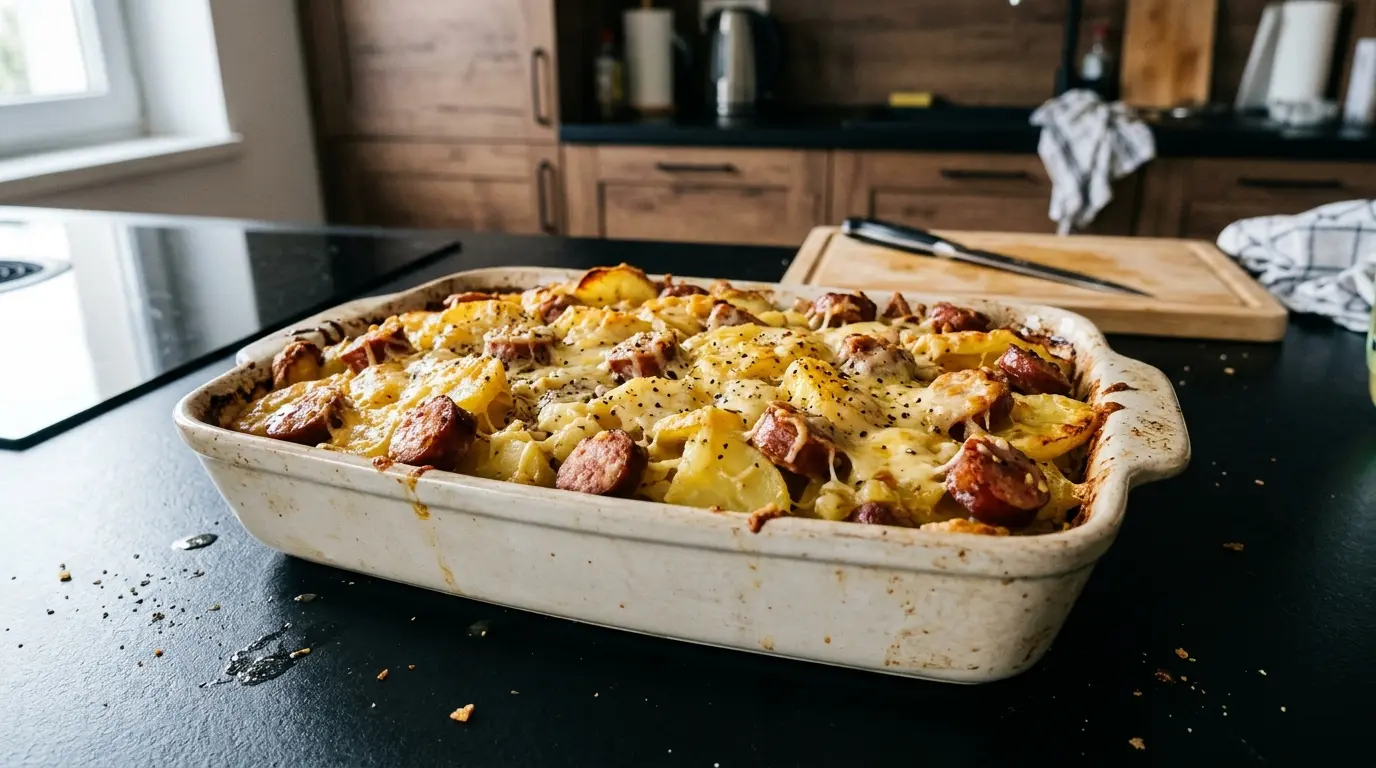
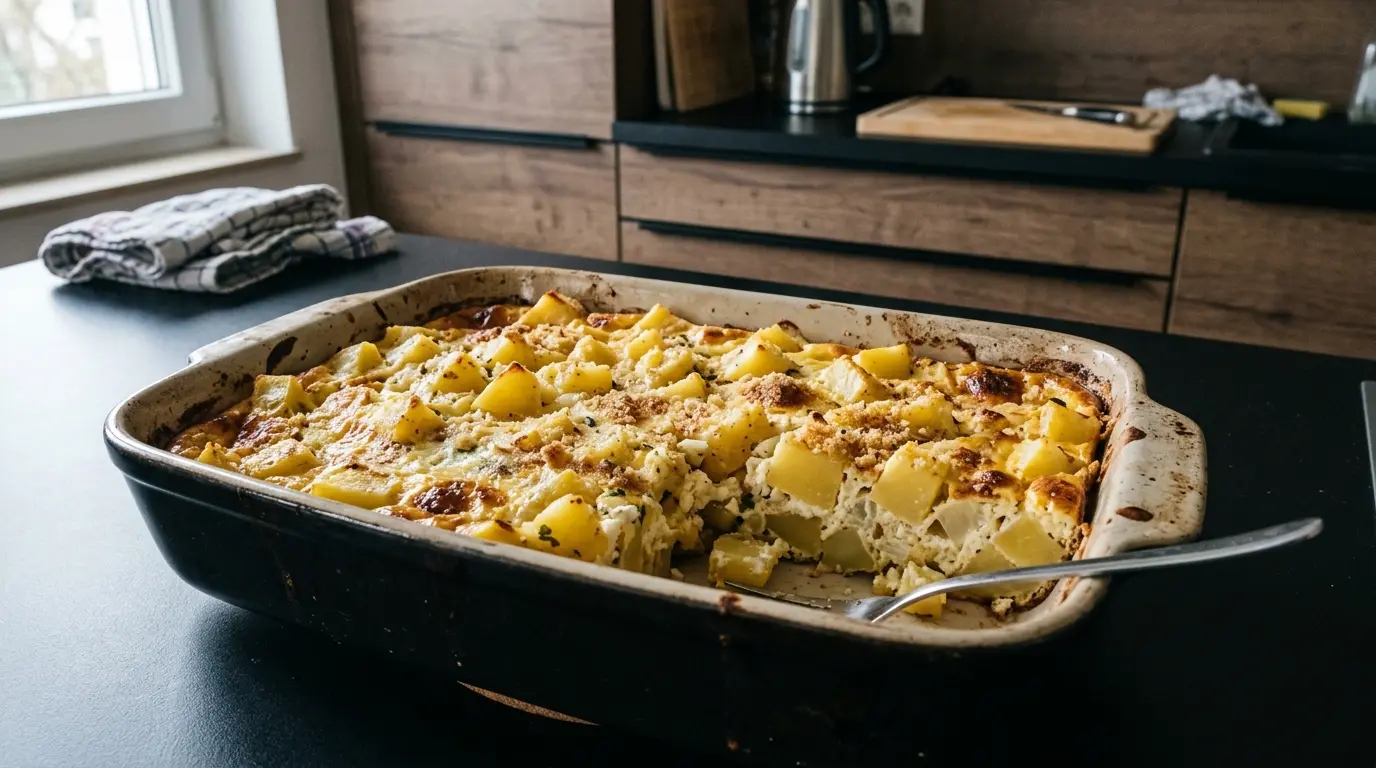
This gratin is wonderfully creamy inside with a golden, slightly crisp top – classic comfort food with simple ingredients. Garlic, nutmeg and thyme give the potatoes a deep, aromatic flavor that works both as a side and as a main dish.
Dlaczego ta wersja działa
- Brak mąki – sos gęstnieje naturalnie od skrobi z ziemniaków, dzięki czemu pozostaje gładki i jedwabisty.
- Płyn jest mocno doprawiony przed zalaniem, więc każda warstwa ziemniaków ma wyrazisty smak, a nie tylko ser na wierzchu.
- Plasterki 2–3 mm gwarantują, że środek dopiecze się równomiernie, bez rozgotowania brzegów i bez surowych plastrów w środku.
- Pieczenie najpierw pod folią, a potem bez niej daje miękkie, kremowe wnętrze i mocno zrumienioną, serową skorupkę.
Chef's tips
Slice the potatoes as evenly and thinly as possible so they cook at the same rate. Taste the cream mixture before pouring it over the potatoes – it should be a bit saltier than you think, because the potatoes will mellow the seasoning. If the top browns too quickly, cover the dish loosely with foil again.
How to serve
Serve the gratin in generous squares, spooning some of the creamy sauce from the bottom of the dish over each portion. It goes particularly well with roast chicken, pork loin or a simple green salad with mustard vinaigrette. For a vegetarian dinner, add a side of steamed green beans or broccoli.
Na co uważać
- Zbyt grube plasterki (powyżej 4 mm) mogą pozostać lekko surowe, nawet jeśli wierzch jest już mocno zrumieniony.
- Jeśli sos sięga wyraźnie powyżej ostatniej warstwy, zapiekanka będzie się gotować, a nie rumienić – odlej trochę płynu.
- Gdy ser na wierzchu szybko ciemnieje, luźno przykryj go folią, inaczej utworzy twardą, gorzkawą skorupę.
- Nie kroj zapiekanki od razu po wyjęciu – za gorąca masa rozpłynie się na talerzu zamiast trzymać kształt.
Zamienniki
- Część śmietanki możesz zastąpić mlekiem, jeśli chcesz lżejszą wersję – zachowaj jednak łączną ilość płynu.
- Zamiast jednego sera użyj mieszanki: np. gouda + cheddar + odrobina parmezanu dla głębszego, ciągnącego się smaku.
- Tymianek można zamienić na rozmaryn, ale dodaj go mniej, bo ma intensywniejszy, łatwo dominujący aromat.
Ingredients
- potatoes preferably waxy, suitable for baking - 1 kg
- cream 30% or 18% - 300 ml
- milk - 150 ml
- yellow cheese grated, well-melting - 150 g
- garlic - 2 cloves
- butter for greasing the dish - 20 g
- nutmeg grated - 0.25 teaspoons
- salt to taste
- pepper to taste
- thyme dried herb, optional - 1 teaspoon
Preparation
- Preheat the oven to 190°C (top and bottom heat). Grease an ovenproof dish thoroughly with butter, including the sides.
- Peel the potatoes and slice them very thinly, ideally 2–3 mm thick. You can use a mandoline or a sharp knife.
- Peel the garlic and press it through a garlic press or chop very finely.
- In a bowl, mix the cream with the milk, then add the garlic, nutmeg, thyme, salt and pepper. Taste the mixture – it should be distinctly salty, as the potatoes will absorb some of the seasoning.
- Arrange the first layer of potato slices on the bottom of the dish, slightly overlapping them like roof tiles.
- Pour over a thin layer of the cream–milk mixture so the potatoes are just lightly covered. Sprinkle with a little grated cheese.
- Repeat the layers of potatoes, sauce and cheese until you use up all the ingredients. The top should be a layer of potatoes covered with sauce and sprinkled with the remaining cheese.
- Cover the dish with aluminum foil (shiny side facing in) and bake in the preheated oven for 35–40 minutes.
- After this time, remove the foil and bake for another 20–25 minutes, until the top is golden and a knife inserted into the center of the gratin slides in without resistance.
- After taking the dish out of the oven, let the gratin rest for 10 minutes so it can set slightly and be easier to slice.
Storage
Store cooled leftovers in the fridge, covered, for up to 2 days. Reheat in the oven or in a covered pan over low heat; if the gratin seems dry, add a splash of milk or cream before reheating.
I like to prepare this gratin on weekends – it fills the house with a cozy, buttery aroma and reheats very well the next day. A small pinch of extra nutmeg on top before baking gives it a subtle, warming note.