German Pork Roast with Caraway Schweinebraten Recipe
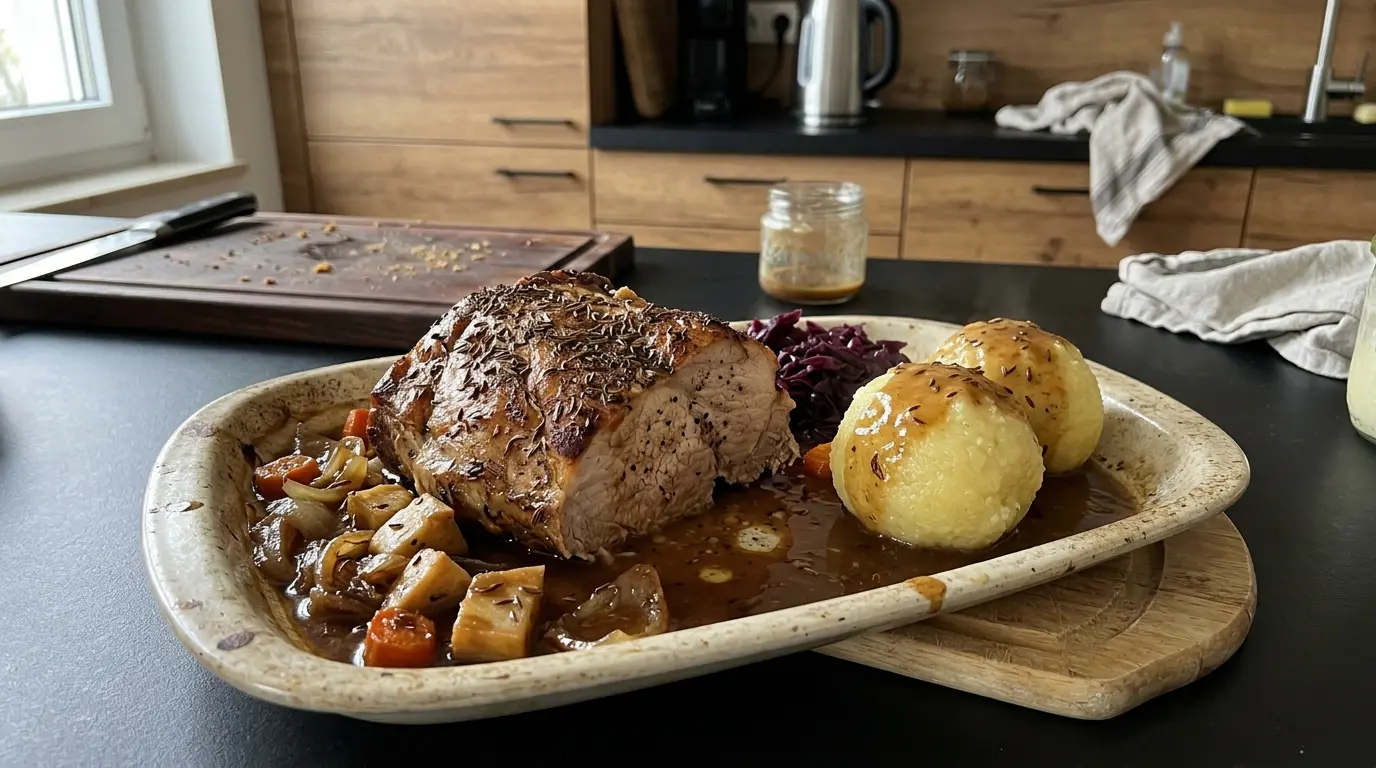
Juicy pork roast with a crispy crackling, fragrant with caraway and garlic, is a classic Sunday dinner in many German homes. It’s often served with cabbage and dumplings, and the smell of slowly roasted meat fills the whole apartment. This is a Bavarian-style dish, a bit like Polish roast with gravy, but with a distinct caraway aroma and a dark roasting sauce.
In Bavaria, Schweinebraten is a classic Sunday pub roast, often served with potato dumplings and braised red cabbage. Beer and caraway are the region’s signature touches and set this roast apart from Polish versions seasoned with marjoram.
A classic Bavarian-style pork roast with caraway and a rich dark gravy that brings German Sunday-dinner atmosphere straight to your table.
Why this version works
- A well-marbled pork shoulder forgives longer roasting and stays juicy.
- A strong initial sear builds a dark, flavorful sauce without stock cubes.
- Starting covered and finishing uncovered combines a tender interior with a deeply browned crust.
- Thickening the sauce with a flour-and-water slurry is easy to control, so it doesn’t turn lumpy.
Chef's tips
Sear the meat well at the beginning – the deep browning is what gives the sauce its color and flavor. If the crackling is not crispy enough at the end, briefly increase the oven temperature to 210–220°C, watching carefully so it doesn’t burn.
How to serve
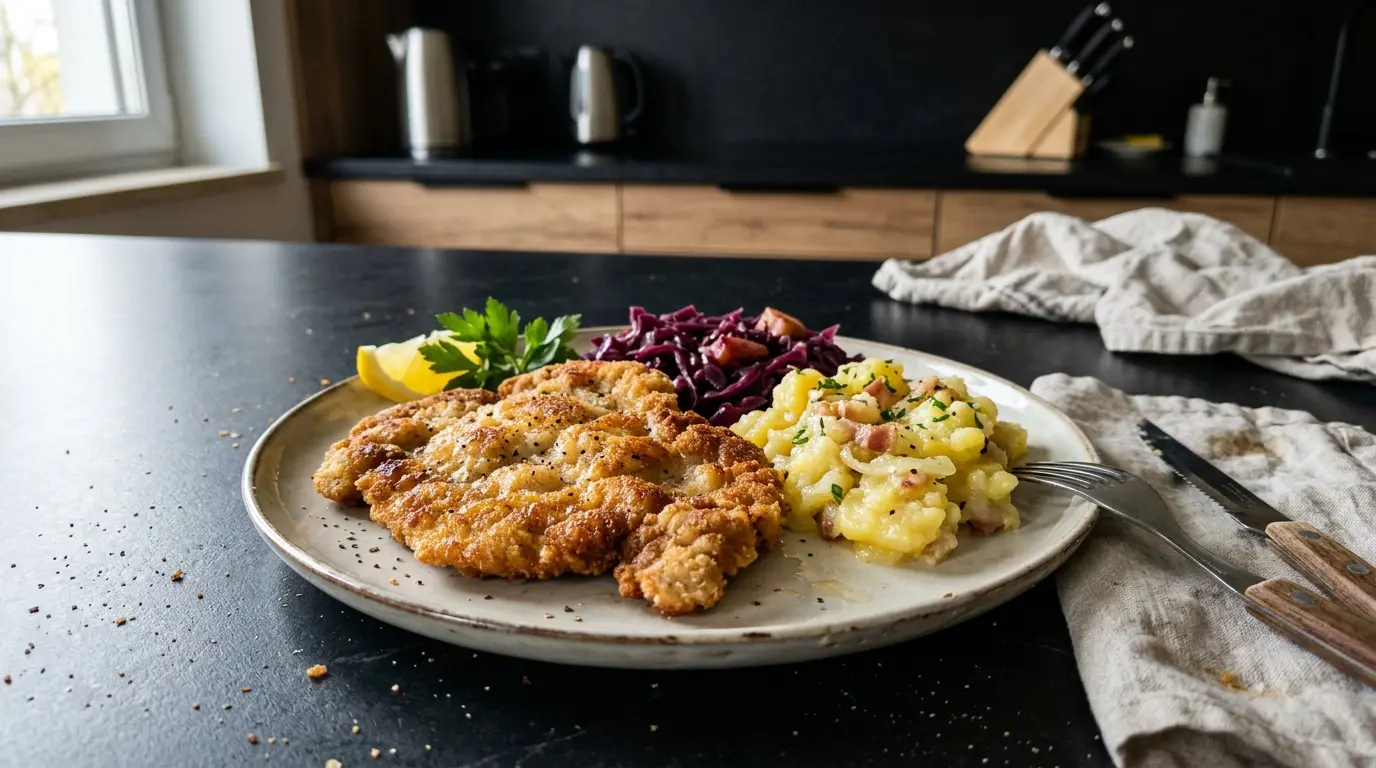
Serve with potato dumplings, bread dumplings or mashed potatoes and braised white or red cabbage. A cold beer or a glass of dry red wine pairs very well with this roast.
Watch out for
- Don’t put the meat straight from the fridge into the oven – the center will cook through much later and it’s easier to dry it out.
- Make sure there is always at least a thin layer of liquid in the roasting pan; if needed, add a bit of stock.
- When browning, the vegetables should be brown, not black – burnt bits will make the sauce bitter.
Ingredients
- pork shoulder - 1.5 kg
- carrot - 2 pieces
- parsley root - 1 piece
- celeriac - 0.25 pieces
- onion - 2 pieces
- garlic - 4 cloves
- vegetable oil - 2 tablespoons
- caraway seeds - 2 teaspoons
- stock - 500 ml
- beer - 200 ml
- salt
- black pepper
- wheat flour - 1 tablespoon
Preparation
- Rinse the meat and pat it very thoroughly dry with paper towels, including all creases. Rub generously with salt, pepper, and 1 teaspoon of caraway seeds, also on the sides. Leave on the counter for 15–20 minutes, until it feels cool but not icy to the touch.
- Peel the carrot, parsley root, and celeriac and cut into thick slices. Peel the onions and cut into eighths, and lightly crush the garlic cloves with a knife just until they crack – they should remain whole so they don’t burn dark.
- Heat a large frying pan or roasting pan with the oil over fairly high heat until the fat just starts to shimmer. Sear the meat for 3–4 minutes on each side, until deep golden and in places brown; if you still see dull, grey patches, keep searing longer.
- Transfer the meat to an ovenproof dish or push it to one side of the roasting pan. Add the vegetables and garlic to the same fat and fry for 5–7 minutes, until the onion is lightly browned and brown (but not black) bits form on the bottom.
- Pour in the beer, bring to a boil and cook for 2–3 minutes, scraping the browned bits from the bottom with a wooden spoon – the liquid should clearly darken and thicken slightly. Add the stock and remaining caraway, stir so the vegetables are almost covered.
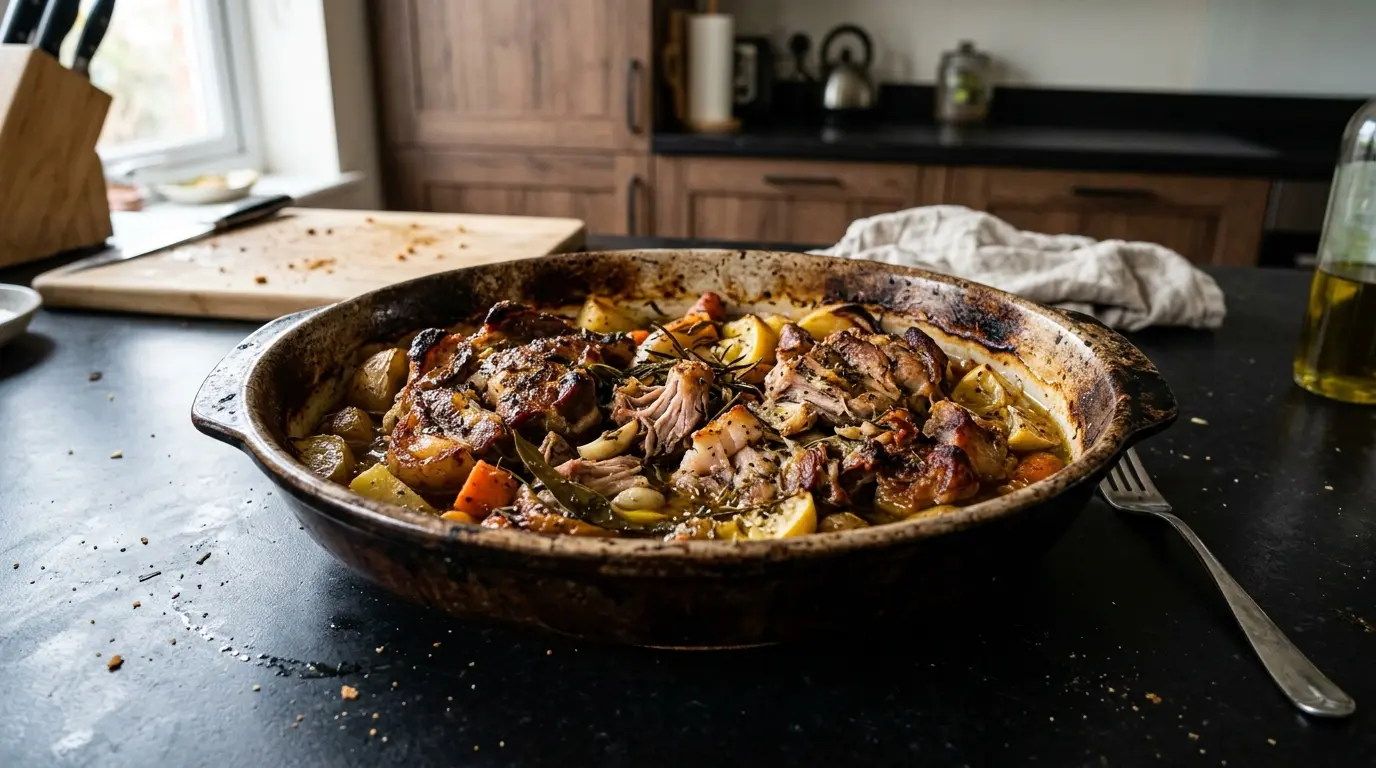
- Place the meat on top of the vegetables, fatty side up. Cover with a lid or tightly with foil and put into an oven preheated to 170°C (top–bottom heat). Roast for about 1 hour, until a fork goes into the meat with noticeable but reduced resistance and the sauce is just gently bubbling around the edges.
- After an hour, remove the cover and spoon some of the sauce from the bottom over the meat. Roast for another 40–60 minutes uncovered, basting the top every 20 minutes; the meat should be very tender when pierced, and the rind and sides deep golden but not burnt.
- Transfer the finished roast to a board, cover loosely with foil, and leave for 10–15 minutes so the juices can settle – when sliced, the meat should be juicy but not flood the board. Pour the sauce with the vegetables into a pot; you can leave the vegetables in chunks or blend the sauce smooth.
- In a small bowl, mix the flour with 3 tablespoons of cold water into a smooth, pourable paste with no lumps. Bring the sauce to a boil and pour in the slurry in a thin stream, whisking constantly, until the sauce thickens to the consistency of thin cream.
- Taste the sauce and season with salt and pepper. Slice the roast crosswise against the grain into 1–1.5 cm thick slices; the knife should glide through smoothly and the edges of the slices should stay neat. Serve hot, generously topped with the sauce.
Storage
Store leftover roast in the fridge, covered with sauce, for up to 3 days. Reheat gently in a saucepan or in the oven, adding a splash of stock or water if needed so the meat doesn’t dry out.
This roast reminds me of cozy Bavarian inns, where the smell of caraway and roasting meat greets you at the door. It’s a great dish for family gatherings – it mostly cooks itself in the oven while you spend time with your guests.