German Onion Pie Zwiebelkuchen Recipe
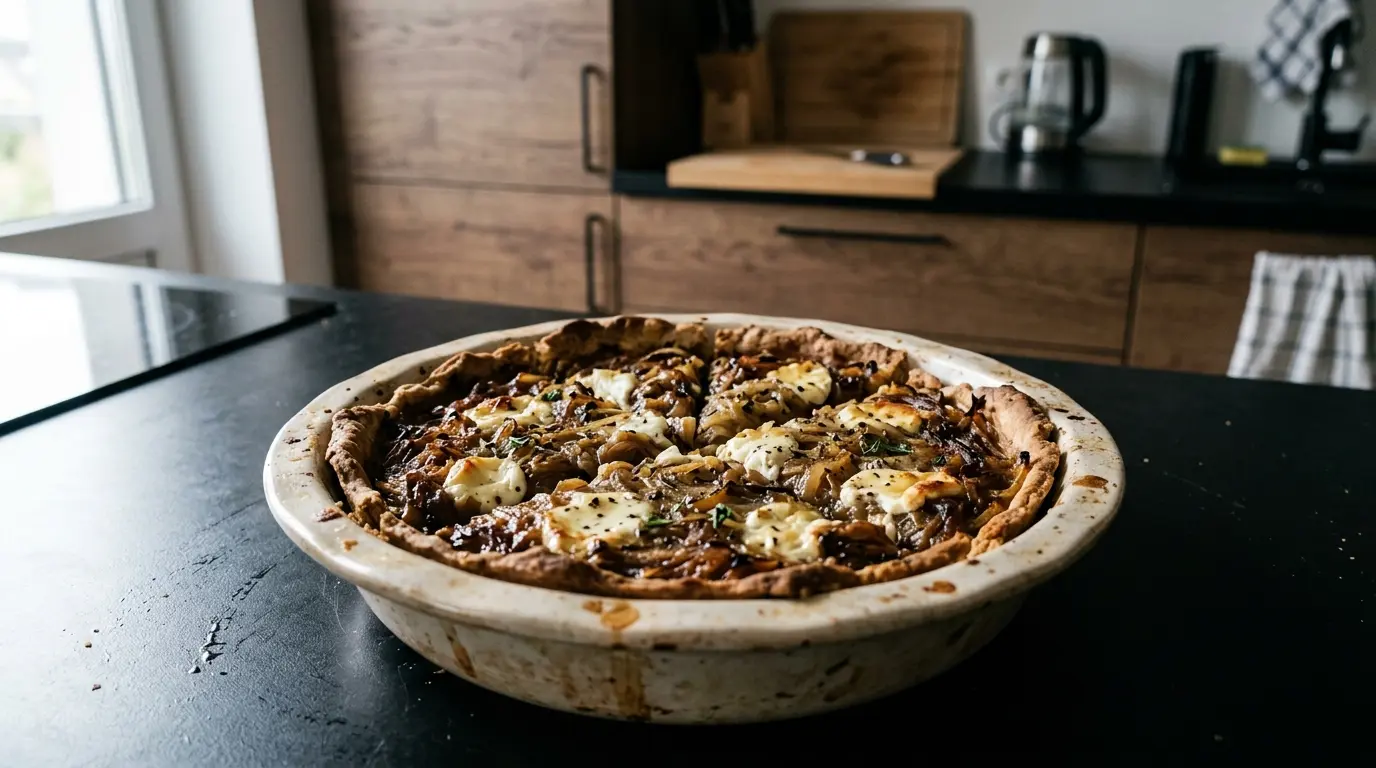
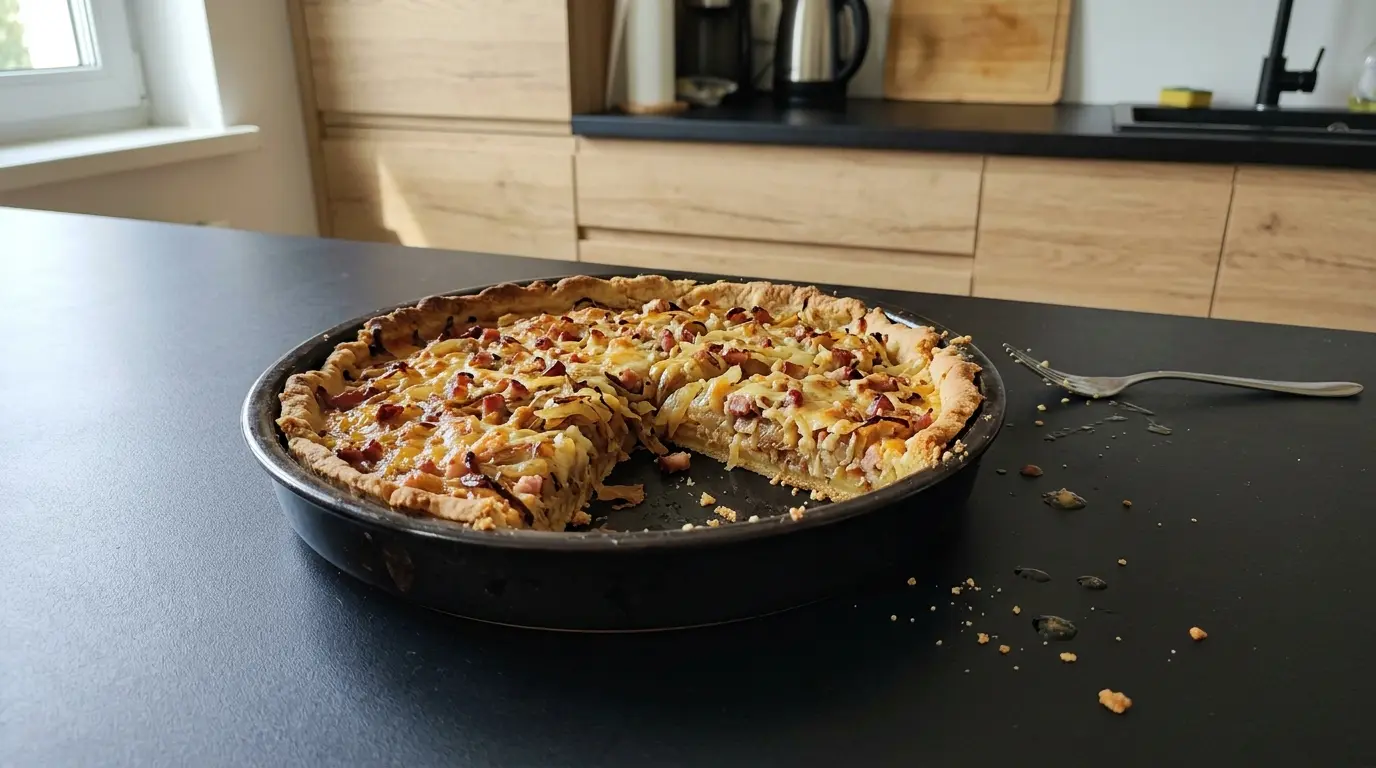
Zwiebelkuchen is a savoury onion pie that in Germany is often eaten in autumn together with young wine. It tastes a bit like a cross between an onion tart and a very rich casserole on a shortcrust base. It’s a great dish for a lazy weekend when you want something you can cut into pieces and nibble on warm or cold.
In Germany, Zwiebelkuchen appears in autumn in wineries and at local festivals, often served together with young wine (Federweißer). Depending on the region it is seasoned with caraway or bacon, and sometimes baked on large trays and sold in squares, a bit like pizza.
Zwiebelkuchen is a typically autumnal onion pie that in Germany is often served with young wine during the first cooler evenings. The creamy, savoury onion filling on a buttery base tastes like a mix of tart, casserole and very comforting comfort food. It’s a dish that reheats and slices very well, so once baked it “works” for several meals.
Why this version works
- Chilling and blind‑baking the dough creates a barrier against moisture from the filling and keeps the base crisp.
- Long, gentle sautéing of the onions brings out a sweet, mild flavour instead of a harsh raw‑onion sharpness.
- The ratio of eggs to cream gives a filling that slices cleanly but still stays creamy.
- Letting the onions cool to lukewarm before adding the eggs prevents them from scrambling and forming lumps.

Chef's tips
Sauté the onions over low heat until they are soft and sweet – if you rush and burn them, the pie will taste bitter. It’s worth lightly blind-baking the base before adding the filling so it doesn’t turn soggy and doughy. After baking, let the pie rest for at least 15–20 minutes so the onion filling firms up slightly and it’s easier to cut neat slices.
How to serve
It tastes best with a glass of young white wine or a light Riesling, but it also works well with homemade lemonade or lemon tea for a late brunch. Serve it with a simple salad with vinaigrette or a pickled cucumber salad to cut through the creaminess of the filling. It’s a great dish for a lazy Sunday lunch or a board-game evening when everyone can nibble on a slice at their own pace.
Watch out for
- Do not mix hot onions with the egg mixture – the eggs can scramble and form lumps.
- If you sauté the onions for too short a time, they will stay firm and sharp and the filling will turn out heavy.
- If, after blind‑baking, the base is still pale and soft, bake it for a few minutes longer before pouring in the filling.
Substitutions
- You can replace the bacon with smoked tofu or omit it and increase the amount of onion for a vegetarian version.
- You can swap 18% sour cream for 30% – the filling will be richer and more creamy.
- You can replace about 1/4 of the onions with leeks for a milder, sweeter taste.
- Swap ground caraway for whole seeds if you like more pronounced, crunchy accents.
Ingredients
- wheat flour type 450–550 - 250 g
- butter cold, straight from the fridge - 125 g
- egg for the dough - 1 piece
- salt for the dough - 0.5 teaspoons
- water very cold - 2 tablespoons
- onion peeled, preferably regular yellow onions - 800 g
- smoked bacon in thin strips or cubes - 100 g
- vegetable oil for frying the onions - 1 tablespoon
- 18% fat sour cream for the onion mixture - 200 ml
- egg for the onion mixture - 2 pieces
- ground or whole caraway seeds traditional seasoning for Zwiebelkuchen - 1 teaspoon
- ground black pepper to taste - 0.5 teaspoons
- salt for seasoning the onion mixture
Preparation
- Start with the dough: put the flour and salt into a bowl, add the cold butter cut into cubes. Rub with your fingers or cut with a knife until you get fine crumbs resembling wet sand.
- Add the egg and 2 tablespoons of very cold water, quickly bring the dough together until the ingredients combine. Form a ball, flatten it into a disc, wrap in cling film and chill in the fridge for at least 30 minutes.
- Peel the onions and slice them into thin, evenly sized half‑moons so they soften at the same rate. Dice the bacon finely so it renders easily and doesn’t leave big, chewy chunks.
- In a large frying pan, fry the bacon over medium heat for 3–4 minutes until the edges are browned and a layer of fat covers the pan. Add the oil and onions, stirring so all the slices are coated in fat.
- Fry the onions with the bacon over medium heat for 15–20 minutes, stirring often. They should be very soft, golden and translucent, without dark brown, burnt strands; if they start to catch, reduce the heat and add 1–2 tablespoons of water.
- Remove the pan from the heat and set the filling aside until lukewarm – it should feel warm to the touch but not hot. In a bowl, mix the sour cream, 2 eggs, caraway, pepper and salt until smooth and uniform.
- Preheat the oven to 190°C (top and bottom heat). Lightly grease a tart tin or round tin about 28 cm in diameter with butter, making sure the base and sides are evenly coated but without clumps of fat.
- Roll out the chilled dough on a lightly floured surface into a circle slightly larger than the tin. Transfer the dough to the tin, press it into the base and sides, trim any excess and prick the base in several places with a fork so it doesn’t puff up.
- Blind‑bake the base for 8–10 minutes at 190°C, until the surface looks matte and the edges are lightly golden; the surface should be dry to the touch, not shiny and raw. Remove from the oven and let it cool slightly in the tin.
- Pour the cream‑and‑egg mixture onto the cooled onions and bacon and mix thoroughly so there are no dry pockets of onion. Spread the filling evenly over the pastry base, smoothing the top with a spoon.
- Bake for 30–35 minutes at 190°C, until the filling is clearly set, slightly risen and lightly browned on top, and the pastry edges are golden. When you gently shake the tin, the centre should not slosh, only have a slight wobble.
- Remove the tart from the oven and leave it to stand for 10–15 minutes so the filling stabilises and firms up slightly. Slice into wedges when the centre is still hot but no longer liquid and the edges release easily from the tin.
Storage
Store the cooled pie in the fridge, covered, for up to 3 days. Reheat individual pieces in the oven or in a dry pan to keep the base crisp, or eat cold straight from the fridge.
I usually bake Zwiebelkuchen on Saturday afternoon when the oven is already running at full speed – then for the rest of the weekend I just reheat a slice in the oven or in a dry pan. I always set aside two pieces for my Monday lunchbox, because it tastes just as good cold as it does freshly baked.