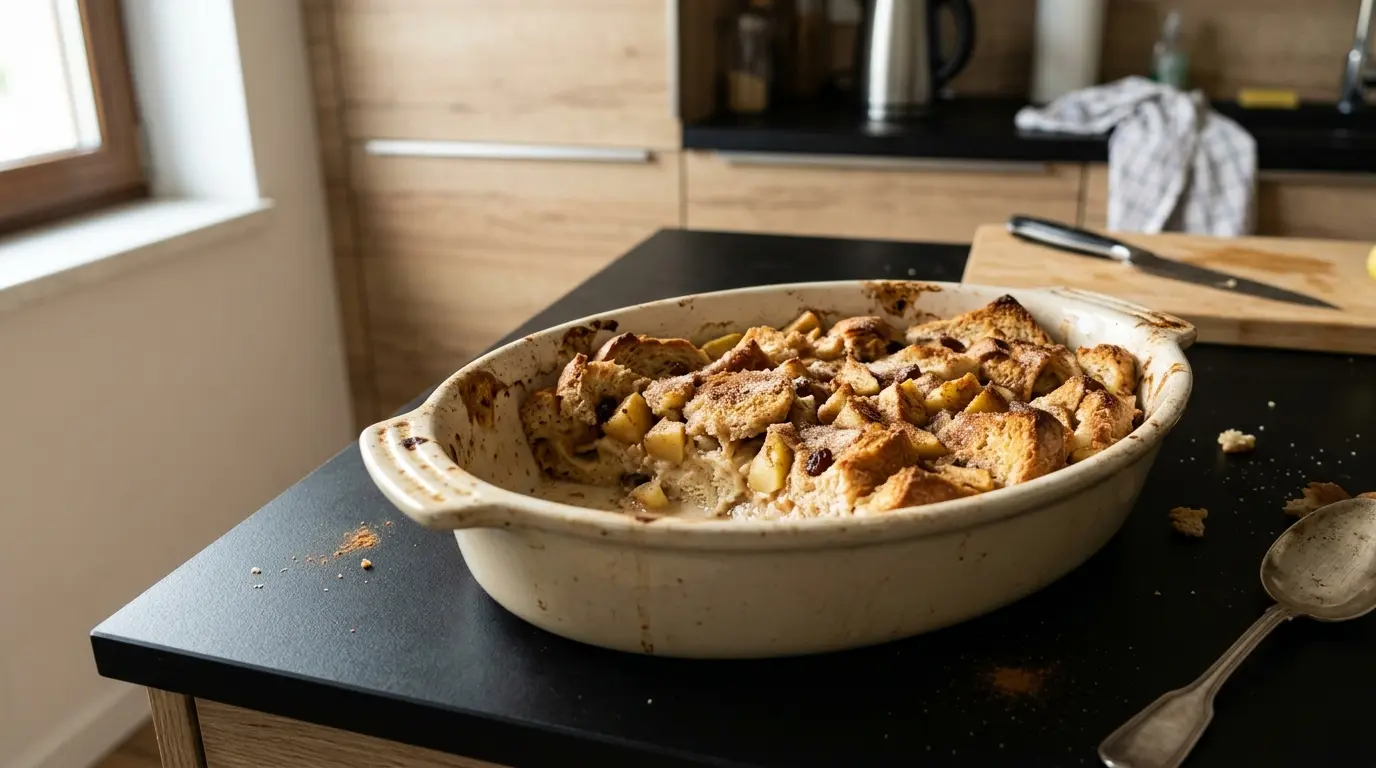
German Bread Soup Brotsuppe Recipe
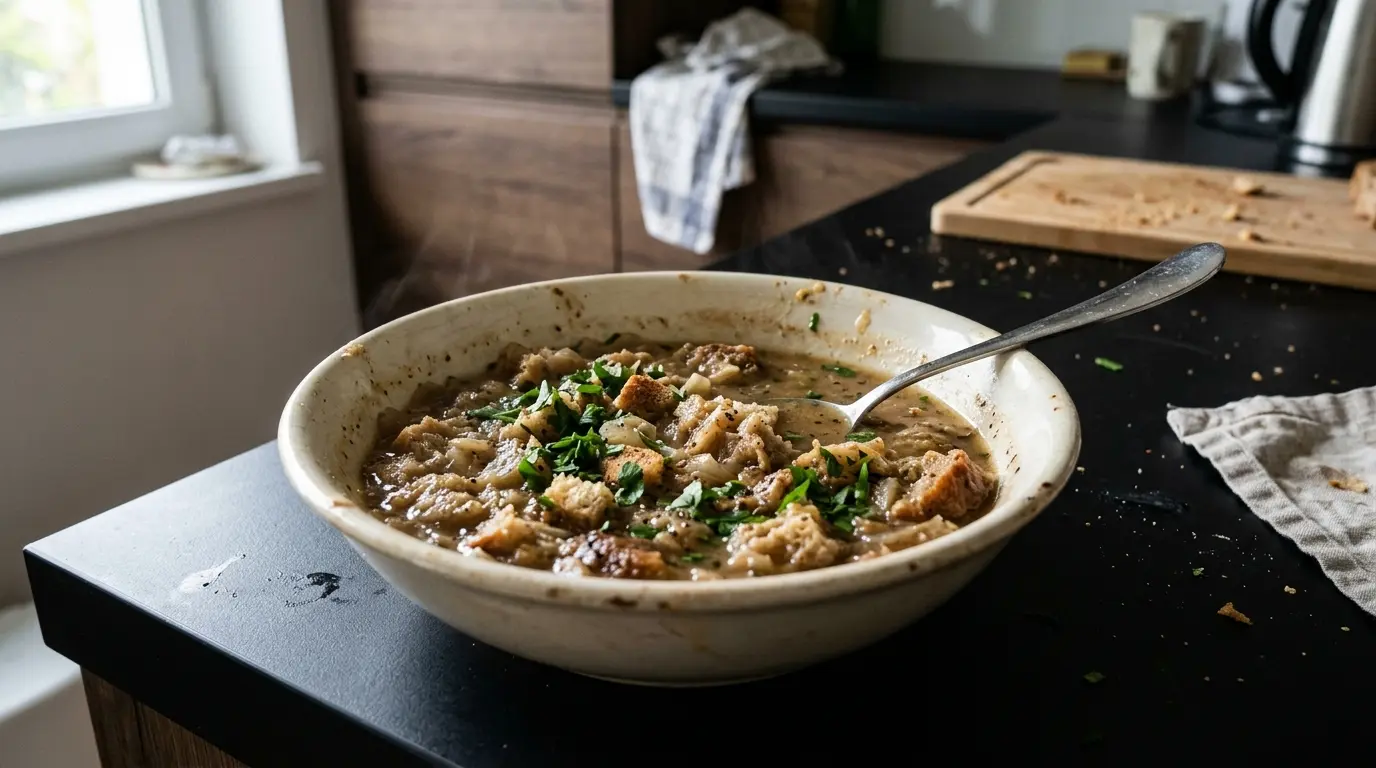
Brotsuppe is a clever German soup created to use up stale bread – nothing goes to waste. Its flavor is a bit like a mix of creamy garlic soup and a light pan gravy, but it’s much simpler to make. In Alpine regions it’s served as a warming first course after a whole day spent outdoors.
Brotsuppe comes from the peasant cuisine of southern Germany, where stale bread was too valuable to throw away. Over time it also appeared in inns and taverns, often served in versions enriched with bacon or fried onions.
A classic example of German frugality and comfort food in one bowl: it turns simple stale bread into a silky, aromatic soup with minimal effort and ingredients.
Why this version works
- Combining stock with milk and cream creates a flavor similar to a roast gravy in soup form.
- Toasting the bread in butter before cooking intensifies the aroma of toasted bread.
- Setting some of the bread aside for croutons gives contrast: velvety cream below and a crunchy topping.
- Adding the liquid after frying the bread lets you easily control the thickness, regardless of how stale the bread is.
Chef's tips
Use bread that is dry but not rock-hard – it will blend more easily and give the soup a smoother texture. If your stock is very salty, season the soup only at the end to avoid over-salting.
How to serve
Serve in warm bowls, generously topped with croutons and chives. For a heartier meal, add a side of sausage or a slice of smoked ham, or pair it with a crisp green salad.
Watch out for
- Don’t burn the onion and garlic – even slightly browned edges will add bitterness noticeable in the whole soup.
- Add the cream at the end and don’t boil the soup afterward to avoid curdling and lumps.
- If the blender doesn’t fully break down the bread, the soup will be lumpy and heavy on the palate.
Substitutions
- You can replace chicken stock with vegetable stock if you want a meat-free version.
- Swap part of the milk for heavy cream (30%) if you want a more luxurious creaminess.
- Instead of chives, use finely chopped parsley or celery leaves.
- You can replace mixed bread with wholemeal, but then add a pinch of sugar for balance.
Ingredients
- stale wheat or mixed bread without a lot of seeds on top - 200 g
- chicken stock vegetable stock also works - 1 l
- milk - 250 ml
- onion medium - 1 piece
- garlic - 2 cloves
- butter - 30 g
- vegetable oil for frying the croutons - 1 tablespoon
- 18% cream for enriching the soup - 50 ml
- dried marjoram - 1 teaspoon
- chives chopped, for serving - 2 tablespoons
- salt to taste
- ground black pepper to taste
Preparation
- Cut the stale bread into cubes. Set aside about 1/3 for the croutons for serving, the rest will go into the soup.
- Peel and finely chop the onion, and finely chop the garlic as well.
- Melt the butter in a pot over medium heat. Add the onion and sauté for 3–5 minutes, until it softens and turns slightly translucent. Add the garlic and cook for about 1 minute more, until fragrant.
- Add 2/3 of the cubed bread to the pot, stir and cook for 2–3 minutes, until the bread soaks up some butter and starts to brown at the edges.
- Pour in the stock and milk, add the marjoram, stir and bring to a gentle boil. Reduce the heat and simmer for 10–15 minutes, until the bread has completely broken down.
- Meanwhile, heat the oil in a frying pan. Add the reserved 1/3 of the bread cubes and fry for 4–5 minutes, stirring, until golden and crispy. Transfer to a plate.
- Remove the soup from the heat and blend with a hand blender until smooth and creamy. If it’s too thick, add a little water or stock.
- Pour in the cream and briefly reheat the soup, but do not let it come back to a boil. Season to taste with salt and pepper.
- Serve the soup hot, topped with crunchy croutons and fresh chives.
Storage
Store the soup in the fridge in a closed container for up to 2–3 days. Reheat gently, without boiling, and add a splash of water or stock if it has thickened too much. Prepare fresh croutons each time you serve it.
This soup is a great way to experience traditional Alpine-style cooking at home. It’s simple, filling, and perfect for cold days when you want to use what you already have in the kitchen.