German Beef Goulash Rindergulasch Recipe
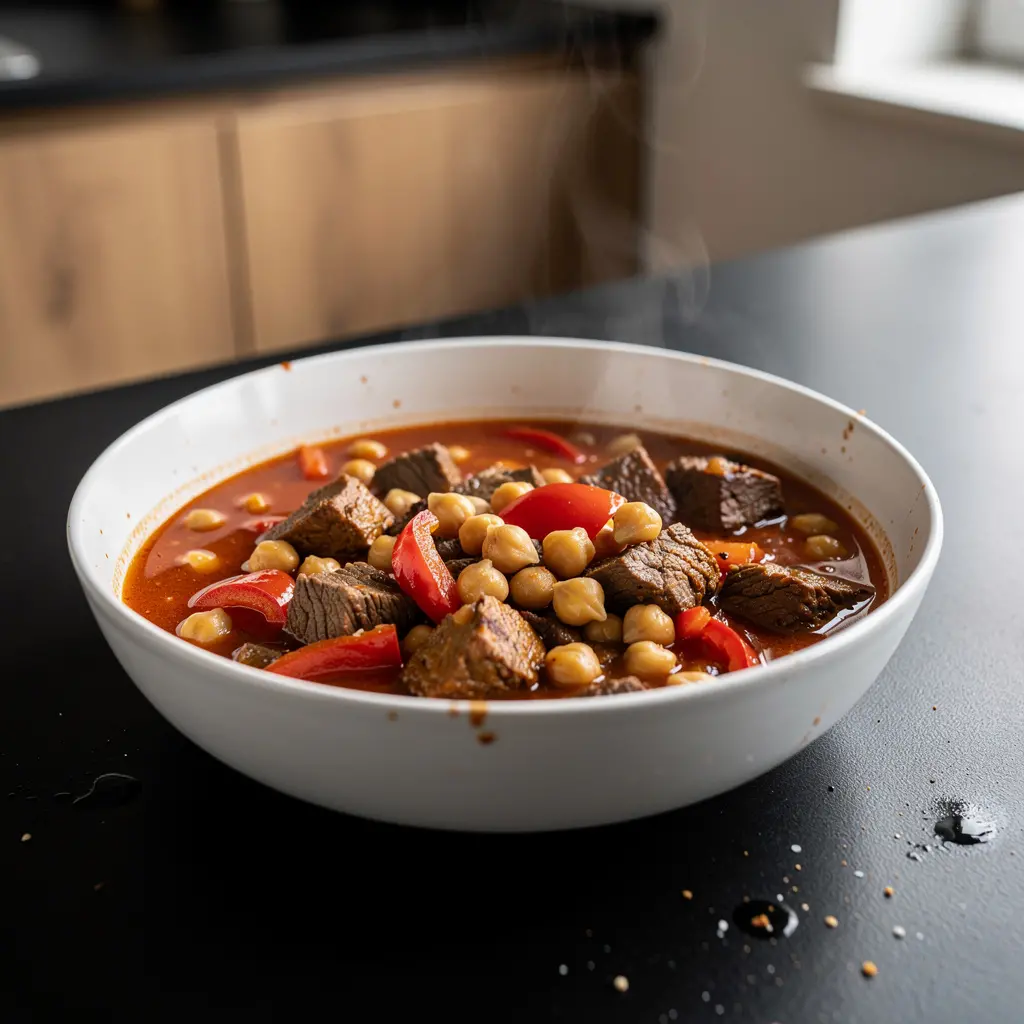
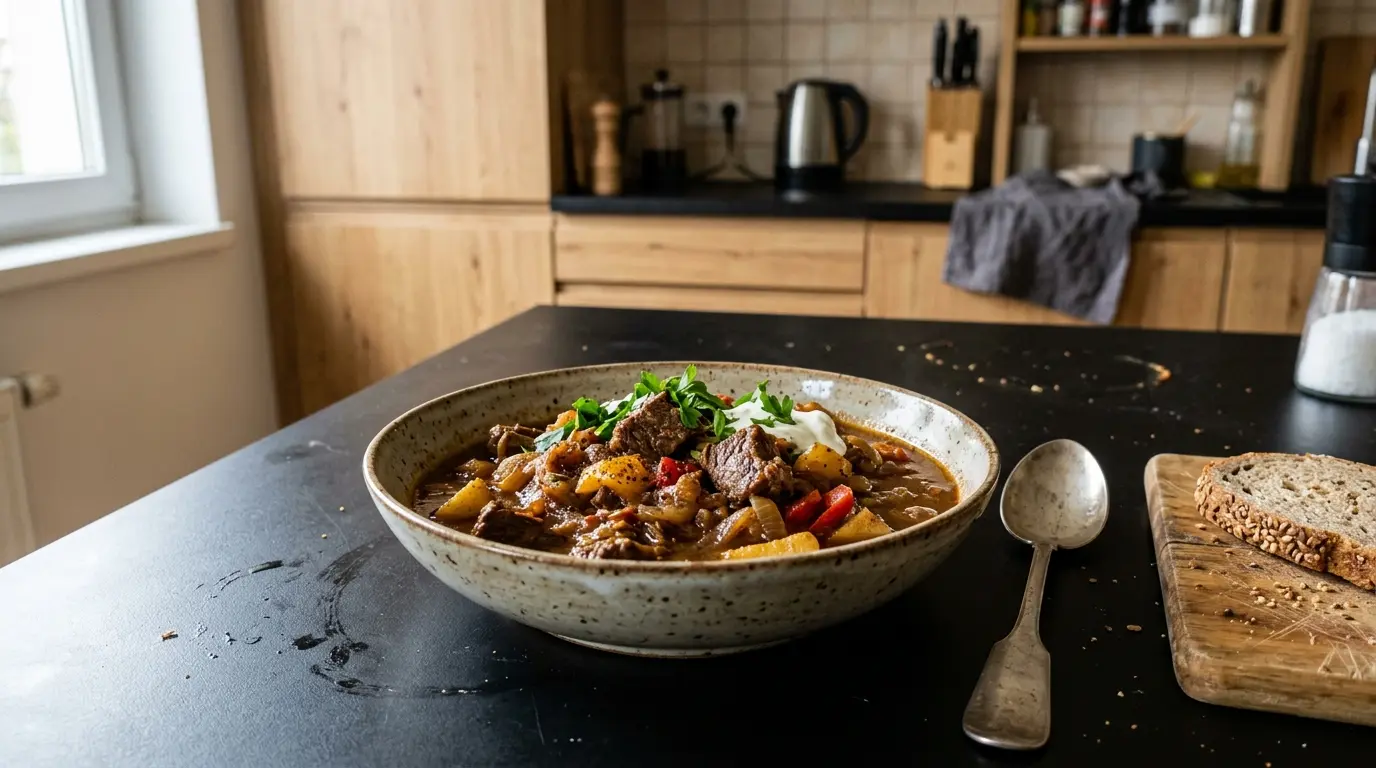
Rindergulasch is a German beef goulash made from beef braised with onions and bell pepper in a thick sauce. It’s a typical meal for cold days, often served with dumplings or potatoes at family gatherings. The flavors are similar to Hungarian goulash, but the German version is usually milder and less spicy.
In Germany, Rindergulasch is a staple of home cooking and Gasthaus menus, often served with Knödel dumplings or Spätzle. Compared to the Hungarian version it is usually milder, with more onion and without very hot paprika.
This goulash has a classic German character: distinctly paprika-forward but not hot, with plenty of sweet, well-caramelized onions. Simple techniques – deep browning of the meat and patient slow braising – give you a rustic tavern-style result, even in an ordinary home pot. It also freezes very well, so it’s worth making a bigger batch for the future.
Why this version works
- Browning the meat in batches builds a deep, caramelized flavor and a dark sauce instead of a pale, watery stew.
- A thin coating of flour on the meat gently thickens the sauce without a noticeable, heavy roux.
- Adding paprika powder only after the onions have softened protects it from burning and turning bitter.
- Long, gentle braising over low heat guarantees meat that falls apart under the pressure of a fork.
Chef's tips
The best cuts are from the shoulder or chuck – they have some fat and connective tissue, which turn into gelatin during long braising and naturally thicken the sauce. If any scum or excess fat collects on the surface while braising, skim it off with a spoon – the sauce will taste cleaner and feel less heavy. By the end of cooking, the meat should “give way” under the pressure of a fork, and the sauce should coat the spoon evenly, without lumps or visible pools of fat on top.
How to serve
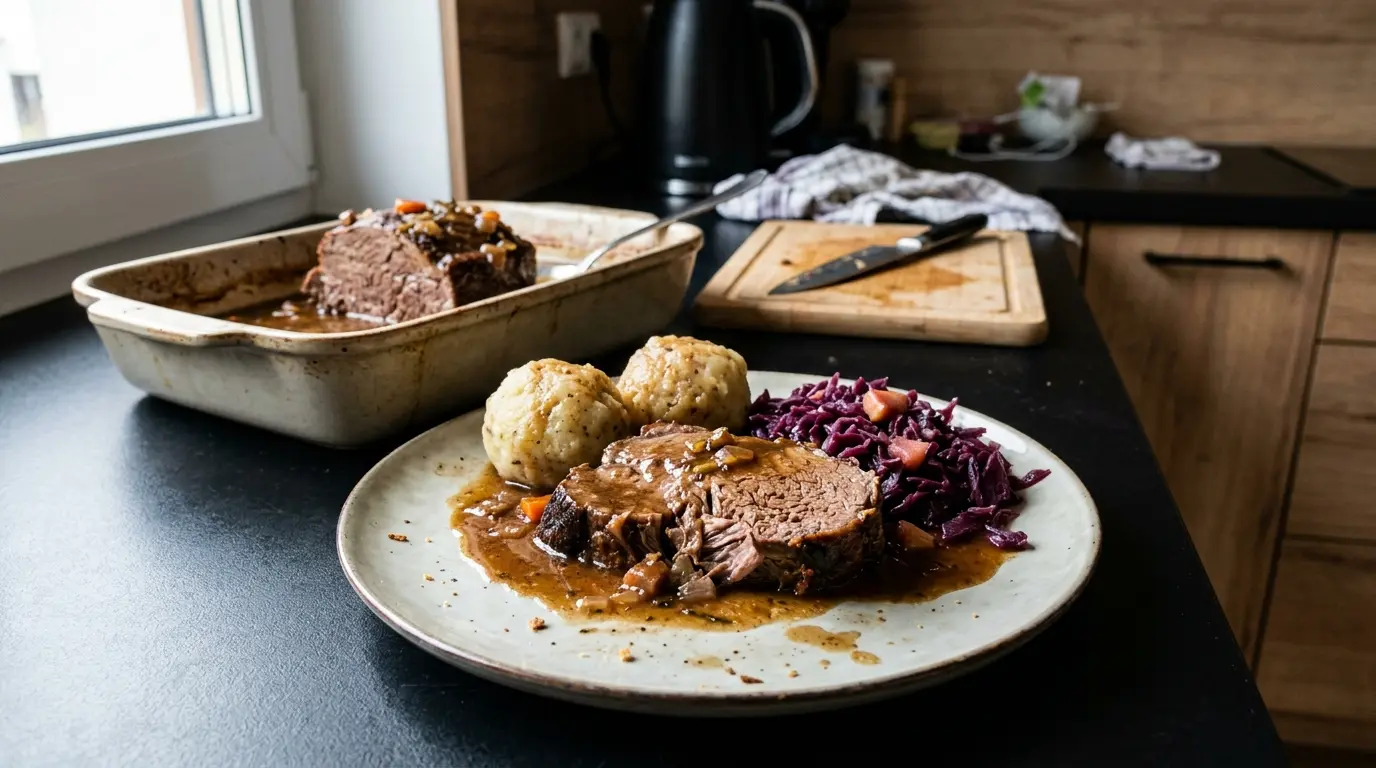
Serve with Knödel dumplings, Polish-style potato dumplings, mashed potatoes, or thick egg noodles – anything that catches plenty of thick sauce. To drink, a dark, not too bitter beer or a full-bodied red wine such as Portugieser or Spätburgunder is ideal. The next day you can reheat leftover goulash and pile it onto a slice of crusty bread for a quick, hearty meal.
Watch out for
- Don’t overcrowd the pot when browning – the meat will start to steam in its own juices instead of searing.
- Paprika powder burns easily, so after adding it, lower the heat and stir constantly for about a minute.
- If, after the planned cooking time, the meat is still a bit tough, don’t cut it short – give it at least another 15–20 minutes of gentle braising.
- Boiling too vigorously without a lid at the end can quickly reduce the sauce too much and burn the bottom of the pot.
Substitutions
- You can replace part of the beef stock with red wine, adding it at the deglazing stage after browning the meat.
- If you don’t like heat, skip the hot paprika and add a pinch of sweet smoked paprika for deeper aroma.
- You can partially replace the beef with pork shoulder – the goulash will be milder but still hearty.
Ingredients
- beef for goulash, e.g. shoulder or neck, cut into cubes - 800 g
- onion medium - 3 pieces
- red bell pepper - 2 pieces
- garlic - 3 cloves
- tomato paste - 2 tablespoons
- sweet paprika ground - 2 teaspoons
- hot paprika ground, optional - 0.5 teaspoons
- bay leaf - 2 pieces
- allspice - 3 grains
- beef stock - 600 ml
- oil for frying - 3 tablespoons
- wheat flour for coating the meat - 1 tablespoon
- salt to taste
- pepper to taste
Preparation
- Pat the beef very dry with paper towels and cut into 2–3 cm cubes. Sprinkle with salt, pepper, and flour, and mix so that each piece is only lightly dusted, without a wet, thick coating.
- Cut the onions into thin wedges or large dice. Remove the cores from the peppers and cut into strips about 1 cm wide. Finely chop the garlic so it distributes evenly in the sauce.
- Heat 2 tablespoons of oil over fairly high heat in a large, heavy pot. Add the meat in batches so the pieces don’t touch and fry for 3–4 minutes on each side until well browned. A dark brown residue should form on the bottom of the pot.
- Transfer the browned meat to a plate. Pour the remaining 1 tablespoon of oil into the same pot, add the onion, and fry for 6–8 minutes over medium heat, stirring often and scraping up the browned bits from the bottom, until the onion is very soft and lightly browned.
- Add the garlic, sweet paprika, and hot paprika. Reduce the heat and stir for about 1 minute, until the spices become very fragrant and slightly darken, but don’t let them turn brown – that would make them bitter.
- Add the tomato paste and fry for another minute, stirring, until it loses its raw smell and starts to catch slightly on the bottom, forming a thick red paste with the onions.
- Return the browned meat along with any juices from the plate to the pot. Add the bay leaves and allspice, and briefly stir with the onions and spices so every piece of meat is coated in the sauce.
- Pour in enough stock to almost cover the meat (the pieces can stick out a little). Bring to a boil, reduce the heat to low, cover the pot, and simmer for about 60 minutes, until the sauce has noticeably thickened and the meat starts to soften when pierced with a fork.
- After an hour, add the sliced peppers. If the sauce has reduced a lot, add a little water or stock so the meat is almost covered. Simmer covered for another 40–60 minutes, until the meat is very tender and can be easily mashed with a fork.
- At the end, remove the lid and cook for another 5–10 minutes over medium heat, stirring, until the sauce is as thick as heavy cream and coats the spoon smoothly, without greasy pools on the surface.
- Remove the bay leaves and allspice. Taste the sauce and season with salt and pepper. Serve the goulash hot with dumplings, potatoes, or pasta so they can soak up the sauce.
Storage
Store the goulash in the fridge for up to 3–4 days; the sauce will gain depth of flavor each day and the meat will become even more tender. When reheating over low heat, the sauce may thicken further, so add a splash of water or stock if needed and stir gently until it once again coats the spoon smoothly.
I most often cook this goulash on Saturday evening so that on Sunday I only have to reheat it – it tastes even better the next day, so I always freeze one portion “for a rainy day.”