Crostata with Lemon Cream and Meringue Recipe
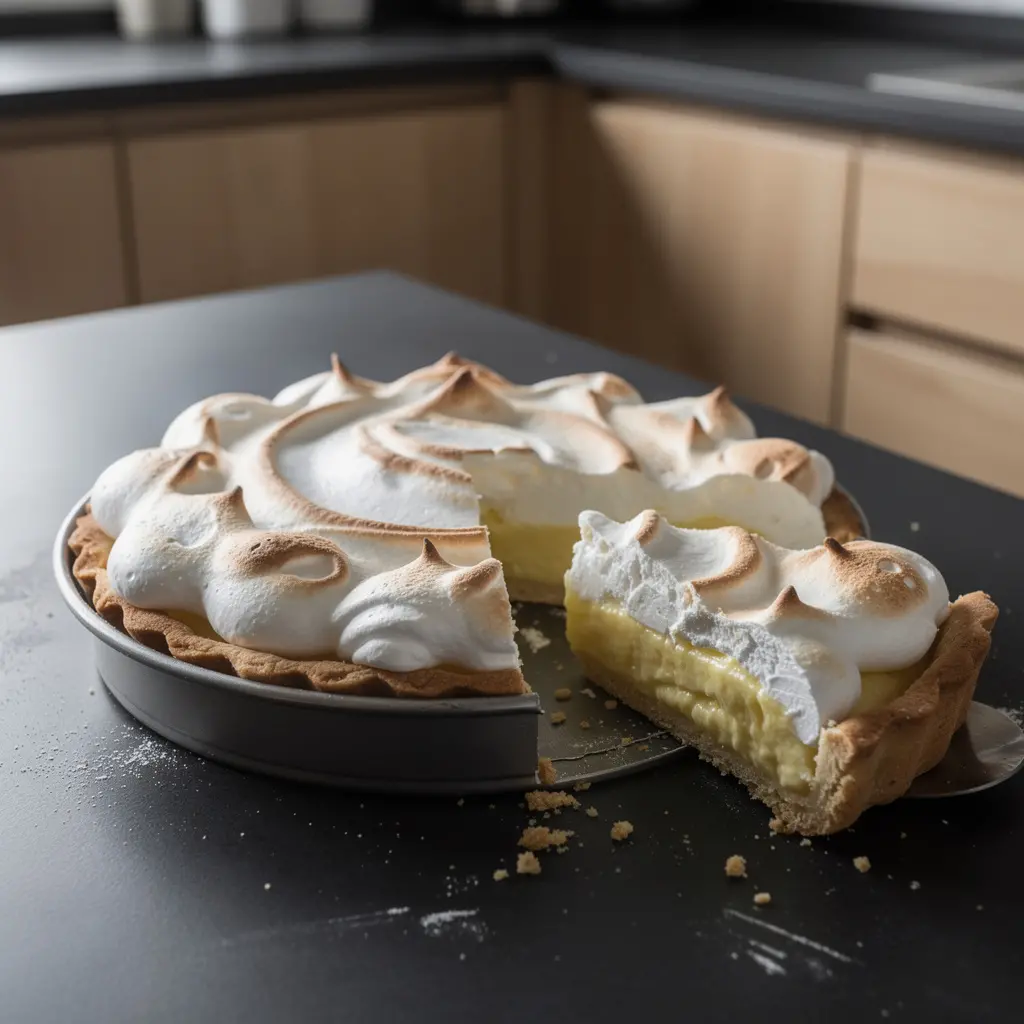
This crostata is the Italian answer to lemon tart – a crisp shortcrust base, intensely lemony cream and a soft, lightly toasted meringue on top. In Italy, cakes like this often appear at Sunday family lunches, served with espresso. It looks like a patisserie dessert, but you can easily make it at home.
This crostata combines Italian simplicity with a show‑stopping look – the crisp, buttery pastry contrasts with the bold lemon cream and soft, toasted meringue. Unlike many French tarts, the cream here is a bit more rustic but intensely citrusy, like homemade bakes from southern Italy. It’s a dessert that smells like a small Roman pastry shop on a Sunday afternoon.
Chef's tips
The butter for the shortcrust must be really cold – ideally cut into cubes and placed in the freezer for 10 minutes before making the dough, so the base turns out crisp rather than hard. Stir the lemon cream constantly over low heat until it thickens and clearly coats the back of a spoon; if you miss this moment, it can curdle. Beat the meringue while adding the sugar gradually – a tablespoon at a time – until the mixture is thick and glossy; otherwise it may weep syrup in the oven.
How to serve
This crostata tastes best well chilled, served with a strong espresso or a small cappuccino after a long family lunch. It’s perfect on a birthday table instead of a classic layer cake, especially in summer when heavy creams feel overwhelming. For a get‑together with friends, serve it with a glass of sparkling prosecco and a few fresh raspberries on the side.
Ingredients
- flour type 450–550 - 250 g
- cold butter cut into cubes - 125 g
- sugar - 80 g
- egg for the dough - 1 piece
- egg yolks for the cream - 3 pieces
- egg whites for the meringue - 3 pieces
- sugar 80 g for the cream, 80 g for the meringue - 160 g
- milk for the cream - 300 ml
- lemon juice about 2–3 lemons - 80 ml
- grated lemon zest only the yellow part - 1 teaspoon
- potato or corn starch about 2 tablespoons - 25 g
- pinch of salt for the meringue
Preparation
- Prepare the shortcrust pastry: put the flour and icing sugar into a bowl, add the cold butter. Rub with your fingers or cut with a knife until you get fine crumbs resembling wet sand.
- Add the egg and quickly bring the dough together just until combined. Shape into a flattened disc, wrap in cling film and chill in the fridge for at least 30 minutes.
- Preheat the oven to 180°C (top and bottom heat). Roll out the chilled dough on a lightly floured surface to a round about 3–4 mm thick. Transfer to a tart tin about 24 cm in diameter, press into the base and sides, trim off any excess dough.
- Prick the base all over with a fork. Cover with baking paper and fill with dried beans or rice as weights. Bake for 15 minutes, then remove the paper with the weights and bake for another 8–10 minutes, until lightly golden. Set aside to cool.
- Make the lemon cream: in a saucepan whisk together the egg yolks, 80 g sugar and starch until you have a smooth, lump‑free paste. Gradually pour in the milk, whisking constantly.
- Place the saucepan over medium heat and cook, stirring all the time, until the mixture thickens to a custard‑like consistency and starts to bubble gently. Remove from the heat, add the lemon juice and zest and mix thoroughly. Cover the surface of the cream with cling film so it touches the cream (this prevents a skin forming) and leave to cool slightly.
- Pour the lemon cream onto the cooled pastry base and smooth the surface with a spoon.
- Prepare the meringue: beat the egg whites with a mixer on medium speed until foamy. Add a pinch of salt, increase the speed and continue beating, gradually adding 80 g sugar, 1 tablespoon at a time. Beat until the meringue is very thick and glossy and does not move when you turn the bowl upside down.
- Spoon the meringue over the lemon cream, using the spoon to create waves and peaks.
- Place the tart in an oven preheated to 170°C and bake for 10–12 minutes, until the top of the meringue is lightly browned. If it darkens too quickly, lower the temperature.
- Remove the crostata from the oven and let it cool completely before slicing so the cream can set properly.
Storage
Store the crostata in the fridge, covered, for up to 2 days. The meringue will gradually soften, but the dessert will still taste delicious. Avoid stacking slices on top of each other so you don’t crush the meringue.