Crostata ricotta e cioccolato – tart with ricotta and chocolate Recipe
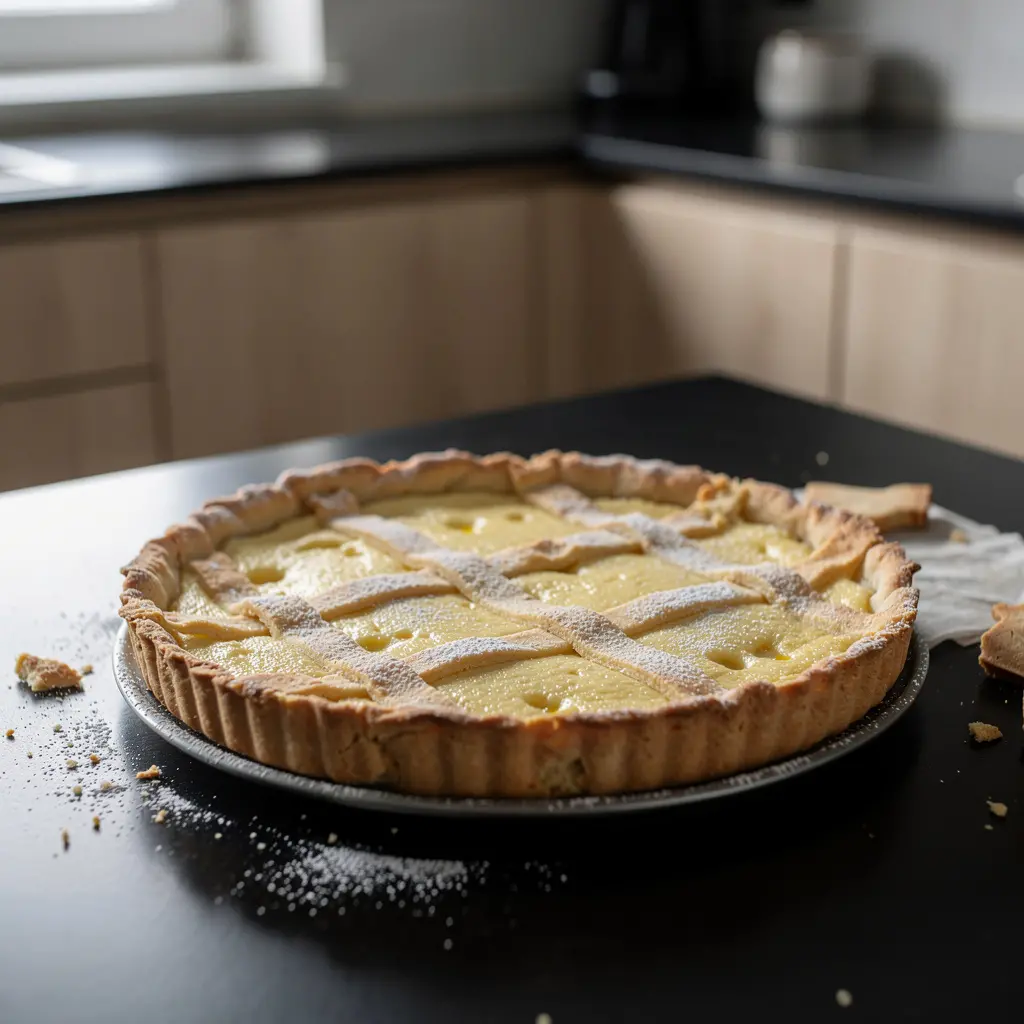
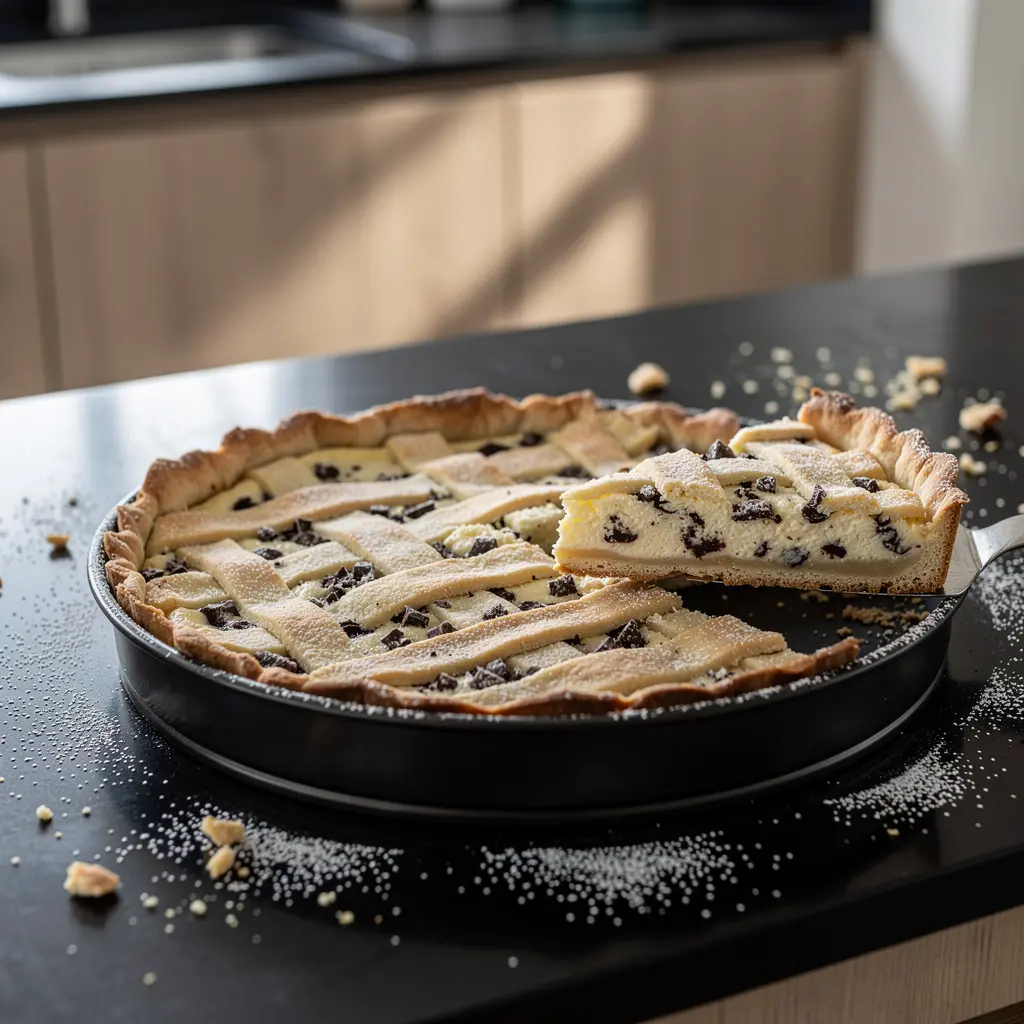
Crostata with ricotta and chocolate is a classic Italian cake: a buttery shortcrust base and a delicate, lightly vanilla-scented cheese filling with chunks of chocolate. Italians often bake it for holidays or family gatherings – it’s something between a cheesecake and a tart. It’s lighter than Polish cheesecake and, thanks to ricotta, has a very delicate, creamy texture.
Crostata with ricotta and chocolate is a variation on classic Italian crostate, most often filled with apricot or sour cherry jam. In Rome and southern Italy, ricotta versions are popular for holidays and family lunches, because they travel well and are easy to serve at room temperature.
Crostata with ricotta and chocolate combines a crisp, buttery base with a light, creamy cheese filling hiding pockets of melting chocolate. It’s less heavy than a typical Polish cheesecake and feels more like an elegant dessert from a Roman pastry shop – with noticeable vanilla and gentle sweetness. It’s also a cake that travels well: you can bake it in the morning and take it in a box to a family gathering or festive lunch.
Why this version works
- Well‑chilled shortcrust pastry holds its shape and stays buttery rather than hard.
- Drained and mashed ricotta gives a smooth filling that sets evenly.
- The ratio of ricotta to eggs and sugar makes the mixture light but stable after baking.
- The lattice top lets moisture escape from the filling so the center doesn’t turn out watery.
Chef's tips
Work the shortcrust pastry quickly, just until the ingredients come together, and then be sure to chill it in the fridge so that after baking it is really crisp and doesn’t slide down the sides of the tin. Drain the ricotta well or at least mix and mash it thoroughly so there are no lumps, and add the eggs at room temperature – the filling will then be smooth and bake evenly. Watch the baking time: the ricotta mixture should set but still have a slight wobble when you gently shake the tin, as it continues to firm up after you take it out.
How to serve
It tastes best completely cooled, slightly chilled, served with a cup of espresso or cappuccino after Sunday lunch. On hot days you can serve it with a few raspberries or strawberries and a dollop of whipped cream, which nicely balances the sweetness of the chocolate. It’s also a great dessert for holidays or name days – it cuts cleanly into neat slices, so it looks good on the table alongside other bakes.
Watch out for
- Don’t knead the shortcrust pastry for too long – warmed butter will make the base tough.
- The ricotta must be well drained; if it’s too wet, the filling may stay runny in the center.
- Don’t overbake – once the center feels springy to the touch, the tart is done.
Substitutions
- You can replace ricotta with well‑ground, drained cheesecake curd.
- Instead of vanilla extract, use sugar with real vanilla.
- You can swap part of the dark chocolate for milk chocolate for a milder flavor.
Ingredients
- flour - 300 g
- cold butter - 150 g
- sugar - 120 g
- eggs - 3 piece
- ricotta cheese - 500 g
- dark or milk chocolate - 100 g
- lemon zest - 1 piece
- vanilla extract or vanilla sugar - 1 teaspoon
- pinch of salt - 1 pinch
- sugar (optional)
Preparation
- Prepare the shortcrust pastry: put the flour, 80 g icing sugar and a pinch of salt into a bowl. Add the cold butter cut into cubes. Rub with your fingers or cut in with a knife until you get fine crumbs resembling wet sand.
- Add 2 eggs and quickly knead the dough just until it comes together. If it is very dry, add 1–2 tablespoons of cold water. Form into a ball, flatten into a disc, wrap in cling film and chill in the fridge for at least 30 minutes.
- Meanwhile, prepare the filling: transfer the ricotta to a bowl and mash with a fork or briefly blend until smooth. Add 40 g icing sugar, 1 egg, lemon zest and vanilla. Mix until the mixture is uniform. Finally, add the chopped chocolate and gently fold in.
- Preheat the oven to 180°C (top and bottom heat). Lightly grease a tart tin about 24–26 cm in diameter with butter or line it with baking paper.
- Divide the chilled dough into two parts: about 2/3 for the base and sides, 1/3 for the strips on top. Roll out the larger part on a lightly floured surface into a circle slightly larger than the tin. Carefully transfer the dough to the tin, pressing it into the base and sides. Trim off any excess dough.
- Prick the base several times with a fork. Pour in the ricotta filling and smooth the surface with a spoon.
- Roll out the remaining dough and cut it into strips about 1.5–2 cm wide. Arrange them on top of the tart in a lattice pattern.
- Place the tart in the preheated oven and bake for 40–45 minutes, until the pastry is golden and the filling is set and slightly springy when you touch the centre.
- Remove from the oven and leave to cool completely in the tin – the filling will firm up as it cools.
- Before serving, you can dust the top with icing sugar and cut into wedges.
Storage
Store the tart covered, in the fridge, for up to 3 days. Bring to room temperature before serving or enjoy slightly chilled. For longer storage, you can freeze individual slices well wrapped for up to 1 month and thaw them slowly in the fridge.
I usually bake this crostata in the evening before a bigger gathering, when the kitchen is already cleaned and the oven is still warm from dinner. I always have to hide it in the pantry, because my family members tend to “even out the edges” with a knife before it’s officially served.