Çiğ köfte with bulgur – vegan cold “meatballs” Recipe
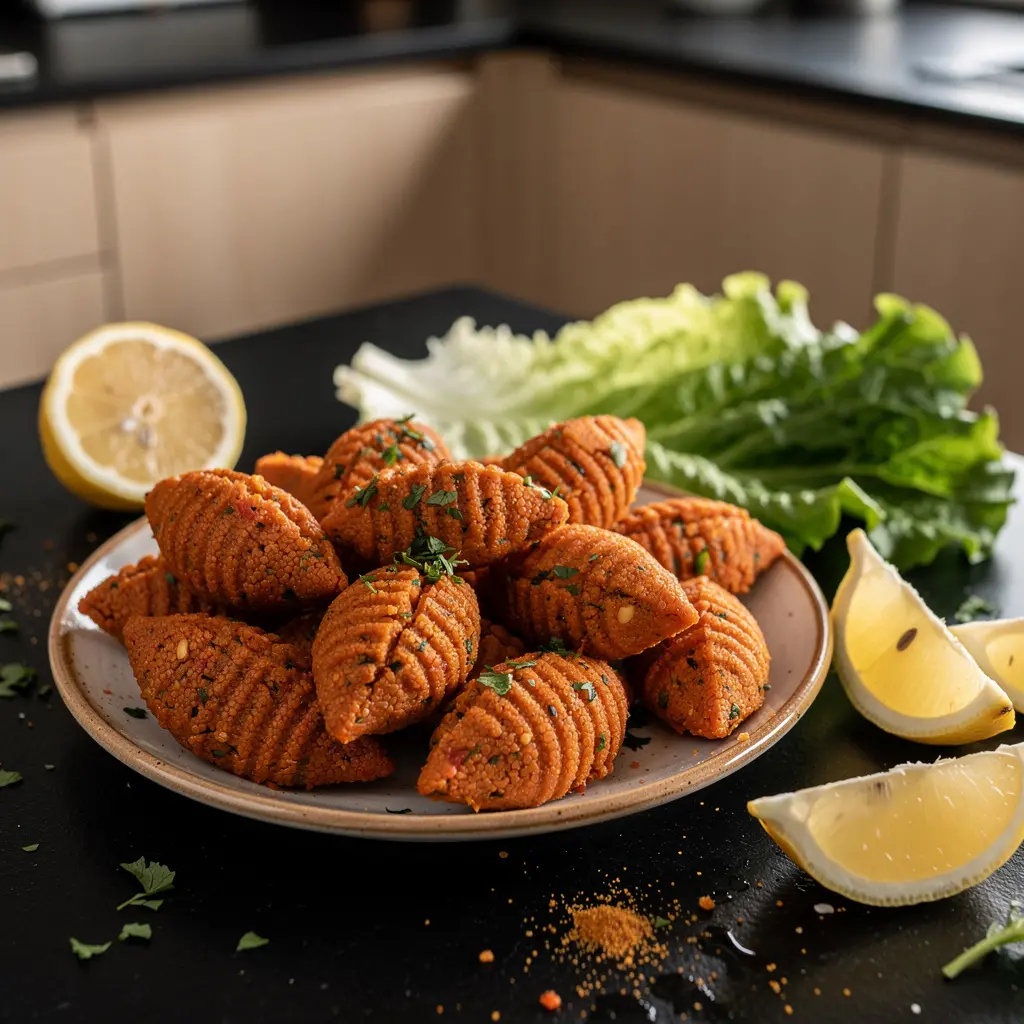
Çiğ köfte in a bulgur-based version are spicy, vegan “meatballs” without frying, shaped from fine bulgur, pepper paste and spices. In Turkey they are served wrapped in lettuce leaves with lemon juice as a snack or light dinner. The taste is a bit like a spicy sandwich spread, but the texture is firm and springy.
This version of çiğ köfte is completely plant-based and doesn’t require frying or baking, yet has a rich, deep flavor and pleasantly chewy texture. It’s perfect as a light, refreshing dish that still feels satisfying and is ideal for sharing.
Chef's tips
Use the finest bulgur you can find – coarse bulgur won’t soften enough without cooking and the texture will be too grainy. Kneading is key: don’t rush this step, because it’s what binds the mixture and gives it its characteristic elasticity. If your hands get too sticky while shaping, rinse them briefly in cold water and continue.
How to serve
Serve çiğ köfte on a large platter with crisp lettuce leaves, lemon wedges and plenty of fresh herbs such as parsley and mint. You can also add thinly sliced onion, radishes or cucumber on the side. They pair well with ayran or another refreshing yogurt drink, or with a simple tomato and cucumber salad.
Ingredients
- fine bulgur - 250 g
- water hot, for soaking the bulgur - 200 ml
- pepper paste can be hot or mild - 2 tablespoons
- tomato paste - 1.5 tablespoons
- onion small, finely grated - 1 piece
- garlic finely grated - 2 cloves
- vegetable oil e.g. sunflower - 3 tablespoons
- lemon juice freshly squeezed - 3 tablespoons
- soy sauce for umami, optional - 1 tablespoon
- hot paprika powder or more, to taste - 1 teaspoon
- ground cumin - 1 teaspoon
- black pepper - 0.5 teaspoons
- salt to taste
- parsley finely chopped - 0.5 bunch
- fresh mint chopped leaves - 2 tablespoons
- lettuce e.g. iceberg or romaine, leaves for serving - 1 head
- lemon cut into wedges for serving - 1 piece
Preparation
- Put the bulgur into a large bowl. Pour over the hot water, stir quickly, cover with a plate and set aside for 15–20 minutes until it absorbs the water and softens.
- After soaking, fluff the bulgur with a fork to separate the grains and let it cool slightly.
- Grate the onion and garlic on a fine grater or chop very finely so there are no large pieces.
- Add the pepper paste, tomato paste, grated onion, garlic, oil, lemon juice, soy sauce, hot paprika, cumin, pepper and a pinch of salt to the bowl with the bulgur.
- Start kneading the mixture with your hands like dough for 10–15 minutes, pressing firmly until everything is well combined, the bulgur softens further and the mixture becomes sticky and uniform. This step is important – the longer you knead, the better the texture.
- Add the chopped parsley and mint and knead for another 1–2 minutes until the herbs are evenly distributed.
- Taste the mixture and, if needed, season with more salt, lemon juice or hot paprika.
- Lightly moisten your hands with water. Take portions of the mixture about the size of a large walnut and shape into oblong “meatballs”, gently squeezing them with your fingers to create the characteristic indentations.
- Arrange the finished çiğ köfte on a plate. Serve wrapped in lettuce leaves, drizzled with lemon juice just before eating.
Storage
No storage information available for this dish.
This is one of those dishes that are simple in ingredients but impressive in flavor and presentation. Once you get used to the kneading and shaping, it becomes almost meditative, and the platter of neatly arranged çiğ köfte always disappears quickly at the table.