Chinese Tofu and Chive Omelette from the Pan Recipe
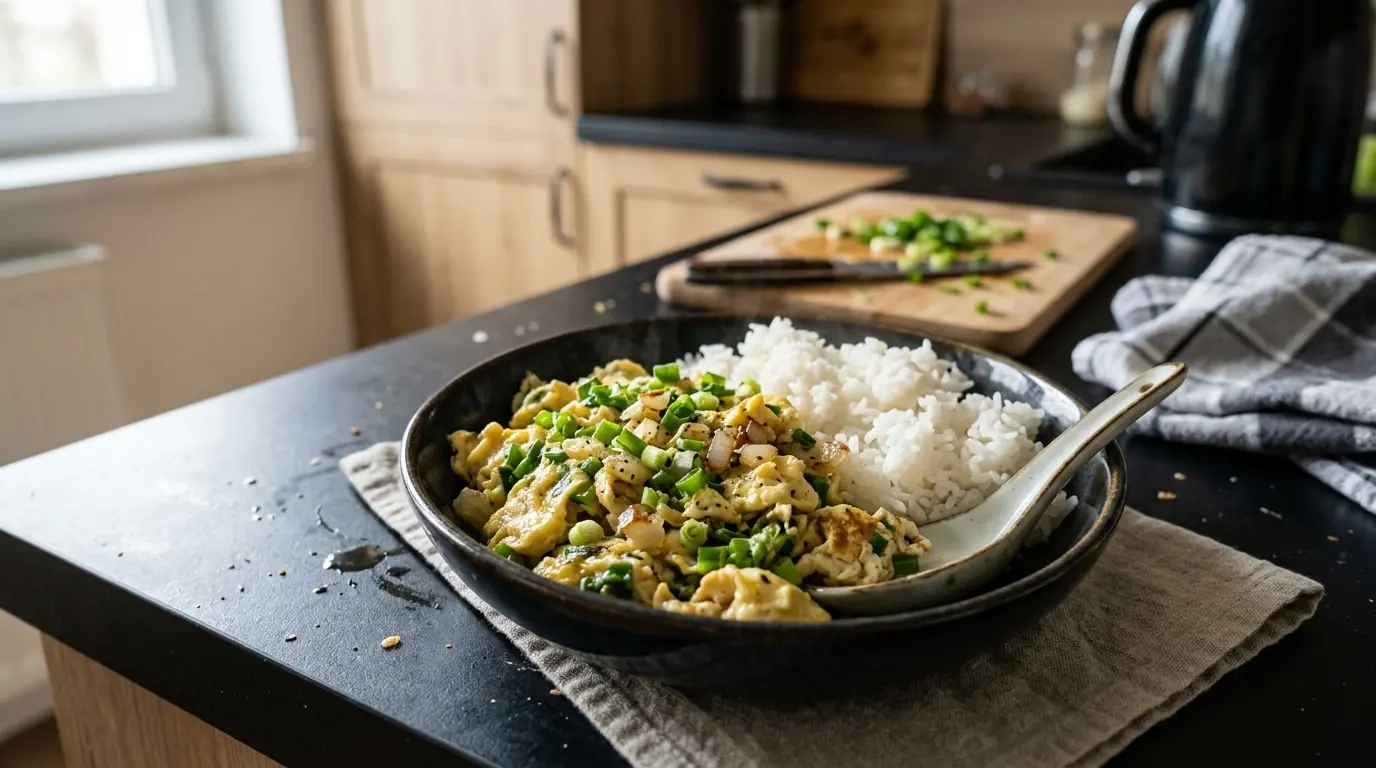
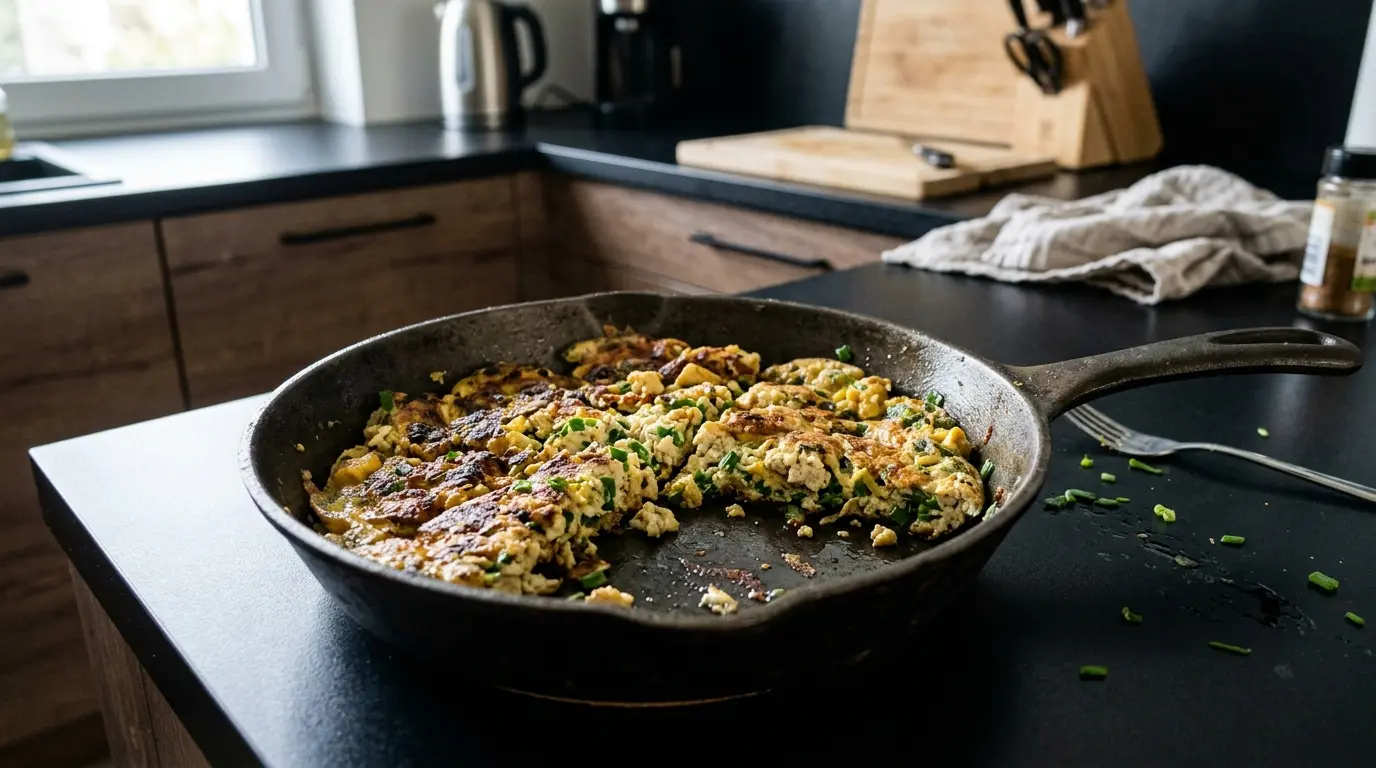
A fluffy tofu and chive omelette is a popular home-style dish in China – something between scrambled eggs and a pancake. Perfect for breakfast, but it also works great as a quick dinner with a bowl of rice. The tofu adds protein and makes the omelette very filling.
Such tofu omelettes are a common part of home-style meals in southern China, where tofu is treated as an everyday, inexpensive substitute for meat. They usually land on the table next to a bowl of rice and simple stir-fried vegetables.
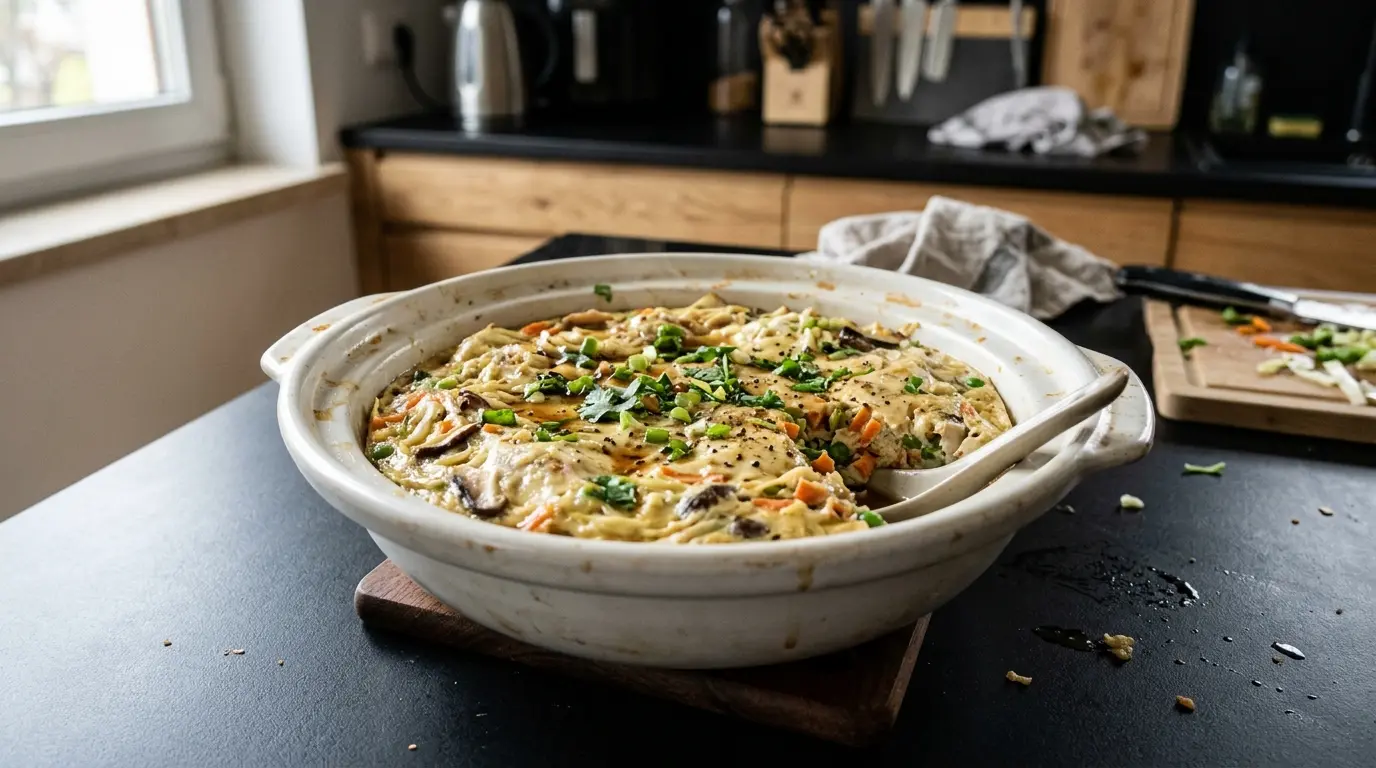
This Chinese-style omelette combines the fluffiness of classic eggs with the delicate texture of tofu, making it both light and very satisfying. It’s quick to prepare, uses simple ingredients, and works equally well for breakfast, lunch or dinner.
Why this version works
- A splash of water in the eggs loosens the mixture, making the omelette fluffier.
- Pan-frying the tofu before adding the eggs gives it flavor and a springy, lightly browned crust.
- Low heat lets the omelette set evenly, without a burnt bottom and raw center.
- Cutting it into pieces before flipping reduces the risk of tearing its delicate structure.
Chef's tips
Don’t rush the frying – gentle, medium-low heat helps the omelette set evenly without burning on the bottom. If your pan tends to stick, use a non-stick pan and make sure it’s well heated and lightly oiled before adding the tofu and eggs.
How to serve
Serve cut into larger pieces as a main dish with rice and vegetables, or slice into smaller squares as a side dish for a larger Asian-style meal. It also tastes good at room temperature, so you can pack it in a lunchbox.
Watch out for
- Poorly dried tofu will release water and thin out the eggs, making the omelette pale and rubbery.
- Don’t stir the mixture after you pour it into the pan – you’ll end up with scrambled eggs instead of an omelette.
- Don’t flip it while the center is still liquid; wait until it only trembles slightly when you shake the pan.
- Heat that’s too high will quickly burn the bottom while leaving the top raw and runny.
Substitutions
- You can replace plain tofu with smoked tofu, reducing the amount of soy sauce because it’s already salty.
- You can swap the chives for the green part of scallions or finely chopped flat-leaf parsley.
- Instead of water in the eggs, you can add 1 tablespoon of cow’s milk or soy milk.
- You can substitute white pepper with black pepper, but use less – its aroma is stronger.
Ingredients
- eggs - 4 piece
- plain tofu preferably medium-firm or firm - 150 g
- chives or green part of spring onion chopped - 3 tablespoon
- soy sauce - 1 tablespoon
- water added to the eggs for fluffiness - 2 tablespoon
- oil e.g. rapeseed oil - 1.5 tablespoon
- pepper to taste
Preparation
- Pat the tofu dry with a paper towel and cut it into small cubes (about 1 cm).
- In a bowl, whisk the eggs with the water, soy sauce and pepper until the mixture is uniform and slightly foamy. Add the chopped chives and gently mix.
- Heat the oil in a medium frying pan over medium heat. Add the tofu cubes and fry for 3–4 minutes, stirring gently, until lightly golden on the outside.
- Reduce the heat to medium-low. Spread the tofu in an even layer in the pan, then pour in the egg mixture so it covers the tofu.
- Cook the omelette over low heat for 4–5 minutes without stirring, until the edges are set and the top is still slightly moist. If the edges brown too quickly, lower the heat.
- When the omelette is almost set, you can carefully flip it over using a large spatula, or cut it into quarters and flip each piece separately. Fry for another 1–2 minutes, until the eggs are fully set.
- Transfer the omelette to a plate, cut into pieces and serve immediately, sprinkled with extra chives if you like.
Storage
No storage information available for this dish.
This is one of those simple home dishes that are easy to adapt to what you have in the fridge. Once you master the basic method, you can freely add your favorite vegetables or spices and adjust the texture by changing the ratio of tofu to eggs.