Chinese Omelette with Shrimp and Chives Recipe
A delicate omelette with shrimp and plenty of chives is a popular dish in southern China, often eaten as a quick lunch or dinner. It’s a bit like a Spanish tortilla, but lighter and juicier. It tastes great with a bowl of rice or on its own, straight from the pan.
This style of omelette is popular in southern China and Hong Kong, often found on the menus of small family-run eateries. It combines eggs with seafood and plenty of greens, and is usually served with rice as a quick lunch or dinner dish.
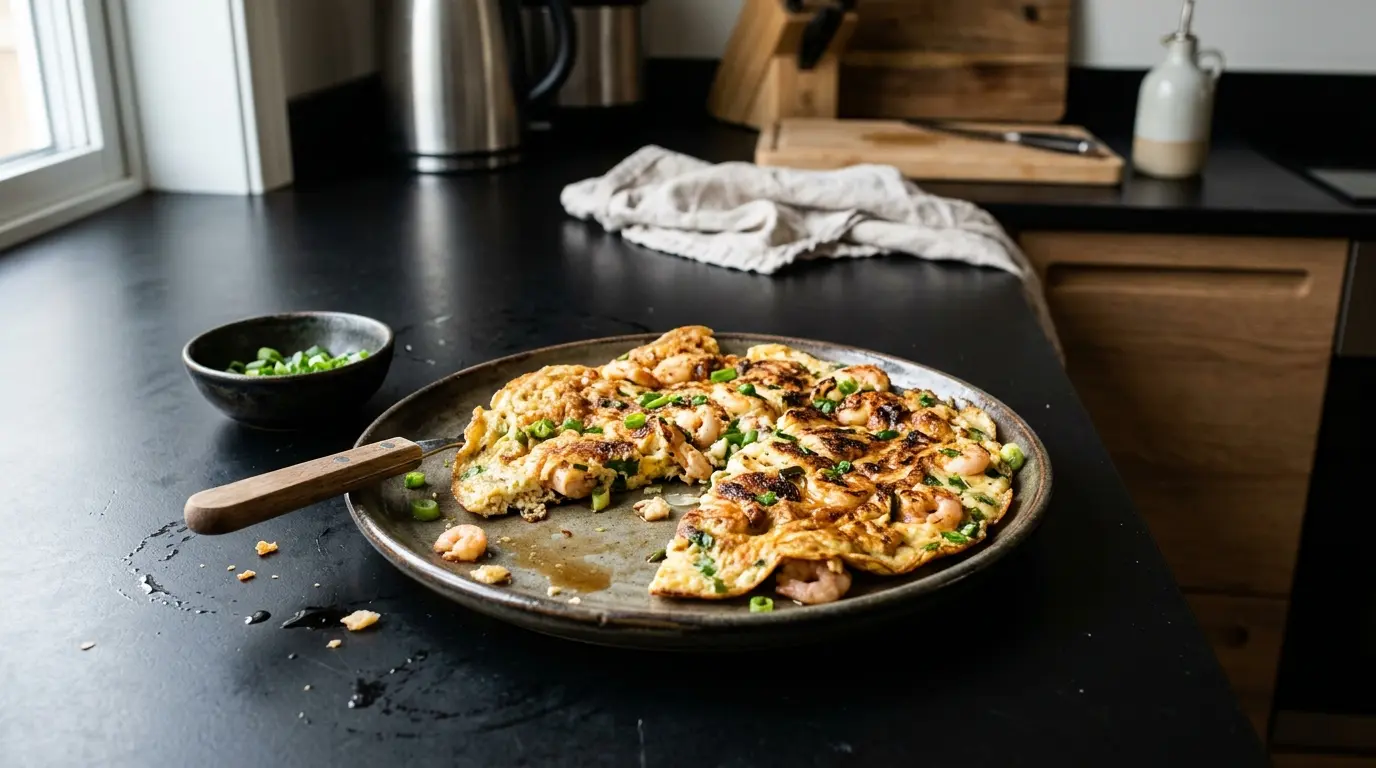
This Chinese-style omelette combines juicy shrimp, aromatic ginger, and plenty of chives in a light, tender egg base. The addition of starch and water gives it a uniquely silky, slightly bouncy texture that’s different from Western omelettes or Spanish tortilla.
Why this version works
- The starch and water in the egg mixture create the creamy, slightly springy texture typical of southern Chinese omelettes.
- Searing the shrimp separately ensures they stay juicy and just cooked through instead of turning rubbery.
- The technique of lifting the edges lets the eggs set evenly without turning the omelette into scrambled eggs.
Chef's tips
Use fresh, good-quality shrimp if possible – they make a big difference in flavor. Don’t overcook the eggs; take the omelette off the heat while the center is still slightly moist so it stays soft and juicy. A non-stick pan makes flipping and serving much easier.
How to serve
Serve hot, cut into wedges, with steamed jasmine rice and a small dish of soy sauce or chili oil for dipping. It also works well as part of a larger spread of Chinese-style dishes, alongside stir-fried vegetables or a simple clear soup.
Watch out for
- Too high a heat will quickly burn the bottom while leaving the center runny—if the edges brown too fast, immediately lower the flame.
- Don’t fry the shrimp for too long before adding the eggs; as soon as they turn pink, move on to the next step.
Substitutions
- Instead of shrimp, you can use thinly sliced surimi sticks, frying them just until lightly browned.
- You can replace fresh ginger with a pinch of dried ginger, using half as much because it’s more intense.
- Light soy sauce can be swapped for tamari, reducing the added salt in the egg mixture.
Ingredients
- eggs - 5 piece
- raw shrimp - 150 g
- chives - 4 tablespoon
- soy sauce - 1 tablespoon
- potato or corn starch - 1 tablespoon
- water - 2 tablespoon
- fresh ginger - 10 g
- oil - 2 tablespoon
- salt
- ground white pepper - 0.25 teaspoon
Preparation
- If you’re using frozen shrimp, thaw them in the fridge or in cold water, then drain very well. For larger shrimp, slice them in half lengthwise or into 2–3 pieces and pat completely dry with a paper towel until they look matte, not wet—this way they won’t release water into the pan.
- Finely chop the chives. Peel the ginger and grate it on a fine grater or chop it very finely until it’s almost a paste, so it distributes evenly in the eggs without tough fibers.
- In a bowl, mix the eggs with the water, starch, light soy sauce, a pinch of salt, and white pepper. Beat with a fork for 30–40 seconds, until the mixture is uniform, slightly thicker, and a light foam appears on the surface, but without large air bubbles.
- Add the chives and ginger to the eggs and stir with a spoon. Let sit for 2–3 minutes so the starch can fully hydrate and the herbs and ginger start releasing their aroma; the mixture should thicken slightly.
- Heat 1 tablespoon of oil in a non-stick pan over medium-high heat. Add the shrimp and fry for 1–2 minutes, until they turn pink and slightly matte on both sides; the centers should no longer be translucent but the shrimp should still feel soft when pressed.
- Reduce the heat to medium. Spread the shrimp evenly over the pan, then pour in the egg mixture, gently swirling the pan so the eggs form an even layer. If the shrimp cluster in one spot, quickly nudge them with a spatula.
- Cook for 3–4 minutes over medium heat without stirring. From time to time, lift the edges with a spatula and tilt the pan so the uncooked egg flows underneath; the edges should set and turn matte, while the top remains slightly glossy but no longer liquid.
- If you want to flip the omelette, cover the pan with a large plate, invert it confidently, then slide the omelette back into the pan. Fry for another 1–2 minutes, until the second side is lightly browned and the center feels soft and springy when gently pressed.
- To finish, you can pour 1 tablespoon of oil around the edge of the pan and fry for about 30 seconds to get delicately crisp edges. Slide the omelette onto a board, cut into triangles, and serve immediately while the inside is still moist and the edges lightly browned.
Storage
No storage information available for this dish.
This is one of those simple, homely dishes that comes together in minutes but feels special. Adjust the amount of chives and ginger to your taste – in many southern Chinese homes, there’s a lot of both, which makes the omelette wonderfully fragrant.