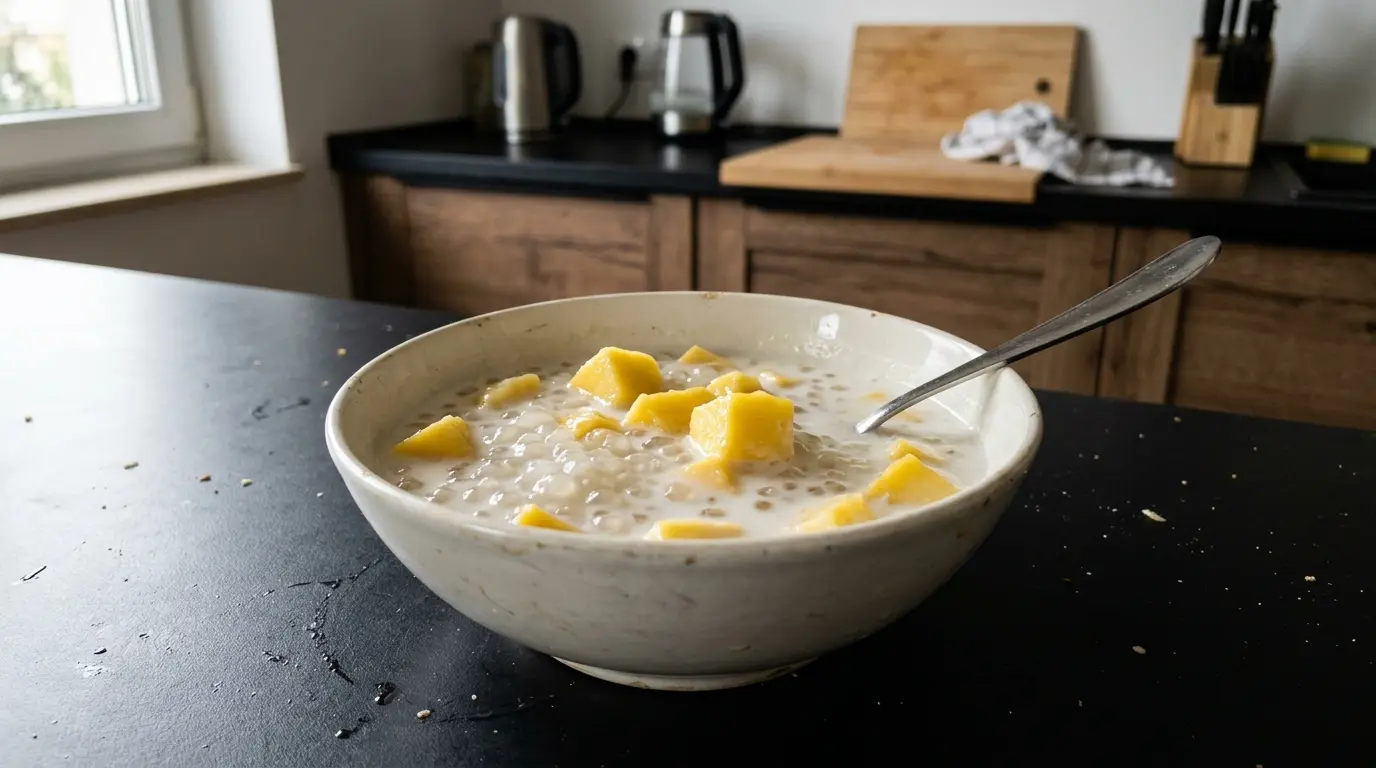
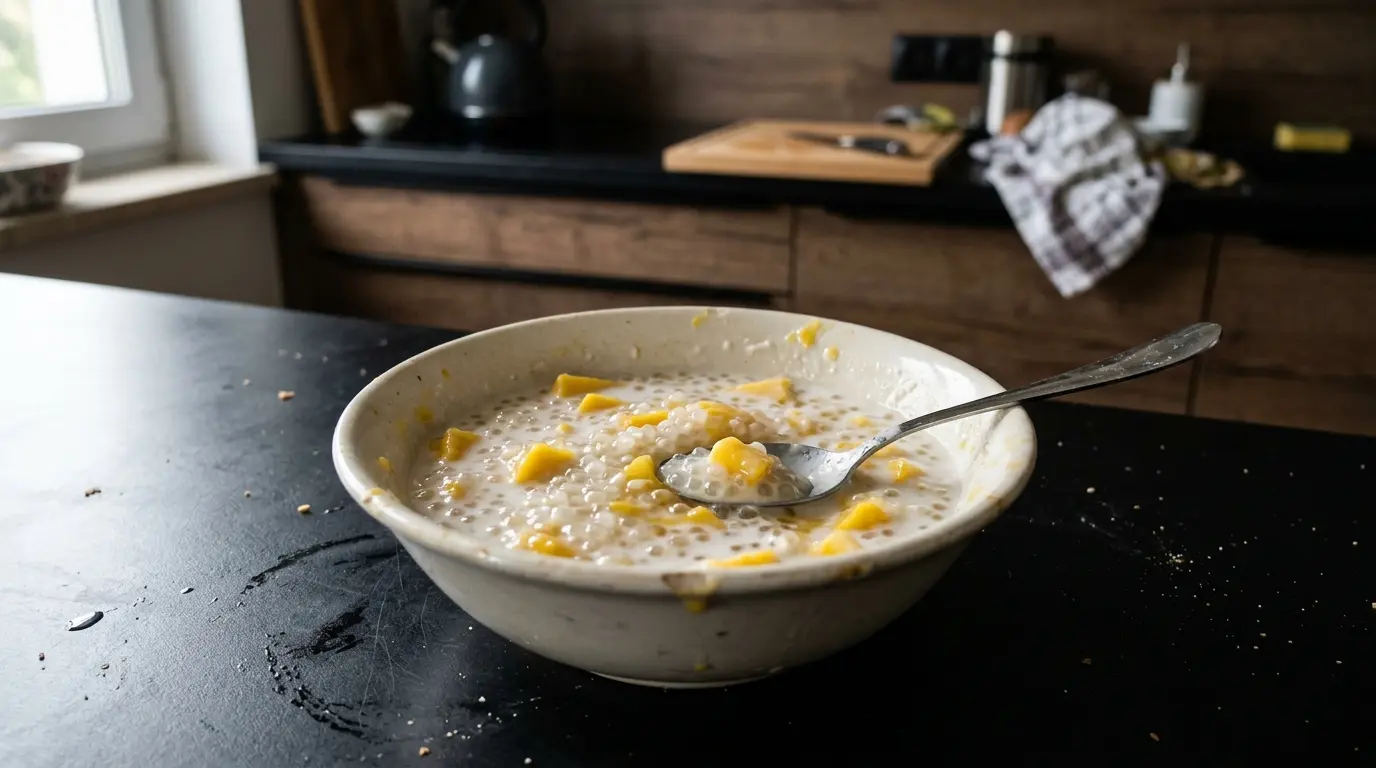
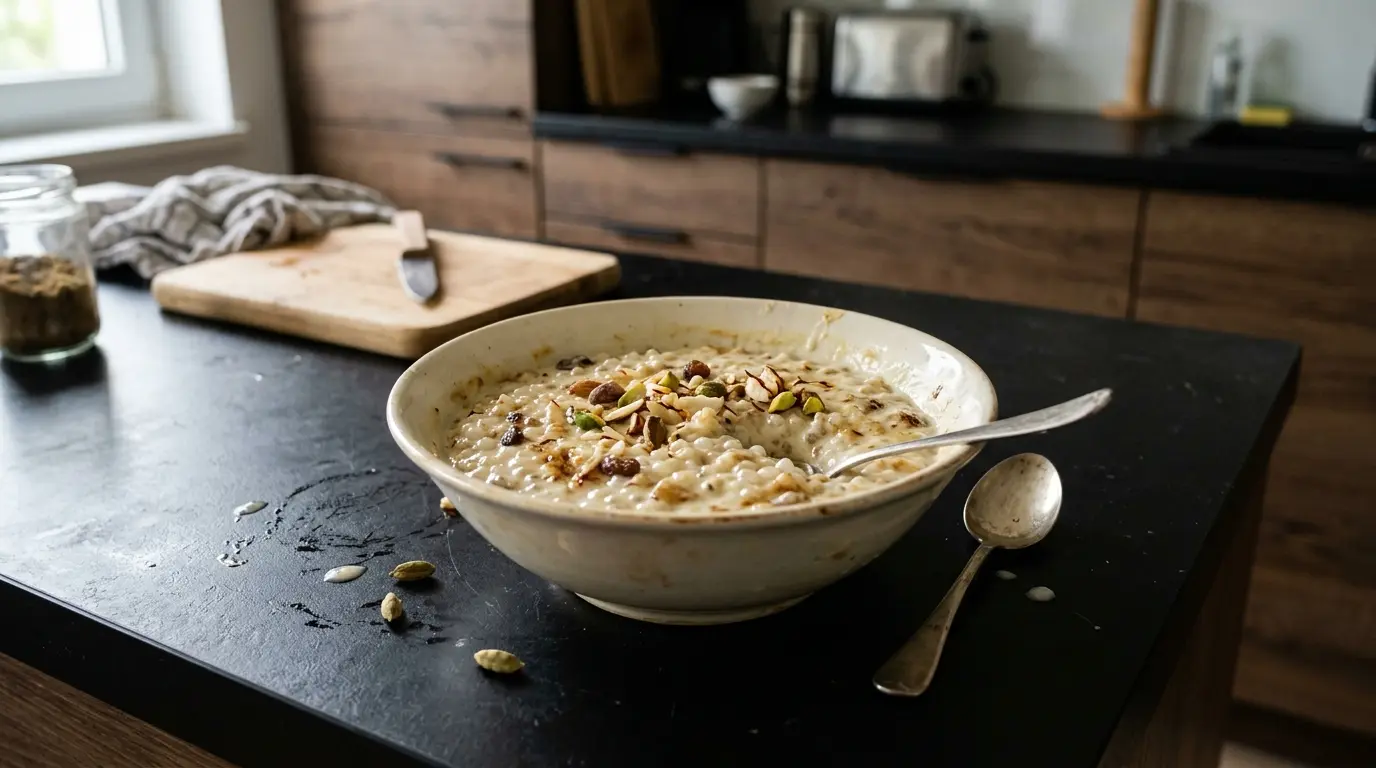
Chinese Coconut Milk Tapioca and Fruit Dessert Recipe
A delicate dessert made with coconut milk, tapioca and fruit is a popular sweet treat in many Asian countries, including China. Its texture is somewhere between a pudding and a jelly, and the small, translucent tapioca pearls pleasantly “pop” between your teeth. It’s a great alternative to traditional pudding or jelly, especially in summer when you serve it slightly chilled.
Similar desserts with tapioca and coconut milk are popular in Chinese dessert shops and bubble tea bars, often served with mango or taro. This is a simplified homemade version that’s easy to prepare with ingredients available in European supermarkets.
This dessert combines the creamy richness of coconut milk with the unique texture of tapioca pearls and the freshness of fruit. It’s naturally gluten-free, light yet satisfying, and can be easily adapted with different fruits or flavorings to suit the season.
Why this version works
- Soaking the pearls before cooking shortens the time on the heat and reduces the risk of hard centers.
- Cooking over low heat after adding the coconut milk prevents curdling and lumps.
- The water‑to‑coconut‑milk ratio creates a base that you can easily thicken or thin to match the fruit you’re using.
- A pinch of salt boosts the coconut flavor and balances the sweetness of the sugar and fruit.
Chef's tips
Stir the tapioca frequently while cooking to prevent it from sticking and clumping. If the mixture thickens too much after cooling, you can gently loosen it with a splash of coconut milk. Taste and adjust the sweetness while it’s still warm, as flavors are easier to balance at that stage.
How to serve
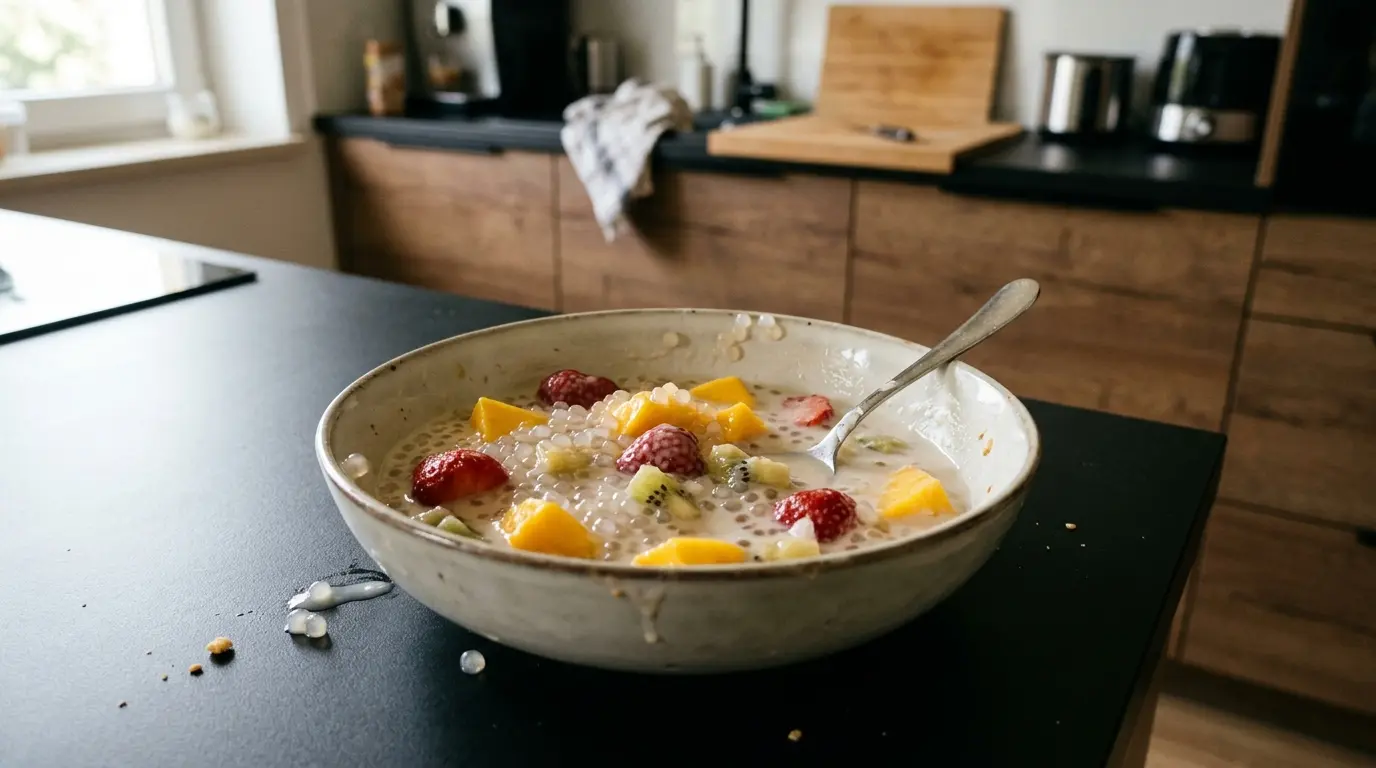
Serve in small glass cups or dessert bowls, topped with colorful fruit like mango, strawberries, kiwi or berries. For an extra touch, sprinkle with toasted coconut flakes or a little lime zest just before serving.
Watch out for
- Don’t let the mixture come to a vigorous boil after adding the coconut milk – large bubbles appearing on the surface are a sign you should immediately reduce the heat.
- If you stop stirring at the beginning of cooking, the tapioca can easily stick to the bottom and clump into a hard mass.
- Distinct white dots in the center of the pearls at the end of cooking mean the tapioca is still undercooked.
Substitutions
- You can replace part of the coconut milk with cow’s milk or plant milk if you want a lighter version.
- You can swap the vanilla for lime or orange zest for a citrusy aroma.
- You can replace the mango or strawberries with kiwi, blueberries, or well‑drained canned fruit.
Ingredients
- small tapioca pearls available in Asian grocery stores, can be substituted with sago - 80 g
- coconut milk well shaken - 400 ml
- water - 400 ml
- sugar or more to taste - 3 tablespoons
- pinch of salt to enhance the flavor
- vanilla extract or vanilla sugar - 0.5 teaspoons
- mango, strawberries or other soft fruit diced - 200 g
- mint leaves a few for decoration, optional
Preparation
- Put the small tapioca pearls into a bowl, cover with cold water so they’re fully submerged, and leave for about 10 minutes. They’re ready to use when they swell slightly and turn semi‑translucent but are still springy to the touch.
- Drain the tapioca in a fine sieve, shaking gently to remove excess water. In a heavy‑bottomed saucepan bring 400 ml of water to a boil, until you see clear bubbles across the whole surface.
- Add the drained tapioca to the boiling water, reduce the heat to low and cook for 10–15 minutes, stirring very often, especially at the bottom. The mixture should gradually thicken and the pearls should become almost completely translucent.
- At this stage the tapioca is almost done when most of the pearls are translucent with a small white dot in the center and there are no large clumps forming on the bottom. If you see the mixture sticking, scrape it thoroughly with a silicone spatula.
- Pour in the coconut milk and add the sugar, a pinch of salt and the vanilla. Mix thoroughly until the liquid is evenly milky, with no sugar crystals or dry lumps of tapioca; the mixture should only gently bubble around the edges.
- Cook over very low heat for another 5–7 minutes, still stirring often and not allowing it to boil vigorously. The dessert is ready when it has clearly thickened to the consistency of a loose pudding and the pearls are almost completely translucent with a tiny pale dot.
- Remove the saucepan from the heat and leave for 5–10 minutes, stirring once or twice so a skin doesn’t form. Taste and, if needed, sweeten slightly, bearing in mind that once chilled the sweetness will be more pronounced.
- Spoon the warm mixture into small bowls or glasses, filling them to about three‑quarters full and smoothing the tops with a spoon. Let cool to room temperature, then cover and refrigerate for at least 1 hour, until the dessert sets and becomes bouncy.
- Just before serving, cut the mango, strawberries or other soft fruit into cubes or slices. Arrange a generous layer of fruit on top of each portion, gently pressing it into the dessert but leaving it visible on the surface.
- Garnish with mint leaves and, if you like, coconut flakes or finely grated lime zest. Serve well chilled – the base should be soft and slightly wobbly when shaken, and the tapioca pearls pleasantly springy with no hard centers.
Storage
No storage information available for this dish.
This coconut tapioca dessert is one of those simple recipes that feels special with very little effort. It’s perfect for hot days, can be made ahead, and always impresses guests with its delicate texture and exotic aroma.