Chinese Braised Beef with Tomatoes and Ginger Recipe
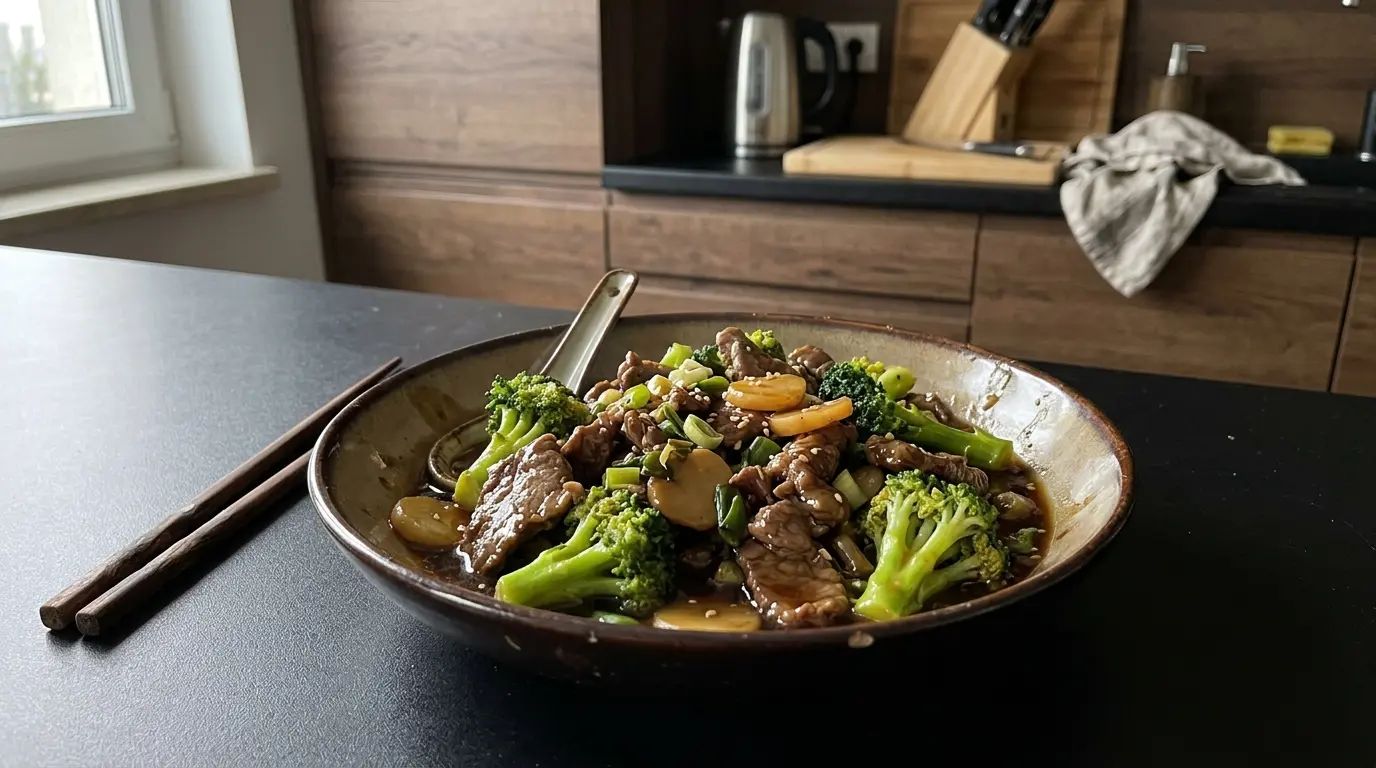
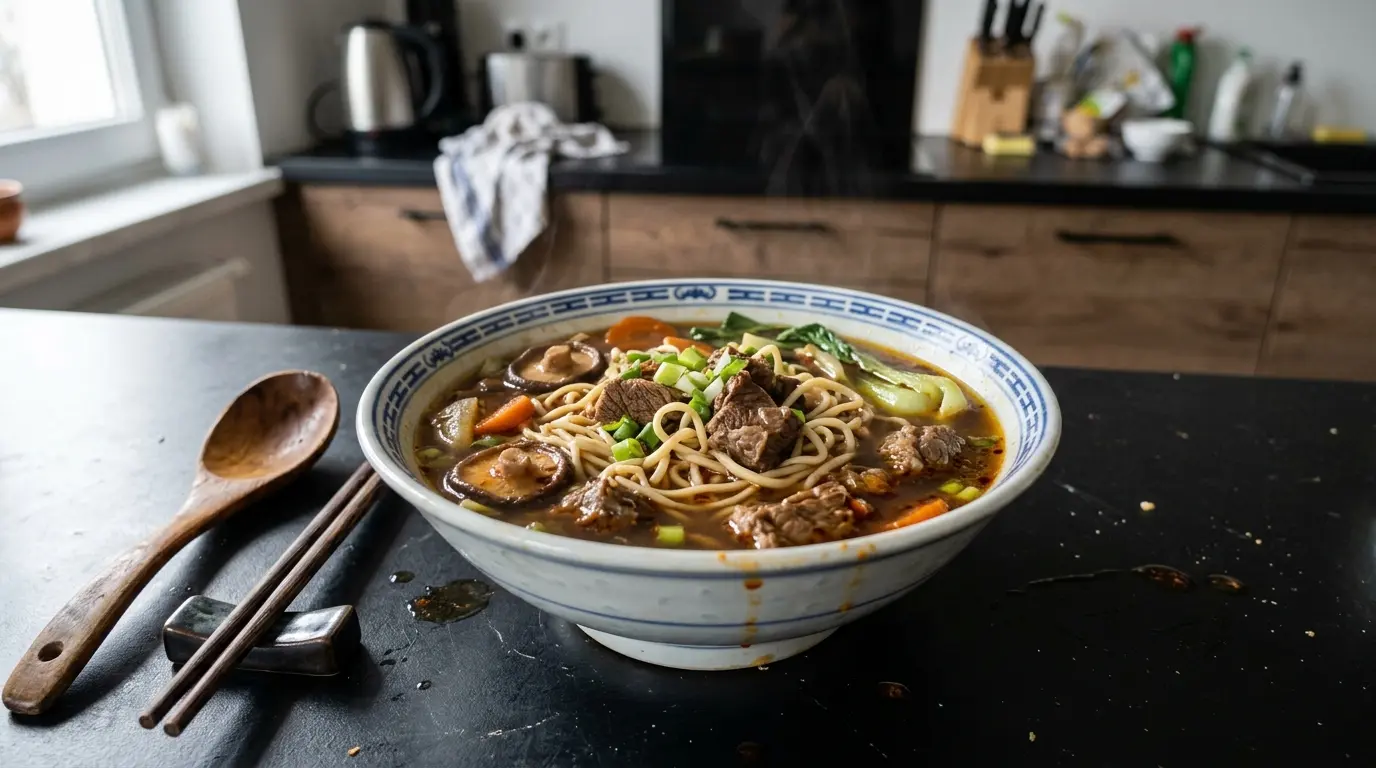
This dish is a Chinese-style stew – tender beef braised in a sauce made with tomatoes, ginger, and soy sauce. In many Chinese homes, dishes like this are cooked on the weekend and then reheated during the week. It tastes a bit like a cross between Polish goulash and an Italian tomato stew, but with a distinctly Asian character.
This is a simplified version of homestyle Chinese beef stews where tomatoes and soy sauce replace classic stock. In many regions of China, dishes like this are served with rice or wheat noodles as a hearty one-pot meal.
A comforting, make-ahead Chinese-style stew that combines familiar tomato and beef flavors with aromatic ginger and soy sauce, making it both homely and pleasantly exotic.
Why this version works
- Hard, batch searing of the beef creates a caramelized flavor base instead of relying on stock.
- Tomatoes and soy sauce combine acidity with umami, so the sauce is deep and flavorful without a long list of spices.
- Long, gentle braising breaks down the meat fibers without drying out the inside.
- Letting the sauce reduce uncovered at the end gives a gravy that clings thickly to rice or noodles.
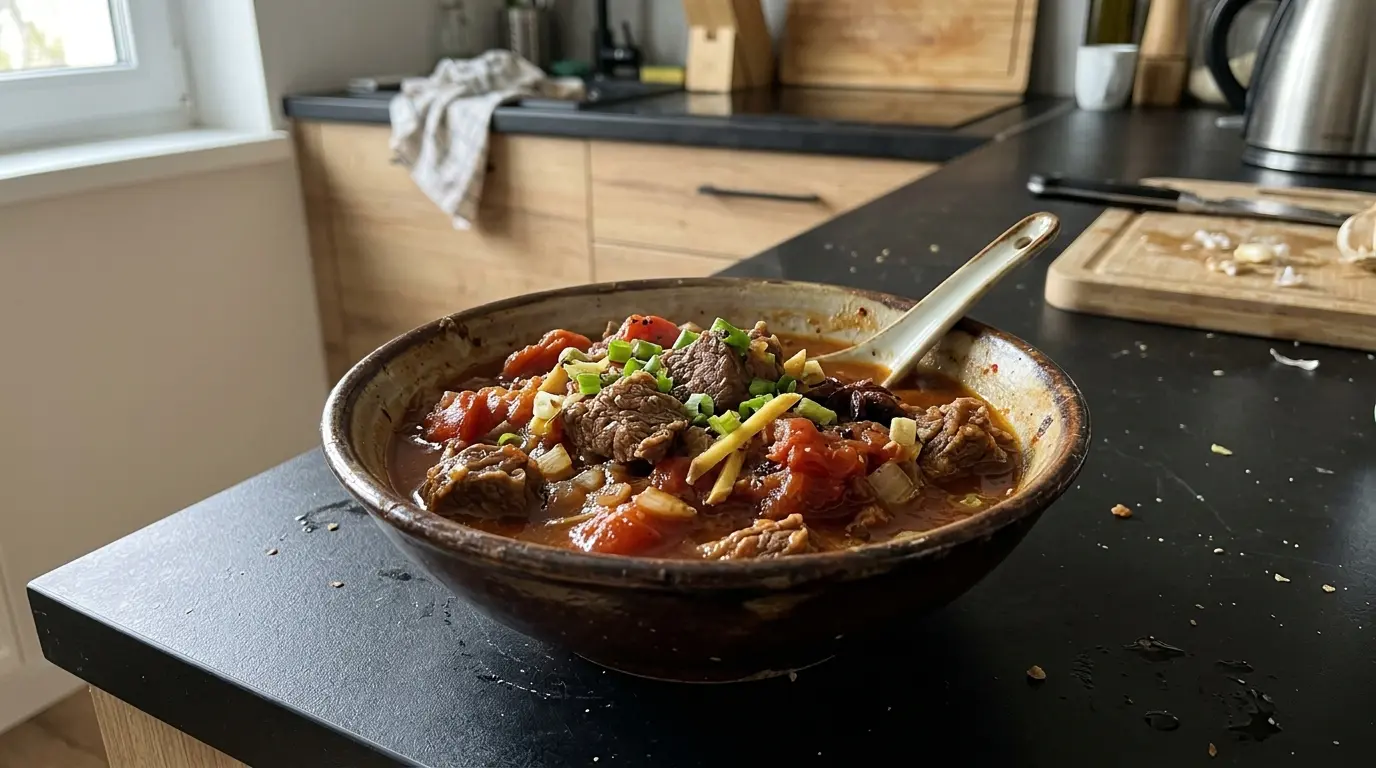
Chef's tips
For the best flavor, take the time to brown the beef well in batches so it doesn’t steam. Use a heavy pot with a thick bottom to maintain gentle, even heat during braising. If you have time, cook the stew a day ahead and reheat before serving – the flavors will meld and intensify.
How to serve
Serve in deep bowls over a bed of steamed jasmine rice or with thick wheat noodles that can soak up the sauce. Add a side of lightly pickled cucumbers or a simple stir-fried green vegetable for balance.
Watch out for
- If the pot is too small, the meat will steam and release its juices – sear the beef in 2–3 batches in a single layer.
- If the sauce starts to catch and darken around the edges, immediately lower the heat and add a splash of water.
- Do not drastically shorten the braising time for tougher cuts – the meat will be sinewy and hard to chew.
Substitutions
- You can replace canned tomatoes with fresh, well-ripened tomatoes that have been peeled.
- Instead of bay leaf you can add a piece of star anise for a more Chinese-style aroma.
- You can swap chuck for brisket, extending the braising time by 15–20 minutes.
Ingredients
- stewing beef (shoulder, neck) - 700 g
- chopped canned tomatoes - 400 g
- onion medium - 1 piece
- fresh ginger about a 3–4 cm piece - 20 g
- garlic - 4 cloves
- soy sauce - 4 tablespoons
- sugar balances the acidity of the tomatoes - 1 teaspoon
- water - 300 ml
- oil - 2 tablespoons
- bay leaf optional - 1 piece
- pepper white or black - 0.5 teaspoons
- salt to taste, carefully, as soy sauce is salty
- spring onion or parsley chopped, for serving - 2 tablespoons
Preparation
- Cut the beef into cubes of about 3 cm. Pat dry with paper towels so it browns well.
- Peel the onion and dice finely. Peel and finely chop the garlic. Peel the ginger and cut into thin matchsticks or grate.
- In a large heavy-bottomed pot, heat 2 tablespoons of oil over fairly high heat. Add the beef in a single layer (if needed, brown in batches) and cook for 6–8 minutes, turning, until browned on all sides.
- Add the onion, reduce the heat to medium, and cook for 4–5 minutes, stirring, until the onion softens and becomes slightly translucent (it should be soft and lightly transparent, but not brown).
- Add the garlic and ginger and cook for another 1–2 minutes, until very fragrant.
- Pour in the canned tomatoes and water, add the soy sauce, sugar, bay leaf, and pepper. Mix thoroughly, scraping up any browned bits from the bottom of the pot – they will add flavor to the sauce.
- Bring everything to a boil, then reduce the heat to low, cover the pot with a lid, and braise for 60–70 minutes, until the beef is very tender. Stir every 15 minutes and add a little water if needed.
- Towards the end of cooking, taste the sauce. If it is too acidic, add a little more sugar. Season with salt and additional pepper if needed. Cook uncovered for another 5–10 minutes to let the sauce thicken slightly.
- Before serving, remove the bay leaf. Sprinkle the dish with chopped spring onion or parsley. Serve hot with rice or wheat noodles.
Storage
No storage information available for this dish.
This dish is perfect for weekends when you can let it simmer slowly and then enjoy quick, comforting meals during the week. The flavor profile is friendly even for those who are new to Asian cuisine, while still offering a distinct twist compared to classic European beef stews.